What Does Asbestos Insulation Look Like? A Plain Guide
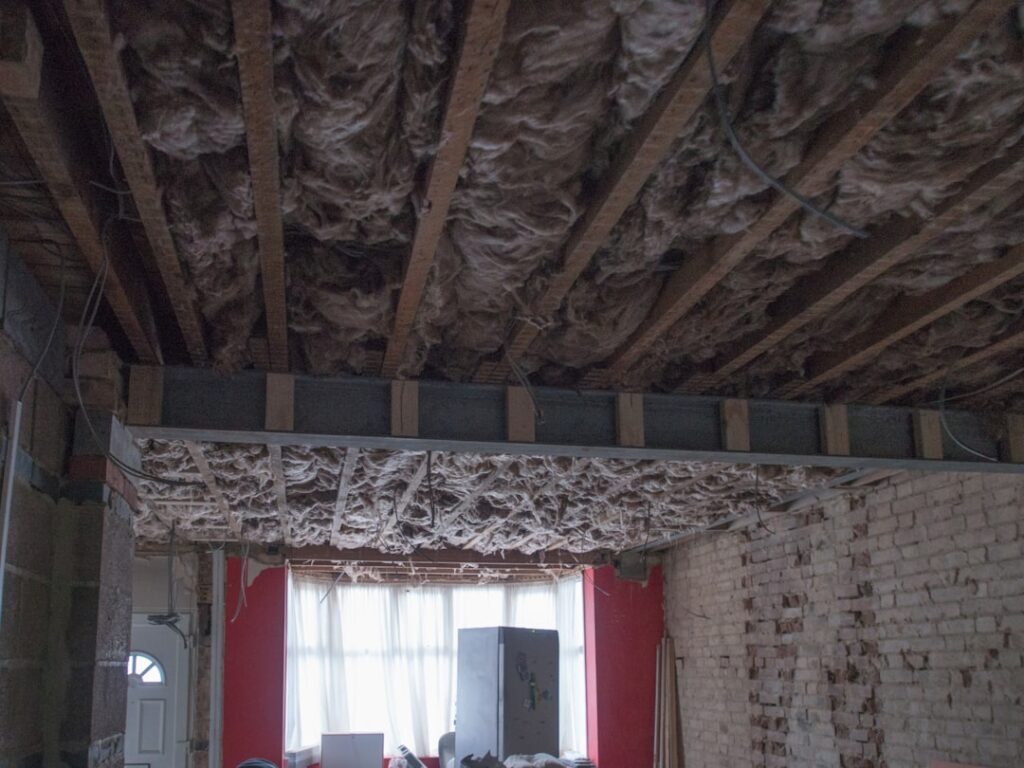
Homeowners often ask what is asbestos insulation look like once they spot something unfamiliar wrapped around a basement pipe or poured into an attic. The frustrating truth is that asbestos came in many forms, so there is no single appearance to memorize. There are, however, reliable visual clues tied to specific product types and the age of the home, and pairing those clues with the year of construction gets you most of the way to a sensible first judgment. What you cannot do is clear a material as safe on looks alone. This guide summarizes EPA and CDC guidance current as of 2026; appearance is only a starting point, the home’s age sharpens the picture, and laboratory testing remains the only way to confirm whether a material truly contains asbestos.
Part of our Asbestos in the Home guide — start there for the full picture →
Is this mold, asbestos, or water damage? Get a free instant screen
Upload a clear photo of the suspect area. You'll get an instant AI screening opinion and what to do next. This is screening guidance, not a professional determination.
Screening guidance only. AI can be wrong. Confirm asbestos, mold type, or lead with lab testing or a licensed professional before acting.
What does asbestos insulation look like?
Asbestos insulation shows up in several distinct forms, each with its own look. The most recognizable is white or gray pipe wrap with a corrugated, cardboard-like or chalky surface, often covered in a cloth or paper jacket. Loose-fill attic insulation made of vermiculite appears as small grayish-brown or silvery-gold pebbly granules. Block and board insulation around boilers and furnaces looks like solid, chalky white or gray slabs.
Older spray-applied insulation can look fluffy, fibrous, and matted, sometimes painted over on ceilings or steel beams. None of these looks is exclusive to asbestos; modern non-asbestos products can resemble them. That is why agencies stress testing over visual identification.
Pipe and boiler insulation
The classic asbestos product in homes is pipe insulation on heating pipes in basements and crawl spaces. It often appears as a thick white wrap with a ridged, corrugated profile under a cloth or canvas outer layer. When it ages, the outer jacket cracks and the chalky white core shows through. Damaged sections may flake or release dust, which is the dangerous state.
Boiler and furnace jackets used a similar chalky white or gray material, sometimes molded into curved sections. Front Range homes with original mid-century boilers are reasonable candidates for this material. The parent guide to asbestos and lead in older housing maps where these products typically appear.
Why deteriorated material is the bigger concern
Intact, sealed pipe insulation with an undamaged jacket is far less hazardous than crumbling, exposed material. Friable insulation that you can crush with light hand pressure releases fibers readily. If you see white powder or flakes on the floor beneath old pipe wrap, treat that as a disturbance signal and stop touching the area.
Loose-fill attic insulation
Loose-fill vermiculite is one of the most asked-about forms. It looks like small, lightweight granules, grayish-brown or silvery-gold, with an accordion-like layered texture under close inspection. It pours and shifts like tiny gravel rather than matting like fiberglass. Not all vermiculite contains asbestos, but a large share of the product sold for decades came from a contaminated source.
Fiberglass, by contrast, looks like spun glass wool in white, pink, or yellow, and cellulose looks like shredded gray paper. For a side-by-side appearance comparison, our guide to asbestos blown in insulation walks through the differences in detail.
Batt, block, and spray-applied forms
Asbestos also appeared in some older batt and blanket insulation, in rigid block and board around mechanical equipment, and in spray-applied coatings on ceilings and structural steel. Block insulation looks like solid chalky slabs. Spray-applied material looks fluffy or popcorn-like and may be painted. Textured “popcorn” ceilings from certain eras can also contain asbestos, though they are a surface finish rather than insulation per se.
The variety is the point. Because so many products and eras are involved, no homeowner can reliably clear a material by appearance. A confident “that’s definitely safe” based only on looks is exactly the judgment agencies warn against.
Age and location clues that raise suspicion
Appearance is most useful combined with context. A few factors should raise your suspicion before you ever test.
- The home was built or last re-insulated before roughly 1990.
- Material wraps heating pipes, boilers, or furnaces.
- Loose granular fill sits in an older attic.
- You see a corrugated, chalky, or cloth-jacketed wrap.
- The material is crumbling, flaking, or shedding dust.
When several of these line up, treat the material as presumed asbestos-containing and avoid disturbing it until a lab confirms what it is.
Why you cannot confirm asbestos by sight
Asbestos fibers are microscopic, far too small to see in the bulk material. Two visually identical wraps can test differently, and modern fiberglass or mineral-wool products can mimic the look of asbestos products. The EPA is explicit that suspect material should be assumed to contain asbestos unless tested by an accredited laboratory.
This is not bureaucratic caution. The health stakes are high and the cost of a single lab sample is low, so the rational default is to test before any work that would disturb the material rather than gamble on a visual guess.
Where asbestos insulation typically hides
Knowing the usual locations helps you focus a visual check. The most common spot is heating pipe insulation in basements and crawl spaces, where the corrugated white or chalky wrap follows the pipe runs. Boiler and furnace jackets are another hotspot, especially around original mid-century mechanical equipment. Attics hold the loose-fill vermiculite concern.
Less obvious locations include duct insulation and the tape sealing duct seams, insulation behind old wall registers, and material tucked around steam and hot-water lines. Some homes have asbestos insulation board (a flat, rigid sheet) behind stoves or near heat sources. Because installers used asbestos wherever heat was an issue, anywhere near a heat source in a pre-1980 home deserves a careful look.
It also pays to think about access points. Crawl spaces, utility closets, and the cavities behind access panels often hide original insulation that newer cosmetic work never touched. A home can have a fully remodeled kitchen upstairs while the basement mechanical room still holds decades-old asbestos pipe wrap. Checking the unglamorous, mechanical corners of a house frequently reveals more suspect material than the finished living spaces do.
The condition of the material in these spots matters as much as its presence. Insulation that is painted, jacketed, and intact is far less of an immediate concern than insulation that is exposed, crumbling, or shedding. A basement with neat, sealed pipe wrap is in better shape than one where chalky debris litters the floor beneath cracked insulation.
How asbestos insulation differs from modern products
Modern insulation is engineered to be asbestos-free, but it can superficially resemble older asbestos products, which is why appearance alone fails. Fiberglass batts and blown fiberglass are spun glass, typically pink, yellow, or white, and obviously fibrous in a glassy way. Mineral wool can look gray and dense. Cellulose looks like shredded gray paper. None of these contain asbestos.
The asbestos products predate these and tend to look more like cloth, cardboard, plaster, or chalky molded sections rather than fluffy modern batts. Pipe wrap with a woven cloth jacket and a corrugated paper-like core is a classic asbestos appearance. A solid, chalky white molded section around a boiler is another. These materials simply look older and more rigid or papery than fluffy contemporary insulation.
Still, the lookalike problem is real enough that the EPA’s rule stands: presume suspect material contains asbestos until a lab confirms otherwise. A confident visual clearance is the exact error that leads to accidental disturbance. The differences above narrow your suspicion; they do not substitute for testing before any work.
How material gets tested
A certified inspector collects a small representative sample using dust-suppression and containment, then submits it to an accredited lab that uses polarized light microscopy to identify and quantify fibers. Homeowners who handle their own sampling must follow strict precautions, but for friable material professional sampling is strongly preferred. To understand the lab side, see our guide to where to send samples for asbestos testing.
Air testing is a separate service that measures airborne fiber levels, useful after a suspected disturbance to check whether living areas are affected.
The role of condition in assessing risk
Appearance answers “what might this be,” but condition answers “how urgent is it.” Intact asbestos insulation with an undamaged jacket, sealed and undisturbed, releases very few fibers and is often safest left in place. Damaged, crumbling, or exposed insulation is friable and can release fibers with little provocation, making it the higher priority for action.
When inspecting visually, note the condition alongside the look. Cracked jackets, exposed chalky cores, white powder or flakes on the floor beneath pipe wrap, and material that has been bumped or torn all signal disturbance. A basement with neat, painted, intact pipe insulation is a different situation from one where insulation hangs in tatters and debris litters the floor.
This condition-based thinking aligns with how professionals prioritize. Encapsulation or enclosure can stabilize material in fair condition, while severely deteriorated friable material more often warrants removal. The visual clues that identify the material type feed directly into a condition assessment that guides what to do next.
Friable versus non-friable insulation
A key distinction in asbestos work is whether material is friable, meaning it can be crumbled by hand pressure when dry, releasing fibers easily. Most asbestos insulation, including pipe wrap, loose-fill vermiculite, and spray-applied coatings, is friable, which is why these materials are treated so cautiously. They give up fibers readily when disturbed.
- Friable: pipe and boiler insulation, loose-fill vermiculite, spray-applied coatings.
- Generally non-friable when intact: some floor tiles, certain bound boards and panels.
- Non-friable material can become friable if sanded, cut, drilled, or badly weathered.
- Friable material is regulated more strictly and is riskier to disturb.
The practical consequence is that the insulation products most homeowners ask about happen to be the friable, higher-risk ones. That is exactly why visual identification, condition assessment, and testing all converge on the same advice: do not disturb suspect insulation, and use professionals for any work that would.
Documenting what you find
When you spot suspect insulation, documenting it carefully helps any professional who follows. Photograph the material from a safe distance, noting its location, the system it serves (pipe, boiler, duct, attic), and its condition. Record the home’s age and any known renovation history, since these shape the likelihood of asbestos and guide where to sample.
Avoid touching or collecting material yourself for documentation. A clear photo and a written note of location and condition are enough for an inspector to plan sampling, and they create a record you can reference later. If multiple areas have suspect material, list each separately, because they may be different products with different asbestos status.
This kind of preparation makes a professional visit more efficient and helps you make informed decisions. It also prevents the common mistake of disturbing material to “get a better look,” which is exactly the action that releases fibers. Look, document from a distance, and let testing answer the question of what the material actually is.
When to call a professional
Call a certified inspector when you find suspect insulation in a pre-1990 home and plan any work that could disturb it, or when material is already damaged. Call a licensed abatement contractor for removal of confirmed asbestos. If you have disturbed material, stop, keep people out, ventilate, and arrange air testing.
For any health worries after exposure, consult your physician. Identifying the material and addressing medical concerns are two different tasks, each best handled by the right professional.
References
- EPA overview of asbestos in building materials — U.S. Environmental Protection Agency
- CDC and NIOSH asbestos identification and exposure resources — Centers for Disease Control and Prevention
- EPA information on vermiculite attic insulation — U.S. Environmental Protection Agency
Frequently asked questions
What does asbestos pipe insulation look like?
It usually appears as thick white or gray wrap with a corrugated, cardboard-like surface under a cloth or paper jacket. As it ages, the jacket cracks and a chalky white core shows through, sometimes flaking into dust.
Does all loose-fill attic insulation contain asbestos?
No. Only vermiculite loose-fill is a concern, and not all vermiculite contains asbestos. Vermiculite looks like small grayish-brown or silvery-gold pebbly granules, unlike fluffy fiberglass or shredded cellulose.
Can I identify asbestos insulation just by looking?
No. Asbestos fibers are microscopic and many non-asbestos products look identical. Appearance and home age can raise suspicion, but only laboratory testing by an accredited lab can confirm whether a material contains asbestos.
Is intact asbestos insulation dangerous?
Intact, sealed material that nobody disturbs poses limited risk. The hazard rises sharply when material is damaged, crumbling, or disturbed, because that releases inhalable fibers into the air.
Front Range homeowners who spot suspect insulation can reach out through our contact page to connect with a certified inspector for safe sampling.
Asbestos test kits
Asbestos can only be confirmed by a lab. A mail-in kit gets you a sealed sample container and accredited analysis — never sand or disturb suspect material first.
| Product | Why | Buy |
|---|---|---|
 Asbestos Test Kit (mail-in lab) Asbestos Test Kit (mail-in lab) | Includes PPE + sealed mailer. | Amazon — $34.99 |
| Pro-Lab Asbestos Test Kit | Widely available; lab fee separate. | Amazon — $34.99 |