Asbestos Insulation in Attic: What Homeowners Know
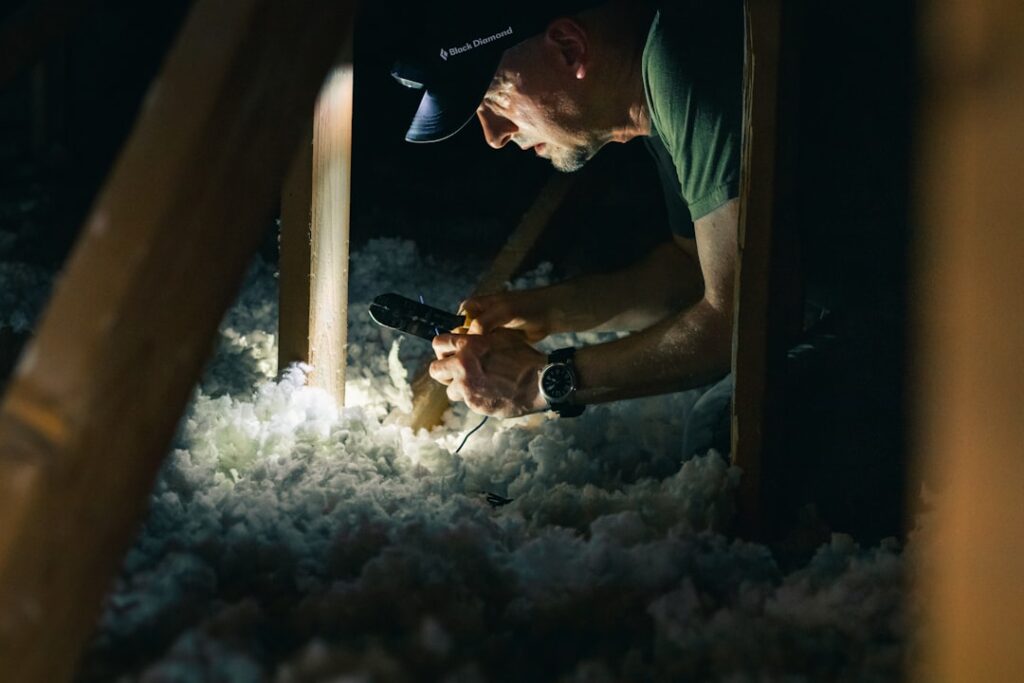
The attic is one of the most likely places to find asbestos in an older home, usually in the form of loose-fill vermiculite insulation that may carry asbestos fibers. For homeowners across the Front Range, recognizing asbestos insulation in attic spaces matters most before any project that would disturb it, from adding insulation to running new wiring. The material is generally low-risk when left alone and far more dangerous when stirred up. This guide covers identification, the health concern, testing, and safe handling. It reflects EPA, CDC, and OSHA guidance current as of 2026; consult a certified professional for testing decisions and your physician about any symptoms.
Is this mold, asbestos, or water damage? Get a free instant screen
Upload a clear photo of the suspect area. You'll get an instant AI screening opinion and what to do next. This is screening guidance, not a professional determination.
Screening guidance only. AI can be wrong. Confirm asbestos, mold type, or lead with lab testing or a licensed professional before acting.
What does asbestos insulation in an attic look like?
The most common asbestos-related attic insulation is vermiculite, a loose-fill product that looks like small, lightweight pebbles or flakes in gray-brown, silvery-gold, or grayish tones, with a layered, accordion-like texture. It pours and shifts when disturbed, unlike fiberglass batts or blankets. It was poured across attic floors and sometimes into masonry walls, often sold under the Zonolite brand.
Vermiculite is not the only asbestos material that can appear in an attic. Old pipe and duct insulation, some types of paper-backed materials, and around chimneys, asbestos-containing products may be present. But pour-in pebble insulation in a home built before the late 1980s is the classic find. Our guides to whether vermiculite is asbestos and the broader asbestos and lead hazard hub add context.
Why vermiculite attic insulation is a concern
The issue is contamination at the mining source. A mine near Libby, Montana supplied much of the vermiculite used in U.S. homes, and its ore was naturally contaminated with amphibole asbestos. Because the asbestos was in the rock, it traveled into finished insulation that ended up in attics nationwide. The mine operated until 1990.
The EPA therefore advises treating older vermiculite attic insulation as if it contains asbestos unless laboratory testing proves otherwise. Not every batch was contaminated, and material from other deposits may be clean, but a homeowner cannot determine the source by sight. The conservative default protects households from an invisible risk.
The health risk
Asbestos becomes hazardous when fibers are released into the air and inhaled. The EPA and CDC associate long-term asbestos exposure with asbestosis, lung cancer, and mesothelioma, generally after repeated or prolonged inhalation rather than a single brief contact. Attic insulation that sits sealed and undisturbed releases far fewer fibers than material being moved, swept, or renovated around.
Attics create a specific risk pattern because people periodically enter them to store belongings, check wiring, or add insulation. Each entry that disturbs the fill can stir fibers into the air. Finishing an attic into living space, the most disruptive project of all, is the highest-risk scenario for vermiculite that may contain asbestos.
How attic insulation gets disturbed
Common disturbances include walking through loose fill, retrieving and storing boxes, pulling electrical or data cable through the attic, installing recessed lighting or bath fans, adding new insulation over the old, and remodeling. Even seemingly minor tasks like running a vacuum or sweeping debris can release fibers from contaminated vermiculite.
The riskiest mistake is a homeowner deciding to remove old attic insulation themselves to upgrade efficiency. Dry-handling potentially asbestos-containing loose fill without containment generates substantial fiber release. This is exactly the activity the EPA’s leave-it-alone guidance is meant to prevent.
Testing attic insulation
Laboratory analysis is the only way to confirm asbestos. An accredited asbestos professional collects a sample under controlled, dust-suppressing conditions and submits it for polarized light microscopy at a certified lab. Homeowners should not sample the material themselves, because the act of disturbing loose fill to collect a sample can release fibers.
Some owners reasonably skip testing and simply treat pre-1990 vermiculite as asbestos-containing, managing it conservatively. Testing is most worthwhile when a definitive answer is needed before a renovation, an insulation upgrade, or a real-estate transaction. Whatever the choice, the fill should not be casually disturbed first.
Safe handling and what to do
The EPA’s general guidance favors leaving intact, undisturbed vermiculite in place. Avoid entering the attic unnecessarily, do not use it for storage that grinds the fill, and seal attic access points and any gaps where fibers could migrate into living space. Do not sweep, vacuum, or rake the material.
When work is unavoidable, hire an accredited asbestos professional to sample and, if needed, remove the insulation under proper containment with appropriate respiratory protection and regulated disposal. Never attempt removal yourself. If the goal is better efficiency, a professional can advise on options that avoid disturbing the existing fill, such as targeted air-sealing from below.
Buying or renovating an older home
Across Denver, Jefferson, Boulder, and El Paso counties, many homes date to the era when vermiculite was a standard attic insulation. Buyers should ask about attic insulation and consider a professional assessment as part of due diligence. Renovators planning attic work, additions, or efficiency upgrades should budget for testing before disturbing anything. Identifying the material early avoids an emergency cleanup and protects the household’s health.
Encapsulation, enclosure, and removal options
When asbestos attic insulation must be addressed, professionals weigh three approaches. Encapsulation applies a sealant that binds the material so fibers cannot become airborne, which can work for certain conditions but is less common for loose-fill vermiculite that shifts easily. Enclosure builds a barrier over the material, sealing it away from living space. Removal physically takes the insulation out of the attic and is the most definitive option.
For loose-fill vermiculite, removal by a licensed abatement contractor is often the chosen route when the attic must be accessed for renovation, rewiring, or an efficiency upgrade. The decision depends on the project, the material’s condition, and cost. A qualified professional can lay out the trade-offs. What matters is that any of these options is performed by accredited specialists under proper containment, never improvised by a homeowner who underestimates how readily disturbed loose fill releases fibers.
What professional removal involves
Removing asbestos attic insulation is a controlled process. The work area is isolated and placed under negative air pressure with HEPA filtration so fibers cannot migrate into the home. Crews wear respirators and protective suits, and loose-fill vermiculite is typically extracted with specialized HEPA-filtered vacuum equipment rather than swept or shoveled dry. The waste is sealed in labeled containers and taken to a permitted disposal site.
After extraction, the attic is cleaned and may undergo air clearance testing to confirm it is safe before any new insulation goes in. This rigor is why removal is a professional job with a real cost attached. Homeowners should hire licensed, accredited contractors, verify credentials, and request documentation of disposal. The investment buys both a safe attic and confidence that the work met regulatory standards.
Adding insulation without disturbing the old
Many homeowners want better attic efficiency but do not want the cost of full abatement. In some cases, a professional can advise on approaches that avoid disturbing the existing vermiculite, such as air-sealing penetrations from the living space below or carefully adding insulation in ways that do not stir the old fill. These options depend heavily on the specific attic and should be evaluated by someone qualified to assess the asbestos risk first.
The wrong move is for a homeowner to blow new insulation over loose vermiculite or walk through it to do other work, both of which disturb the material. Because the contaminated fill is so easily aerosolized, any efficiency project in a vermiculite attic should start with professional assessment. Getting that sequence right, assess first, then plan, protects the household and often costs less than cleaning up after an accidental release.
Documenting and disclosing asbestos in a sale
For homeowners selling an older property, attic insulation is a disclosure consideration as much as a safety one. Buyers and their inspectors routinely look in the attic, and pebbly vermiculite fill in a pre-1990 home raises questions that are better answered with documentation than left to speculation. Having a professional assessment or lab result on file lets a seller represent the home accurately and lets a buyer plan with clear information.
On the buyer’s side, identifying suspect attic insulation during due diligence is part of understanding the true cost of an older home. The presence of asbestos vermiculite is not necessarily a deal-breaker, since intact, undisturbed material can often remain safely in place, but it does shape any renovation budget. Treating the assessment as routine, rather than alarming, keeps the transaction grounded in facts and helps both parties make sound decisions about a common feature of mid-century Front Range housing.
The health basis behind the guidance
The caution around attic vermiculite rests on documented health evidence. The CDC and its National Institute for Occupational Safety and Health link inhaled asbestos fibers to asbestosis, a scarring of the lungs, along with lung cancer and mesothelioma, a cancer of the lining around the lungs and abdomen. These diseases generally follow repeated or prolonged inhalation rather than a single brief contact, and they can take years or decades to appear. OSHA sets workplace exposure limits for asbestos because the dose accumulated over time drives the risk.
For a homeowner, this supports a measured response. Sealed, undisturbed fill releases few fibers, so leaving good-condition material in place is low-risk and often the right call. The hazard concentrates in the disturbing activities, raking the fill, dry-removing it, or repeatedly entering the attic in ways that loft fibers, that the health evidence identifies as harmful over time. Keeping the material undisturbed keeps airborne fiber low, which is precisely the protective goal.
Friability and the regulatory picture
Asbestos materials are classified by how readily they release fibers, and loose-fill vermiculite sits on the friable end, which shapes how it must be handled. Friable materials crumble or powder under hand pressure when dry, freeing fibers easily, while non-friable materials lock fibers in a hard matrix until cut or ground. Because the granules pour and shift freely, any asbestos riding among them can become airborne with minimal disturbance, which is why the material draws such caution.
That friability also places attic vermiculite within the scope of asbestos regulations governing handling and disposal. The amphibole asbestos associated with the Libby source is regulated like other forms, and removed material is treated as regulated asbestos waste that cannot go in household trash. Workers performing abatement follow OSHA standards for respiratory protection and exposure control. For a homeowner, the takeaway is that this is not a material the rules treat lightly, and the regulatory framework exists precisely because friable fill releases fibers so readily.
What shapes the cost of abatement
Homeowners weighing removal usually want a sense of what drives the price. The square footage of the attic and the depth of the fill set the baseline, since more material means more vacuuming, containment, and disposal. Accessibility matters: a low-clearance attic or one packed with stored items and obstructions takes longer to clear than an open, walkable space. The amount of preparation, sealing penetrations and isolating the area under negative pressure, adds to the labor.
The regulated handling itself accounts for much of the cost that ordinary insulation work does not carry. Licensed crews must use HEPA-filtered vacuum equipment, wear respirators and disposable suits, transport the waste to a permitted facility, and often pay for air clearance testing before new insulation goes in. Disposal fees for regulated asbestos waste are a real line item. Because these costs vary with the home, getting more than one bid from accredited contractors gives a homeowner a realistic range, and the broader asbestos and lead hazard hub sets the decision in context with other household materials.
References
- Protect your family from contaminated vermiculite insulation — U.S. Environmental Protection Agency
- Asbestos exposure and health effects — CDC / NIOSH
- Asbestos standards and safe handling — Occupational Safety and Health Administration
If you are buying or renovating an older Front Range home with suspect attic insulation, you can connect with a vetted local asbestos professional through our contact page for testing before any work begins.
Asbestos test kits
Asbestos can only be confirmed by a lab. A mail-in kit gets you a sealed sample container and accredited analysis — never sand or disturb suspect material first.
| Product | Why | Buy |
|---|---|---|
 Asbestos Test Kit (mail-in lab) Asbestos Test Kit (mail-in lab) | Includes PPE + sealed mailer. | Amazon — $35.00 |
 Pro-Lab Asbestos Test Kit Pro-Lab Asbestos Test Kit | Widely available; lab fee separate. | Amazon — $45.99 |