Vermiculite Insulation Removal Near Me: 2026 Hire Guide
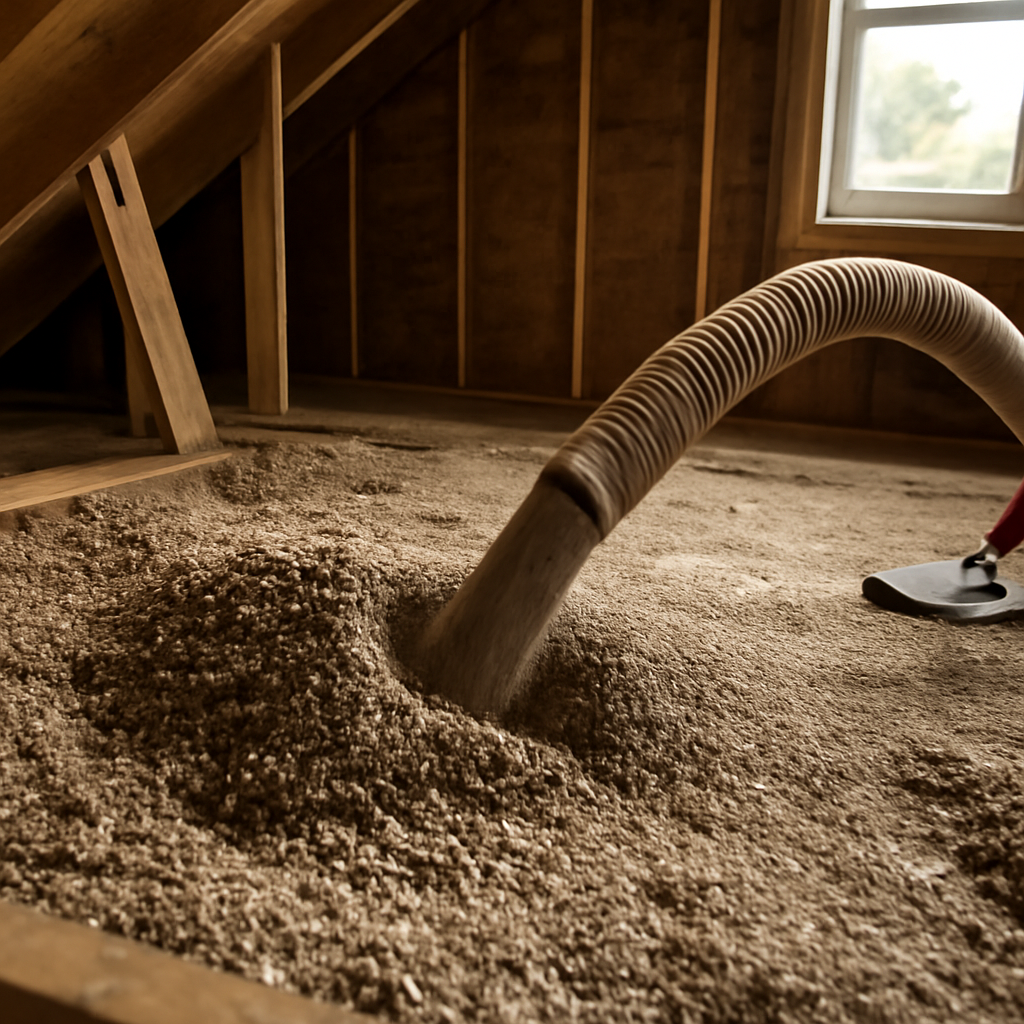
A search for vermiculite insulation removal near me almost always traces back to one product: Zonolite Attic Insulation, manufactured from ore mined near Libby, Montana between the 1920s and 1990. That ore was contaminated with tremolite asbestos, a more potent fiber than the chrysotile found in most other building products. The EPA treats Zonolite as presumed asbestos-containing material unless laboratory testing proves otherwise. This guide summarizes EPA and OSHA guidance current as of 2026 and is not a substitute for a licensed abatement contractor. The most important sentence in this article: do not remove, vacuum, sweep, or disturb suspected vermiculite yourself. Hire a licensed asbestos abatement firm. That is non-negotiable.
Part of our Asbestos in the Home guide — start there for the full picture →
Asbestos or biohazard concern? Speak with a certified contractor.
📞 Call (877) 742-8496Why vermiculite needs professional removal
Vermiculite is a natural mineral that expands when heated, producing lightweight pebbly granules used as loose-fill attic insulation through most of the twentieth century. The Libby mine supplied roughly 70 percent of U.S. vermiculite during that era. Tremolite and actinolite asbestos veins ran through the Libby ore body, and the milling process did not separate them out. The result is an insulation product that may contain trace to significant asbestos contamination depending on the batch. EPA testing on Zonolite samples consistently finds asbestos fibers in concentrations from trace to several percent by weight. There is no safe DIY threshold. Tremolite is among the most carcinogenic asbestos types, linked to mesothelioma, lung cancer, and asbestosis in both occupational and household-contact exposures.
Disturbing vermiculite — even briefly — releases respirable fibers into the air. Those fibers settle on clothing, hair, and tools, and travel into living spaces. Vacuuming with a household vacuum is among the worst possible actions because it aerosolizes fibers directly into breathing space. The EPA’s official guidance is to leave undisturbed vermiculite in place behind sealed barriers and to remove it only when renovation, addition, or building demolition requires it. When removal is necessary, federal NESHAP regulations and OSHA’s Class I asbestos work requirements both apply.
What “licensed abatement” actually means
Licensed asbestos abatement contractors are regulated at the state level under EPA-approved programs. In Colorado, the CDPHE Asbestos Compliance Assistance Group certifies contractors, supervisors, and workers separately. A firm running attic vermiculite removal must employ a certified Asbestos Project Designer to write the work plan, a certified Asbestos Supervisor on-site for the duration, and certified Asbestos Workers performing the physical removal. The firm itself must hold a state asbestos abatement certification, post a public notice to CDPHE before starting work, and follow strict containment, negative-pressure, decontamination, and disposal protocols.
OSHA classifies attic vermiculite removal as Class I asbestos work — the highest hazard tier, alongside thermal system insulation removal. Class I work requires full containment with critical barriers, HEPA-filtered negative air pressure machines maintaining at least minus-0.02 inches of water column, full-face respirators with HEPA cartridges or supplied-air respirators, disposable Tyvek suits, and a three-stage decontamination unit at the entry to the work area. Workers shower between work shifts and before exiting the regulated area. Air monitoring confirms fiber counts inside containment and at the perimeter throughout the project.
Why DIY removal is dangerous and often illegal
EPA NESHAP regulations cover commercial and multifamily structures categorically. Single-family homeowner work falls into a state-by-state gray area: some states allow homeowner removal under strict notification and disposal rules, others ban it outright. Even where homeowner DIY is technically legal, the practical risks make it a non-starter. Single use of an N95 mask, no containment, no negative air, no decontamination, and household vacuums all combine to expose the homeowner, family members, and neighbors to airborne fibers at concentrations far above OSHA’s permissible exposure limit of 0.1 fibers per cubic centimeter as an 8-hour time-weighted average. Mesothelioma can develop 20 to 50 years after exposure, with no safe threshold dose established by the scientific literature. The cost of getting this wrong is measured in lives, not dollars.
Disposal compounds the legal exposure. Vermiculite from Libby ore is regulated asbestos-containing waste material. It must be double-bagged in 6-mil polyethylene, labeled with OSHA asbestos warning text, transported by a registered hauler, and disposed at a permitted asbestos landfill cell. Dumping in regular household trash is a federal violation under NESHAP. The companion guide on asbestos disposal rules walks through the chain-of-custody documentation a homeowner should receive after any legitimate abatement job.
Pricing what to expect in 2026
Front Range Zonolite attic removal pricing runs roughly $10 to $25 per square foot of attic floor area in 2026, with most projects landing $12 to $18. A 1,500-square-foot attic with average accessibility costs $18,000 to $27,000 to abate. Drivers of the upper range: cathedral roof framing, low headroom, knob-and-tube wiring requiring electrician coordination, multiple access points requiring separate containments, and HVAC equipment in the attic requiring disassembly. Drivers of the lower range: walk-up attic access, single rectangular footprint, no obstructions, single-story home with short waste-haul distance to the disposal cell.
The price covers far more than insulation removal. Mobilization of containment materials, daily on-site supervisor wages, HEPA equipment rental, certified worker labor, OSHA-compliant PPE consumables, air-monitoring laboratory analysis, regulated-waste hauling, disposal-cell tipping fees, and post-abatement clearance testing all stack into the bid. A bid significantly below the $10 per square foot floor is almost always a contractor planning to skip containment, falsify monitoring records, or dump the waste illegally. None of those outcomes are acceptable.
Reading abatement bids
A defensible bid spells out work plan summary, containment scope, negative-pressure equipment specs, PPE level, air-monitoring frequency and laboratory, waste-disposal facility name, clearance-testing methodology (typically TEM under NESHAP for residential reoccupancy), insurance certificates, state certifications, and a price broken out by line item. Bids that present only a lump sum or that lack laboratory and disposal facility names should be set aside. The asbestos removal quote reading guide walks through line-by-line bid analysis with examples of what to question and what to accept.
Three- to five-day project timeline
A typical 1,500-square-foot attic vermiculite removal runs three to five working days from mobilization to demobilization.
Day 1: Mobilization and containment
Crew arrives, sets HEPA filters, builds critical barriers at attic access, installs decontamination unit, runs negative-pressure equipment, performs initial air sampling. Homeowner relocates if living in the home — most abatement firms require occupant relocation during Class I work for liability reasons.
Days 2–3: Removal
Workers in full PPE enter through the decontamination unit, manually shovel or HEPA-vacuum vermiculite into 6-mil bags, double-bag at the second containment layer, and stage bags for waste transport. Air monitoring continues throughout. A negative-pressure breach triggers immediate work stoppage and root-cause investigation.
Day 4: Final cleanup and waste transport
Remaining residue HEPA-vacuumed, encapsulant applied to all framing and surfaces if specified in the work plan, bagged waste loaded onto registered hauler for disposal-cell transport, manifests retained for the homeowner’s records.
Day 5: Clearance testing and demobilization
Independent third-party industrial hygienist performs aggressive air sampling inside the containment, samples analyzed by TEM. Once clearance fiber counts pass — under 70 structures per square millimeter is the federal threshold for reoccupancy — containment comes down. Homeowner receives a project closeout package with all manifests, monitoring data, and clearance results.
What “near me” means for vermiculite
Most metro areas in Zone 1 EPA radon states and pre-1990 housing stock have at least three to five qualified asbestos abatement firms. The Front Range supports roughly fifteen CDPHE-certified firms across the nine counties. Rural Colorado and high-altitude mountain communities sometimes have to draw firms from Denver or Colorado Springs, which adds travel mobilization to the bid — typically $1,500 to $3,500. Confirm state certification status through the CDPHE Asbestos Compliance Assistance Group portal before requesting a bid. The same logic applies in other states with EPA-approved asbestos programs: search the state environmental agency’s certified-contractor list, not Google’s map pack.
For background on whether you actually have Zonolite versus a non-asbestos vermiculite product, the asbestos and lead pillar walks through visual identification cues and why laboratory PLM testing is the only definitive answer. A small sample collected by a certified asbestos inspector — never by the homeowner — confirms or rules out the contamination.
Why “near me” searches sometimes return the wrong firms
Map-pack results for asbestos abatement frequently include general demolition contractors, mold remediation firms, and insulation installers who do not hold state asbestos certifications. Google’s algorithm does not distinguish between certified and uncertified providers. A homeowner relying on map-pack ranking alone may end up calling a firm legally prohibited from performing the work, or worse, a firm willing to take the job without the required certifications. The CDPHE asbestos contractor portal in Colorado, and equivalent state databases elsewhere, are the only authoritative source for verifying current certification status. A firm that does not appear on the state database should be removed from the shortlist regardless of how prominently it ranks on a Google search.
Several pre-1980 housing-stock metros — Boston, Pittsburgh, Cleveland, Detroit, Saint Louis — also have significant Zonolite penetration, and licensed abatement capacity in those metros is generally robust. Front Range capacity is more concentrated in the Denver-Boulder corridor; rural Front Range homeowners may need to draw firms from the metro and pay travel mobilization. The companion asbestos inspection process guide covers the testing step that should precede any removal decision — confirming that the material is actually Zonolite vermiculite from the Libby ore body rather than a non-asbestos vermiculite product.
Insurance and tax considerations
Homeowner’s insurance rarely covers asbestos abatement as a standalone event. Coverage sometimes attaches when abatement is triggered by a covered peril — fire, water damage requiring attic access, hail damage requiring roofing work that disturbs the insulation. Consult the policy and the carrier directly before assuming coverage. EPA grant programs exist for low-income households in specific regions but rarely cover Front Range homeowners outside disaster declarations.
The IRS has historically allowed asbestos abatement costs as a capital improvement increasing cost basis rather than a deductible expense, which affects capital gains at sale rather than current-year taxes. Consult a tax professional for specifics. State of Colorado offers no direct subsidy for asbestos abatement as of 2026.
References
- EPA Guidance on Vermiculite Insulation from Libby, Montana — U.S. Environmental Protection Agency
- OSHA Class I Asbestos Work Standards — Occupational Safety and Health Administration
- CDPHE Asbestos Compliance Assistance Group — Colorado Department of Public Health and Environment
- Vermiculite Insulation Background — Asbestos.com
Frequently asked questions
Is all vermiculite insulation asbestos-contaminated?
No. Vermiculite from non-Libby mines may be asbestos-free. But because the Libby mine supplied roughly 70 percent of U.S. vermiculite for most of the twentieth century, EPA recommends treating all attic vermiculite as presumed asbestos-containing unless laboratory testing proves otherwise. Only certified asbestos inspectors should collect samples.
Can I remove vermiculite insulation myself?
No. Federal and most state regulations require licensed asbestos abatement contractors for vermiculite removal. Even where homeowner DIY is technically legal in a single-family residence, the practical risks of fiber exposure to the homeowner, family, and neighbors make it a non-starter. Hire a state-certified abatement firm.
How much does vermiculite removal cost in 2026?
Front Range pricing runs $10 to $25 per square foot of attic floor, with most projects landing $12 to $18. A 1,500-square-foot attic typically costs $18,000 to $27,000. Bids well below the floor usually mean a contractor skipping containment or disposal requirements.
What happens if I leave vermiculite in place?
EPA's official guidance is to leave undisturbed vermiculite alone, sealed behind intact ceiling drywall and building envelope. Removal is recommended when renovation, addition, or HVAC work requires accessing the attic. A long-term encapsulation strategy combined with occupancy education is acceptable when no renovation is planned.
Front Range homeowners considering vermiculite testing or weighing abatement bids can connect with our vetted-inspector network for an unbiased sample-collection inspection before contracting with an abatement firm.