Asbestos Inspection: What Homeowners Need to Know
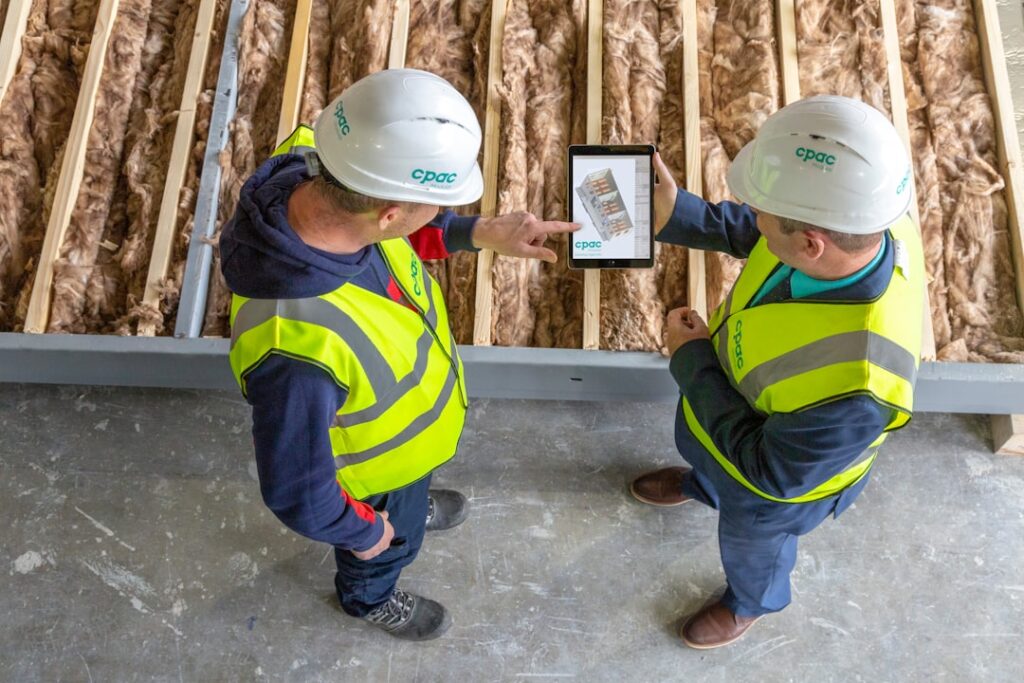
A professional asbestos inspection is a structured visual and sampling survey conducted by a state-certified inspector that identifies asbestos-containing materials (ACM) in a building and tests representative samples through an accredited laboratory. For pre-1981 homes on the Colorado Front Range, an inspection is the only reliable way to know whether suspected materials — floor tile, pipe insulation, attic insulation, textured ceiling, siding, and roofing — actually contain regulated levels of asbestos before any renovation, demolition, or disturbance work begins. This guide summarizes EPA, OSHA, and Colorado Department of Public Health and Environment (CDPHE) guidance current as of 2026; it does not replace direct consultation with a certified asbestos building inspector for any specific property.
Is this mold, asbestos, or water damage? Get a free instant screen
Upload a clear photo of the suspect area. You'll get an instant AI screening opinion and what to do next. This is screening guidance, not a professional determination.
Screening guidance only. AI can be wrong. Confirm asbestos, mold type, or lead with lab testing or a licensed professional before acting.
What does an asbestos inspection cover?
A standard residential asbestos inspection has two parts. The first is a visual survey of the building, conducted by a certified Asbestos Building Inspector, who walks the entire structure and identifies suspect materials based on age, appearance, and historical use patterns. The second is sampling — small representative samples are physically collected from each suspect material category and sent to an accredited laboratory for analysis using Polarized Light Microscopy (PLM) or, in some cases, Transmission Electron Microscopy (TEM) for low-percentage or vermiculite-containing samples.
The output is a written report identifying every sampled material, the laboratory results (percent asbestos by weight, asbestos type — chrysotile, amosite, crocidolite, etc.), the condition of each material (friable vs non-friable, intact vs damaged), and recommendations for management. The EPA’s NESHAP regulations define materials containing more than 1% asbestos by weight as “Regulated Asbestos-Containing Material” (RACM) when friable or when subject to disturbance.
Who is qualified to perform an asbestos inspection?
Federal law and most state regulations require asbestos building inspectors to be trained and certified under the EPA’s Asbestos Hazard Emergency Response Act (AHERA) Model Accreditation Plan or an equivalent state program. The certification requires:
- An initial three-day training course with examination
- Annual half-day refresher training
- State or EPA-equivalent accreditation
In Colorado, the CDPHE Air Pollution Control Division certifies asbestos building inspectors under the state’s Air Quality Control Commission Regulation No. 8, Part B. Hiring an uncertified party to perform an asbestos inspection is not legally adequate for any regulated activity (renovation, demolition, real estate transaction in some states).
When is an asbestos inspection required?
Several triggers make an inspection legally required, not optional.
Pre-demolition surveys
The EPA NESHAP rule requires a thorough asbestos inspection of any building scheduled for demolition or renovation that disturbs more than the regulatory threshold quantity of ACM. The inspection must be completed before any demolition or renovation work begins, and identified asbestos materials must be removed by a licensed abatement contractor before demolition.
Major renovations
NESHAP applies to renovation projects involving more than 260 linear feet of ACM pipe insulation, 160 square feet of surfacing or thermal system ACM, or 35 cubic feet of facility components containing ACM. In practice, many states — including Colorado — apply inspection requirements at lower thresholds for residential work.
Real estate transactions
Federal law does not require asbestos inspection for residential sales, but several states and many lenders require disclosure of known asbestos. Pre-1981 homes commonly carry asbestos in pipe insulation, floor tile, and textured ceilings; buyers commissioning a pre-purchase inspection often add an asbestos visual screen.
Worker safety compliance
OSHA’s 1910.1001 and 1926.1101 standards govern occupational asbestos exposure. Contractors performing work in older buildings are required to assume asbestos is present unless inspection results prove otherwise — which makes inspections routine for licensed contractors working in pre-1981 housing.
The pre-1981 trigger
Asbestos was used in U.S. residential construction from roughly the 1920s through 1980. The EPA’s partial ban on asbestos came in 1989 (later partially vacated), and OSHA’s modern occupational standards date from 1972 onward. As a practical rule, the asbestos.com industry resource and EPA guidance both flag pre-1981 homes as the high-probability category for ACM. Common pre-1981 materials include:
- 9×9 inch and some 12×12 inch vinyl floor tiles and associated mastic adhesive
- Pipe insulation (white or gray sectional wrap)
- Boiler and furnace insulation
- Textured ceiling treatments (“popcorn” ceilings) applied before 1978
- Cement asbestos siding and roofing shingles
- Vermiculite attic insulation (often Zonolite brand)
- Sheetrock joint compound
- Acoustical ceiling tiles
Newer homes are not guaranteed asbestos-free — some specialty materials continued to be imported well into the 1990s — but the probability drops sharply after 1981. For a deeper walkthrough of how testing actually works, our explainer on asbestos test method comparisons covers PLM vs TEM and when each is required.
Sampling protocols
Sampling is destructive — the inspector must physically remove a small piece of each suspect material category. AHERA’s sampling protocol requires:
- Three samples of each surfacing material category up to 1,000 square feet
- Five samples for surfacing materials between 1,000 and 5,000 square feet
- Seven samples for surfacing materials over 5,000 square feet
- Sufficient samples of thermal system insulation to represent each homogeneous area
Residential inspections typically use a more targeted approach because the building is smaller and material areas are limited, but the principle is the same: enough samples to give a statistically meaningful read on each material category. Samples are collected with PPE (respirator, disposable suit) and amended-water wetting agents to suppress fiber release, then double-bagged and labeled for the lab.
Accredited laboratories
Sample analysis must be performed by a laboratory accredited under the National Voluntary Laboratory Accreditation Program (NVLAP) for bulk asbestos analysis or AIHA-LAP for air-sample analysis. Lab fees are typically $25 to $75 per sample for PLM, $200 to $400 per sample for TEM where required. The inspector typically bundles the lab fee into the inspection quote.
Cost ranges
Residential asbestos inspection costs in 2026:
- Limited visual screen + 2-3 samples: $300 to $500
- Standard residential inspection + 5-8 samples: $500 to $900
- Comprehensive pre-renovation or pre-demolition survey + 10-20+ samples: $900 to $2,500+
Colorado Front Range pricing tracks the national range. CDPHE’s asbestos compliance program lists certified inspectors and abatement contractors by region. Our guide to asbestos and lead in pre-1978 housing provides the broader pillar context.
What happens after the report
An inspection report identifying ACM produces a decision tree, not an automatic abatement requirement. Three management approaches are recognized under EPA and OSHA frameworks:
Operations and Management (O&M)
Intact, non-friable ACM that is not subject to disturbance can be managed in place under a written O&M plan. The plan specifies periodic monitoring, fiber-release prevention, and incident response procedures.
Encapsulation
Some materials — particularly pipe insulation — can be encapsulated with specialized coatings or jacketing that prevents fiber release. Encapsulation is a temporary measure and does not eliminate the need for proper abatement during eventual demolition.
Abatement
Removal by a licensed abatement contractor under regulated work practices. Required for any renovation or demolition that would disturb ACM above NESHAP thresholds. Abatement is heavily regulated — contractor licensing, state notification, regulated work practices, certified-landfill disposal — and is not appropriate as a DIY project.
Front Range Colorado considerations
Colorado’s CDPHE administers a robust asbestos compliance program. State Regulation 8 (Part B) governs asbestos abatement, inspection, and disposal. The CDPHE maintains a public list of certified asbestos consulting firms, building inspectors, and abatement contractors. Front Range homeowners — Denver, Douglas, Elbert, Arapahoe, Jefferson, El Paso, Adams, Boulder, Broomfield counties — should verify any inspector’s CDPHE certification number before hiring.
What an inspection report typically looks like
A complete residential asbestos inspection report includes several structured sections. The cover page identifies the inspector, the inspector’s certification number, the property address, the inspection date, and the lab that analyzed the samples. The methodology section describes the survey scope (full-house, targeted, pre-renovation), the visual assessment approach, and the sampling protocol followed. A homogeneous area inventory lists each suspect material category identified during the visual survey, with photographs and approximate quantities. The sample log details each physical sample taken — sample ID, material type, location, condition, and chain-of-custody timestamps. The lab analytical results are appended as a separate document, typically showing percent asbestos by weight, asbestos type, and any non-asbestos fibrous content. The recommendations section maps each ACM finding to a management approach (O&M, encapsulation, abatement) with reasoning. Reports run 15 to 40 pages for residential inspections and serve as the formal record for any subsequent abatement or renovation project.
What homeowners often misunderstand
Two misconceptions surface regularly. The first is that an inspection report identifying ACM automatically requires abatement. EPA guidance is explicit: intact, undisturbed ACM in good condition often poses less risk than disturbed materials. Many homeowners can keep identified ACM in place under a written Operations and Management plan with periodic monitoring. Abatement becomes mandatory when the material is being disturbed (renovation, demolition) or when it’s deteriorating in place. The second misconception is that asbestos is only a problem in obvious materials like pipe insulation and popcorn ceiling. In practice, ACM can hide in less-obvious places — vinyl floor tile mastic, sheetrock joint compound, acoustical ceiling tiles, even certain caulks and sealants. A comprehensive inspection samples each potentially containing material category rather than relying on visual cues alone.
Inspection vs sampling vs abatement: three different services
Homeowners sometimes conflate three distinct services. An asbestos inspection is the survey and sampling activity performed by a certified Asbestos Building Inspector. Asbestos sampling alone — without the inspection framework — is a more limited activity sometimes performed by remediation contractors for specific materials. Asbestos abatement is the removal work performed by a separately licensed Asbestos Abatement Contractor. Federal and state rules typically require the inspection party to be independent of the abatement contractor to prevent conflicts of interest — an inspector who profits from identifying maximum quantities of ACM and an abatement contractor who profits from maximum scope shouldn’t be the same firm. Front Range homeowners should hire the inspector and the abatement contractor as separate engagements; some consulting firms employ both roles but maintain organizational separation.
When to call a professional
Any planned renovation or demolition in a pre-1981 Front Range home should start with a certified asbestos inspection. The inspection cost is modest relative to the cost of unknowingly disturbing ACM during a remodel — fiber exposure has no safe threshold, and remediation after an uncontrolled disturbance is substantially more expensive than a properly scoped abatement project. CDPHE’s certified asbestos building inspector list is the starting point for any Front Range homeowner planning regulated work.
References
- Learn About Asbestos — U.S. Environmental Protection Agency
- Asbestos NESHAP Regulations — U.S. EPA
- OSHA Asbestos Standards — Occupational Safety and Health Administration
- Colorado Asbestos Compliance Program — Colorado Department of Public Health and Environment
- Asbestos Overview — Asbestos.com
Front Range homeowners planning a renovation in a pre-1981 home can reach out through our contact page for a connection to a CDPHE-certified asbestos inspector serving Denver, Boulder, Colorado Springs, and the surrounding counties.