Asbestos Testing in Centennial, Colorado | InspectandTest
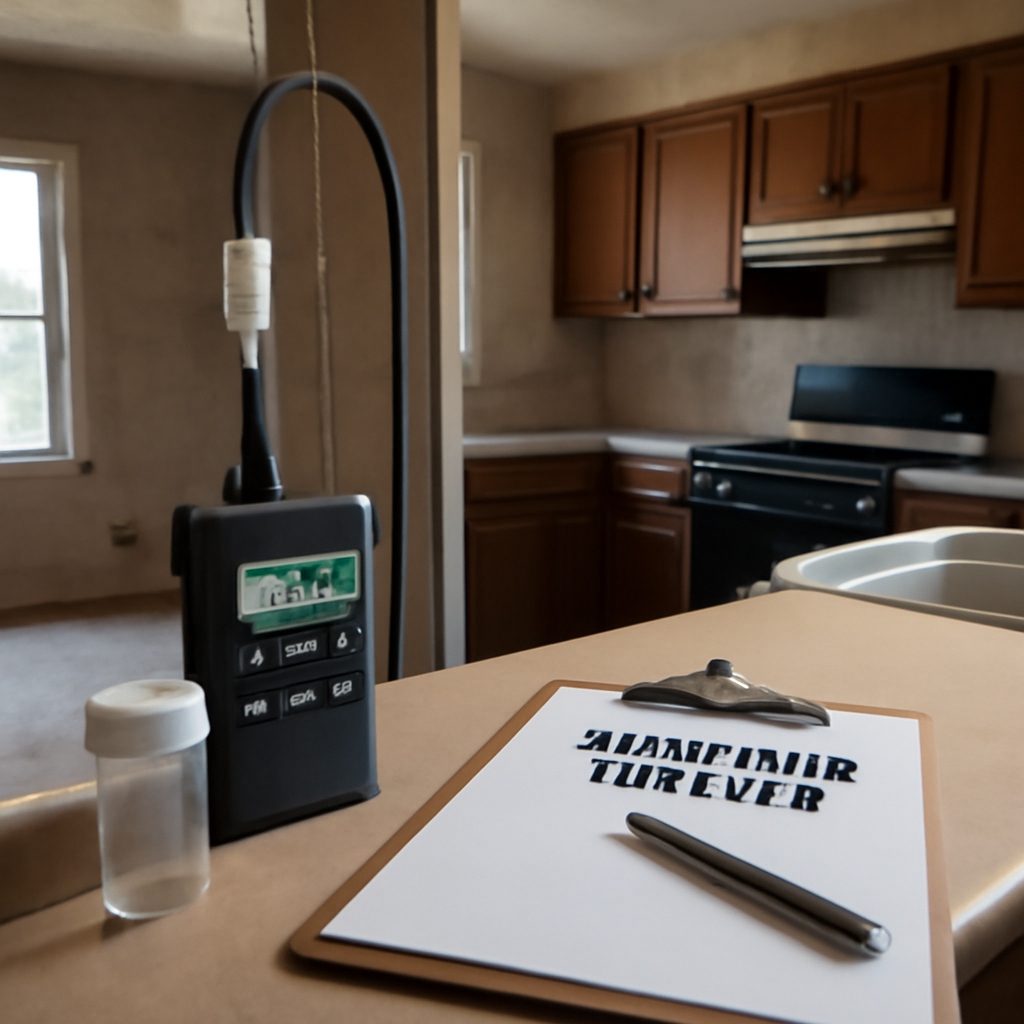
Asbestos was used in dozens of building materials through the 1980s, and Centennial’s housing, much of it built in the 1970s and 1980s, falls right in the window where those materials were common. Vinyl flooring, popcorn ceilings, pipe wrap, and vermiculite insulation in a home from that era can all contain asbestos, which becomes a hazard only when a renovation disturbs it. This page explains how asbestos testing centennial homeowners should approach a remodel, what a lab analysis covers, and what it costs. This summary reflects EPA, OSHA, and CDPHE guidance current as of 2026; consult a certified inspector before disturbing any suspect material.
Is this mold, asbestos, or water damage? Get a free instant screen
Upload a clear photo of the suspect area. You'll get an instant AI screening opinion and what to do next. This is screening guidance, not a professional determination.
Screening guidance only. AI can be wrong. Confirm asbestos, mold type, or lead with lab testing or a licensed professional before acting.
Asbestos testing in Centennial: what to know
Asbestos is dangerous only when its fibers become airborne, which happens when materials are cut, sanded, drilled, or demolished. Intact, undisturbed asbestos is generally left in place. The purpose of testing is to know what is in a material before a renovation turns it into dust, since asbestos cannot be identified by sight; a certified lab confirms it under a microscope.
Testing means a trained inspector collects small bulk samples of suspect materials under controlled conditions and sends them to an accredited lab for polarized light microscopy. Colorado’s rules tie required abatement to measured square footage and linear footage, so a documented lab result is also what a contractor or county permit office needs before work proceeds. Our guide to asbestos and lead in pre-1978 housing maps out where asbestos hides in a home.
Centennial’s housing era makes this directly relevant. A 1978 Southglenn home or a 1985 Foxridge house is a realistic candidate for asbestos in original flooring, ceilings, and insulation, unlike newer Front Range suburbs. The deciding factor is the age of the specific material being disturbed, so a homeowner planning to scrape a popcorn ceiling or pull old vinyl tile in a Centennial home of this vintage should test that material first.
Why Centennial homes may need asbestos testing
The building era is the central reason. Centennial’s suburban housing is largely 1970s-through-1990s, and the earlier portion of that range, the 1970s and 1980s, overlaps the period when asbestos was still widely used in residential materials. That gives Centennial a meaningfully higher baseline asbestos likelihood than newer towns, which is why CDPHE’s pre-renovation testing requirement comes up often in homes here.
The materials worth flagging are consistent statewide and common in this housing. Vinyl floor tiles and the black mastic beneath them, popcorn and textured ceilings, vermiculite attic insulation, pipe and duct wrap, and some cement siding and roofing products were all asbestos carriers. In a Centennial home from the 1970s or 1980s, any of these original materials should be tested before a remodel disturbs it.
Renovation turns the latent risk into a real one. Centennial’s finished-basement homes invite lower-level remodels, ceiling scraping, and flooring replacement, all of which can release fibers if asbestos materials are present. Colorado regulations require testing before disturbing suspect materials above the regulatory thresholds, which keeps a renovation legal and prevents fibers from spreading through the home. Pairing testing with lead testing in Centennial is sensible, since the same-era materials often carry both hazards.
Popcorn ceilings are the single most common asbestos question in Centennial’s 1970s and 1980s homes. The sprayed textured ceiling finish popular in that era frequently contained asbestos, and scraping it, a routine update for buyers who dislike the look, is exactly the kind of disturbance that releases fibers. A homeowner who wants to remove or even repair a popcorn ceiling in a home of this vintage should have it sampled first, since a clean result means a simple scrape while a positive result means the work must be handled as abatement.
Vermiculite attic insulation is a second high-value test in this housing. Some homes from the asbestos era were insulated with vermiculite that can contain asbestos, and disturbing it during an attic project, adding insulation, running wiring, or finishing a space, can release fibers. Because vermiculite is loose and easily stirred up, a Centennial homeowner should identify and test it before any attic work rather than assuming the granular material is harmless. Confirming what is up there shapes the whole approach to an attic remodel.
What a Centennial asbestos test covers
A certified asbestos inspector surveys the areas slated for work, identifies suspect materials, and collects representative bulk samples while controlling dust. The samples go to an accredited lab, and the written result tells you whether asbestos is present, in what material, and at what percentage.
Bulk sampling and lab analysis
The inspector wets the material, cuts a small sample, seals it, and patches the spot to prevent fiber release. The lab uses polarized light microscopy to identify and quantify asbestos. For materials that read negative under that method but remain suspect, a lab may recommend transmission electron microscopy for a more sensitive look. The report is the document a Centennial abatement contractor or the county permit office relies on.
Pre-renovation surveys
Before a finished-basement remodel or a ceiling scrape, a pre-renovation survey samples every suspect material in the work area so nothing gets disturbed blind. For a 1970s or 1980s Centennial home, this is the practical core of asbestos testing, because it lets the project proceed with either a clean result or a clear scope for licensed abatement. Coordinating it with a home inspection in Centennial is efficient when buying an older home.
Asbestos testing cost in Centennial
An individual bulk sample analyzed by an accredited lab typically runs about $30 to $75. A professional inspector’s pre-renovation survey of a Centennial home, including sample collection and a written report, usually falls in the $250 to $600 range depending on how many materials need sampling and the size of the work area.
That cost is small against the alternative. If asbestos is disturbed without testing, cleanup and proper abatement of a contaminated area can run into the thousands, and Colorado regulates abatement above defined thresholds, meaning unpermitted disturbance can carry penalties. Testing first keeps a renovation legal and keeps fibers out of the air a family breathes.
For a Centennial home from the asbestos era, the decision is straightforward: test the suspect materials before the renovation starts. A few hundred dollars of survey is far cheaper than a contaminated finished basement, and it is what a reputable contractor will require before scraping a 1970s ceiling or pulling original vinyl flooring.
The cost of disturbing asbestos blind is what makes testing the cheaper path. If a homeowner scrapes a positive popcorn ceiling without knowing, the released fibers can contaminate the room and require professional containment, HEPA cleanup, and air clearance testing before the space is safe, work that runs well into the thousands. Against that, a $250-to-$600 survey that identifies the hazard up front and lets the homeowner plan proper abatement is plainly the economical choice for any Centennial home of the right vintage.
Leaving asbestos in place is often the right and cheapest answer. Intact, undisturbed asbestos materials, sealed vinyl tile under newer flooring, or a popcorn ceiling that will simply be painted, generally pose little risk and do not require removal. Testing gives a Centennial homeowner the information to decide whether a planned project actually disturbs the material at all. Sometimes the result is that the renovation can be redesigned to leave the asbestos undisturbed, avoiding abatement cost entirely while keeping the home safe.
Colorado regulations and disclosure
Colorado’s Air Quality Control Commission Regulation 8 governs asbestos and requires testing before renovation or demolition that would disturb materials above set thresholds, with abatement performed by state-certified contractors. CDPHE administers the program, and the EPA’s national rules apply alongside it. Single-family homes fall under these requirements once the disturbed quantity exceeds the regulatory trigger, which is realistic in a 1970s or 1980s Centennial remodel.
For a sale, Colorado’s Seller’s Property Disclosure asks about known environmental hazards, which can include asbestos. A documented clean test, or a record of professional abatement, removes uncertainty for a buyer. Because Colorado does not license home inspectors, confirm that the person sampling your materials holds asbestos inspector certification and uses an accredited lab, so the result holds up for permitting and disclosure.
Neighborhoods and areas served
Asbestos testing in Centennial concentrates in the 1970s and 1980s housing of Southglenn, Willow Creek, Walnut Hills, Foxridge, and Homestead, where original flooring, ceilings, and insulation are realistic asbestos candidates. Service typically extends to adjacent Greenwood Village, Littleton, and the Arapahoe County side of Aurora, which share the same suburban housing era.
Across these neighborhoods, the year the specific material was installed decides whether testing is warranted. A Centennial homeowner planning to scrape a textured ceiling, remove original vinyl tile, or open a wall with old pipe insulation should test that material first, since homes of this vintage are exactly the ones where asbestos still turns up.
How to choose a Centennial asbestos testing provider
Hire a certified asbestos inspector who collects samples under dust control and sends them to an accredited lab, and ask for the written report rather than a verbal all-clear. A good provider explains which materials are suspect, samples only what the renovation will disturb, and gives you a result you can hand to an abatement contractor or the county. For an older home purchase, bundling the survey with a broader inspection is efficient.
Confirm the inspector is independent of any abatement company, or transparent about it, so the testing recommendation is not a sales funnel for removal work. A trustworthy provider will tell you when intact, undisturbed material is best left in place rather than removed, since unnecessary abatement creates risk and cost without benefit. That honest scoping matters in a town where many homes contain asbestos that is safe as long as it stays undisturbed.
For Centennial’s asbestos-era homes, ask the provider to coordinate asbestos and lead sampling in one visit. The same pre-1978 and pre-1990 materials, old flooring, plaster, pipe insulation, and painted trim, frequently carry both hazards, and a single coordinated survey is cheaper and more thorough than two separate trips.
Confirm lab accreditation and turnaround before booking the survey. Results from polarized light microscopy typically return within a few business days, but a Centennial remodel on a contractor’s schedule may justify paying for expedited analysis so the project does not stall waiting on a ceiling or flooring sample. Ask which accredited laboratory the provider uses and whether rush service is available. A provider transparent about turnaround helps the homeowner sequence the survey early enough that testing clears the way for the renovation rather than holding it up at the last minute.
References
- Asbestos hazards and protection — U.S. Environmental Protection Agency
- Colorado asbestos regulations and certification — Colorado Department of Public Health and Environment
- Asbestos exposure standards — Occupational Safety and Health Administration
Before remodeling a 1970s or 1980s Centennial home, a certified asbestos test keeps the project legal and the air clean. To connect with a vetted local inspector who uses an accredited lab, get in touch through our contact page.