Licensed Asbestos Removal Contractors Guide

Licensed asbestos removal contractors are the only legal performers of friable asbestos abatement in occupied buildings under EPA NESHAP, OSHA 29 CFR 1926.1101, and state certification programs. Hiring the right one is the most consequential decision a homeowner makes during an abatement project, and the quality range across firms is wide. This guide is a vetting framework — the credentials, documentation, insurance, written scope elements, and post-clearance verification steps that distinguish a credible firm from one that should not be hired. This summary reflects EPA, OSHA, and Colorado CDPHE guidance current as of 2026 — consult a licensed asbestos professional for any specific decision about your project.
Part of our How to Become a Home Inspector guide — start there for the full picture →
Is this mold, asbestos, or water damage? Get a free instant screen
Upload a clear photo of the suspect area. You'll get an instant AI screening opinion and what to do next. This is screening guidance, not a professional determination.
Screening guidance only. AI can be wrong. Confirm asbestos, mold type, or lead with lab testing or a licensed professional before acting.
What “licensed” actually means
The word “licensed” in this context is shorthand for a stack of distinct credentials, each issued by a different authority for a different purpose. A firm should hold all of them. A firm holding only one or two is not adequately credentialed for residential asbestos work in Colorado.
EPA AHERA accreditation
The Asbestos Hazard Emergency Response Act requires accredited training for individuals performing asbestos work in schools. The AHERA training framework has been broadly adopted as the baseline standard for asbestos workers in all settings. Workers and supervisors complete initial training of specified duration, pass exams, and complete annual refresher training. AHERA accreditation appears on individual worker certificates, not on firm certificates.
State worker and supervisor certification
Colorado, through CDPHE, certifies individual asbestos workers, supervisors, and inspectors. Certification requires AHERA-accredited training, a background check, an application fee, and annual renewal. Every individual on an active project site in Colorado must hold current CDPHE certification appropriate to their role. The certifications are searchable on the CDPHE online registry.
State firm certification
Above the individual level, CDPHE certifies the abatement firm itself. Firm certification requires that the company maintain certified supervisors, hold appropriate insurance, demonstrate procedural capacity, and pay annual fees. Out-of-state firms must obtain Colorado firm certification before performing in-state work. Firm certifications are also searchable on the CDPHE registry.
Insurance and bonding
Licensed abatement firms carry general liability insurance, workers’ compensation coverage, automobile liability for asbestos transport, and often pollution liability or environmental impairment insurance. Bond coverage may be required by the state or by individual project contracts. Homeowners should request certificates of insurance directly from the firm’s insurer rather than relying on photocopies.
How to verify each credential
Verification is the homeowner’s responsibility. Three steps cover most of the verification work.
- CDPHE registry lookup. The CDPHE asbestos program maintains a publicly searchable registry of certified firms and certified individuals. Confirm both the firm and the named supervisor for the project appear in the registry with current certification.
- EPA AHERA training records. Request copies of the AHERA training certificates for every worker scheduled on the project. Confirm the dates are current.
- Insurance certificate direct from carrier. Ask the insurance carrier (not the contractor) to send a certificate of insurance naming the homeowner as a certificate holder. This avoids forged or expired documentation.
None of this verification is intrusive or unusual. Reputable firms provide it routinely and welcome the request. A firm that resists or delays providing verification documentation should be considered disqualified.
NESHAP documentation: what should appear in writing
A credible licensed contractor produces specific written documentation as part of the project. The homeowner should receive each of these documents.
Pre-work survey report
The survey identifies every asbestos-containing material in the project area by location, condition, and lab-confirmed composition. The survey is performed by a CDPHE-certified asbestos inspector, often a different individual or firm than the abatement contractor. Many homeowners pay for the survey separately to ensure the survey results are unbiased relative to the contractor’s bid.
Written scope of work
The scope of work specifies every material to be removed, the containment configuration, the engineering controls, the air-monitoring plan, the disposal landfill, the schedule, the worker roster, and the total fixed price. A scope written in vague terms — “removal of asbestos materials” without specifying which materials — should be returned to the contractor for revision.
NESHAP notification
The contractor files the NESHAP notification with CDPHE at least 10 working days before work begins. The homeowner should receive a copy of the filed notification. The notification identifies the project location, the materials, the dates, the contractor, and the receiving landfill.
Daily project logs
The supervisor maintains daily logs documenting worker rosters, engineering control performance, air-monitoring readings, and procedural variances. These logs are typically reviewed at project closeout and included in the closeout package.
Air-monitoring data
The contractor or a third-party industrial hygienist collects air samples during and after the project. The pre-abatement background sample, the personal samples on workers, the area samples outside containment, and the final clearance samples are all documented in writing with lab analysis results.
Final clearance certificate
The clearance certificate documents the final air-sample results and certifies that the work area returned to below 0.01 fibers per cubic centimeter before containment was dismantled.
Waste manifest
The signed waste manifest documents the chain of custody from the project site to the receiving landfill. Each handoff is signed and dated.
A complete closeout package containing all of these documents is the legal record that the abatement was performed under regulatory standards. Homeowners interested in the broader pre-1978 housing hazard documentation framework should treat this package as permanent home-file material.
How to compare bids
Three written bids is the working minimum. Each bid should be structured similarly enough to permit apples-to-apples comparison. Specific elements to compare:
- Total fixed price, including the disposal line item.
- Specific materials and locations covered by the scope.
- Containment configuration and engineering controls.
- Air-monitoring plan, including whether a third-party industrial hygienist is used.
- Receiving landfill identified by name and CDPHE permit number.
- Schedule, including the post-NESHAP-notification start date.
- Closeout documentation package.
- Re-clearance policy if the first clearance sample fails.
A bid significantly lower than the others is almost always a warning rather than a bargain. Common ways unscrupulous firms achieve low bids include skipping the third-party industrial hygienist, using less containment material, employing uncertified workers, or planning to dispose of waste at an unauthorized facility. Each of these shortcuts creates regulatory and health risk for the homeowner.
References to request
Three recent residential project references is a reasonable request. The references should be projects of similar scope completed within the last 18 months. Homeowners should contact the references directly and ask:
- Did the project complete on schedule?
- Did the final price match the bid?
- Did the homeowner receive a complete closeout package?
- Did any post-project concerns arise?
- Would the homeowner hire the contractor again?
A firm unable or unwilling to provide recent residential references should be considered disqualified. A firm providing only commercial references when the project is residential should be questioned on its residential project experience.
Post-clearance sampling and independent verification
The final clearance air sample is collected inside the containment before release. Some homeowners commission an independent post-clearance sample from a third-party industrial hygienist after the containment is dismantled. This independent sample provides an additional layer of verification. The cost is typically $200 to $500 and is well-spent on larger projects or when the homeowner has any concerns about the contractor’s primary clearance.
The independent post-clearance sample is also valuable documentation for future real-estate transactions. A signed third-party report stating that the work area returned to below the EPA threshold is a credible disclosure document for future buyers.
Red flags during the project
Several behaviors during an active project warrant immediate attention.
- Containment that appears compromised — torn plastic, gaps at the perimeter, doors propped open.
- Workers entering or exiting containment without using the decontamination shower.
- Negative-air machines not running continuously.
- Waste bags staged outside the designated waste-storage area.
- Workers without visible protective equipment in the work zone.
- Containers without proper OSHA and NESHAP labeling.
Any of these should trigger an immediate conversation with the supervisor and, if not resolved, a call to CDPHE to report the project. Homeowners reviewing the broader vetting guide on asbestos removal companies should treat these red flags as serious procedural concerns.
What about referral services and contractor directories?
Online contractor directories and home-services platforms list asbestos removal firms but do not consistently verify CDPHE certification. The homeowner is responsible for confirming credentials directly with the state regulator regardless of where the firm was found. CDPHE itself does not endorse specific contractors; the agency provides the certification registry and leaves selection to the consumer. ASHI, InterNACHI, and trade-association membership lists are useful supplementary references but do not substitute for direct CDPHE verification.
Contract terms that protect the homeowner
The contract between the homeowner and the abatement firm should include specific protective terms. Fixed-price billing rather than time-and-materials is the standard for residential abatement and avoids cost overruns. The contract should specify that clearance is part of the fixed price and that re-clearance after a failed initial sample is the contractor’s responsibility, not the homeowner’s. The contract should require the contractor to provide a complete closeout package within a defined window after final clearance, typically 14 days. The contract should specify that the contractor indemnifies the homeowner against any regulatory penalty arising from contractor procedural failure during the project.
A contract missing any of these protective terms exposes the homeowner to risks that more careful contracting would mitigate. Homeowners reviewing a contractor’s standard agreement should ask specifically whether each of these elements is present and should request changes before signing.
What if a project has already started and concerns arise?
Mid-project concerns about contractor procedural compliance are stressful but not uncommon. The homeowner has several options. The first step is a direct conversation with the supervisor on site, asking specific questions about the observed concern. If the conversation does not resolve the concern, the homeowner can contact the contractor’s office and request a project audit. If the project is not on track, the homeowner can contact CDPHE to file a complaint, which triggers a state inspection of the active project.
Stopping work mid-project is sometimes necessary but creates its own difficulties. Containment is harder to maintain over extended pauses. The homeowner should consult with CDPHE before terminating a contractor mid-project to understand the procedural sequence for safely securing the partially completed work and transitioning to a replacement firm.
Cost ranges by project type
Cost varies significantly by scope. The ranges below are typical Front Range pricing in 2026 for properly licensed work with complete documentation.
- Single-room floor tile removal: $1,500 to $3,500.
- Basement pipe wrap removal: $2,500 to $6,500.
- Textured-ceiling removal in a single room: $2,000 to $4,500.
- Whole-house textured-ceiling removal: $15,000 to $25,000 or more depending on square footage.
- Roof underlayment or siding removal: $5,000 to $20,000 depending on coverage and accessibility.
- Post-disturbance contamination cleanup: $5,000 to $40,000 depending on the spread of contamination.
Bids dramatically below these ranges signal corners being cut somewhere in the scope. Bids dramatically above these ranges may reflect specialized site conditions but warrant a follow-up conversation to understand the cost drivers.
More Questions About Asbestos Removal Contractors
Should the asbestos tester and removal contractor be different companies?
Yes, using an independent company for asbestos testing and clearance, separate from the removal contractor, is widely recommended. When the same firm samples the material, designs the scope, removes it and then declares the area clean, there is a built-in conflict of interest. Some states require independence for clearance air sampling on certain projects. An independent inspector also gives a second set of eyes on whether the scope was appropriate. The added cost is usually small compared with the overall abatement price and the protection it provides.
How long is an asbestos contractor’s warranty or guarantee?
Asbestos removal contractors do not usually offer a long-term warranty the way roofers or builders do. The practical guarantee is passing independent clearance testing at the end of the job, documented in writing before containment is taken down. Some contracts commit the contractor to re-clean at its own cost if clearance fails, which is worth requiring. Homeowners should also keep the waste manifest, air monitoring results and clearance report permanently, since these documents show the work was done properly if questions arise at resale.
Can a general contractor remove asbestos?
A general contractor can remove asbestos only if the firm and its workers hold the asbestos abatement licenses or certifications the state requires. A general contractor license by itself does not authorize regulated asbestos work in most states. On renovation projects, general contractors commonly hire a licensed abatement subcontractor to handle asbestos before demolition begins. Homeowners should ask for the abatement firm’s license number and verify it with the state agency, even when the general contractor is managing the overall project.
What should an asbestos removal contract include?
An asbestos removal contract should spell out the exact materials and quantities to be removed, the containment method, who performs clearance testing, the clearance criteria, and what happens if clearance fails. It should also list the firm’s license number, insurance certificates, the disposal site, payment schedule, and start and completion dates. Including a clause that ties final payment to passing clearance and delivering the closeout documents protects the homeowner. Vague scopes such as remove asbestos as needed invite disputes and surprise change orders.
References
- EPA asbestos laws and regulations — U.S. Environmental Protection Agency
- OSHA asbestos construction standard — Occupational Safety and Health Administration
- CDPHE asbestos certification registry — Colorado Department of Public Health and Environment
- InterNACHI asbestos reference — International Association of Certified Home Inspectors
Frequently asked questions
What credentials must a licensed asbestos removal contractor hold in Colorado?
State firm certification through CDPHE, state worker and supervisor certifications for every individual on the project, AHERA-accredited training for all workers, general liability insurance, workers compensation, and asbestos-transport authorization.
How does a homeowner verify a contractor's certification?
Through the CDPHE asbestos certification registry, which is publicly searchable online. Confirm both the firm and the supervisor for the project. Request AHERA training certificates for individual workers, and request insurance certificates direct from the carrier.
What documentation should appear in the closeout package?
Survey report, written scope of work, NESHAP notification, daily project logs, air-monitoring data, final clearance certificate, and signed waste manifest. A complete package documents that the work met regulatory standards and should be retained permanently with the home file.
Is a low bid a sign of a good deal?
Usually not. A bid significantly lower than the others typically reflects skipped third-party monitoring, less containment material, uncertified workers, or planned disposal at unauthorized facilities. Each of these creates risk for the homeowner.
Do asbestos contractors need pollution liability insurance?
Reputable asbestos contractors typically carry contractor pollution liability insurance, because general liability policies commonly exclude asbestos. Homeowners should request a certificate of insurance showing pollution coverage, workers' compensation and the policy dates, then confirm it with the insurer before work starts.
How far in advance should I book an asbestos removal contractor?
Booking an asbestos removal contractor two to four weeks ahead is common, though busy seasons and large projects can take longer. Some states require notification days before abatement begins, which adds lead time. Emergency response is available from some firms after floods or fires.
Can an asbestos contractor also do the reconstruction work?
Some asbestos abatement firms also offer reconstruction such as drywall, flooring or insulation replacement, while others only remove materials. Using separate firms keeps abatement and rebuild responsibilities clear. Either way, reconstruction should start only after clearance testing has passed and documentation is received.
Front Range homeowners can reach out through our contact page for a connection to CDPHE-certified abatement firms with verifiable closeout documentation.
Asbestos test kits
Asbestos can only be confirmed by a lab. A mail-in kit gets you a sealed sample container and accredited analysis — never sand or disturb suspect material first.
| Product | Why | Buy |
|---|---|---|
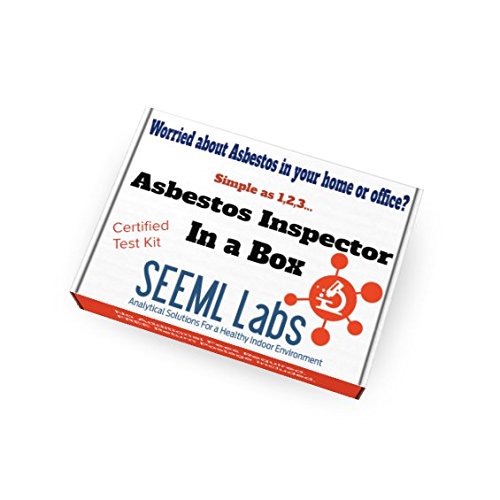 Asbestos Test Kit (mail-in lab) | Includes PPE + sealed mailer. | Amazon — $22.00 |
 Pro-Lab Asbestos Test Kit | Widely available; lab fee separate. | Amazon — $63.99 |