Lead Paint Removal Company: 2026 Homeowner Guide
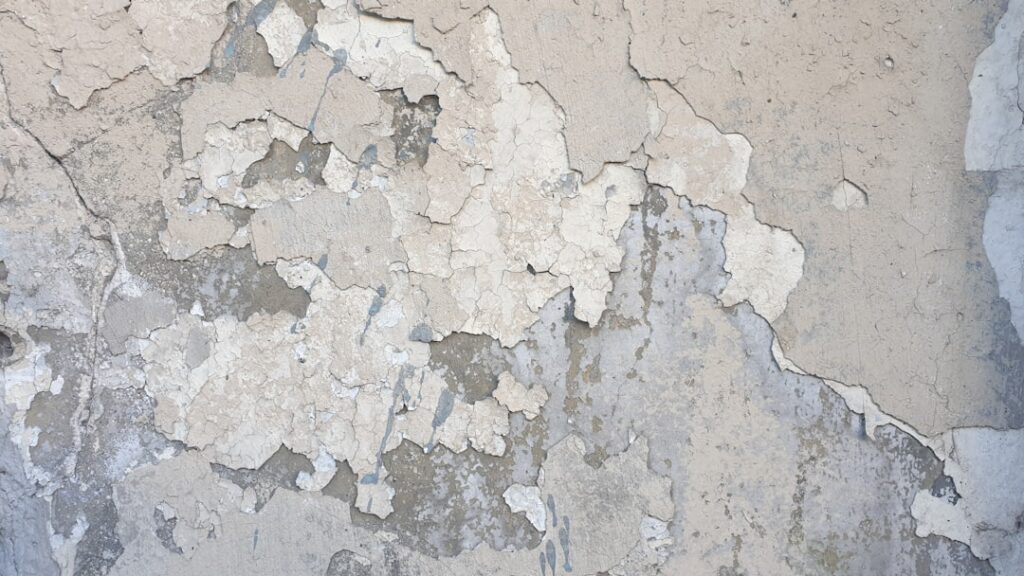
A lead paint removal company performs lead-safe renovation or full lead abatement on pre-1978 properties. This guide summarizes EPA and HUD guidance current as of 2026; consult an EPA-certified Lead Inspector or Risk Assessor for testing decisions and a physician for any health symptoms. The phrase “lead paint removal company” covers two very different services. EPA RRP Renovator firms perform lead-safe work practices during ordinary renovation. EPA Lead Abatement Contractors perform permanent lead-paint removal under stricter rules. Front Range homeowners shopping for either service should understand the difference before they pick a vendor, because the wrong credential creates legal and health risk that no amount of post-work cleanup can repair.
Is this mold, asbestos, or water damage? Get a free instant screen
Upload a clear photo of the suspect area. You'll get an instant AI screening opinion and what to do next. This is screening guidance, not a professional determination.
Screening guidance only. AI can be wrong. Confirm asbestos, mold type, or lead with lab testing or a licensed professional before acting.
What a lead paint removal company actually does
The term “lead paint removal” is informal. EPA recognizes two distinct services. RRP work (Renovation, Repair, and Painting) is ordinary renovation on a pre-1978 property where lead-based paint may be disturbed. The work follows EPA lead-safe work practices but does not aim to permanently remove lead-based paint. RRP firms are EPA-certified and must employ at least one EPA-certified Renovator on every job. Abatement is the permanent removal, encapsulation, or enclosure of lead-based paint surfaces. Abatement firms are EPA-certified Lead Abatement Contractors and employ EPA-certified Lead Supervisors and Workers. Abatement triggers stricter EPA work-area containment, dust-monitoring, and clearance-testing requirements.
The practical question for homeowners is which service they actually need. If the goal is to renovate a kitchen, replace windows, or repaint exterior trim in a pre-1978 home, RRP is the correct credential. If the goal is to permanently remove lead hazards (for example, after a child’s elevated blood lead test, or as part of a HUD-funded affordable housing rehabilitation), abatement is the correct credential. The asbestos and lead pillar guide covers the full pre-1978 housing framework.
EPA RRP versus EPA Abatement: the credential difference
The two credentials differ in training, scope, oversight, and cost. RRP Renovator certification requires 8 hours of EPA-accredited training plus 4 hours of refresher every 5 years. RRP firms certify online and pay a $300 EPA fee. Abatement Supervisor certification requires a 32-hour initial training, an 8-hour annual refresher, and a state-administered exam. Abatement Worker certification requires 16 hours of training plus refresher.
Scope differs as well. RRP firms can perform lead-safe renovation on individual components (windows, doors, siding) using interim controls like wet sanding, drop cloths, and HEPA vacuum cleanup. They cannot perform full abatement and cannot certify the property as lead-free after the work. Abatement contractors can perform full removal, encapsulation, or enclosure, and the work is followed by mandatory clearance testing performed by a separate third-party Lead Risk Assessor or Lead Sampling Technician.
Cost reflects the scope difference. RRP renovation typically costs 10 to 20 percent more than non-RRP renovation on the same scope due to extra setup, containment, and cleanup time. Lead abatement runs $8 to $15 per square foot of treated surface plus mandatory pre-work testing and post-work clearance testing. A typical pre-1978 single-family home with substantial lead hazards can require $15,000 to $50,000 in full abatement work.
State-level overlay in Colorado
Colorado adds a state-level certification overlay through the Colorado Department of Public Health and Environment (CDPHE). CDPHE-certified Lead Abatement Contractors must complete additional state training, hold a CDPHE firm certification, and follow CDPHE notification and reporting requirements on top of federal EPA rules. The CDPHE program is one of the more rigorous state lead programs in the western United States.
Front Range homeowners can search the CDPHE lead program directory to confirm a firm holds both federal EPA certification and Colorado state certification. Both credentials should be active and current. The federal EPA certification finder at epa.gov/lead/find-lead-inspector-firm covers the EPA side; the CDPHE site covers the state side. A firm working in Colorado without CDPHE certification is operating outside state requirements regardless of federal status.
How to vet a lead paint removal company before hiring
The credential check is the floor. Vetting goes further. Eight questions separate strong providers from weak ones, and homeowners should ask each one before signing a contract.
1. Is the firm EPA-certified for the work you actually need?
RRP for renovation. Abatement for permanent removal. Some firms hold both certifications; others hold only one. Confirm the certification matches the work scope and that the firm carries CDPHE state certification in Colorado.
2. Will the on-site Supervisor be an EPA-certified individual?
Federal rules require an EPA-certified Renovator (for RRP work) or EPA-certified Lead Supervisor (for abatement) on-site whenever lead-disturbing work is performed. Ask for the name and certification number of the on-site individual, not just the firm-level certification.
3. Does the firm carry general liability and workers’ compensation insurance?
Request certificates of insurance directly from the carrier. General liability minimum $1 million per occurrence. Workers’ compensation as required by state law. Lead-specific environmental liability is a recommended add-on but not universally carried.
4. Can the firm provide three recent references on similar work?
Recent meaning within the past 12 months. Similar meaning on properties of comparable age, scope, and complexity. Call all three references and ask about timeline adherence, change-order discipline, post-work cleanup, and dust-clearance results.
5. Will the firm provide a written scope of work before the job starts?
The scope should specify each surface to be treated, the treatment method (removal, encapsulation, enclosure, or interim controls), the containment approach, the cleanup protocol, the disposal plan for lead waste, and the schedule. A vague verbal agreement is a red flag.
6. Will the firm offer or arrange clearance testing after the work?
Clearance testing by an independent third-party Lead Risk Assessor or Lead Sampling Technician confirms the dust levels in the work area are below EPA clearance thresholds. The same firm performing the abatement should not perform the clearance testing (conflict of interest). The LeadInfo consumer resource center documents the post-work clearance framework.
7. Does the firm follow EPA work-area containment rules?
For RRP work, plastic sheeting on floors extending 6 feet from the work area, doors and HVAC vents sealed off, signage posted at entry points. For abatement, full containment with negative-pressure HEPA filtration. Ask the firm to describe their containment in writing.
8. How does the firm dispose of lead waste?
Lead-painted debris is generally regulated as hazardous waste depending on the jurisdiction. The firm should describe whether they use a licensed hazardous-waste hauler or whether the waste can be disposed of as construction debris (allowed in some jurisdictions for small quantities). Vague disposal answers are a red flag.
What the written scope of work should contain
A strong written scope runs 5 to 15 pages and contains specific elements. Property address and unit if applicable. Pre-work lead inspection or risk assessment report (or a statement that no testing has been performed). Surface-by-surface treatment plan listing each component and the treatment method. Containment plan with diagrams. Cleanup protocol including HEPA vacuuming, wet wiping, and waste containment. Worker personal protective equipment specifications. Disposal plan for lead-painted debris. Post-work clearance testing protocol and the third-party tester’s name. Schedule with start date, expected completion date, and milestone payment schedule. Total price broken down by component or by phase. Change-order policy.
A scope that omits any of these elements is asking the homeowner to accept verbal assurances on items the EPA treats as documentation requirements. The HUD Office of Lead Hazard Control and Healthy Homes publishes additional template scopes for federally-funded projects.
What clearance testing actually proves
Clearance testing is the post-work verification that the project achieved the dust-level standard required by EPA. The testing collects floor, window sill, and window trough dust wipes within the work area and sends them to an EPA-recognized laboratory. The lab returns results in micrograms of lead per square foot (μg/ft²). Federal clearance thresholds in 2026 are 10 μg/ft² on floors, 100 μg/ft² on window sills, and 100 μg/ft² on window troughs.
Clearance testing must be performed by an EPA-certified Lead Risk Assessor or Lead Sampling Technician who is independent of the abatement contractor. The independence is a federal requirement, not a recommendation. Clearance results below the threshold close out the project; results above the threshold require additional cleaning and a re-test, paid by the abatement contractor under standard contract terms.
Treatment methods a lead paint removal company actually uses
Federal rules recognize four lead-paint hazard control methods, each with different cost profiles and different permanence. Interim controls are low-cost, short-duration solutions: wet cleaning of dust, stabilization of paint chips, and limited paint stabilization on small areas. Interim controls do not permanently remove the hazard and must be re-done every 1 to 3 years on an ongoing basis. Encapsulation applies a specialized encapsulant paint or coating over intact lead-based paint surfaces. The encapsulant chemically bonds the paint in place and prevents dust generation. Encapsulation is a mid-cost option but requires intact substrate to work properly.
Enclosure covers lead-based paint surfaces with new building materials: drywall, paneling, vinyl siding, or aluminum capping on window trim. The lead-based paint remains in place but is no longer accessible. Enclosure is a permanent control under EPA definitions provided the enclosure material is durable and properly installed. Full abatement removes the lead-based paint entirely through controlled scraping with chemical strippers, heat-gun removal (with strict temperature controls), wet sanding with HEPA vacuum collection, or component replacement (replacing the entire painted component rather than removing paint from it). Full abatement is the most expensive but the only method that allows the property to be certified lead-free after clearance.
The right method depends on the property age, the surface condition, the household budget, and whether children under six will live in the home. EPA-certified Risk Assessors can advise on the best mix of methods for a specific property. Smart homeowners commission a Risk Assessment first, then ask multiple lead paint removal companies to bid against the same scope.
Red flags during the search and bidding process
Three patterns signal a problematic vendor early. Refusal to provide credential numbers or insurance certificates. A bid significantly lower than competing bids (often signals corner-cutting on containment, testing, or worker training). A bid that lumps “lead paint removal” into a single line item with no surface-by-surface detail.
Two patterns signal a stronger vendor. Willingness to involve a third-party Risk Assessor before the work to define scope and after the work for clearance. A written change-order policy that requires homeowner sign-off before any added cost is incurred. A track record of recent comparable projects is the third strong signal worth weighing carefully. Front Range homeowners looking for a connection to a vetted local lead removal company can get in touch through our contact page for a referral.
References
- EPA certified lead firm and individual finder — Environmental Protection Agency
- HUD Office of Lead Hazard Control and Healthy Homes — US Department of Housing and Urban Development
- CDPHE Colorado lead program — Colorado Department of Public Health and Environment
- LeadInfo consumer lead-safety resources — LeadInfo
- CDC childhood lead poisoning prevention — Centers for Disease Control and Prevention
Front Range homeowners who want a connection to a vetted EPA RRP or abatement contractor can reach out through our contact page for a local referral.
Lead paint test kits
Instant swab kits flag lead on painted surfaces in minutes — useful before a renovation in any pre-1978 home.
| Product | Why | Buy |
|---|---|---|
 3M LeadCheck Swabs 3M LeadCheck Swabs | EPA-recognized instant swabs. | Amazon — $208.00 |
 Lead Test Kit (lab-based) Lead Test Kit (lab-based) | Mail-in for a documented result. | Amazon — $35.00 |