Asbestos Air Testing: What Homeowners Need to Know
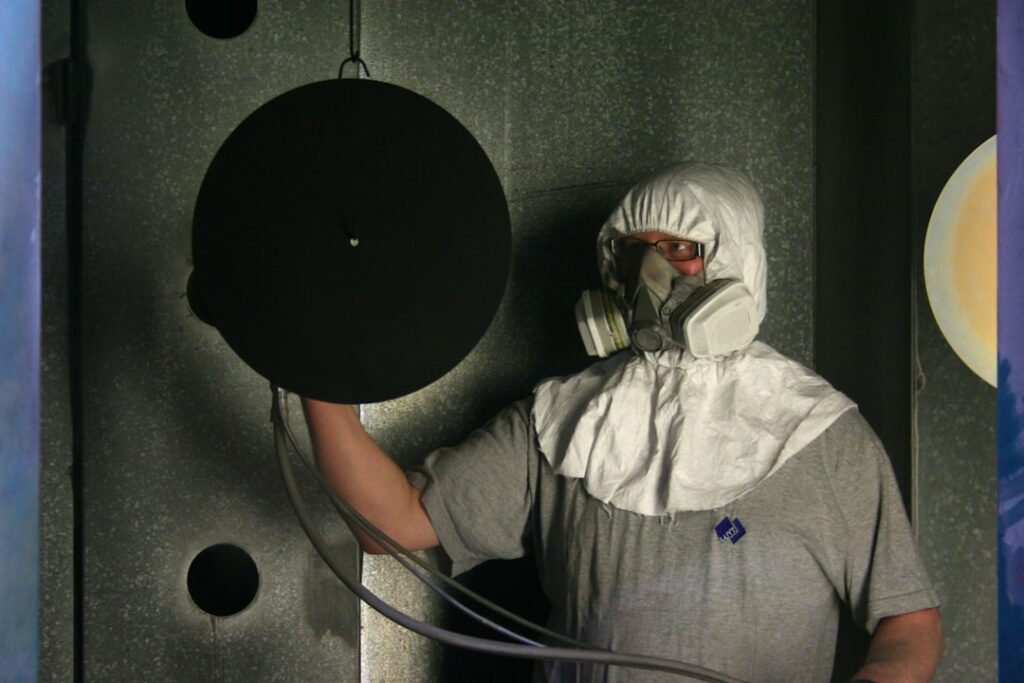
Asbestos air testing measures the concentration of asbestos fibers floating in the air of a building, rather than testing a solid material directly. It answers a different question than bulk sampling: not “does this tile contain asbestos?” but “are dangerous fibers airborne right now?” That distinction matters during and after any disturbance of asbestos-containing materials, because asbestos only threatens health when its microscopic fibers become airborne and are inhaled. This guide summarizes EPA, OSHA, and CDC guidance current as of 2026 and explains how asbestos air testing works, what the numbers mean, and when a homeowner actually needs it — consult a licensed abatement professional and your physician for decisions specific to your situation.
Part of our Asbestos in the Home guide — start there for the full picture →
Is this mold, asbestos, or water damage? Get a free instant screen
Upload a clear photo of the suspect area. You'll get an instant AI screening opinion and what to do next. This is screening guidance, not a professional determination.
Screening guidance only. AI can be wrong. Confirm asbestos, mold type, or lead with lab testing or a licensed professional before acting.
What Asbestos Air Testing Measures
Air testing captures and counts asbestos fibers suspended in the air. A trained technician sets up calibrated air pumps that draw a known volume of air through a filter cassette over a set period. The filter traps any airborne particles, and a laboratory then analyzes it under a microscope to count and, in some methods, identify the fibers. The result is expressed as a fiber concentration — fibers per cubic centimeter (f/cc) or structures per square millimeter — that can be compared against clearance thresholds.
This is fundamentally different from bulk sampling, where a small piece of a suspect material is removed and analyzed to determine whether asbestos is present at all. Bulk testing tells you whether a popcorn ceiling or floor tile contains asbestos; air testing tells you whether fibers from that material are escaping into breathable air. For homeowners deciding which test they need, the broader guide to asbestos and lead in older homes explains where each fits in.
The Two Main Air Testing Methods
Laboratories use two principal techniques, and the difference affects both accuracy and cost.
Phase Contrast Microscopy (PCM)
PCM is the faster, cheaper method. It counts all fibers of a certain size but cannot distinguish asbestos from other fibers like fiberglass or cellulose. OSHA uses PCM for occupational exposure monitoring because it gives quick results during work. The downside: a high PCM count does not prove the fibers are asbestos, only that fibers are present.
Transmission Electron Microscopy (TEM)
TEM is the more sophisticated and definitive method. It can identify asbestos specifically and detect much smaller fibers than PCM. The EPA’s clearance protocol for asbestos abatement projects — the Asbestos Hazard Emergency Response Act (AHERA) clearance — relies on TEM analysis. TEM costs more and takes longer, but when the question is whether a remediated space is truly safe to reoccupy, it is the standard that matters.
When Do Homeowners Need Air Testing?
Air testing is not a routine first step for most homeowners. If you simply suspect a material contains asbestos and it is intact, undisturbed, and in good condition, bulk sampling — or simply leaving it alone — is usually the right path. Intact asbestos-containing material generally does not release fibers. The CDC and EPA both emphasize that undisturbed, undamaged asbestos is far less of a hazard than material that is crumbling or being disturbed.
Air testing becomes important in specific scenarios: after an abatement project, to confirm the area is clean before the containment is removed; following accidental damage to suspected asbestos materials, such as a burst pipe soaking asbestos pipe insulation or a renovation that cut into old flooring; or when occupants have unexplained concerns and want to verify air quality. It is also used as clearance after professional removal — the final sign-off that fiber levels have dropped to acceptable limits.
Understanding the Results and Clearance Levels
For abatement clearance, the EPA’s AHERA standard commonly used in schools and adopted widely sets a clearance threshold around 70 structures per square millimeter using aggressive TEM sampling, or comparison to outdoor background levels. In practice, a laboratory report will state whether the sampled air passed or failed the applicable clearance criterion. A passing result after abatement means fiber concentrations have returned to safe, near-background levels and the space can be reoccupied.
Interpreting a single number out of context is risky, which is why air testing is paired with proper sampling protocols and conducted by accredited professionals. There is no level of asbestos exposure that authorities consider entirely without risk, but clearance thresholds reflect concentrations low enough to be treated as safe for reoccupancy. The article on choosing an asbestos testing lab covers what to look for in the analysis side of the process.
Who Should Perform Asbestos Air Testing?
Air sampling should be done by a trained, accredited asbestos professional — typically an industrial hygienist or a licensed asbestos inspector — using calibrated equipment and analyzed by an accredited laboratory. This is not a reliable do-it-yourself task. Proper sampling requires correct pump calibration, appropriate sample volumes, controlled conditions, and chain-of-custody handling so the results hold up.
For post-abatement clearance specifically, best practice is to use a third party independent of the company that performed the removal, so the entity verifying the cleanup is not the same one being paid for it. This separation protects the homeowner and removes a conflict of interest. The overview of asbestos testing services explains how to find qualified providers.
How Air Testing Fits a Safe Asbestos Strategy
For most homeowners, the smartest approach to asbestos is to identify it, leave intact material undisturbed, and call professionals when removal or repair is unavoidable. Air testing is the verification layer in that strategy — the tool that confirms a space is safe after disturbance or remediation, not a screening test you run on a hunch. Pairing bulk sampling to identify the material with air testing to confirm clearance gives the fullest picture, and both belong in the hands of accredited specialists rather than weekend renovators.
What the Air Sampling Process Looks Like
A typical air sampling job follows a defined sequence. The technician first sets up the sampling pumps at fixed locations and, for clearance after abatement, often performs aggressive sampling — using fans and leaf blowers to stir settled dust back into the air so the test captures a worst-case condition rather than a deceptively clean still-air reading. The pumps then draw air through filter cassettes at a calibrated flow rate for a set duration, usually long enough to pull a defined volume through each filter.
The number and placement of samples matter. Clearance protocols specify a minimum number of samples per area, plus field blanks and outdoor samples for comparison against background levels. Once collected, the cassettes are logged under chain-of-custody documentation and sent to an accredited laboratory. This rigor is why reliable air testing cannot be improvised — the conditions of collection, the volume sampled, and the handling all affect whether the lab result means anything.
Cost and Turnaround
Air testing pricing varies with the method and the number of samples. PCM analysis is faster and cheaper, sometimes available same-day, while TEM is more expensive and may take several days for results. A clearance test after an abatement project, which typically involves multiple TEM samples plus the technician’s setup time, commonly runs several hundred dollars and can exceed a thousand for a large or complex job. Single-area screening with fewer samples costs less.
The cost should be weighed against what it protects. Confirming that a remediated space is truly safe before children and pets return, or verifying that an accidental disturbance did not contaminate a home, is worth far more than the testing fee. Where the result will guide a decision about reoccupancy or a real estate transaction, the more definitive TEM method is generally the right investment despite its higher price.
Common Materials That Prompt Air Testing
Certain materials in older homes are the usual triggers for concern. Popcorn ceilings applied before the early 1980s, vinyl floor tiles and the mastic beneath them, pipe and boiler insulation, cement asbestos siding and roofing, and joint compound on drywall all may contain asbestos. As long as these remain intact and undisturbed, they generally do not release fibers and air testing is unnecessary. The moment they are damaged, cut, sanded, or demolished, the calculus changes — and that is precisely when air testing earns its place, confirming whether the disturbance released fibers and whether cleanup succeeded. The companion guides on asbestos identification and testing labs explain how to determine what a material contains before deciding whether air monitoring is warranted.
Why Asbestos Fibers Are a Health Concern
The reason air testing exists at all is the specific way asbestos harms the body. Asbestos fibers are microscopic and durable. When airborne, they are easily inhaled, and because they are so thin and needle-like, the body cannot effectively clear them from the lungs. Over years and decades, lodged fibers can cause scarring and cellular damage. The CDC and EPA link asbestos exposure to mesothelioma, a cancer of the lining of the lungs and abdomen, as well as lung cancer and asbestosis, a chronic scarring of lung tissue.
There is no exposure level that authorities consider entirely without risk, and disease often appears decades after exposure. That long latency is why prevention is the entire strategy — there is no treatment that reverses the damage, only avoidance of inhalation in the first place. Air testing supports that strategy by answering the one question that determines risk: are fibers actually airborne where people breathe? A material safely sealed in a wall poses no inhalation risk, while the same material crumbling and shedding fibers does.
How Air Testing Fits With Inspection and Abatement
Air testing rarely stands alone; it is one stage in a larger sequence. The process usually begins with an inspection and bulk sampling to determine whether suspect materials contain asbestos. If they do and they must be disturbed or removed, a licensed abatement contractor sets up containment and performs the work under controlled conditions. Air monitoring may run during abatement to protect workers and detect leaks from the containment, and clearance air testing afterward confirms the area is safe before the containment comes down and occupants return.
Understanding this sequence helps homeowners place air testing correctly. It is not the first step for a homeowner who merely suspects asbestos, nor a substitute for identifying what a material contains. It is the verification layer — the measurement that confirms the air is safe at the moments when fiber release is most likely. Used in that role, alongside proper inspection and professional abatement, air testing gives homeowners objective evidence that a space is genuinely safe rather than merely assumed to be.
Questions to Ask Before Hiring
Choosing the right professional for asbestos air testing protects both the result and the homeowner. Ask whether the technician is an accredited asbestos consultant or industrial hygienist and whether the analyzing laboratory is accredited for the method being used. For clearance testing after abatement, ask whether the firm is independent of the company that performed the removal, since that separation removes a conflict of interest.
Confirm which analytical method the lab will use — PCM for quick screening or TEM for definitive identification and clearance — and how many samples will be collected, since proper protocols specify minimum sample counts plus field and outdoor blanks. Ask about turnaround time and total cost, including any setup and the per-sample lab fees. A provider who answers these clearly and follows documented chain-of-custody handling is far more likely to deliver a result a homeowner can trust when deciding whether a space is genuinely safe to occupy.
References
- Protect Your Family From Exposures to Asbestos — U.S. Environmental Protection Agency
- Asbestos Standards and Exposure Monitoring — Occupational Safety and Health Administration
- About Asbestos and Health Effects — Centers for Disease Control and Prevention
Frequently asked questions
What is the difference between asbestos air testing and bulk testing?
Bulk testing analyzes a piece of a suspect material to confirm whether asbestos is present. Air testing measures fibers actually floating in the air, which matters during and after a disturbance or abatement.
Can I do asbestos air testing myself?
No. Reliable air sampling requires calibrated pumps, controlled conditions, accredited lab analysis, and proper chain of custody. It should be performed by a trained, accredited professional.
When is air testing needed after asbestos removal?
Air testing is the standard clearance step after abatement. A passing TEM result confirms fiber levels have dropped to near-background concentrations before the space is reoccupied.
Is intact asbestos dangerous?
Intact, undisturbed asbestos in good condition generally does not release fibers and poses far less risk. The hazard arises when material is damaged, crumbling, or disturbed during renovation.
If you are on the Colorado Front Range and concerned about asbestos in an older home, reach out through our contact page to connect with a vetted local professional who can guide testing and clearance decisions.