What Is a Thermal Camera? Device Guide for Homeowners
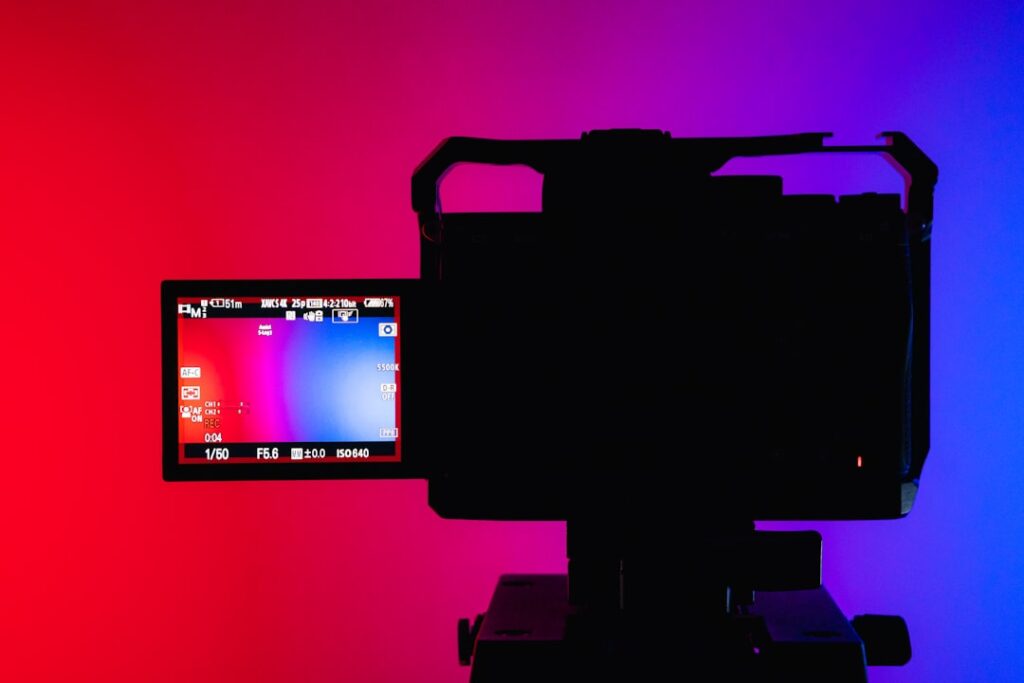
A thermal camera is a piece of hardware. The technology behind it is called thermal imaging, the picture it produces is called a thermogram, but the camera itself is the physical device, the thing you hold or mount, that captures heat data and renders it as an image. This guide focuses on the camera as a product, the components inside, the categories you can buy or rent, and the specifications that actually matter when comparing models. Homeowners often confuse the device with the technology, so the framing here stays squarely on the hardware and the buying decision.
Part of our Thermal Imaging for Homes guide — start there for the full picture →
What a thermal camera is and what it is not
A thermal camera is a sensor-and-lens assembly that detects long-wave infrared radiation, typically in the 8 to 14 micrometer band, and outputs a false-color image showing the temperature differences across the scene. It is not a regular camera with a night-mode filter, the sensor inside is fundamentally different from the CMOS chip in a smartphone. It is not a near-infrared camera, those use silicon sensors that respond to wavelengths close to visible light and require an IR illuminator to work in the dark. A true thermal camera works in pitch black, through light smoke, and in any conditions where there is heat to detect, which is essentially all conditions involving matter above absolute zero.
The hardware components inside a thermal camera
Open up any handheld thermal imager and you will find five core components. The germanium lens, because regular glass blocks infrared, focuses long-wave radiation onto the sensor. The microbolometer array, a grid of resistive pixels that change electrical resistance when heated by IR radiation, sits at the focal plane. The readout integrated circuit samples each pixel many times per second and converts the analog resistance values into digital temperature data. The image processor maps that digital data to a color palette and renders the false-color thermogram. Finally, the display, controls, and battery wrap the whole assembly into something a user can operate one-handed. Germanium optics are the most expensive single component, which is why even a stripped-down handheld camera rarely drops below $200.
Sensor resolution and what the pixel counts mean
Thermal sensor resolution is the single most important spec and the least intuitive to compare. Visible-light cameras shoot at 12 megapixels or more, but a thermal microbolometer of 320 by 240 pixels, just 76,800 thermal pixels, is considered solid mid-range gear. The reason is that microbolometers are vastly more complex to manufacture than CMOS chips. Common consumer resolutions are 80 by 60, 160 by 120, 320 by 240, and 640 by 480. Resolution determines how small a target you can detect at a given distance, a 320 by 240 sensor can identify a hot fuse at 20 feet, while an 80 by 60 sensor would smear the same target into an indistinct blob. The ASHRAE building-diagnostics literature recommends at least 320 by 240 for professional building envelope work.
Categories of thermal camera by form factor
Thermal cameras come in five broad categories. Smartphone attachments, devices that plug into a phone’s USB-C or Lightning port and use the phone’s screen and battery, sit at the bottom of the price range from $250 to $700. Pistol-grip handhelds, the iconic shape that most inspectors carry, run from $400 for an entry-level unit up to $6,000 for high-resolution professional gear. Fixed-mount cameras, used for industrial process monitoring and security, live in industrial settings. Drone-mounted thermal payloads, popular for roof inspection and search and rescue, sit between $2,000 and $15,000 depending on the drone and sensor. Specialty units, such as long-range surveillance thermals and ATEX-certified explosion-proof models, occupy niche markets above $10,000. Homeowners and inspectors live almost entirely in the first two categories.
Thermal sensitivity, refresh rate, and field of view
Beyond resolution, three other specs separate good cameras from frustrating ones. Thermal sensitivity, measured as NETD or noise equivalent temperature difference, indicates the smallest temperature change the camera can resolve. A NETD of 50 millikelvin is excellent, 100 mK is workable, anything over 150 mK produces noisy images on subtle anomalies. Refresh rate matters for any moving scan, the U.S. legal limit for export is 9 Hz on consumer units, so most domestic cameras top out at that rate. Professional cameras above the export-control threshold run at 30 or 60 Hz. Field of view determines how much of a wall you can see at once, narrower FOVs zoom in but lose context, wider FOVs survey faster but lose detail. Pair these specs together when comparing models, not in isolation.
How a thermal camera differs from related tools
A thermal camera is not a non-contact thermometer, also called a spot pyrometer or IR thermometer, even though both technologies detect infrared radiation. A spot pyrometer measures one point and outputs a number, a thermal camera builds a full image from thousands of pixels. A thermal camera is also not a thermal imaging gun in the sense that some marketing copy uses, that term usually refers to a pistol-grip handheld thermal imager. The device is also distinct from a moisture meter, a borescope, and a stud finder, even though some homeowners hope a single thermal camera will replace several tools. It cannot. Our coverage of the broader home inspection tools category walks through how each device complements the others, and the what is an infrared camera guide breaks down related sensor terminology.
Calibration, lens options, and accessories
Professional thermal cameras require periodic calibration, typically every one to two years, to maintain temperature-measurement accuracy. The manufacturer or an authorized lab returns the camera with documentation that proves its readings are accurate to plus or minus 2 degrees Celsius or 2 percent. Lens options vary, wide-angle lenses cover more area for building envelope scans, telephoto lenses zoom in on distant subjects such as power lines or roofs. Accessories worth budgeting for include a hard case, a calibration reference plate, and a tripod for time-lapse temperature logging. Consumer units rarely need lens swaps or formal calibration, the manufacturer expects them to be replaced or upgraded rather than recertified.
What homeowners should buy or rent versus hire
For a one-time use, such as confirming insulation coverage before closing on a home or finding a draft in a single room, renting a camera for a weekend at $40 to $80 or hiring a certified thermographer for $250 to $500 makes more sense than buying. For homeowners who want ongoing diagnostic capability, who plan to inspect rental properties, audit energy bills annually, or learn the trade, a $400 to $800 handheld with 160 by 120 or better resolution is the practical sweet spot. Smartphone attachments are tempting at the price point but the lower sensitivity and narrow FOV frustrate users who expected more. Working inspectors should budget $1,500 to $3,000 for a unit with 320 by 240 resolution, sub-60 mK sensitivity, and a built-in laser pointer for marking targets.
Display, controls, and the user experience
The hardware specs that matter for everyday use extend beyond the sensor and lens. Display resolution and brightness affect how usable the camera is outdoors in direct sunlight, dim displays force the user to shade the screen with a hand to see the thermal image clearly. Touchscreens are now standard on mid-tier and pro cameras, letting the user tap an anomaly to spot-meter the temperature, swipe through palettes, and annotate images on the spot. Physical buttons remain useful for gloved operation in cold weather, when touchscreens can fail to register. Battery life ranges from 2 hours on lightweight smartphone attachments (which drain the host phone’s battery) to 8 hours or more on pro handhelds with swappable batteries. Weight matters during long scans, a 1.5 pound pistol-grip handheld becomes tiring after an hour of overhead attic work, lighter units compromise on battery or ruggedness to drop weight.
Storage, file formats, and image management
Thermal cameras store images in two distinct formats. JPEG output is the standard photographic format, useful for embedding in reports and viewing on any device but lacks the underlying temperature data per pixel. Radiometric JPEG (rJPEG) or proprietary radiometric formats embed the full temperature data for every pixel in the image, allowing the user to open the file later in manufacturer software and re-spot-meter any point in the scene. This distinction matters for professional workflows where reports may be reviewed weeks or months after capture, only radiometric files let the reviewer drill into specific pixels for temperature readings. Pro cameras default to radiometric formats while consumer units often produce only JPEG. Onboard storage capacity also varies, entry-tier cameras typically include 2 to 4 GB of internal storage adequate for 1,500 to 3,000 images, while pro cameras include SD card slots accepting 32 to 128 GB cards for larger jobs. Most cameras allow folder organization on the card, useful for separating client jobs without manual file management later.
Connectivity and report generation features
Modern thermal cameras export images and temperature data through several pathways. SD card storage remains the most universal, allowing the user to swap cards or import to a laptop via card reader. USB-C and micro-USB ports support direct file transfer and tethered live-view modes. WiFi connectivity on pro cameras enables cloud uploads to manufacturer platforms such as FLIR Ignite or Hikmicro Analyzer, which generate annotated PDF reports and store images for client portfolios. Bluetooth pairing with phones supports voice annotation on captured images, useful for documenting findings without typing. Some cameras integrate with reporting platforms like Spectora or HomeGauge, letting an inspector embed thermal images directly into a residential inspection report without manual file management. These connectivity features matter most for working professionals who deliver thermal data as part of paid reports, hobbyist homeowners can usually skip them.
What to expect on a first thermal camera shopping trip
For homeowners or new inspectors approaching their first thermal camera purchase, a few practical expectations help avoid disappointment. Pricing is non-negotiable through authorized dealers, manufacturer-set minimum advertised pricing (MAP) prevents most discounting outside seasonal promotions. Trade shows and inspector association events (ASHI national conferences, InterNACHI House of Horrors training events) offer the best opportunities to compare units hands-on against competing brands. Online demonstrations through YouTube or manufacturer webinars are useful for understanding features but cannot substitute for actually holding the unit and shooting a few test images. Refurbished and authorized used inventory from manufacturer programs offer 25 to 40 percent savings on previous-generation models, with full warranties and verified calibration history. Avoid auction-site purchases of high-end cameras without documented calibration history, the recalibration cost often consumes the auction discount and leaves the buyer with no warranty protection on the future life of the unit.
More Questions About Thermal Cameras
How much does a thermal camera cost for home use?
Thermal cameras for home use typically range from roughly a couple of hundred dollars for a smartphone attachment to several thousand dollars for a professional handheld. Price tracks sensor resolution, thermal sensitivity, temperature range, and software features more than anything else.
For occasional draft hunting or finding a warm pipe, an entry-level unit is usually enough. Homeowners with a single project often find that renting a mid-range camera from a tool rental shop, or hiring a thermographer for a one-time scan, costs less than buying.
Can a thermal camera see through walls?
No, a thermal camera cannot see through walls. It reads the surface temperature of whatever it is pointed at, and what looks like an image of a hidden pipe or stud is really the pattern those objects create on the wall surface as they warm or cool it.
That pattern only appears when there is a temperature difference, so a cold water line in a warm room or a heated pipe in winter shows up, while a dry, room-temperature stud may barely register at all.
Is it legal to use a thermal camera on a neighbor’s house?
Owning and using a thermal camera is legal for private individuals across the United States, but pointing one at someone else’s home raises privacy and harassment concerns that vary by state and situation.
A thermal camera cannot see inside rooms; it only shows surface heat patterns. Even so, repeatedly scanning a neighbor’s property can invite complaints or local ordinance issues. For homeowners, the practical rule is simple: scan your own home, or another property only with the owner’s permission, such as during an inspection.
Do thermal cameras work outdoors in daylight?
Yes, thermal cameras work in daylight and in total darkness because they sense emitted heat, not visible light. Sunlight still matters, though, because it warms surfaces unevenly and can create patterns that hide the defects you are looking for.
For exterior building scans, inspectors usually prefer early morning, evening, or overcast conditions with at least a moderate indoor-outdoor temperature difference. South- and west-facing walls that have been in direct sun for hours are especially misleading and are best scanned after they cool.
References
- ENERGY STAR: Seal and Insulate — U.S. Environmental Protection Agency (ENERGY STAR)
- Standards of Practice for Performing Infrared Inspections — InterNACHI
- ASHRAE Standards for Building Diagnostics — ASHRAE
- Standard of Practice — American Society of Home Inspectors
Frequently asked questions
What is the minimum resolution thermal camera worth buying?
For useful homeowner diagnostics, 160 by 120 is the practical floor. Below that, the image is too coarse to identify common targets like missing insulation batts or loose electrical connections at typical inspection distances.
Can a thermal camera replace a moisture meter?
No. A thermal camera can suggest a moisture problem by showing a cool patch from surface evaporation, but confirming moisture content requires a pin or pinless moisture meter pressed against the suspect material.
Do thermal cameras need calibration?
Professional units typically need calibration every one to two years through the manufacturer or an authorized lab. Consumer smartphone-attachment cameras are generally not calibratable and are designed to be replaced rather than recertified.
What is NETD on a thermal camera spec sheet?
NETD stands for noise equivalent temperature difference and measures the smallest temperature change the camera can detect. Lower numbers are better, with 50 millikelvin considered excellent and 100 millikelvin acceptable for homeowner work.
How long do thermal cameras last?
A well-cared-for thermal camera typically lasts many years, since uncooled microbolometer sensors have no moving parts that wear quickly. Batteries usually fade first and are often replaceable. Drops, lens scratches, and moisture are the main threats, so a padded case and occasional manufacturer calibration checks help keep readings dependable.
Can a thermal camera detect a water leak?
A thermal camera can often reveal the cooler pattern that evaporating moisture leaves on a wall or ceiling, which points to a likely leak area. It cannot confirm water by itself. Inspectors follow up with a moisture meter on any suspicious cold spot, because drafts, missing insulation, and shadows can produce similar patterns.
Are thermal cameras safe to use around people and pets?
Yes, thermal cameras are completely passive and safe around people and pets. They only receive infrared radiation that objects naturally give off and emit nothing themselves. Some models include a visible laser pointer or flashlight, and those should not be aimed at anyone's eyes.
Thermal imaging cameras
Infrared cameras reveal hidden moisture, missing insulation, and air leaks. Phone-attachment models are the budget entry point; standalone units have higher resolution.
| Product | Why | Buy |
|---|---|---|
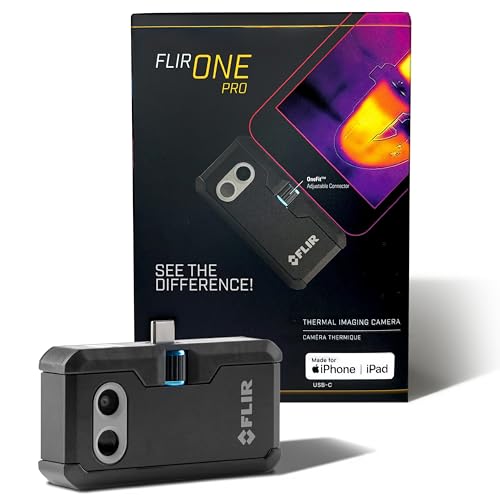 FLIR ONE Pro (phone) | Plugs into iPhone/Android; inspector favorite. | Amazon — $296.65 |
 Topdon TC001 | High-res phone module at a low price. | Amazon — $249.00 |
 FLIR C5 Compact | Standalone pocket camera with Wi-Fi. | Amazon — $593.99 |