Thermal Camera for Car: What Homeowners Need to Know
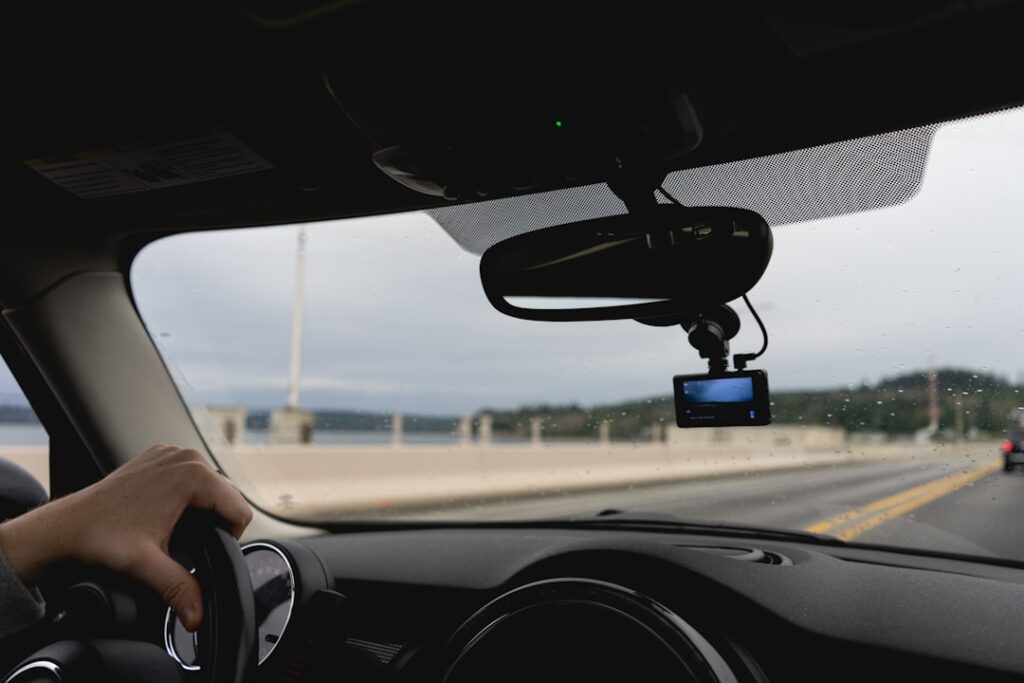
Driving at night puts the human eye at a disadvantage, especially against the glare of oncoming headlights. A thermal camera for car use addresses that by detecting the heat of pedestrians, animals, and vehicles well beyond the reach of low-beam headlights, and the same technology increasingly feeds automotive driver-assistance systems. The capability is real and growing, though specs, cost, and limits shape how useful it actually is.
Automotive thermal cameras work on the same principle as inspection thermal cameras: they detect long-wave infrared radiation emitted by warm objects. In a car, that translates to spotting living beings and hot machinery on a dark road, providing earlier warning than visible light allows.
How does a thermal camera for a car work?
A vehicle thermal camera uses an infrared sensor, typically an uncooled microbolometer, mounted at the front of the car. It detects the heat radiating from objects and displays a video image on the dashboard screen or projects warnings through the driver-assistance system. Because warm bodies stand out sharply against a cool background, a deer at the roadside or a pedestrian in dark clothing becomes visible long before headlights reach them.
The defining advantage is that thermal imaging does not rely on visible light and is not blinded by oncoming headlights, so it sees through darkness and glare. It can also help in certain low-visibility conditions like smoke or light fog, though heavy precipitation degrades it. The technology mirrors the thermal cameras covered in our home inspection tools guide, applied to a moving platform instead of a building.
What specs matter in an automotive thermal camera?
Detection range and resolution lead the list. A higher-resolution sensor, such as 640×480 versus 320×240, identifies objects at greater distance and renders them more clearly, which matters at highway speeds where reaction time is short. Detection range on capable systems extends several hundred meters, far beyond low-beam headlight reach of roughly 60 meters.
Frame rate affects how smooth and usable the image is in motion; automotive systems typically run higher frame rates than the 9 Hz common in budget inspection cameras, since a stuttering image is useless at speed. Field of view balances seeing wide enough to catch roadside hazards against enough magnification to identify distant ones. Thermal sensitivity, again expressed as NETD, determines how well the camera distinguishes a warm object from a slightly cooler background. Integration with the vehicle, whether the output is a simple display or feeds automatic pedestrian-detection braking, also shapes value.
Factory systems vs aftermarket thermal cameras
Two paths exist. Factory night-vision systems, offered on some luxury vehicles from makers like BMW, Mercedes-Benz, and Audi, integrate a thermal camera with the dashboard display and often with pedestrian-detection alerts and automatic braking. These are engineered into the car, calibrated for it, and add several thousand dollars to the vehicle price as an option package.
Aftermarket thermal cameras can be added to a vehicle that lacks a factory system. These range from windshield-mounted or grille-mounted units with a dedicated display to systems that integrate with an existing infotainment screen. Aftermarket options vary widely in quality and cost, from a few hundred dollars for basic units to several thousand for high-resolution systems, and installation quality matters for reliable operation. Automotive thermal sensing has also driven advances in autonomous-vehicle development, where thermal complements radar, lidar, and visible cameras.
The ADAS connection
Advanced driver-assistance systems increasingly use thermal input because it fills gaps left by visible cameras and radar. A thermal sensor detects living beings reliably in darkness and glare, supporting pedestrian and animal automatic emergency braking when other sensors struggle. As ADAS and automated-driving features mature, thermal is positioned as a complementary sensor that improves detection of vulnerable road users at night, the scenario where most pedestrian fatalities occur.
How does this overlap with inspection thermal cameras?
The underlying sensor technology is shared, which is why someone researching automotive thermal often encounters inspection cameras and vice versa. Both detect long-wave infrared and map heat. The difference is optimization: automotive cameras prioritize detection range, frame rate, and motion handling for fast-moving scenes, while inspection cameras prioritize resolution, radiometric measurement, and close-range detail for diagnosing building and electrical issues.
An inspection handheld imager is not a substitute for a driving aid, and a car night-vision camera is not built to measure precise temperatures for finding a wet wall. The crossover is conceptual, not practical. Someone curious about thermal imaging for one purpose may find the other interesting, but the right tool depends on the job. For the building-diagnosis side of thermal, our overview of the DJI thermal camera lineup shows how the same technology serves inspection from the air.
Using a thermal camera for car diagnostics
Beyond night driving, a thermal camera, usually a handheld inspection unit rather than a fixed automotive system, has a genuine place under the hood and around the vehicle. Because mechanical and electrical faults generate heat, an infrared scan surfaces problems that are otherwise invisible. A seized or dragging brake caliper runs hotter than its matching wheel after a drive, so comparing left and right rotors reveals a sticking caliper before it cooks the pads. An overheating wheel bearing shows the same way.
The cooling system reads clearly in thermal: a radiator with a clogged core shows cold patches where coolant is not flowing, a stuck thermostat shows an abnormal warm-up pattern, and a failing water pump or a blocked heater core reveals itself through temperature differences across hoses and fins. Under the hood, a hot spot on an exhaust manifold can hint at a misfiring cylinder, while a thermal scan of the battery terminals and alternator connections finds high-resistance electrical joints much as it does in a building panel. Cabin and HVAC checks, verifying that vents blow at expected temperatures or that a heated seat element works, are quick with an infrared camera. As with building work, the same caution applies: the camera flags a temperature anomaly, and confirming the cause still takes a mechanic’s diagnosis. The shared sensor lineage is exactly why the same instruments described in our home inspection tools guide carry over to automotive troubleshooting.
Mounting and installation considerations
For a driving-aid camera, where and how it is mounted determines whether it works at all. Long-wave infrared does not pass through ordinary glass, so a thermal camera cannot sit behind the windshield the way a dashcam does; it must have a clear external view, which is why factory systems and most aftermarket units mount in or near the grille at the front of the vehicle. That placement exposes the sensor to road debris, stone chips, salt, and weather, so a durable housing and a protective lens, often germanium rather than glass, are part of the design.
Power and integration follow. A factory system is wired into the vehicle and calibrated for its display and braking logic, while an aftermarket unit must be tapped into power, routed to a display, and aimed correctly, all of which reward professional installation. A camera pointed slightly off-axis, or one whose display sits where it pulls the driver’s eyes too far from the road, undercuts the safety benefit. Lens cleanliness matters more than with a visible camera, since a film of road grime degrades a thermal image as surely as mud on a window blocks a view. These practical demands explain why a quality factory option, engineered and calibrated as a unit, often outperforms a bargain aftermarket retrofit despite the higher sticker price.
What are the limits of a car thermal camera?
Thermal cameras have honest limits even on the road. They show heat, not color or text, so they cannot read road signs, traffic-light colors, or lane markings, which means thermal is a supplement to normal vision and other sensors, never a replacement. Heavy rain, snow, and dense fog absorb and scatter infrared, reducing range and clarity. Objects at ambient temperature, like a stationary cold obstacle, contrast poorly with cool surroundings.
Glass blocks long-wave infrared, so the camera must be mounted outside the windshield’s path, typically in the grille. Cost remains a barrier for high-resolution systems, and aftermarket installation quality varies. A thermal camera improves a driver’s ability to detect warm hazards in the dark, but the driver still steers, brakes, and reads the road with their own eyes and judgment. Treated as an early-warning aid rather than autopilot, it adds a genuine safety margin on dark rural roads where wildlife and unlit pedestrians pose real risk.
When a car thermal camera is worth it
The value depends heavily on how and where the vehicle is driven. For a driver who regularly travels dark, unlit rural highways, especially in regions with frequent deer, elk, or livestock crossings like much of the Front Range and the mountain corridors beyond it, a thermal night-vision aid addresses a genuine and recurring hazard. Detecting a warm animal at the road’s edge several hundred meters out, well beyond low-beam reach, buys reaction time that can prevent a serious collision. Drivers who do most of their miles on well-lit urban streets gain far less, because streetlights already extend visible range and the warm-object advantage shrinks.
Factory systems built into a new luxury vehicle are the cleanest implementation, calibrated and integrated with braking, but they are tied to specific models and option packages. An aftermarket unit makes thermal vision possible on a vehicle that lacks it, at a wide range of cost and quality, where installation skill strongly affects the result. For diagnostics rather than driving, the math is different again: a handheld inspection thermal camera that also serves a homeowner’s building checks does double duty under the hood, making it easier to justify than a single-purpose driving camera. Matching the spend to the actual risk and use pattern, rather than buying for novelty, is what keeps a thermal camera a sensible purchase instead of an expensive gadget.
How automotive and inspection thermal hardware differ
Though the core sensor is the same uncooled microbolometer in both worlds, the engineering diverges sharply around the job. An automotive driving camera is tuned for motion: a high frame rate so the image does not stutter at highway speed, a detection range optimized to identify warm hazards far ahead, a field of view chosen to balance roadside coverage against distant identification, and a rugged externally mounted housing built to survive road debris and weather. Precise temperature measurement is not its purpose; spotting and ranging a warm object quickly is.
An inspection handheld inverts those priorities. It favors higher spatial resolution and radiometric accuracy so it can report the actual temperature of a connection or a wet patch, adjustable emissivity to handle different surface materials, close-focus optics for detail work, and onboard storage and reporting features. Its frame rate can be modest because the targets hold still. Neither camera substitutes well for the other: the driving unit cannot tell a mechanic whether a bearing is 20 degrees over its mate, and the inspection unit cannot range a deer at 300 meters at speed. Recognizing that the shared physics does not mean shared suitability is the key insight for anyone shopping across the two categories. The building-diagnostics side, including how the same technology flies on a drone, is covered in our overview of the DJI thermal camera lineup.
The optics and packaging differ as well. A driving camera’s lens and housing are sealed against weather and aimed once for a fixed forward view, with the image tuned for fast recognition at a glance. An inspection camera offers interchangeable behavior through palettes, spot meters, and emissivity adjustment so an operator can dwell on a target and pull a precise number from it. The contrast is the difference between a sensor built to keep up with a moving road and one built to hold still and measure, and it explains why a single device rarely does both jobs well. Buyers who understand that distinction shop for the camera that matches their actual task, rather than expecting one unit to cover night driving and precise diagnostics equally, and they end up satisfied with hardware suited to the job at hand.
References
- Home Inspection Tools of the Trade — International Association of Certified Home Inspectors
- Professional Home Energy Assessments — U.S. Department of Energy
- Standard of Practice — American Society of Home Inspectors
Thermal imaging cameras
Infrared cameras reveal hidden moisture, missing insulation, and air leaks. Phone-attachment models are the budget entry point; standalone units have higher resolution.
| Product | Why | Buy |
|---|---|---|
 FLIR ONE Pro (phone) FLIR ONE Pro (phone) | Plugs into iPhone/Android; inspector favorite. | Amazon — $349.00 |
 Topdon TC001 Topdon TC001 | High-res phone module at a low price. | Amazon — $199.99 |
 FLIR C5 Compact FLIR C5 Compact | Standalone pocket camera with Wi-Fi. | Amazon — $449.00 |