Thermal Camera FLIR: Why the Brand Dominates in 2026
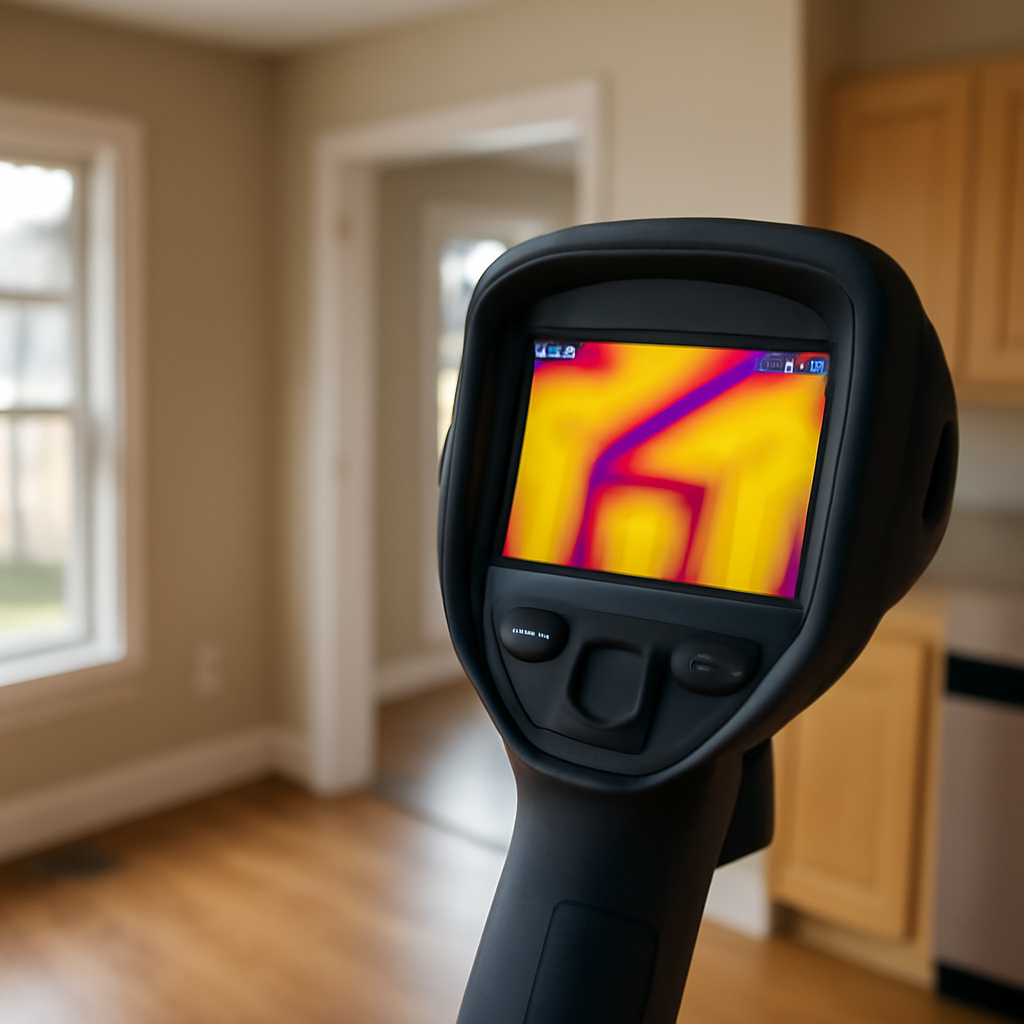
FLIR Systems, now part of Teledyne, sits at the top of the thermal-imaging market by a wide margin. A buyer searching for a thermal camera FLIR option in 2026 is encountering a lineup that spans $200 phone attachments to $30,000 specialty bodies, plus a software ecosystem that anchors most professional inspection workflows. This guide focuses on what makes the brand distinctive rather than a generic device tour: the patented MSX image-fusion technology, the Thermal Studio and Ignite software stack, and the breadth of the commercial product line. Homeowners and working inspectors will find guidance on which tier matches which job.
Part of our Thermal Imaging for Homes guide — start there for the full picture →
Why FLIR Dominates the Thermal Imaging Market
Three factors keep FLIR the default brand in commercial thermography. First, MSX (Multi-Spectral Dynamic Imaging), a patented image-fusion technology that overlays visible-light edge detail onto the thermal image in real time. Second, a mature software ecosystem (Thermal Studio for desktop reporting, Ignite for cloud collaboration, FLIR Tools for legacy compatibility) that integrates with most report-generation workflows used by energy auditors and inspectors. Third, the broadest commercial product line in the industry, from the $200 One Gen 3 phone attachment to the $15,000+ T-series and specialty optics for substation, R&D, and fire-investigation work.
For broader category context, see the home inspection tools 2026 buyer’s guide.
What Is MSX Image Fusion?
MSX is the feature most often cited when working inspectors explain why they pay a premium for FLIR. The camera includes a small visible-light sensor in addition to the thermal microbolometer. Onboard processing extracts edge detail from the visible image and embosses it onto the thermal image so that doorways, electrical outlets, drywall seams, and HVAC register frames are readable inside the heat picture.
The practical value is in the report deliverable. A thermal image with no MSX overlay shows hot and cold blobs that a homeowner or client cannot orient. The same image with MSX shows the same thermal pattern over a recognizable building feature. Reports become more readable, and the inspector spends less time annotating screenshots.
Competing manufacturers offer similar fusion techniques, but FLIR’s MSX is the longest-running and best-integrated implementation, present on most FLIR bodies from the One Gen 3 phone attachment up through the professional T-series.
The Thermal Studio and Ignite Software Ecosystem
Thermal Studio is FLIR’s desktop application for report generation. It accepts radiometric image files from any FLIR body, applies temperature-scale corrections, supports batch report assembly, and exports to PDF or Word templates aligned with InterNACHI and ASHI report conventions. Tier pricing covers a free Standard version (basic editing), a Pro license, and an enterprise tier that adds AI-assisted defect tagging and automated report sections.
Ignite is the cloud-collaboration counterpart. Camera uploads from a connected unit appear in a workspace where colleagues can review, annotate, and assemble deliverables remotely. Many municipal facility-maintenance teams and roofing thermography firms use Ignite as the document-of-record system for ongoing surveys.
The ecosystem matters more than buyers expect. A $2,500 prosumer camera locked into a mature software stack often beats a $3,500 camera that ships with a less-supported app, because the time cost of fighting the report tool exceeds the hardware difference within a single quarter of paid work.
The FLIR Product Line at a Glance
FLIR One Series (Phone Attachments)
One Gen 3 ($200 to $250) and One Pro ($400 to $450) plug into USB-C or Lightning ports. Resolutions of 80×60 to 160×120 native. Best for homeowner triage and as a learning instrument.
FLIR Cx Series (Pocket Handhelds)
C3-X (around $700) and C5 (around $1,000 to $1,200) ship as standalone pocket handhelds with their own screen and battery. The C5 adds Wi-Fi for direct Ignite upload. Best for working inspectors adding thermal screenshots to a standard report bundle.
FLIR Ex Series (Entry Prosumer)
E5-XT and E6-XT ($2,000 to $4,000) are entry-prosumer handhelds with 240×180 to 320×240 sensors and improved sensitivity. Best for residential energy auditors and serious building-science work.
FLIR Ex/Ex-Pro and T-Series (Pro)
Higher Ex models, T-series, and specialty bodies ($5,000 to $15,000+) include 640×480 sensors, interchangeable lenses, and radiometric streaming. Best for commercial roofing, electrical thermography, and certified Level II/III work.
Distinctive Features Beyond MSX
FLIR’s touchscreen UI on the T-series shortens the learning curve compared with button-driven competing bodies. The on-device camera-direct PDF report feature on several mid-line models lets a working inspector hand a client a thermal report from the camera over Wi-Fi without ever opening a laptop. Radiometric file output (.fff and .seq formats) is the de-facto standard for third-party analysis tools, which means FLIR images plug into more workflows than competitor formats.
Lens ecosystem breadth is another quiet advantage. Wide-angle, telephoto, and macro lenses for the Ex and T series cover everything from substation gantry inspection to printed-circuit-board diagnostics, with calibrated mounts that preserve radiometric accuracy across swaps.
Where FLIR Trade-Offs Show
FLIR is not always the value choice. Topdon, Hti, and InfiRay offer phone-attachment and pocket cameras with competitive specs at lower prices, and a homeowner doing seasonal envelope checks may not need the FLIR ecosystem premium. Topdon’s mid-budget brand position is one example. The brand premium is most worth paying when the buyer needs report-generation speed, third-party software compatibility, or commercial-grade lens flexibility.
Calibration costs are similar across brands (factory recalibration typically runs $200 to $400 for handhelds), so that is not a deciding factor on its own.
How Buyers Should Approach the FLIR Lineup
The wrong way: pick a camera by price and hope the features match. The right way: identify the deliverable (homeowner screenshot, inspection-report image, certified audit report) and the operating context (phone-attached, standalone pocket, full handheld), then walk up the FLIR ladder until both are covered.
Professional home-energy assessments typically use thermography as one input alongside blower-door testing, combustion-safety checks, and duct leakage measurement; ENERGY STAR’s seal-and-insulate guidance covers the repairs that usually follow. ASHRAE envelope-thermography practice notes assume prosumer-tier sensitivity. InterNACHI thermography certification training assumes professional-tier resolution. Matching the FLIR tier to the certification framework the buyer plans to operate under is the simplest decision rule.
Buying Channels and Warranty
Authorized FLIR resellers (Grainger, Tequipment, and others) ship factory-new units with the full 2-year hardware warranty and 10-year detector warranty that FLIR includes on most bodies. Outlet refurbished units carry shortened warranty (12 months) at 20 to 35 percent discount. Third-party marketplace listings without warranty paper should be verified through FLIR’s serial database before purchase; counterfeit units do circulate.
Front Range Considerations
Front Range inspectors covering Denver, Boulder, and Colorado Springs operate in a climate where envelope thermography is most readable during winter heating season, when the indoor-outdoor temperature delta exceeds 18°F. FLIR’s prosumer Ex line is well matched to that workload, and the Thermal Studio templates align with the reporting conventions Colorado real-estate agents recognize.
MSX Image Fusion Explained
MSX (Multi-Spectral Dynamic Imaging) is the patented overlay technology that distinguishes most FLIR bodies from competing brands. The technical premise is straightforward: the camera carries two image sensors, a thermal microbolometer and a small visible-light CMOS sensor. The processor extracts edge detail from the visible image, applies geometric correction to align the two viewpoints, and embosses the visible-light edges onto the thermal image in real time. The result is a thermal picture where doorways, outlet covers, drywall seams, ceiling tiles, and HVAC register frames are readable inside the heat pattern.
What MSX solves is the orientation problem in thermal imaging. A raw thermal image shows hot and cold blobs in colors mapped to temperature, but without visible-light context the viewer often cannot tell where the blob sits in the room. A client reviewing the report sees an unidentifiable colored field and asks the inspector to annotate every image with arrows and labels. MSX dramatically reduces that annotation overhead because the structural context is already embedded in the thermal capture.
The technology has limits. MSX requires good visible-light conditions for the secondary sensor; in dim spaces (unlit crawlspaces, dark attics) the edge extraction quality drops and the overlay becomes faint or unreliable. The two sensors have a small parallax offset that becomes noticeable at very close working distances under about 12 inches. And the visible-light sensor adds power draw, marginally shortening battery life compared to thermal-only bodies. None of these limits is severe in normal residential inspection use, but they are real.
Competing brands offer similar fusion implementations. Fluke offers IR-Fusion, Testo offers SuperResolution and twin-sensor fusion, and a few imported brands offer their own versions. The implementations differ in edge-extraction algorithm quality, parallax correction, and integration depth. Inspectors who have used multiple brands generally rate FLIR’s MSX as the longest-running and most polished, but the gap has narrowed in recent years. For buyers comparing brands strictly on fusion quality, hands-on testing on similar scenes is the most reliable comparison method.
FLIR’s Software Ecosystem Depth
The software side of the FLIR ecosystem often matters more than the camera hardware after the first year of ownership. Thermal Studio is the desktop application that anchors the workflow. The free Standard tier covers basic image editing, radiometric temperature correction, and PDF export. Thermal Studio Pro adds batch report assembly, template library access, AI-assisted defect tagging, and multi-camera workspace management; pricing typically runs $200 to $400 per year per seat. Working inspectors who deliver branded reports to clients almost always step up to Pro within the first quarter of paid work.
FLIR Tools+ is the legacy desktop application that predates Thermal Studio. It remains compatible with older FLIR bodies and supports basic image editing and radiometric playback. New buyers should start with Thermal Studio rather than Tools+, but inspectors transitioning from older equipment sometimes maintain both during the migration period.
FLIR Ignite is the cloud collaboration counterpart. Camera uploads from Wi-Fi-enabled bodies (C5, E-series, T-series) appear in a workspace where colleagues can review and annotate. Many municipal facility-maintenance programs use Ignite as the document-of-record system for ongoing thermography surveys, particularly for roof and electrical infrastructure where year-over-year comparison matters. Ignite includes free and paid tiers; paid tiers add larger storage allocations, longer retention, and multi-user collaboration features.
Mobile companion apps round out the ecosystem. The FLIR One app handles phone-attachment cameras as discussed earlier. The FLIR Tools Mobile app pairs with handheld bodies over Wi-Fi for live preview, image transfer, and quick annotation. Both apps integrate cleanly with Ignite for upload-to-cloud workflows. ASHRAE envelope-thermography practice notes implicitly assume a software workflow at this maturity level; FLIR’s ecosystem comes the closest to that assumption among current brands, which is one of the reasons working inspectors pay the brand premium even when the hardware specs are similar to competitors.
More Questions About FLIR Thermal Cameras
Does FLIR offer calibration services?
Yes, FLIR offers calibration services for many professional thermal cameras, and authorized service centers can provide calibration certificates. Calibration intervals depend on the model, use, and whether accurate temperature measurements are required for reports. Consumer phone attachments may not have the same calibration options. Professionals should check the service availability for their specific camera before buying, especially if clients require documented calibration. Keeping service records helps support the credibility of inspection reports.
Do older FLIR cameras still get software support?
Older FLIR cameras may still work with current software, but support can decrease over time as operating systems and apps change. Some older models remain compatible with desktop analysis tools even when mobile apps are no longer updated. Buyers of used FLIR cameras should check whether the model is supported by current software and whether firmware updates are available. Limited software support may not matter for basic image capture but can affect reporting and data transfer.
Is a FLIR camera worth it for homeowners?
A FLIR camera can be worth it for homeowners who regularly check insulation, air leaks, radiant heating, electrical issues, or suspected moisture problems. Entry-level FLIR phone attachments and compact cameras offer an affordable way to learn thermal scanning. Homeowners with only one question, such as a single leak, may save money by hiring an inspector or renting equipment. The value depends on how often the camera will be used and whether the owner wants to interpret thermal images personally.
Can FLIR images be used in third-party report software?
Many FLIR images can be used in third-party report software, especially when exported as standard image files. Radiometric FLIR images may require FLIR software or compatible tools to preserve temperature data. Inspectors often import thermal images into their inspection reporting platform with notes and visible photos. Checking whether the reporting software supports the camera’s radiometric files helps avoid losing measurement data. Some workflows use FLIR software for analysis and another platform for the final client report.
References
- ENERGY STAR: Seal and Insulate — U.S. Environmental Protection Agency (ENERGY STAR)
- ASHRAE Technical Resources — ASHRAE
- InterNACHI Infrared Certification — InterNACHI
- ICC International Energy Conservation Code — ICC
Frequently asked questions
What makes FLIR cameras different from other thermal cameras?
Three things: MSX image fusion (patented overlay of visible-light edges onto thermal images), a mature Thermal Studio and Ignite software ecosystem, and the broadest product line from $200 phone attachments to $15,000+ pro bodies.
Is MSX worth paying extra for?
For working inspectors and report deliverables, yes. MSX makes thermal images readable without heavy annotation. Homeowner triage users may not notice the difference.
Which FLIR is best for a home inspector?
The C5 pocket handheld at around $1,000 covers most residential report needs. Energy auditors performing paid Level 1 or Level 2 work typically step up to the E5-XT or E6-XT prosumer line.
How long is the FLIR warranty?
Most professional FLIR bodies carry a 2-year hardware warranty plus a 10-year detector warranty. Refurbished units typically include 12 months of coverage.
Are FLIR phone attachments durable?
FLIR phone attachments are designed for portable use, but they are not as rugged as many handheld professional cameras. Drops, connector stress, and lens scratches can damage them. Using a protective case and removing the attachment carefully extends its life.
Does FLIR sell refurbished thermal cameras?
FLIR has offered refurbished or certified pre-owned cameras through authorized channels at times. Availability varies by model and region. Buying refurbished from an authorized source may provide warranty coverage and calibration records that private used sales usually lack.
Do FLIR cameras need special training?
FLIR cameras do not require special training for basic use, but thermography training helps users understand emissivity, reflections, and interpretation. Professionals who document findings for clients benefit from formal courses. Training reduces false conclusions from misleading thermal patterns.
Thermal imaging cameras
Infrared cameras reveal hidden moisture, missing insulation, and air leaks. Phone-attachment models are the budget entry point; standalone units have higher resolution.
| Product | Why | Buy |
|---|---|---|
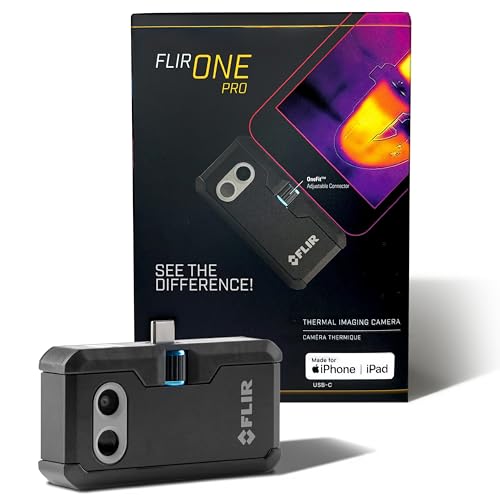 FLIR ONE Pro (phone) | Plugs into iPhone/Android; inspector favorite. | Amazon — $296.65 |
 Topdon TC001 | High-res phone module at a low price. | Amazon — $249.00 |
 FLIR C5 Compact | Standalone pocket camera with Wi-Fi. | Amazon — $593.99 |