FLIR Thermal Security Camera: What Homeowners Need to Know
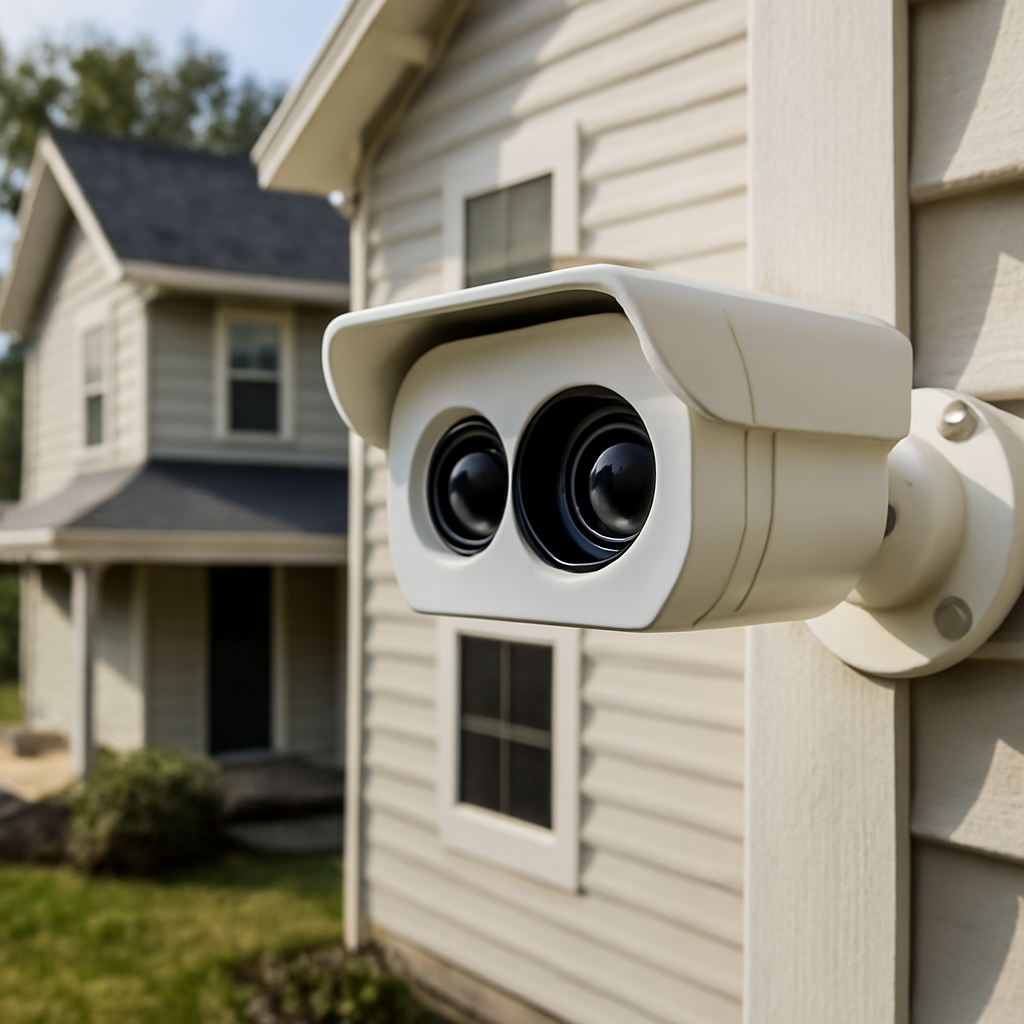
A FLIR thermal security camera is a fixed-mount surveillance product line from a manufacturer whose name became synonymous with consumer thermal imaging. The security camera product lines target industrial and commercial markets primarily, with residential channel availability through past partnership arrangements. This guide summarizes the current FLIR thermal security camera product families, the historic Lorex partnership context, and how FLIR’s industrial platforms compare to alternatives from other manufacturers serving the same market. The content references NFPA fire-detection standards, InterNACHI inspection-tool guidance, and ASIS International security guidance current as of 2026.
Part of our Thermal Imaging for Homes guide — start there for the full picture →
FLIR’s place in the thermal security camera market
The manufacturer has produced thermal-imaging products since the 1980s, originally for military and industrial markets. The security-camera product lines emerged in the 2000s as fixed-mount thermal cameras for perimeter protection. The current security-focused product families serve three distinct market segments: industrial perimeter protection (Saros), pan-tilt long-range surveillance (Quasar), and fixed-mount short-range bullet-style cameras (Triton). Each family addresses different deployment scenarios with different price points and feature sets.
Saros — industrial perimeter platform
The Saros product family combines thermal and visible-light sensors in multi-sensor housings designed for perimeter intrusion detection. The cameras integrate built-in video analytics that classify thermal signatures crossing virtual tripwires — human vs vehicle vs animal — and trigger alarms only on classified threats. The platform targets critical infrastructure protection (substations, water treatment facilities, government installations) where false-alarm tolerance is low and detection certainty matters. Industrial pricing runs $5,000 to $15,000 per camera installed depending on lens configuration and analytics licensing.
Quasar — pan-tilt long-range surveillance
The Quasar family uses pan-tilt-zoom mechanical positioning to direct the thermal sensor across wide areas from a single mounting point. The platform suits situations where one camera needs to cover a large perimeter rather than installing many fixed cameras. The PTZ capability allows operators to follow detected threats or pre-program patrol patterns. Pricing runs $10,000 to $30,000 per camera installed including the precision positioning gimbal. The companion piece on thermal imaging CCTV camera systems covers the broader industrial CCTV category.
Triton — fixed-mount bullet cameras
The Triton family represents the more affordable end of the security thermal camera lineup. The fixed-mount bullet-style housings install at building corners or perimeter points for fixed-coverage applications. The cameras lack PTZ but offer better price-performance for applications where coverage is well-defined. Pricing runs $2,000 to $8,000 per camera installed. The form factor matches the visible-light bullet cameras most security integrators are already comfortable mounting and configuring.
The historic Lorex residential channel
Through the mid-2010s, the manufacturer partnered with consumer security brand Lorex to bring thermal CCTV to residential big-box retail channels. The partnership delivered consumer-grade thermal cameras at price points (around $500 to $1,500 per camera) that made residential deployment newly accessible. The partnership ended in 2018 when ownership changes affected both sides of the arrangement. Residual product from the partnership remained available through aftermarket channels for several years afterward; new product flow ended. The residential thermal CCTV market subsequently fragmented across smaller brands without a dominant consumer-channel anchor.
Comparison to Hikvision and Dahua thermal security
Chinese manufacturers Hikvision and Dahua produce thermal security cameras competing directly with FLIR’s industrial product lines at substantially lower price points. Per-camera prices run $1,000 to $5,000 for capability roughly comparable to the FLIR mid-range — a third to half the price for similar resolution and similar analytics. Hikvision and Dahua products dominate Asia-Pacific markets and have significant presence in Europe and Latin America. US market adoption has been complicated by federal procurement restrictions (NDAA Section 889) that prohibit federal agencies from purchasing certain Chinese-manufactured surveillance equipment. The article on forward looking infrared camera category covers the broader thermal-imaging context.
FLIR thermal security versus general-purpose thermal CCTV
Three features distinguish dedicated security thermal cameras from general-purpose thermal CCTV. First, built-in video analytics — security cameras include onboard intelligence to classify thermal signatures rather than just produce raw imagery. Second, integration with video management systems — ONVIF compliance plus manufacturer-specific integration plugins for major VMS platforms (Genetec, Milestone, Avigilon). Third, environmental ratings — IP66 weatherproofing minimum, vandal-resistant IK10 housing optional, operating temperature ranges suitable for outdoor industrial deployment.
Frame rate and image quality for security applications
Security thermal cameras typically operate at 9 or 30 frames per second; higher rates enable smoother motion capture but consume more bandwidth. Resolution ranges from 320×240 at the lower tier to 640×480 or 1024×768 at the higher tier; higher resolution extends detection range proportionally. Lens focal length determines the field of view versus detection distance trade-off; security applications typically use longer focal lengths (19mm to 50mm or longer) to extend detection range at the cost of narrower coverage per camera.
Recording infrastructure for thermal security
Thermal security cameras typically supplement rather than replace visible-light security cameras. The standard architecture pairs a thermal camera for detection with a visible-light camera (often a PTZ unit) for identification once detection occurs. Both streams record continuously through the video management system; thermal alerts trigger the visible-light camera to slew to the detection location. Recording infrastructure (network video recorder, storage, video management software) typically represents 30 to 50 percent of total system cost beyond the cameras themselves.
What FLIR security cameras do not do
Through-glass surveillance fails — long-wave infrared blocks at glass. Indoor-from-outdoor monitoring through windows is not possible. Long-range facial identification fails because thermal imagery lacks the visible-spectrum detail required. Vehicle license-plate reading fails for the same reason. Each of these limitations means thermal security cameras supplement rather than replace visible-light surveillance. The reference on home inspection tools category covers handheld thermal imaging that operates in different contexts.
Maintenance and lifecycle considerations
Thermal security cameras require periodic lens cleaning (dust and debris obscure the long-wave infrared sensor more than visible-light dust) and seasonal recalibration if the sensor drifts from factory calibration over time. Lifecycle expectations run 7 to 10 years for industrial-grade equipment in protected installations and 5 to 7 years for outdoor deployment exposed to weather extremes. Replacement parts and firmware support typically continue for at least 5 years past initial product introduction.
Buying considerations for FLIR security cameras
FLIR’s distribution channel runs primarily through authorized security integrators rather than direct consumer channels. End users typically engage a security integrator who specifies, sources, installs, and integrates the cameras into the broader security infrastructure. Direct purchase channels exist but rarely provide the integration support that distinguishes a functional system from an expensive collection of cameras. Authorized integrators carry both FLIR product training and complementary VMS expertise.
When to call a professional
Industrial-grade thermal security cameras require a licensed security integrator with thermal-camera experience and VMS integration capability. Residential thermal security at the consumer price point sometimes self-installs through standard security platform integrations; the analytics and tuning generally remain less sophisticated than industrial deployments. For protection-critical applications, engage a licensed integrator carrying appropriate insurance and demonstrated thermal-camera deployment history.
Mounting and installation requirements
Fixed-mount thermal security cameras require sturdy mounting structures that can support the camera weight (typically 5 to 15 pounds for industrial units) plus wind loading. Pole mounts for perimeter applications need wind-load engineering for the geographic area. Building-corner mounts need proper attachment to structural members rather than just sheathing. The mounting infrastructure cost can rival the camera cost on large installations; budget planning should account for both. Junction-box waterproofing, cable routing through conduit, and lightning-protection grounding all become part of the installation scope.
Power and network requirements
Industrial thermal cameras typically use Power-over-Ethernet (PoE+) for both power and network connection through a single cable. The PoE+ standard delivers up to 30 watts per port, adequate for most thermal cameras including their heater elements (used in cold-climate installations to prevent housing condensation). Long cable runs (above 100 meters) may require PoE extenders or fiber-optic conversions. Network architecture should isolate camera traffic from corporate IT networks for security and bandwidth management reasons.
Maintenance schedules and cleaning
Outdoor thermal cameras accumulate dust, pollen, insect residue, and weather debris on the lens over time. Regular cleaning (typically monthly to quarterly depending on the environment) maintains image quality. The cleaning procedure differs from visible-light camera lenses — thermal-camera optics use materials (germanium, zinc selenide) that scratch more easily than standard glass. Manufacturer-specified cleaning solutions and microfiber cloths protect the optical coatings. Periodic recalibration after lens cleaning verifies sensor accuracy.
Day-night transitions and dynamic range
Thermal cameras handle day-night transitions differently from visible-light cameras. They do not require auxiliary illumination at night and produce consistent imagery 24 hours per day. Solar loading on the scene during day operation can produce higher-contrast imagery than night operation; some installations actually find day imagery more useful than night imagery, contrary to common assumption. The trade-off is increased false-alarm sensitivity during sun-loaded daytime conditions.
Lifecycle planning and total cost
Industrial thermal security deployments require 7 to 10 year lifecycle planning. The camera-hardware cost represents 40 to 60 percent of total deployment cost; the remainder covers integration, installation, ongoing maintenance, software licensing, and eventual upgrade or replacement. Annual maintenance costs run 5 to 10 percent of initial hardware investment for properly maintained installations. Replacement cycles align with technology generations rather than hardware failures; many installations operate well past their original specification’s nominal lifecycle.
Multi-sensor fusion considerations
Modern thermal security platforms increasingly combine thermal sensors with visible-light sensors, radar units, and acoustic sensors in single housings. The fusion approach addresses thermal CCTV’s interpretive limitations by providing visible-light identification once a thermal detection occurs. Radar adds all-weather motion detection that complements thermal coverage. Acoustic sensors detect specific audio signatures associated with intrusion attempts. The integrated multi-sensor approach produces fewer false alarms and better situational awareness than thermal alone, at proportionally higher equipment cost.
Geofencing and detection-zone configuration
Thermal security cameras include software for defining detection zones within the camera’s field of view. The detection zones specify where threats matter (perimeter line, restricted area) and where activity should be ignored (a road outside the property, an area where wildlife regularly crosses). Properly configured zones substantially reduce false alarms while maintaining sensitivity to real threats. The zone configuration requires understanding of the protected area’s normal activity patterns; this configuration step typically requires several weeks of operational data to refine.
Industry verticals and adoption patterns
Different industry verticals adopt thermal security cameras at different rates and for different reasons. Electric utility substations have been early adopters due to NERC CIP requirements and the high cost of intrusion-caused outages. Water treatment facilities have adopted for similar critical-infrastructure-protection reasons. Data centers have adopted to protect against physical access to high-value assets. Chemical and petrochemical facilities have adopted for safety and security reasons. Commercial retail, hospitality, and general office applications have adopted more slowly because the cost-benefit case is less clear.
References
- NFPA 72 National Fire Alarm and Signaling Code — NFPA
- Infrared thermography overview — InterNACHI
- Building envelope standards — ASHRAE
- ENERGY STAR: Seal and Insulate — U.S. Environmental Protection Agency (ENERGY STAR)
- Standards of practice — ASHI
Frequently asked questions
What product lines does FLIR offer for security cameras?
Three main families: Saros for industrial perimeter protection with built-in analytics, Quasar for pan-tilt long-range surveillance, and Triton for fixed-mount bullet-style cameras. Pricing runs $2,000 to $30,000 per camera depending on family and configuration.
Is there a residential FLIR thermal security camera option?
The historic Lorex partnership produced consumer-grade thermal CCTV through 2018; the arrangement ended and the residential market subsequently fragmented. Current consumer-grade thermal security cameras come from smaller brands rather than direct FLIR consumer-channel products.
How does FLIR compare to Hikvision or Dahua thermal security cameras?
Chinese manufacturers offer comparable resolution and analytics at a third to half the FLIR price. US federal procurement restrictions (NDAA Section 889) prohibit federal agency purchase of certain Chinese surveillance products, which affects market dynamics in defense and government sectors.
Can a FLIR security camera see through windows?
No. Glass blocks long-wave infrared, so thermal cameras cannot image through windows. The cameras work for outdoor-to-outdoor monitoring but not for monitoring through window glass into a yard or street.
Thermal imaging cameras
Infrared cameras reveal hidden moisture, missing insulation, and air leaks. Phone-attachment models are the budget entry point; standalone units have higher resolution.
| Product | Why | Buy |
|---|---|---|
 FLIR ONE Pro (phone) FLIR ONE Pro (phone) | Plugs into iPhone/Android; inspector favorite. | Amazon — $349.00 |
 Topdon TC001 Topdon TC001 | High-res phone module at a low price. | Amazon — $199.99 |
 FLIR C5 Compact FLIR C5 Compact | Standalone pocket camera with Wi-Fi. | Amazon — $611.50 |