FLIR Thermal Camera Boat: Marine vs Home-Inspection
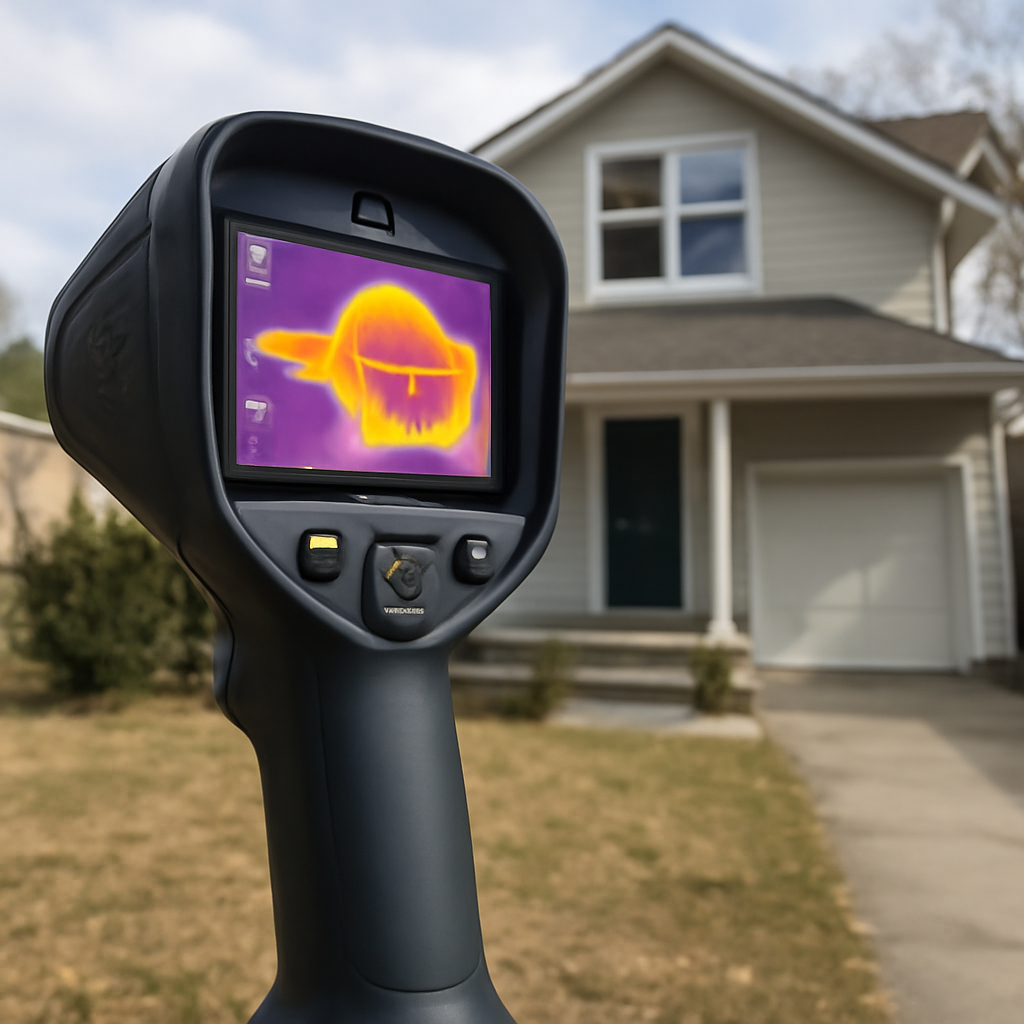
FLIR’s product line splits cleanly between marine-grade thermal cameras built for boats and yachts, and building-inspection thermal cameras built for home and commercial use. The marine cameras (the M-Series: M200, M300, M364 and similar models) are fixed-mount instruments that mount on the cabin top or mast and provide navigation aids, collision avoidance, and man-overboard detection. They share the underlying thermal sensor technology with the building-inspection family but live in a completely different price bracket and feature set. This guide explains what marine FLIR cameras do, why their price tag is so much higher than a homeowner-grade thermal camera, and how the two categories converge when the question is actually about home inspection.
What a marine FLIR thermal camera is
A marine thermal camera is an LWIR (long-wave infrared) instrument designed for the specific environmental conditions of boating: salt air, sustained vibration, mounting on a moving platform, integration with marine electronics (radar, chart plotters, autopilot), and the regulatory environment around USCG-certified marine equipment. The FLIR M-Series spans models from M200 (entry marine, around $3,000 to $5,000) through M300 (mid-tier, $6,000 to $10,000) and M364 (dual-payload thermal-plus-visible with optical zoom, $12,000 to $25,000).
Mounting is fixed: the camera sits on a pan-tilt mount controlled by a joystick at the helm or via the boat’s networked multifunction display. The output integrates into chart plotters from Garmin, Raymarine, Furuno, and Simrad. Image quality is comparable to commercial-grade building-inspection thermal cameras (320×240 to 640×480 thermal resolution), but the form factor and environmental ratings are completely different.
Why marine cameras cost so much more
The core thermal sensor in a marine FLIR M-Series camera is similar to or identical to the sensor in a $1,500 building-inspection thermal camera. The price difference is driven by the marine-specific engineering: IP66 or IP67 environmental rating, salt-spray-resistant housing, pan-tilt motorized mounts, integration with marine networking protocols (NMEA 2000 and Ethernet), gyro stabilization to compensate for vessel motion, and USCG-certification compliance for navigation equipment.
Add the dual-payload models that combine a thermal sensor with a high-resolution daylight camera and optical zoom, and the cost climbs further. The thermal piece does the night-vision and fog-penetration work; the daylight piece does target identification and color contextualization.
Marine use cases
Navigation and collision avoidance. Thermal cameras detect floating debris, partially submerged containers, low-profile vessels, and unlit buoys at night and in fog where radar may miss small targets. The U.S. Coast Guard and several marine safety organizations recognize thermal imaging as a useful supplemental navigation aid; it does not replace radar but extends what the crew can see directly.
Man-overboard detection. Body temperature contrasts strongly against cold water; a person in the water shows up clearly on thermal imagery from hundreds of feet away. Some marine FLIR systems integrate with man-overboard sensors and automatically slew the camera toward the alarm.
Docking and night operation. Marine thermal cameras let captains operate at night and in low-light conditions without artificial white-light spotlights that would disturb other vessels or wildlife.
The pivot to home inspection
Most homeowners searching “FLIR thermal camera boat” are not buying marine equipment. They are either curious about the marine product line, considering the same brand for home use, or trying to understand whether thermal imaging is worth installing somewhere. The answer for residential use is a different product category entirely: handheld building-inspection thermal cameras like the FLIR ONE Pro ($400 to $500), the FLIR E5-XT ($1,500 to $2,000), or the FLIR C5 pocket-format ($700 to $900).
These instruments are designed for short-duration handheld use indoors, not for permanent outdoor mounting on a moving vessel. Resolution is similar (160×120 to 320×240 thermal pixels on the consumer tier; up to 640×480 on the pro tier), but the form factor is small and battery-powered.
Home-inspection thermal use cases
Insulation gap detection. Thermal cameras reveal cold spots on interior walls during winter, indicating insulation gaps or air leaks. The U.S. Department of Energy’s home energy assessment guidance treats thermal imaging as the most informative single tool for finding insulation problems.
Moisture concentration scouting. Wet drywall and wood read colder than dry materials during the cold-side season due to evaporative cooling. A thermal camera localizes the wet zone for a moisture-meter follow-up; the camera does not measure moisture, but it points the meter at the right spot.
Electrical hot-spot detection. Overloaded breakers, loose connections, and failing components run hotter than their neighbors and show up on thermal imagery from a few feet away. Inspectors scan electrical panels and high-load circuits for hot spots during home inspections.
HVAC duct leak detection. Conditioned air leaking from supply ducts produces visible temperature anomalies on attic ceilings and crawlspace floors. Our piece on thermal imaging cameras for house insulation covers this workflow in more depth.
The brand context
FLIR Systems, headquartered in Wilsonville, Oregon, was founded in 1978 and is the dominant US thermal-imaging manufacturer across consumer, commercial, industrial, and defense segments. The marine M-Series is one product line; the building-inspection ONE, C-Series, E-Series, and T-Series are separate lines targeting different end markets at different price points. ASHRAE and various building-science guidance documents recognize thermal imaging as a primary diagnostic tool for building envelope assessment.
Within the home-inspection segment, FLIR competes with Fluke (similar pro-tier instruments at similar prices), Hikmicro, and several smaller specialty brands. For broader market context, see our cheap thermal camera piece, which covers the budget end of the home-inspection thermal market.
Comparison: marine FLIR vs home-inspection FLIR
Marine FLIR M-Series: fixed-mount, $3,000 to $25,000, IP66/67 environmental rating, integration with marine electronics, optimized for outdoor moving-platform use. Home-inspection FLIR ONE Pro through T-Series: handheld, $400 to $5,000+, IP54 typical, USB or Wi-Fi to mobile device, optimized for short-duration indoor or near-outdoor use.
The shared technology is the LWIR sensor. The shared limitation is that neither type sees through walls or solid objects; thermal cameras detect surface temperature only. The marketing claim that thermal cameras “see through walls” is incorrect at any price tier.
Which one should you buy
For a boat owner considering marine FLIR, the decision is operational: does the vessel travel at night, in fog, or in waters with debris and low-profile traffic? If yes, the M-Series pays for itself in safety value. If the boat is a daylight-only weekend cruiser, the cost is hard to justify.
For a homeowner considering thermal imaging for home use, the marine cameras are the wrong product entirely. The FLIR ONE Pro at $400 to $500 covers most homeowner needs (insulation gaps, moisture scouting, electrical scans). For working home inspectors, the FLIR E5-XT or E8 at $1,500 to $3,000 is the typical professional-grade choice. Our home inspection tools buyer guide walks through the full thermal-camera buying decision.
The bigger context
Thermal imaging is one slice of the home-inspection toolkit. For homeowners thinking about thermal capability for a phone or as a standalone tool, our broader best handheld thermal camera overview covers the consumer and pro-consumer tiers.
Marine FLIR installation logistics
Installing a marine FLIR M-Series camera on a vessel typically requires a mounting bracket on the cabin top or radar mast, electrical wiring from the camera to the helm power bus, network cabling (Ethernet or NMEA 2000) to the chart plotter, and a control device (joystick or networked multifunction display). Professional marine electronics installers handle the integration; DIY installation is possible but requires understanding of marine electrical standards (ABYC E-11 wiring) and waterproofing best practices.
Installation cost typically runs $500 to $2,000 depending on the complexity of the integration and the existing electronics on the vessel. Boats with newer Garmin, Raymarine, or Simrad multifunction displays integrate the FLIR camera more easily than older vessels.
Marine vs handheld thermal: resolution comparison
Marine FLIR M-Series cameras use thermal sensors in the 320×240 to 640×480 pixel range, similar to mid-tier and high-tier home-inspection cameras. The M364 dual-payload model uses a 640×512 thermal sensor paired with a high-resolution daylight camera. Handheld home-inspection cameras span 80×60 (FLIR ONE Pro entry) through 320×240 (FLIR E-Series mid-tier) up to 640×480 (FLIR T-Series pro-tier).
The pixel count is similar across categories; the price difference comes from the environmental engineering, mount systems, and integration features, not the sensor itself.
What home-inspection thermal cameras actually do
Home inspectors use thermal cameras for four primary tasks. Insulation gap detection: scanning interior walls during winter to find cold spots that indicate missing or compressed insulation. Moisture concentration scouting: locating wet zones that read colder than dry zones during cold-side seasons. Electrical hot spot detection: scanning electrical panels and high-load circuits for overheating connections. HVAC duct leak detection: finding conditioned-air leaks from supply ducts in attics and crawlspaces.
None of these tasks requires marine-grade environmental sealing, pan-tilt mounts, or integration with chart plotters. The handheld form factor wins on every dimension for home use.
FLIR ONE Pro: the entry home-inspection option
The FLIR ONE Pro plugs into a smartphone (iOS or Android variants) and provides a 160×120 thermal sensor with the FLIR MSX feature that overlays visible-light details on the thermal image for context. Price runs $400 to $500 in 2026. The MSX overlay is the feature that distinguishes the ONE Pro from cheaper smartphone thermal accessories; it makes thermal images legible by combining edge detail from the visible camera with the temperature data from the thermal sensor.
For homeowners doing one-off thermal scans (post-purchase home check, post-renovation verification, occasional energy audit), the FLIR ONE Pro is the budget-friendly answer. For working home inspectors, step up to the E-Series.
FLIR E5-XT and E8: the pro home-inspection options
The FLIR E5-XT ($1,500 to $2,000) provides 160×120 thermal resolution with the MSX overlay in a self-contained pistol-grip form factor. The E8 ($2,500 to $3,000) bumps to 320×240 resolution. Both are designed for one-handed inspector use without smartphone tethering, with all-day battery life and rugged construction suitable for daily field work.
For working inspectors, the E5-XT or E8 is the typical professional choice. The price premium over the FLIR ONE Pro buys self-contained operation, higher-resolution sensor, longer battery life, and more rugged construction.
Comparison to competing thermal brands
FLIR competes with Fluke (similar pro-tier instruments at similar prices, with stronger electrical-inspection feature sets), Hikmicro (Chinese-OEM-style consumer and pro thermal cameras at 20 to 30 percent lower prices), Seek Thermal (smartphone-accessory and standalone consumer cameras), and several specialty brands. For inspector certification context, the InterNACHI thermal-imaging credential covers FLIR and Fluke as the established platform choices.
Why marine cameras stay expensive
The marine FLIR price tag absorbs five engineering cost categories beyond the thermal sensor. Salt-spray-resistant housing and connectors. Pan-tilt motorized gimbal mounts. Gyro stabilization to compensate for vessel motion. Integration with marine networking protocols and chart plotters. USCG-certification compliance for navigation equipment.
Each category adds incremental cost. Stripping any of them would produce a cheaper camera that fails in the marine environment. The price reflects the engineering necessary to make thermal imaging work on a moving outdoor platform, not a markup on identical hardware.
When marine FLIR pays for itself
The cost-benefit calculation for a marine FLIR M-Series purchase depends on operating hours in low-visibility conditions. Vessels operating primarily in daylight and clear weather rarely justify the cost. Vessels operating at night, in fog, or in waters with debris and low-profile traffic see safety value that can pay for the camera within 1 to 3 years of operation. Commercial vessels (charter boats, fishing operations, harbor patrol) usually have a clearer cost justification than recreational pleasure craft.
References
- InterNACHI Inspection Articles — International Association of Certified Home Inspectors
- Home Energy Assessments — U.S. Department of Energy
- ASHRAE Standards and Guidelines — American Society of Heating, Refrigerating and Air-Conditioning Engineers
- NFPA News and Articles — National Fire Protection Association
Thermal imaging cameras
Infrared cameras reveal hidden moisture, missing insulation, and air leaks. Phone-attachment models are the budget entry point; standalone units have higher resolution.
| Product | Why | Buy |
|---|---|---|
 FLIR ONE Pro (phone) FLIR ONE Pro (phone) | Plugs into iPhone/Android; inspector favorite. | Amazon — $349.00 |
 Topdon TC001 Topdon TC001 | High-res phone module at a low price. | Amazon — $199.99 |
 FLIR C5 Compact FLIR C5 Compact | Standalone pocket camera with Wi-Fi. | Amazon — $449.00 |