Topdon Thermal Camera: Mid-Budget Brand Position Guide
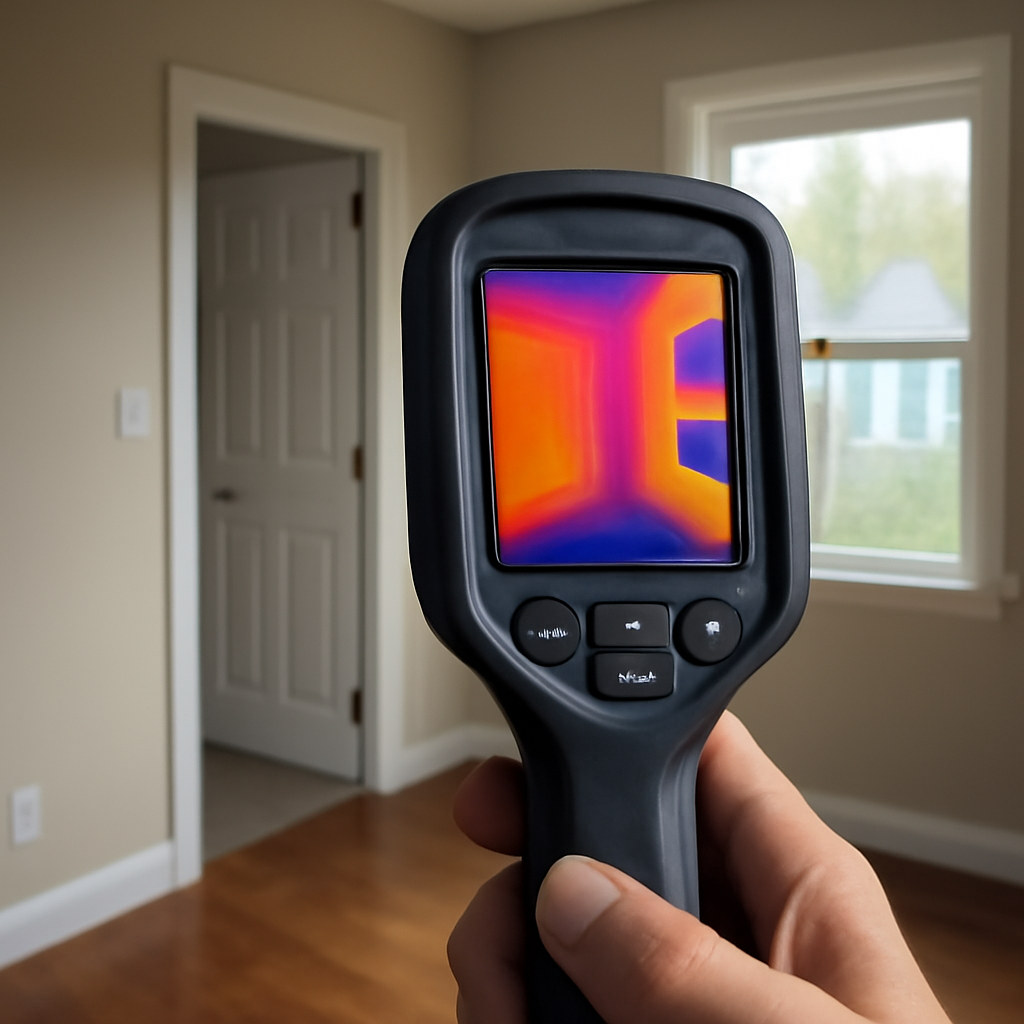
A Topdon thermal camera occupies a specific market position: mid-budget pricing, Chinese manufacturing origin, automotive-diagnostics roots that have expanded into home-inspection adjacent uses. The TC001, TC002, TC003, and TC005 product lines compete on price against entry-tier FLIR and Fluke offerings while ceding the high-end professional bracket to the established brands. For homeowners and casual inspection users, Topdon hardware delivers usable thermal imagery at roughly half the FLIR ONE Pro price. For licensed inspectors writing reports for clients, the calibration documentation gap matters more than the price savings. This guide walks through the lineup, the trade-offs, and where Topdon makes sense versus where it does not.
Part of our Thermal Imaging for Homes guide — start there for the full picture →
Where Topdon sits in the thermal-imager market
The thermal-imager market in 2026 stratifies into three tiers. The professional tier includes FLIR, Fluke, and Testo, with handhelds from $1,500 to $4,000+ and full radiometric calibration documentation. The prosumer tier includes FLIR ONE Pro, FLIR C5, and a handful of Seek Thermal offerings in the $300 to $600 range. The budget tier includes Topdon, HikMicro, InfiRay, and several smaller brands at $150 to $400.
Topdon’s roots are in automotive diagnostic equipment. The thermal imagers grew out of engine-diagnostics tooling and expanded toward general-purpose handheld imaging. The current TC003 and TC005 lines target the same hobbyist and prosumer audience as the FLIR ONE Pro. The pricing typically runs 30 to 50 percent below comparable FLIR options.
The Topdon lineup in 2026
The TC001 is the entry-level USB-C smartphone attachment at roughly $200 to $250. The sensor resolution is 256 by 192 pixels. The TC002C is a similar attachment with slightly upgraded optics. The TC003 is a standalone handheld with a built-in display and battery, retailing around $300 to $400. The TC005 is the current top-of-line standalone handheld at roughly $500 to $700 depending on bundle.
All four units use Chinese-manufactured microbolometers. The sensor specifications quoted on Topdon marketing typically match the actual hardware, but the calibration documentation that professional inspectors rely on is thinner than what FLIR or Fluke provide. The radiometric accuracy on Topdon handhelds is generally stated at plus or minus 2 degrees Celsius or 2 percent, similar to entry-FLIR but with less documentation of test methodology.
Sensor resolution versus FLIR comparables
The Topdon TC001 at 256 by 192 pixels actually exceeds the FLIR ONE Pro’s 160 by 120 native resolution. FLIR’s MSX technology overlays visible-light detail onto the thermal image to improve interpretability, which is not the same as actually having more thermal pixels. Topdon’s response has been to ship higher native resolution at lower price. For raw pixel counts, the TC001 is a strong on-paper match against the FLIR ONE Pro.
In practice, image quality depends on more than pixel count. Thermal sensitivity (the NETD value) measures the smallest temperature difference the sensor can detect. Topdon’s stated NETD on the TC003 is approximately 50 mK, similar to entry FLIR. The sensor’s actual field performance generally matches the spec sheet within reason.
What home inspection requires that Topdon may not provide
InterNACHI’s infrared certification program teaches that residential thermography reports should reference the imager’s calibration date and manufacturer-issued calibration certificate. FLIR, Fluke, and Testo provide calibration documentation as a standard product feature, with annual recalibration services available for a fee. Topdon’s calibration documentation is less standardized. For an inspector writing a thermal report that may surface in real-estate negotiation or insurance claims, the documentation gap matters.
For homeowners scanning their own house, the gap does not matter. The thermal data tells the same story regardless of which brand captured it. The inspection report difference is a professional-liability question rather than a technical one. ASHI’s standards of practice do not specify a manufacturer requirement but do reference the importance of documented equipment.
Build quality and warranty considerations
Topdon hardware uses plastic-shell housings with rubber overmolds, similar to entry FLIR. Drop ratings are not always published. Warranty terms are typically one to two years, with parts and service routed through regional distributors. FLIR’s two-to-ten warranty program (two years parts, ten years detector) is not matched in the Topdon range.
Replacement-part availability is the practical concern. A FLIR E5 that breaks in 2031 can usually be repaired through authorized service. A Topdon unit that breaks in 2031 may not have parts available through any channel. For hobbyist users, the warranty gap is a minor concern. For professional users who depend on a single imager for client deliverables, the gap weighs against Topdon.
Specific Topdon models and use-case fit
TC001 and TC001 Plus for smartphone-attached scanning
The TC001 plugs into a USB-C port on Android or Apple smartphones. The companion app provides image capture, video, and basic point-temperature spot measurement. For occasional energy-audit walkthroughs, the unit delivers usable imagery at the lowest price point in the category. Battery drain on the phone is noticeable during extended sessions.
TC003 and TC005 for standalone handheld use
The standalone units include a built-in display, battery, and storage. Operation does not depend on a smartphone, which matters in tight crawlspaces and attics where a phone is awkward. The TC005 adds a higher-resolution sensor and additional onboard storage. Both units output to MicroSD for transfer to a desktop for analysis.
How Topdon compares to other budget brands
HikMicro is Topdon’s closest competitor in the budget tier. HikMicro’s roots are in surveillance imaging, which gives the brand a different engineering pedigree. Pricing is similar. Build quality is comparable. For homeowners weighing the two, the choice often comes down to which retailer carries which brand in stock locally.
InfiRay is another Chinese-manufactured brand competing at similar price points. Image quality on the upper InfiRay models has been positively reviewed in hobbyist communities, though professional reviews are thinner. Seek Thermal is the American-flag competitor in the same tier, with the Seek ShotPRO standalone at roughly $499 to $600.
Where Topdon fits a Front Range homeowner
For a Denver-area homeowner doing one annual envelope scan, the TC001 at $200 to $250 is a reasonable purchase. The thermal data captured during a winter low-differential scan still reveals the same insulation gaps and air-leak paths regardless of brand. The Department of Energy’s diagnostic equipment guidance does not specify any manufacturer for residential energy audit work.
For an inspector building out a professional toolkit, the answer depends on report-writing volume and client expectations. The cost savings on Topdon do not offset the calibration-documentation gap for an inspector who writes 100 thermal reports per year. For an inspector who incorporates thermal as a supplementary tool rather than a primary deliverable, Topdon is more defensible.
Anyone building a complete inspection toolkit should also review the home inspection tools 2026 buyer guide and the companion thermal camera cost tier breakdown for cross-brand context.
Training and post-purchase learning
InterNACHI infrared training is brand-agnostic. The methodology applies to any radiometric imager regardless of manufacturer. The single most important skill for any new thermal user is recognizing reflection artifacts and avoiding the cold-spot-from-sky-reflection error on roof scans.
Software ecosystem and image processing
Topdon ships its own image processing software for desktop analysis of captured radiometric data. The Topdon software supports basic point temperature measurement, area-based statistics, and palette adjustment. The feature set is narrower than FLIR Tools or FLIR Ignite, but covers the workflows most homeowners and casual inspection users need. Cross-platform support includes Windows and macOS, an advantage over DJI Thermal Analysis Tool which is Windows-only.
For users who want more sophisticated analysis, third-party radiometric tools like Thermimage (an open-source R package) and several Python libraries can read Topdon thermal files after format conversion. The conversion step adds friction but opens the door to custom analysis workflows. Professional thermographers writing detailed reports for client deliverables typically prefer FLIR’s mature software ecosystem over the Topdon options.
Real-world image quality considerations
Image quality in practical use depends on more than the spec sheet. Topdon’s image processing applies digital filtering that smooths the raw thermal data into more visually appealing imagery. This is the same approach FLIR’s MSX uses, just with different algorithms. The processed image looks cleaner than the raw data, which helps on-site interpretation but can obscure subtle defects that a less-processed image would reveal more clearly.
For comparative thermography work, where the goal is detecting small temperature differences across a surface, less processing is generally better. Topdon’s processing leans toward visual cleanliness. FLIR’s leans toward analytical fidelity. Neither is wrong; they reflect different design priorities. Users should understand which they are getting.
Front Range homeowner decision example
A typical Denver-area homeowner doing an annual winter envelope scan benefits more from getting any thermal data than from getting the highest possible quality thermal data. A $200 Topdon TC001 captures the missing-insulation areas in the master bedroom, the cold air leaks around the front door, and the warm-spot pattern from improperly installed window flashing just as clearly as a $1,500 FLIR E5-XT would for those specific defect sizes. The cost-versus-value math for occasional use favors the budget tier.
For a homeowner doing weekly or monthly thermal scans during a major remediation project (chasing down moisture intrusion in a basement, for example), the budget tier’s limitations on documentation and software polish start to matter. Stepping up to a mid-tier FLIR or Seek Thermal unit becomes more defensible when the use case justifies the additional investment.
Resale value of thermal hardware
Thermal imager resale value varies sharply by brand. FLIR units retain 50 to 65 percent of original value after three to five years of light use. Used FLIR market is liquid through eBay and specialty resellers. Topdon units retain perhaps 30 to 40 percent of original value over the same period, with thinner used market liquidity. For buyers who anticipate upgrading within a few years, the FLIR resale value partially offsets the higher initial cost.
The resale calculation shifts at the entry-level tier. A $200 Topdon that depreciates to $80 still represents only $120 of net cost over three years. A $400 FLIR ONE Pro that depreciates to $200 represents $200 of net cost. The Topdon is still cheaper net of resale at the lowest tier even with worse retention percentage.
Geopolitical considerations for Chinese-manufactured hardware
Topdon is a Chinese-origin brand, which matters to some buyers in the current geopolitical environment. Federal procurement restrictions on Chinese-manufactured technology have expanded in recent years, particularly affecting drones (DJI) but with some carryover concerns to other Chinese consumer electronics. For residential homeowner use, these concerns do not affect purchase eligibility. For inspectors working under federal contracts or for clients with their own restrictions, the manufacturing origin may matter.
The practical impact on most homeowners is zero. The hardware works the same regardless of manufacturing origin. The data captured by the imager belongs to the user. Privacy and data-sovereignty concerns that have been raised about some Chinese-manufactured technology generally do not apply to standalone thermal imagers without network connectivity.
Where Topdon excels versus where it falls short
Topdon excels at delivering working thermal hardware at the lowest practical price points. The TC001 at $200 represents the floor of the market for usable radiometric imaging. For homeowners who want to experiment with thermal scanning without committing significant capital, Topdon is the lowest-friction entry point. The hardware works as advertised within its stated specifications.
Topdon falls short on professional documentation, ecosystem maturity, and long-term serviceability. Inspectors who need calibration certificates for client deliverables, comprehensive software analysis tools, or warranty support over five to ten years should look at FLIR or Fluke instead. The price-versus-professional-capability tradeoff is real and unavoidable at this tier.
References
- ENERGY STAR: Seal and Insulate — U.S. Environmental Protection Agency (ENERGY STAR)
- InterNACHI Infrared Certified Training — InterNACHI
- ASHI Standard of Practice — American Society of Home Inspectors
- ASHRAE Standards and Guidelines — ASHRAE
Frequently asked questions
Is a Topdon thermal camera good enough for home inspection?
For homeowner self-use and casual inspection, yes. The TC001 at $200 to $250 produces usable imagery comparable to a FLIR ONE Pro at higher price. For professional inspectors writing client reports, the calibration documentation gap may matter for liability purposes.
How does Topdon compare to FLIR on price and specs?
Topdon prices typically run 30 to 50 percent below comparable FLIR units. Native sensor resolution is sometimes higher on Topdon. Image processing, build quality, warranty length, and calibration documentation favor FLIR.
Are Topdon imagers calibrated?
Yes, but the calibration documentation is thinner than what FLIR or Fluke provide. Topdon publishes radiometric accuracy specifications but does not typically issue per-unit calibration certificates as a standard product feature.
What is the warranty on Topdon thermal cameras?
Topdon warranty terms are typically one to two years depending on model and region. Service is routed through regional distributors. The terms are shorter than FLIR's two-year parts and ten-year detector program.
Thermal imaging cameras
Infrared cameras reveal hidden moisture, missing insulation, and air leaks. Phone-attachment models are the budget entry point; standalone units have higher resolution.
| Product | Why | Buy |
|---|---|---|
 FLIR ONE Pro (phone) FLIR ONE Pro (phone) | Plugs into iPhone/Android; inspector favorite. | Amazon — $349.00 |
 Topdon TC001 Topdon TC001 | High-res phone module at a low price. | Amazon — $199.99 |
 FLIR C5 Compact FLIR C5 Compact | Standalone pocket camera with Wi-Fi. | Amazon — $611.50 |