Topdon Thermal: Phone-Attached Thermal Camera Overview
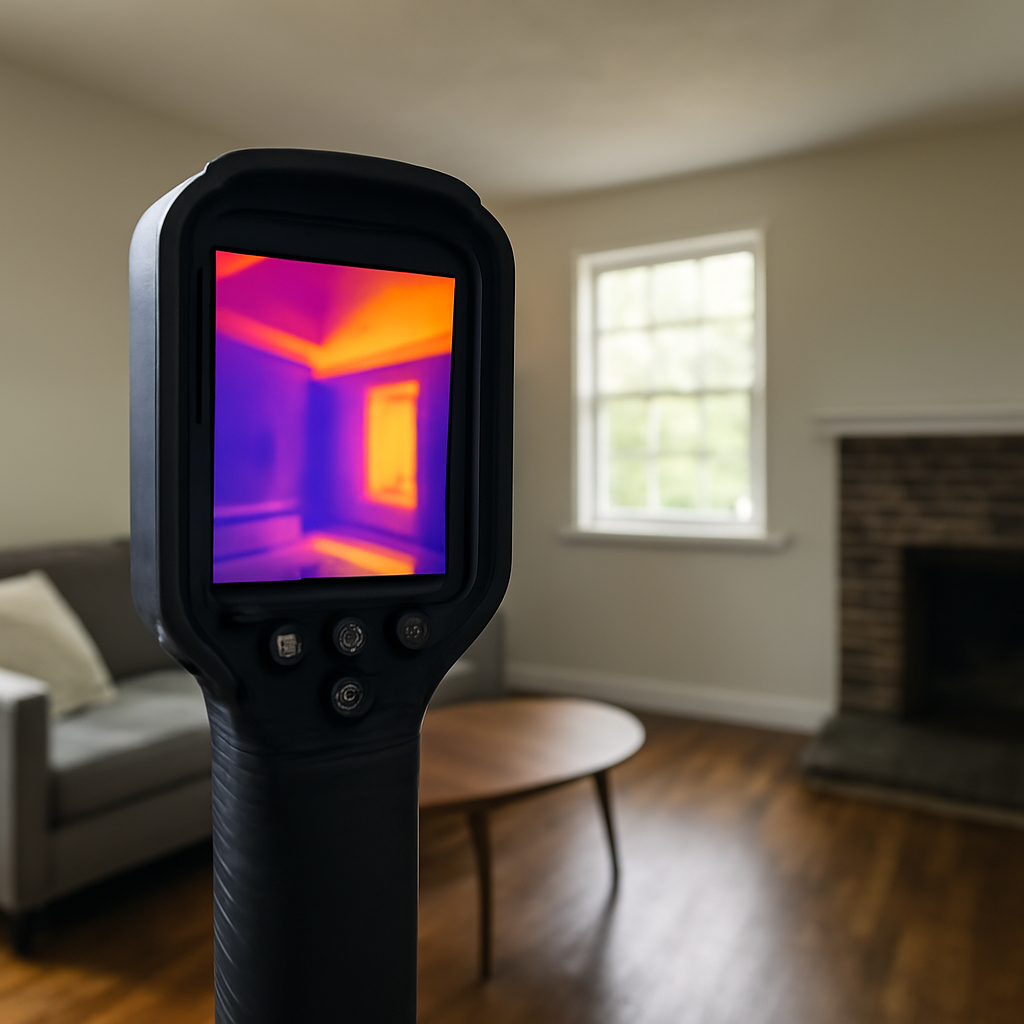
Topdon thermal cameras sit in the phone-attached category at roughly the $300 to $500 price point, alongside competing products from FLIR and Seek. These devices clip onto a smartphone’s USB-C or Lightning port and use the phone’s processor and screen to render thermal imagery. For homeowners weighing a budget entry into thermography or working inspectors looking for a backup pocket tool, the phone-attached tier deserves a clear-eyed assessment of what the form factor delivers and where its limitations show up in practice. This guide treats Topdon thermal as one example of the broader phone-attached category and compares the form factor against standalone handhelds across the use cases inspectors and homeowners actually face.
Part of our Thermal Imaging for Homes guide — start there for the full picture →
What the phone-attached thermal category is
A phone-attached thermal camera is a small accessory roughly the size of a thumb drive that plugs into a smartphone and adds a thermal sensor and lens. The phone provides the display, image processing, file storage, and battery. The accessory supplies only the thermal sensor, optics, and a small dedicated processor for the raw thermal data stream. The category emerged around 2014 and now includes several established manufacturers at the entry tier, with Topdon, FLIR ONE, Seek Thermal, and a handful of Chinese-manufactured brands occupying overlapping segments.
The Topdon thermal line specifically targets the automotive diagnostics market alongside building inspection use. The TC series carries native sensor resolutions ranging from 160 by 120 at the entry product up to 256 by 192 at the higher end, with thermal sensitivity in the 40 to 50 mK range. Connector versions include both USB-C variants for modern Android and recent iPhone models and Lightning variants for older iPhones still in service. Buyers should confirm connector compatibility against their specific phone before purchase.
Sensor specifications across the phone-attached tier
Resolution
Native sensor resolution across the phone-attached category clusters at 160 by 120, 192 by 144, and 256 by 192. Some products advertise higher figures through pixel-shift or super-resolution algorithms that interpolate between native pixels using accelerometer data or computational upscaling. Real-world image detail depends on the native sensor count, not the upscaled marketing number, so buyers should focus on the lower of the two figures when specifications list both.
Thermal sensitivity
The phone-attached tier runs 40 to 70 mK NETD. Lower is better, and the difference between 40 and 70 mK is visible when scanning for subtle envelope detail like missing batt insulation in a moderately conditioned wall. For obvious anomalies, slab leaks, hot breakers, or major drafts, the entire tier performs adequately.
Field of view and focus
Phone-attached cameras carry fixed-focus lenses optimized for arm’s-length to room-distance work. Field of view typically runs 50 to 56 degrees horizontal. Close-up macro work, reading a circuit breaker label or photographing the heat trail along a single Romex run, suffers because the fixed focus blurs at distances under 18 inches.
Where phone-attached thermal works well
The form factor’s strengths concentrate in three use cases.
Homeowner envelope screening
A homeowner who wants to find drafty windows, check whether bedroom walls are insulated, or confirm a suspected slab leak before calling a plumber gets real value from a $300 to $500 phone-attached unit. The thermal contrast on a 30-degree winter morning between a properly insulated wall and a stud-cavity gap is large enough to image clearly on any sensor in the category. The phone interface is familiar, image sharing through standard apps is friction-free, and the device fits in a pocket.
Inspector pocket-backup
Working home inspectors who carry a $2,500 handheld as their primary tool often keep a phone-attached camera as backup or for situations where pulling out the pro unit feels excessive. The backup role makes sense; the cheap unit handles unexpected secondary scans without delaying the inspection workflow.
Automotive and small-equipment diagnostics
For checking radiator hot spots, identifying overheating brake calipers, finding hot bearings on small machinery, or any work where the target sits within a few feet of the camera, the phone-attached tier performs well. Topdon’s automotive-diagnostic positioning reflects this strength.
Where phone-attached thermal falls short
The form factor’s limitations matter in specific scenarios.
Cold-weather reliability
Phone batteries discharge faster in winter, and the thermal accessory draws additional current. Inspectors working unconditioned spaces in January frequently see their phone shut down with low-battery warnings well before they would expect. Standalone handhelds use cold-rated internal batteries and continue working in conditions where phones quit.
Glove operation
Phone touchscreens fight glove use. Standalone thermal cameras carry physical buttons and grip-friendly bodies designed for jobsite operation.
Report-grade output
Image metadata, automatic visible-light overlay, picture-in-picture composition, and built-in reporting templates exist on standalone professional units in ways the phone-attached tier approximates but does not fully replicate. Photo files from phone-attached cameras may lack radiometric data when shared, depending on app and export format. Inspectors planning to include thermal images in formal reports should verify the export workflow preserves the temperature data clients and reviewers may want.
Connector durability
USB-C and Lightning ports on phones are not designed for repeated mechanical loading. A heavy thermal accessory hanging off a phone in landscape orientation puts stress on the port. Daily-use inspectors have reported port damage on phones used as thermal hosts, an issue standalone cameras sidestep entirely.
How the category compares to FLIR ONE and Seek
FLIR ONE products carry the strongest brand recognition in the phone-attached tier, with FLIR’s MSX overlay technology that blends thermal imagery with visible-light edge detail from a secondary camera on the accessory. Seek Thermal positions its products at lower price points with larger thermal sensors on some models, trading visible-light overlay for a higher thermal pixel count. The Topdon line slots between, often pricing competitively against FLIR ONE at similar resolutions and adding automotive diagnostic integrations. Across all three manufacturers, the underlying microbolometer technology comes from a small number of upstream sensor suppliers, so the raw image quality at matched resolutions is comparable. Differentiation comes from app interface, build quality, and ecosystem features.
For homeowners weighing the broader thermal-imaging decision, the home inspection tools 2026 guide covers full sensor categories from phone-attached up through pro-tier handhelds and drone payloads. The thermal imaging cost overview compares purchase versus hiring a thermographer for one-off inspection needs.
How to evaluate any phone-attached thermal camera
Five questions sort the worth-buying from the not-worth-buying across the category.
Native sensor resolution. 256 by 192 is the practical floor for envelope work. 160 by 120 suffices for obvious hot-spot detection only.
Connector match. USB-C accessories work with most current Android phones and recent iPhones. Lightning accessories work with older iPhones. Buy the connector that matches the phone in active use, not a phone planned for a future upgrade.
App quality. Read recent user reviews of the manufacturer’s app on the relevant operating system before purchase. App updates after operating system upgrades can break older accessories.
Temperature range. Building work needs at minimum negative 4 to 248 degrees Fahrenheit. Automotive and small-equipment work benefits from wider ranges up to 1,022 degrees Fahrenheit.
Battery draw. Some accessories include their own small battery; others draw entirely from the phone. The dedicated-battery design preserves phone battery for emergencies and improves cold-weather reliability.
What homeowners should buy first
For a homeowner who has never owned a thermal camera and wants to start somewhere, the $250 to $400 entry-tier phone-attached unit at 192-by-144 or 256-by-192 resolution covers nearly every household question. It locates drafts, finds wet drywall, confirms HVAC distribution issues, and reveals insulation gaps. The Department of Energy’s home thermography resources describe the use cases this tier handles well. If after a year of use the homeowner finds themselves wishing for sharper images, longer battery life, and grip-friendly buttons, that is the moment to consider stepping up to a $1,000 to $2,000 standalone handheld.
When to skip phone-attached entirely
If the buyer is a working inspector running 200-plus inspections per year, the standalone $2,500 handheld is the right starting point and the phone-attached tier serves only as backup. If the buyer is documenting findings for insurance claims, lender reports, or legal disputes, the standalone tier produces report output that holds up under scrutiny in ways the phone tier struggles with. The phone tier is a homeowner-and-hobbyist category, not a primary commercial tool.
Connector compatibility caveats
Phone-attached thermal cameras introduce a hardware dependency on the phone’s connector and operating system. USB-C accessories work on most current Android phones and on iPhones released from 2023 onward. Lightning accessories work on older iPhones still in service but become irrelevant on newer hardware. Some manufacturers sell separate USB-C and Lightning versions of the same sensor module; others retired the Lightning version when Apple moved away from the connector. Buyers planning a multi-year hardware life should confirm not only current-phone compatibility but also the manufacturer’s track record of supporting new operating systems and connector transitions.
Operating system support is a recurring vulnerability for phone-attached accessories. Major iOS or Android updates can break app compatibility with older accessories, sometimes for weeks or months before the manufacturer releases an updated app. Operators who depend on the device for active work benefit from keeping the phone’s OS one major version behind the latest release, allowing time for accessory compatibility to catch up before adopting the new OS.
Storage, charging, and field readiness
A phone-attached thermal camera carried in a working inspector’s bag faces the typical jobsite hazards of dust, dropped tools, and temperature swings. Most accessories ship with a small carrying pouch or case; few are jobsite-rated to the level of standalone professional handhelds. Operators benefit from a separate impact-resistant case for the accessory and a habit of charging the phone immediately before any inspection where the accessory will be used.
Power management on the host phone matters when the accessory draws current. A phone at 30 percent battery entering a thirty-minute thermal scan in a cold space may shut down mid-inspection. Operators planning extended thermal work should start at 80 percent or higher, carry a portable battery pack as backup, and consider an accessory with its own built-in battery if available in the chosen product line.
Image export and report integration
Thermal images captured by phone-attached cameras export through the manufacturer’s app to standard photo libraries or cloud storage. The question for inspection use is whether the exported image retains radiometric data, the per-pixel temperature data that allows post-processing analysis and accurate report annotation. Some manufacturers preserve radiometric data in their proprietary file format and require their software to extract it; others export standard JPEG files with no radiometric information.
For inspectors planning to include thermal images in client reports, the workflow should be tested before commitment. Capture a sample image, export it, import it into the inspection report software, and verify that temperature annotations transfer correctly. Discovering radiometric data loss at the report-writing stage forces re-inspection, which defeats the purpose of the time savings the device promised.
What buyers should expect to spend annually
Beyond the initial purchase, phone-attached thermal cameras have modest ongoing costs. App subscriptions, where required, typically run $30 to $100 per year. Replacement units after physical damage or end-of-life run the original purchase price every two to four years for frequent users. Compared with standalone handhelds where the hardware lasts five to ten years, the phone-attached tier has a shorter realistic service life. The lower up-front cost partially offsets this through faster replacement at lower per-unit cost, but operators planning long service life should factor replacement frequency into the total-cost comparison.
References
- ENERGY STAR: Seal and Insulate — U.S. Environmental Protection Agency (ENERGY STAR)
- Infrared Inspection Certification and Standards — InterNACHI
- Building Diagnostics Technical Resources — ASHRAE
Frequently asked questions
Is a Topdon thermal camera good enough for home inspection?
For homeowner self-inspection it works well. For a working inspector producing client-facing reports, a phone-attached camera is a backup tool. The primary inspection thermal camera should be a standalone handheld at 320 by 240 or higher resolution with built-in visible-light overlay and reporting features.
What is the difference between Topdon and FLIR ONE?
Both occupy the phone-attached tier at similar price and resolution points. FLIR ONE adds the MSX visible-light edge overlay; Topdon often emphasizes automotive diagnostic integration. The underlying thermal sensor technology comes from a small number of upstream suppliers, so raw image quality at matched native resolutions is comparable.
Will a phone-attached thermal camera work in winter?
It works but cold conditions accelerate phone battery drain. Inspectors working unconditioned spaces in cold weather often find their phone shuts down before they expect. A dedicated-battery design or a standalone handheld with cold-rated internals handles January fieldwork better.
Does the resolution upscaling on phone thermal cameras actually help?
Pixel-shift and super-resolution algorithms produce smoother-looking images but do not add real thermal information beyond the native sensor count. Focus on the lower of the two resolution figures when manufacturers list both.
Thermal imaging cameras
Infrared cameras reveal hidden moisture, missing insulation, and air leaks. Phone-attachment models are the budget entry point; standalone units have higher resolution.
| Product | Why | Buy |
|---|---|---|
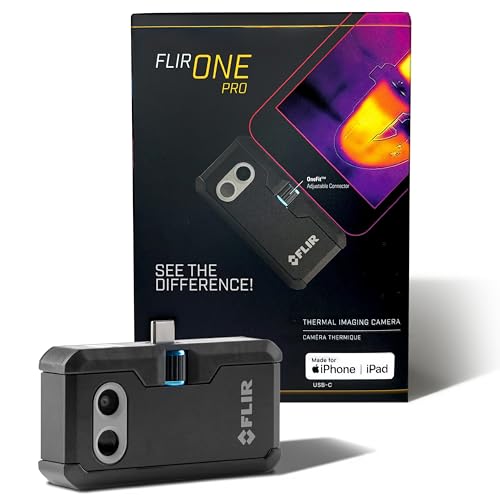 FLIR ONE Pro (phone) | Plugs into iPhone/Android; inspector favorite. | Amazon — $349.00 |
 Topdon TC001 | High-res phone module at a low price. | Amazon — $262.99 |
 FLIR C5 Compact | Standalone pocket camera with Wi-Fi. | Amazon — $649.00 |