InfiRay Thermal Camera: Chinese-OEM Brand Buyer Guide
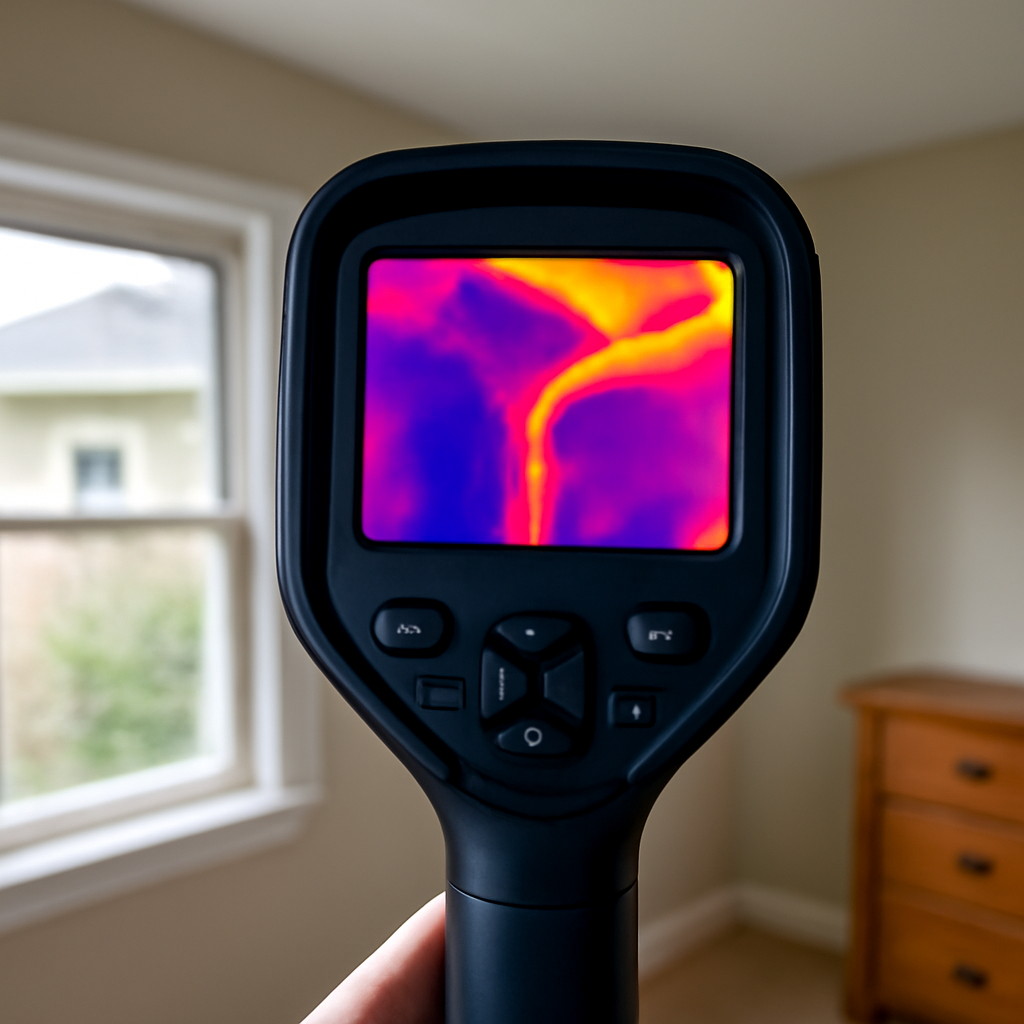
InfiRay is a Chinese thermal-imaging brand that has become a meaningful price-competitive challenger to established Western thermal manufacturers since its founding in 2017. The company spun out of Wuhan Guide Sensmart, a longer-established Chinese thermal imaging manufacturer, and built a product portfolio spanning industrial thermal imaging, consumer pocket thermal cameras, and hunting and outdoor thermal optics. For home inspection professionals and homeowners in the U.S. market, the brand has reached the point where it appears in buyer-comparison conversations alongside FLIR, Fluke, and Hikmicro. This guide covers what InfiRay offers, where it sits in the market, and which use cases match the brand’s product line.
Part of our Thermal Imaging for Homes guide — start there for the full picture →
Who Is InfiRay?
InfiRay (formally IRay Technology Co., Ltd.) is a Chinese thermal imaging manufacturer founded in 2017 with headquarters in Yantai, Shandong Province. The company spun out from Wuhan Guide Sensmart, one of the older Chinese thermal manufacturers. InfiRay’s product range covers industrial thermal cameras (xCity and xModule series for fixed industrial applications), handheld inspection thermal cameras, pocket consumer thermal cameras (P2 Pro and similar smartphone-attachment models), and dedicated hunting and outdoor optics (FCAM series rifle scopes and night-vision-style devices).
The brand has expanded into the North American market over the past several years and is now distributed by various electronics retailers and specialty inspection tool suppliers. As with most Chinese-origin thermal manufacturers, InfiRay competes primarily on price-to-capability ratio rather than on brand heritage. The company manufactures its own thermal sensors rather than sourcing from third parties, which is unusual in the thermal market and gives the brand a vertical integration advantage on cost.
How Does InfiRay Position Versus FLIR, Fluke, and Hikmicro?
FLIR is the long-established U.S. brand and is widely considered the professional standard for thermal imaging in inspection work. Fluke is similarly established, with stronger emphasis on electrical and HVAC diagnostics. Hikmicro is another Chinese-origin brand that has gained meaningful market share in the U.S. inspection tool market over the past five years. InfiRay competes most directly with Hikmicro on the Chinese-challenger side and against the entry and mid-tier products of FLIR and Fluke on the established-brand side.
The general positioning pattern is that InfiRay and Hikmicro offer comparable specifications to FLIR and Fluke at lower price points, with tradeoffs in software ecosystem depth, accuracy specification documentation, and service network coverage. For homeowner and entry-level inspector use, the Chinese brands often offer better price-to-capability ratios. For professional inspection practices that depend on documented accuracy specifications, integration with industry-standard software, and U.S.-based service support, the established Western brands often remain the safer choice.
What Is the InfiRay Product Line?
The InfiRay consumer and inspection product line includes several model families. The P2 Pro is a pocket-sized thermal camera that connects to smartphones via USB-C, targeting the consumer and entry-inspection market segment at roughly $250 to $400. It offers 256-by-192 native IR sensor resolution, which is higher than the typical 160-by-120 of comparably priced FLIR ONE Pro or similar competitors. The handheld inspection line includes higher-resolution units suitable for working inspectors.
The xCity and xModule industrial lines target fixed installations and specialized industrial applications rather than handheld inspection work. The FCAM rifle scope and hunting optics line target outdoor and tactical use rather than home inspection. For residential and commercial home inspection use cases, the P2 Pro and the handheld inspection line are the most relevant products. The home inspection tools hub covers thermal camera tier comparisons in detail.
What Use Cases Match InfiRay Thermal Cameras?
The P2 Pro and similar pocket thermal cameras work well for homeowner diagnostic use (insulation gap scanning, plumbing leak detection, electrical hot spot checks at the residential panel) and as supplemental tools for working inspectors who want higher resolution than typical entry-tier FLIR ONE Pro units offer at similar price points. The 256-by-192 native sensor resolution produces clearer images than 160-by-120 alternatives, which matters for distant subjects and small temperature differentials.
For full-time professional inspection work that produces client deliverables with annotated temperature measurements, the choice between InfiRay and a comparable mid-tier FLIR or Fluke unit depends on the specific deliverable requirements. Some inspection report software and energy audit deliverables expect specific accuracy specifications or specific calibration documentation that established Western brands provide more thoroughly. Inspectors should verify that their deliverable workflow accepts InfiRay output before committing to the brand.
What Are the Tradeoffs With Chinese-OEM Thermal Brands?
The primary tradeoff is software ecosystem maturity. Established Western brands have decades of software development, integration with inspection report tools, and reporting templates designed around their camera output. Chinese-OEM brands including InfiRay often have less mature software ecosystems, with apps that may lack features inspectors expect and with less integration into industry-standard report templates.
A secondary tradeoff is service network coverage. FLIR and Fluke have established U.S. service centers for warranty repairs, calibration verification, and out-of-warranty maintenance. Chinese-OEM brands typically have less developed U.S. service networks, with repairs sometimes requiring the unit to ship internationally. For an inspector using the camera in paid daily work, the service network availability matters operationally. A third tradeoff is regulatory and import considerations; thermal imaging products from China have occasionally been subject to import restrictions or tariff changes that affect availability and pricing.
How Does InfiRay Image Quality Compare?
At the consumer pocket-thermal tier, the P2 Pro produces image quality that compares favorably to similarly priced FLIR ONE Pro units. The higher native IR sensor resolution (256-by-192 versus 160-by-120) is the most visible difference, with InfiRay producing cleaner images of smaller temperature differentials. The visible-light overlay feature on InfiRay cameras (similar to FLIR’s MSX technology) works reasonably well, though the implementation details and image processing differ between brands.
At the mid-tier handheld inspection level, image quality differences narrow as both InfiRay and the established Western brands offer 320-by-240 or higher native sensor resolution. The differentiation at this tier shifts more toward accuracy specifications, software ecosystem depth, and durability rather than raw image quality. The home inspection infrared camera process integration guide covers the workflow considerations.
What Accuracy Specifications Does InfiRay Publish?
InfiRay publishes typical accuracy specifications of plus or minus 2 to 3 degrees Celsius or 2 to 3 percent of reading (whichever is greater), which is comparable to most mid-tier thermal cameras from established brands. Sensitivity specifications (NETD, noise equivalent temperature difference) on the consumer P2 Pro are usually around 40 to 60 millikelvin, with higher-end units in the 25 to 40 millikelvin range. Lower NETD numbers indicate better sensitivity for resolving small temperature differences.
Specification documentation depth varies between InfiRay product tiers. Consumer units often have abbreviated specification sheets compared to established Western brands. Professional and industrial units have more comprehensive documentation. For inspectors who need detailed specifications for deliverable documentation, the higher tiers of the InfiRay line offer more complete information than the consumer tier.
What Is the InfiRay Software Experience?
InfiRay smartphone apps (typically required for the P2 Pro and similar smartphone-attached cameras) offer basic thermal image capture, video recording, and image annotation. The app ecosystem has improved over the past few years but historically lagged behind FLIR Tools and similar established brand software. Desktop software for image processing and report integration is available but less mature than equivalent established-brand offerings.
Working inspectors who depend on tight integration between their thermal camera and their inspection report software should verify the integration path before committing to InfiRay. Some inspection report platforms support direct InfiRay image import; others require manual export and embedding. Test the workflow end to end with a borrowed or rented unit before committing.
When Should You Consider InfiRay Over Established Brands?
InfiRay makes sense when the price-to-capability ratio matters more than software ecosystem depth and service network coverage, when the inspector or homeowner wants higher native sensor resolution than entry-tier FLIR or Fluke units offer at the same price point, and when the use case is supplemental or diagnostic rather than primary paid deliverable. Homeowners doing personal diagnostic work, inspectors building their first kit who want better resolution than a typical $300 FLIR ONE Pro offers, and inspectors carrying a backup unit alongside a primary established-brand camera all fit the InfiRay profile reasonably well. For full-time professional inspection with established-software workflows and demanding accuracy documentation requirements, the established Western brands often remain the more straightforward choice.
How Does InfiRay Handle Common Inspection Use Cases?
For insulation gap scanning, the InfiRay P2 Pro produces clearly readable images of missing or compressed insulation in exterior walls and attic planes. The higher native resolution helps with smaller gaps at modest temperature differentials. For plumbing leak detection, the camera identifies active wet substrates reliably; older dry residual moisture is harder to detect with any thermal camera and usually requires a moisture meter for confirmation. For electrical hot spot scanning at residential panels, the camera identifies abnormally warm breakers or wires at safe working distance.
For HVAC supply-and-return diagnostics, the camera can identify duct leakage points by the temperature mismatch between conditioned supply air and surrounding building cavities. Front Range homeowners scanning during winter (when there is a strong delta between conditioned indoor air and unconditioned exterior or attic spaces) get the most useful images from these use cases. Summer scanning produces less dramatic temperature differentials and is generally harder for any thermal camera to interpret accurately.
Battery Life and Charging Considerations
The P2 Pro and similar smartphone-attachment thermal cameras have small internal batteries that supplement the smartphone power supply. Typical runtime is one to three hours of continuous use depending on the inspection activity. The camera charges via USB-C, with charge time of one to two hours from depleted to full. For inspectors doing back-to-back inspections, carrying a power bank or charging between jobs is necessary.
Standalone thermal cameras (rather than smartphone-attachment units) typically have longer battery life, often three to six hours, with field-swappable batteries on some professional units. InfiRay’s higher-tier handheld inspection cameras follow this pattern, while the consumer P2 Pro and similar pocket units depend on more frequent charging.
Warranty, Support, and Long-Term Considerations
InfiRay’s U.S. warranty support has improved over recent years but remains less developed than established Western brands. Warranty terms typically run one to two years on consumer products, with longer warranties on industrial and professional units. Replacement parts availability through U.S. channels is limited; some repairs require returning the unit to the manufacturer overseas. For inspectors using the camera daily in paid work, this service-network gap is a real operational consideration; for homeowners using the camera occasionally, the warranty terms are usually adequate.
Resale value of Chinese-OEM thermal cameras has historically been lower than equivalent established-brand units, which matters for inspectors who might upgrade their kit every few years. This factor partially offsets the lower initial purchase price when calculating total cost of ownership across multiple-year inspection use.
References
- InterNACHI Infrared Thermography in Residential Energy Auditing — InterNACHI
- ASHI Standard of Practice — American Society of Home Inspectors
- ENERGY STAR: Seal and Insulate — U.S. Environmental Protection Agency (ENERGY STAR)
- ASHRAE Building Diagnostic Resources — American Society of Heating, Refrigerating and Air-Conditioning Engineers
Frequently asked questions
Is InfiRay a good thermal camera brand?
For the price point, yes. InfiRay offers higher native sensor resolution than similarly priced FLIR or Fluke entry-tier units. The tradeoffs are software ecosystem maturity and U.S. service network coverage. For homeowner and entry-inspector use the brand is competitive; for established-software-workflow professional use the Western brands are often easier to integrate.
How does InfiRay P2 Pro compare to FLIR ONE Pro?
The P2 Pro offers 256-by-192 native IR resolution versus the FLIR ONE Pro 160-by-120, at a comparable or slightly higher price. Image quality on the P2 Pro is generally better for the same price tier. FLIR has more mature software and U.S. service network.
Where is InfiRay manufactured?
InfiRay is a Chinese manufacturer based in Yantai, Shandong Province, with thermal sensor manufacturing done in-house. The company was founded in 2017 as a spin-off from Wuhan Guide Sensmart, a longer-established Chinese thermal imaging manufacturer.
Thermal imaging cameras
Infrared cameras reveal hidden moisture, missing insulation, and air leaks. Phone-attachment models are the budget entry point; standalone units have higher resolution.
| Product | Why | Buy |
|---|---|---|
 FLIR ONE Pro (phone) FLIR ONE Pro (phone) | Plugs into iPhone/Android; inspector favorite. | Amazon — $349.00 |
 Topdon TC001 Topdon TC001 | High-res phone module at a low price. | Amazon — $199.99 |
 FLIR C5 Compact FLIR C5 Compact | Standalone pocket camera with Wi-Fi. | Amazon — $611.50 |