Thermal Imaging Inspection Littleton, CO | InspectandTest

Thermal imaging adds a layer of detection a standard home inspection cannot match, revealing temperature differences that point to hidden moisture, missing insulation, and overheating electrical components. In Littleton, where housing ranges from drafty brick Victorians near Historic Downtown to tightly sealed newer homes toward Ken Caryl, those hidden conditions vary widely by neighborhood and era. A thermal imaging inspection littleton homeowners and buyers add to a standard inspection uses an infrared camera to map what the naked eye misses. This page explains how the technology works, what it finds in Front Range homes, what it costs, and how to choose a qualified provider.
Part of our Thermal Imaging for Homes guide — start there for the full picture →
Thermal imaging inspection in Littleton: what to know
A thermal imaging inspection uses an infrared camera that visualizes surface temperature. The camera does not see through walls; it detects subtle temperature variations on surfaces that reveal what lies behind them. A cool patch on a ceiling can signal moisture, a cold band along a wall can mean missing insulation, and a hot spot at an electrical panel can flag a failing connection.
It is an add-on to, not a replacement for, a standard inspection. The camera points an inspector toward areas that warrant closer investigation, and findings are confirmed with a moisture meter or by direct inspection. For how thermal imaging fits into a complete home evaluation, our guide to hiring a home inspector on the Front Range explains where infrared adds value.
Thermal results depend on conditions. The camera works best when there is a temperature difference between inside and outside, which makes Colorado’s cold winters and hot summers ideal for revealing insulation gaps and air leaks. An experienced operator interprets the images correctly, distinguishing a genuine defect from a harmless thermal artifact like sun-warmed framing.
Why Littleton homes benefit from thermal imaging
The city’s range of housing eras creates different uses for the camera. In older Historic Downtown homes, infrared often reveals missing or settled insulation in walls that were built before modern standards, plus air leaks around original windows and doors that drive up heating costs. These homes frequently have uneven, retrofitted insulation that thermal imaging maps clearly.
Moisture detection is a major Littleton application. The South Platte River corridor raises basement and crawl-space moisture risk in lower-lying neighborhoods, and thermal imaging can reveal damp areas behind finished-basement walls before mold takes hold. A cool, irregular pattern on a Ketring basement wall, confirmed with a moisture meter, can catch a slow leak or seepage that a visual inspection would miss entirely.
Electrical and energy issues round out the value. Colorado’s freeze-thaw climate and the heavy heating and cooling load make energy efficiency a real cost concern, and infrared pinpoints where a home loses conditioned air. At the panel, the camera can spot an overheating breaker or loose connection, an early warning of a fire hazard that looks normal to the eye.
The contrast between Littleton’s housing eras makes thermal imaging especially informative across the city. In a century-old Historic Downtown home, infrared often lights up like a map of every place the original construction falls short of modern insulation standards, knee walls, rim joists, and uninsulated cavities that drive winter heating bills. In a tightly built newer home toward Ken Caryl, the same camera is better used to confirm the envelope is intact and to hunt for the rare condensation or leak that a sealed home cannot dry on its own. The tool is the same; the questions it answers differ by neighborhood.
Radiant-heat and HVAC verification is another Littleton-relevant use. Some homes use in-floor radiant heat or have ductwork running through unconditioned spaces, and a thermal camera can confirm whether radiant loops are functioning evenly or whether ducts are leaking conditioned air into a crawl space. For a buyer trying to understand why one room never warms up, infrared can reveal a missing duct connection or a cold spot in a radiant loop that a visual inspection would never catch.
What a Littleton thermal imaging inspection covers
The inspector scans interior walls, ceilings, and floors, the electrical panel, around windows and doors, and the areas most prone to moisture, then documents anomalies with infrared and standard photos. Each finding is interpreted in context and, where possible, verified with a secondary tool.
Moisture and insulation
Cool patches on ceilings or walls can indicate active moisture from a roof leak, plumbing leak, or basement seepage, and the inspector confirms with a moisture meter. Cold bands and patches reveal missing or compromised insulation, common in older downtown homes, while consistent thermal patterns in a newer Ken Caryl home confirm an intact envelope.
Electrical and air leakage
At the panel and major circuits, hot spots flag connections that are overheating under load, a safety concern worth a follow-up by an electrician. Around windows, doors, and rim joists, the camera shows where conditioned air escapes, helping a homeowner target weatherization that lowers Colorado heating and cooling bills.
Thermal imaging inspection cost in Littleton
Thermal imaging is usually priced as an add-on to a standard home inspection, often $100 to $250 on top of the base fee, rather than a standalone service. Some Littleton inspectors include a basic infrared scan in their standard inspection, while a dedicated, whole-home thermal survey for energy or moisture diagnosis can run higher depending on scope.
The value lies in early detection. Finding hidden moisture before it becomes a mold remediation, or an overheating electrical connection before it becomes a fire, can save thousands and protect a family’s safety. Identifying insulation gaps that drive high utility bills pays back through lower energy costs over time, which matters under Colorado’s demanding heating and cooling load.
For a home purchase, the add-on is inexpensive insurance against problems that hide behind finishes. A thermal scan during the inspection can reveal a moisture issue a seller’s fresh paint concealed, giving a buyer documented grounds to negotiate before closing rather than discovering the problem afterward.
Colorado considerations and limits
Colorado does not license home inspectors or thermal imaging operators, so the quality of an infrared inspection depends entirely on the operator’s training and the camera’s resolution. A low-resolution camera in untrained hands produces ambiguous images and false confidence, while a quality camera and a certified thermographer produce actionable findings. Vetting the operator matters more than in licensed states.
Thermal imaging has real limits worth understanding. The camera detects surface temperature, not the cause, so every anomaly needs confirmation. It cannot see inside a wall directly, and it works poorly when indoor and outdoor temperatures are similar. An honest Littleton provider explains these limits and treats infrared as a powerful pointer rather than a definitive diagnosis, confirming findings before a homeowner spends money on repairs.
False positives are common enough that interpretation skill matters as much as the camera. Sun-warmed framing, a recently used appliance, a heating duct behind a wall, or simple thermal mass differences can all produce patterns that look like defects to an untrained eye. An experienced thermographer recognizes these benign signatures and does not alarm a Littleton homeowner over a cold spot that is just an exterior corner doing what corners do. The value of the inspection lies in the operator’s judgment about which anomalies are real and worth confirming, not in the raw images themselves.
Pairing infrared with a blower door test unlocks even more for energy-focused homeowners. A blower door depressurizes the home to exaggerate air leakage, and running the thermal camera during that test makes drafts and bypasses light up dramatically, revealing exactly where a Littleton home loses conditioned air. For a homeowner serious about cutting heating bills in an older downtown property, that combination turns a vague sense of draftiness into a precise, prioritized list of places to air-seal, which is far more actionable than a thermal scan alone.
Neighborhoods and areas served
Thermal imaging serves different needs across Littleton. Older Historic Downtown and Main Street homes benefit most from insulation and air-leak mapping plus moisture detection in aging walls. Mid-century ranches in Ketring, Highland, and Columbine, often with finished basements, gain from moisture scanning near the South Platte corridor. Newer Ken Caryl construction uses infrared mainly to verify envelope quality and catch builder oversights.
Service typically extends to adjacent Ken Caryl, Columbine, Highlands Ranch, and Centennial, all under the same Front Range climate that makes infrared effective. Buyers adding thermal imaging to a broader evaluation can review our coverage of pre-purchase inspection in Littleton to see how the scan fits the overall due-diligence package.
Thermal imaging also has value outside a real-estate transaction, which is worth knowing for current Littleton homeowners. A homeowner chasing a high winter heating bill, a room that never gets comfortable, or a suspected hidden leak can commission a targeted infrared survey to locate the problem before spending on repairs. Catching a roof leak through a faint ceiling cool-spot before it stains drywall, or finding the uninsulated wall section behind a chronically cold bedroom, lets an owner fix the actual cause efficiently. In an older downtown home with decades of incremental changes, that diagnostic clarity can save both money and a great deal of guesswork.
How to choose a Littleton thermal imaging provider
Ask about the camera’s resolution and the operator’s thermographic training. A higher-resolution camera and a Level I certified thermographer or an inspector with documented infrared training produce images you can act on. Request sample thermal reports to see whether the provider explains findings clearly and pairs infrared images with confirming evidence.
Confirm the inspector verifies anomalies rather than reporting raw images. A moisture meter to confirm a suspected leak, or a recommendation to have an electrician check a hot spot, shows the provider understands that infrared points the way but does not diagnose by itself. Be cautious of anyone who promises the camera sees through walls or guarantees it finds every hidden defect.
Decide whether you need a basic add-on scan or a dedicated survey. For a routine purchase, a thermal add-on to the standard inspection is usually enough. For a persistent moisture mystery or a serious energy concern in an older downtown home, a dedicated infrared survey with detailed reporting is the better fit. A good provider helps match the scope to the actual question.
Schedule the scan when conditions favor it. Thermal imaging depends on a temperature difference between inside and outside, so a Littleton winter morning or a hot summer afternoon produces sharper, more diagnostic images than a mild spring day when indoor and outdoor temperatures are close. For a purchase, the inspection timing is usually fixed by the contract, but a homeowner pursuing an energy or moisture investigation can choose a day with a strong thermal gradient to get the clearest results. A provider who explains this is one who understands the tool’s real-world limits.
References
- Residential standards of practice — International Association of Certified Home Inspectors
- Home inspection standard of practice — American Society of Home Inspectors
- ENERGY STAR: Seal and Insulate — U.S. Environmental Protection Agency (ENERGY STAR)
Frequently asked questions
What does thermal imaging find in a Littleton home?
It reveals hidden moisture behind finishes, missing or settled insulation, air leaks around windows and doors, and overheating electrical connections. In Littleton, basement moisture near the South Platte corridor and insulation gaps in older downtown homes are common finds.
How much does thermal imaging inspection cost in Littleton?
It is usually an add-on of $100 to $250 on top of a standard home inspection. Some inspectors include a basic scan, while a dedicated whole-home infrared survey for energy or moisture diagnosis costs more.
Can a thermal camera see through walls?
No. The camera detects surface temperature differences that suggest what lies behind a surface, not the interior directly. Every anomaly should be confirmed with a moisture meter or direct inspection before acting on it.
Is thermal imaging worth adding to a Littleton inspection?
Often yes. The modest add-on cost can catch hidden moisture before it becomes mold or an overheating circuit before it becomes a fire, and it maps energy loss under Colorado's heavy heating and cooling load.
To catch hidden moisture, insulation gaps, or electrical hot spots in a Littleton home before they become expensive, add an infrared scan to your inspection. Reach out through our contact page to connect with a vetted Front Range inspector equipped for thermal imaging.
Thermal imaging cameras
Infrared cameras reveal hidden moisture, missing insulation, and air leaks. Phone-attachment models are the budget entry point; standalone units have higher resolution.
| Product | Why | Buy |
|---|---|---|
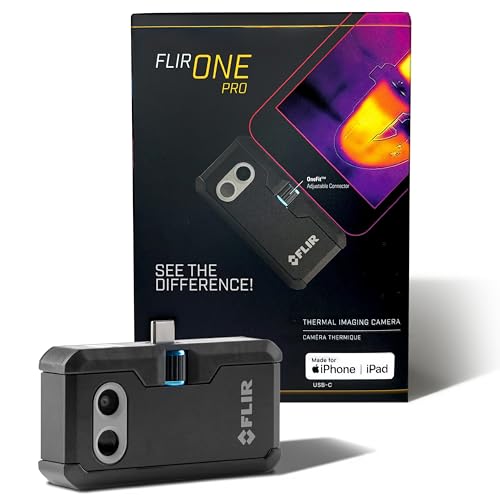 FLIR ONE Pro (phone) | Plugs into iPhone/Android; inspector favorite. | Amazon — $296.65 |
 Topdon TC001 | High-res phone module at a low price. | Amazon — $249.00 |
 FLIR C5 Compact | Standalone pocket camera with Wi-Fi. | Amazon — $593.99 |