Thermal Imaging Inspection Morrison, CO | InspectandTest
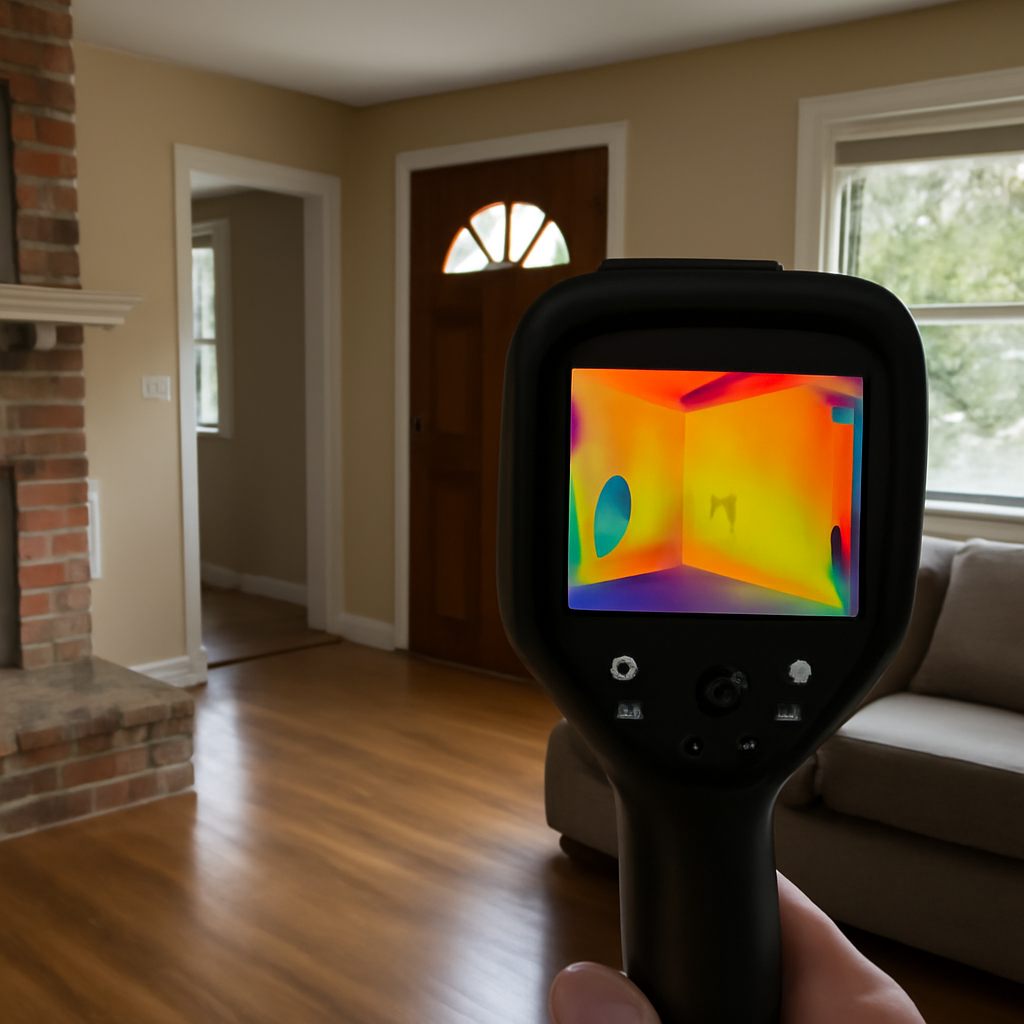
A thermal imaging inspection uses an infrared camera to reveal temperature differences across a building’s surfaces, differences that point to hidden moisture, missing insulation, air leaks, and certain electrical and plumbing problems that a standard visual inspection cannot see. In Morrison, that capability is especially valuable. This historic stone town at the mouth of Bear Creek Canyon combines shaded canyon lots, creek-corridor moisture, older stone and frame construction, and steep terrain, exactly the conditions where hidden water and uneven insulation tend to hide behind finished surfaces. A thermal imaging inspection morrison buyers and owners add to a standard inspection turns invisible temperature patterns into a clearer picture of a foothills home’s condition. This page explains how thermal imaging works, what it finds in Morrison homes, and what it costs.
Thermal imaging inspection in Morrison: what to know
An infrared camera does not see moisture or insulation directly; it measures surface temperature, and a trained inspector interprets the patterns. A cool, irregular patch on a ceiling can indicate water; a cold stripe along a wall can mean missing insulation; a warm spot at an electrical panel can flag an overloaded circuit. The technology is a powerful diagnostic aid, but it depends entirely on the inspector knowing how to read what the camera shows and confirming findings with other tools.
Thermal imaging is almost always an enhancement to a standard inspection rather than a stand-alone service. It complements the visual evaluation of a home’s systems and structure by catching what is hidden behind drywall, under flooring, or inside a wall cavity. Our buyer’s guide to hiring a home inspector explains how inspections fit a Colorado purchase, and a thermal scan layered onto that inspection gives a Morrison buyer additional confidence about moisture and energy performance.
The local building stock makes interpretation matter. A stone wall, a vented crawlspace, and a 1970s addition each present different thermal signatures, and canyon shade and the creek corridor make moisture findings more likely here than on a sunny plains lot. An inspector experienced with foothills construction knows which patterns reflect a real defect and which reflect normal behavior of stone or masonry, which is why the operator’s skill matters as much as the camera.
Why Morrison homes benefit from thermal imaging
Hidden moisture is the headline reason. Bear Creek’s flood history and the heavy canyon shade that slows drying mean creek-corridor and shaded homes are prone to moisture that hides behind finishes, in lower-level walls, beneath flooring, around windows, and in crawlspace framing. A thermal camera can reveal the cool evaporative signature of damp material before it shows as a visible stain, letting a buyer catch a problem early rather than after it has spread.
Insulation and air leakage are the second driver, and they matter more in this climate. Morrison’s older stone and frame homes, and additions built over decades, often have inconsistent or missing insulation, and Colorado’s cold winters make those gaps both a comfort and an energy concern. Thermal imaging maps where heat is escaping, missing wall insulation, gaps around windows and doors, attic deficiencies, so an owner can target improvements rather than guessing. On a canyon lot where wind and shade are already working against the home, those gaps are worth finding.
The technology also catches problems that ride along with the setting. Thermal patterns can hint at electrical hot spots at panels and circuits, water intrusion around a roof valley shedding toward a stone wall, or radiant-floor and plumbing issues in lower levels. Homes in downtown Morrison, Willow Springs, Friendly Hills, and along Mount Vernon Canyon all present these foothills-specific concerns, and a thermal scan layered onto the inspection helps surface them before they become expensive surprises.
What a Morrison thermal imaging inspection covers
During the scan, the inspector moves through the home with the infrared camera, focusing on areas where temperature anomalies are most informative, exterior walls, ceilings below the roof and below upper-floor wet areas, around windows and doors, at the electrical panel, and in crawlspaces and lower levels. The scan works best when there is a meaningful temperature difference between inside and outside, which Colorado’s climate usually provides.
Moisture detection and confirmation
Where the camera shows a pattern consistent with moisture, the inspector confirms with a moisture meter rather than relying on the image alone, because cool spots can have other causes. This pairing, infrared to locate, moisture meter to confirm, is what makes the finding reliable. In a Morrison home near Bear Creek or on a shaded lot, this is the most valuable function of the scan, catching hidden dampness in walls, crawlspaces, and lower levels.
Insulation, air leaks, and electrical
The scan maps insulation coverage and air-leakage paths, useful for both comfort and energy planning in a cold-winter foothills home, and flags thermal anomalies at the electrical panel that warrant a closer look by a qualified electrician. Because thermal imaging works alongside the broader evaluation, pairing it with a full home inspection in Morrison gives the most complete picture of a property’s condition.
Thermal imaging inspection cost in Morrison
When added to a standard inspection, a thermal imaging scan in the Morrison and west Jefferson County market typically adds about $100 to $250, depending on home size and the depth of the scan. Some inspectors include a basic infrared sweep in their standard inspection at no extra charge, while a dedicated, documented thermal report, with annotated images, costs more. A stand-alone thermal scan, ordered separately from a full inspection, generally runs about $200 to $400.
The value lies in catching the hidden and the expensive early. A thermal scan that reveals damp framing in a shaded crawlspace, water tracking behind a lower-level wall, or a major insulation gap gives an owner the chance to fix a small problem before it becomes a large one, and gives a buyer leverage during the inspection contingency. On a foothills home where moisture and energy loss are real risks, that early detection easily justifies the modest add-on cost.
It is worth being realistic about what the scan does and does not do. Thermal imaging finds patterns that warrant investigation; it does not diagnose causes by itself, and its results depend on conditions and the operator’s skill. Paying for a thermal scan from an inexperienced operator who cannot interpret the images well delivers little, while the same cost paid to a skilled inspector who confirms findings with a moisture meter and explains them clearly is money well spent on a Morrison home.
Colorado regulations and how thermal imaging fits
Colorado does not license home inspectors or thermal imaging operators, so credentials and demonstrated competence are what a buyer should verify. Look for inspectors who hold building-science or infrared thermography training and who can show sample thermal reports. In an unlicensed state, that evidence of skill matters more than any certificate of completion, because reading infrared imagery well is a learned craft.
Thermal imaging does not change the structure of a Colorado transaction; it fits inside the same inspection contingency as the standard inspection, and any findings feed the same negotiation over repairs or credits. The Seller’s Property Disclosure may note known issues, but a thermal scan can reveal hidden moisture or insulation problems a seller never knew about, which is precisely its value to a buyer evaluating an older Morrison home within the contingency window.
Neighborhoods and areas served
Thermal imaging requests come from across the Morrison area, wherever hidden moisture or energy loss is a concern. Downtown Morrison’s stone and frame homes benefit from scans for moisture and insulation gaps; canyon homes in Willow Springs, Friendly Hills, and along Mount Vernon Canyon, kept shaded and damp, are prime candidates for hidden-moisture detection; and Red Rocks Ranch and Kerr Gulch properties with additions often show the insulation inconsistencies a thermal scan maps best.
Service typically extends to neighboring Jefferson County communities in the same foothills-and-plains footprint, including Golden, Lakewood, Littleton, Indian Hills, and Kittredge. Buyers comparing options can review the related same-city service in this batch, a pre-purchase inspection in Morrison, or compare foothills conditions with a nearby thermal imaging inspection in Golden on the same hogback terrain.
How to choose a Morrison thermal imaging provider
Skill is everything with thermal imaging, so vet the operator, not just the camera. Ask about infrared or building-science training, request sample thermal reports, and confirm they use a quality camera with adequate resolution. A blurry, low-resolution image interpreted by an untrained eye is worse than no scan at all, while clear imagery read by a knowledgeable inspector reveals genuinely useful findings.
Confirm the inspector pairs infrared with confirmation tools. The right provider uses a moisture meter to verify suspected wet areas rather than declaring a leak from the image alone, and is candid that a thermal anomaly is a reason to investigate, not a final diagnosis. That disciplined approach, locate with infrared, confirm with other tools, is what separates a meaningful scan from an alarming guess in a Morrison home.
Finally, choose someone who integrates the thermal scan with the broader inspection and explains the results plainly. Because thermal imaging is most powerful as part of a complete evaluation, an inspector who layers it onto a standard inspection, documents the findings with annotated images, and walks the buyer through what each pattern means delivers the most value. For a shaded, stone, or creek-corridor Morrison home, that combination is what turns hidden conditions into informed decisions.
What thermal imaging cannot do in a Morrison home
Setting honest limits keeps the scan useful and prevents over-reliance on a single tool. An infrared camera cannot see through walls; it only reads the surface temperature of what it is pointed at, so insulation or moisture deep inside a cavity shows up only when it changes the surface temperature enough to register. A well-sealed wall over a hidden problem may not reveal it, which is why thermal imaging supplements rather than replaces a thorough visual inspection and other diagnostic tools.
Conditions matter, too. The camera needs a temperature difference between inside and outside to highlight anomalies, so a scan run on a mild day with little differential, or right after the sun has warmed an exterior wall, can mask findings that would be obvious on a cold winter morning. In Morrison, a stone or masonry wall holds and releases heat differently than framed construction, which can produce thermal patterns that look like defects but are simply the material behaving normally, another reason the operator’s judgment is decisive.
Finally, the camera identifies symptoms, not causes. A cool patch flags possible moisture but does not say whether the source is a roof leak, a plumbing failure, or condensation, and a warm spot at a panel signals a closer look by an electrician rather than a diagnosis. A good inspector treats every thermal finding as a starting point to investigate with a moisture meter, a visual check, or a specialist referral, so the scan’s value comes from directing attention to the right place, not from delivering final verdicts on its own.
References
- Residential standards of practice — International Association of Certified Home Inspectors (InterNACHI)
- Standards of practice and finding an inspector — American Society of Home Inspectors (ASHI)
- Insulation and home energy performance — U.S. Department of Energy
On a shaded canyon lot or a creek-corridor home in Morrison, a thermal scan layered onto a standard inspection can reveal hidden moisture and insulation gaps before they become costly. To connect with a vetted Front Range inspector skilled in infrared, reach out through our contact page.
Thermal imaging cameras
Infrared cameras reveal hidden moisture, missing insulation, and air leaks. Phone-attachment models are the budget entry point; standalone units have higher resolution.
| Product | Why | Buy |
|---|---|---|
 FLIR ONE Pro (phone) FLIR ONE Pro (phone) | Plugs into iPhone/Android; inspector favorite. | Amazon — $329.00 |
 Topdon TC001 Topdon TC001 | High-res phone module at a low price. | Amazon — $199.99 |
 FLIR C5 Compact FLIR C5 Compact | Standalone pocket camera with Wi-Fi. | Amazon — $610.06 |