Thermal Imaging Inspection Northglenn, CO | InspectandTest
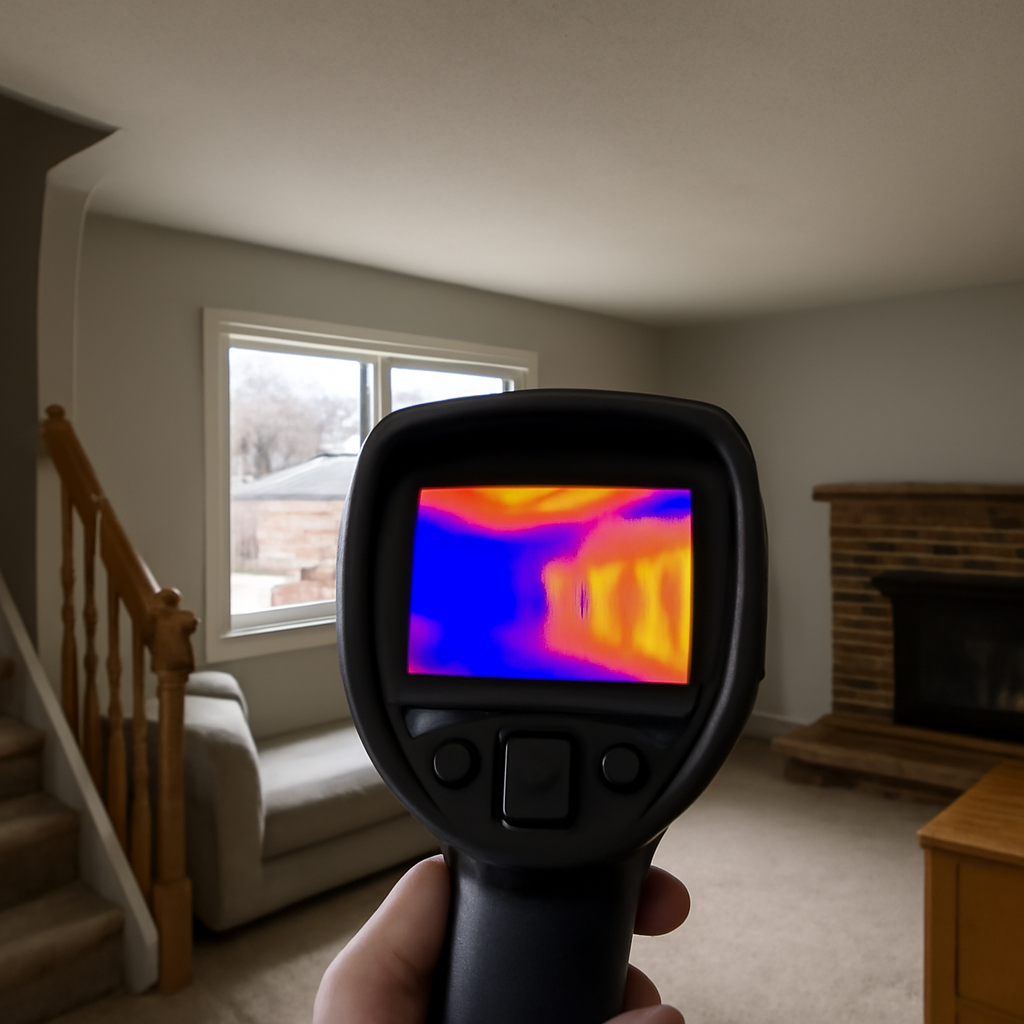
A thermal imaging inspection northglenn homeowners add to an inspection uses an infrared camera to reveal temperature differences across surfaces, exposing problems the eye cannot see: hidden moisture, missing insulation, electrical hot spots, and air leaks. In Northglenn’s 1950s and 1960s housing, where decades of settling, swamp-cooler humidity, and original insulation create plenty of hidden issues, infrared is a useful diagnostic layer on top of a standard inspection. This page explains what thermal imaging can and cannot find, how it applies to this Adams County suburb, and what it costs. Infrared detects temperature patterns, not the cause directly; findings guide where to investigate further.
Part of our Thermal Imaging for Homes guide — start there for the full picture →
Thermal imaging inspection in Northglenn: what to know
A thermal imaging inspection scans walls, ceilings, floors, and electrical components with an infrared camera that maps surface temperature. Because moisture, missing insulation, and overloaded circuits all change how warm or cool a surface appears, the camera flags anomalies a visual inspection would miss. It is a non-invasive way to point an inspector toward where a hidden problem likely is.
Infrared is a complement, not a replacement. It pairs naturally with a full inspection, and our guide to hiring a Front Range home inspector explains how add-on tools fit the process. The camera does not see through walls or detect mold or radon directly; it sees the temperature signatures those problems often leave.
That distinction is the single most important thing to understand about the tool. People sometimes expect an infrared camera to act like an x-ray, showing pipes, wires, or mold inside a wall, but it only maps surface temperature. A wet area reads cooler as it evaporates, missing insulation reads as a temperature contrast, and a hot wire reads warmer, yet each is an inference about what lies behind the surface, not a direct view of it. Keeping that in mind sets realistic expectations for what a Northglenn thermal scan can deliver.
Interpreting the image is where skill matters. A cool patch on a Northglenn basement ceiling could be moisture, a draft, or a thermal bridge, and only a trained inspector, often confirming with a moisture meter, can tell which. That is why a thermal scan is a guide to further investigation rather than a final verdict.
Conditions during the scan affect what the camera can show, which is another reason interpretation matters. Infrared works best when there is a temperature difference between inside and out, so a scan on a cold Colorado morning reveals insulation gaps and drafts more clearly than one on a mild day. A skilled inspector knows to account for recent sun on an exterior wall, a register blowing warm air, or plumbing behind a surface, any of which can mimic a defect. The image is data, not a diagnosis, and reading it correctly is the inspector’s job.
Why Northglenn homes benefit from thermal imaging
The housing age creates the conditions infrared catches. Northglenn’s 1950s and 1960s homes in Original Northglenn, Stonehocker, and Hillcrest often have original or thin insulation, settled foundations, and aging electrical, exactly the issues that show up as temperature anomalies. A thermal scan can map where insulation has slumped or gone missing in walls and attics, a common find in mid-century stock.
Moisture is the standout local use. Evaporative swamp coolers add humidity all summer, and finished basements can hide seepage from settled slabs or plains soil that drains slowly near Grange Hall Creek and Webster Lake. Water cools a surface as it evaporates, so a damp band behind finished-basement drywall often reads cooler on infrared, flagging a leak no one would see by eye.
Electrical and energy issues round it out. Older panels and circuits in Northglenn homes can develop hot spots at loose connections, which infrared reveals as warm anomalies before they become a fire risk. The same scan finds the air leaks and insulation gaps that drive up heating bills through cold Colorado winters, giving a homeowner a map of where to seal and insulate.
The energy angle has real value in Northglenn’s older stock. Mid-century homes were often built with minimal wall insulation by current standards, and decades of settling can leave gaps where insulation slumped or was never installed. A thermal scan that maps the cold spots tells a homeowner exactly where to add insulation or seal air leaks, turning a vague high-heating-bill complaint into a targeted list of improvements. For a household weighing efficiency upgrades, that map prevents spending on areas that are already sound.
What a Northglenn thermal imaging inspection covers
An infrared scan is typically run alongside a standard inspection, with the camera trained on the areas most likely to hide problems in mid-century homes.
Moisture and insulation scanning
The inspector scans ceilings, exterior walls, finished-basement walls, and around windows and the swamp cooler for the cool signatures of moisture and the temperature contrasts of missing insulation. A suspected damp area is confirmed with a moisture meter, since infrared flags the anomaly but the meter measures the actual wetness.
Electrical and air-leak scanning
At the panel and at outlets and fixtures, the camera looks for warm spots that signal loose or overloaded connections. Along exterior walls, doors, and windows, it reveals where conditioned air escapes, the drafts that raise winter heating costs in Northglenn’s older homes. Each finding points to a specific repair or a follow-up by a specialist.
An electrical hot spot is one of the more useful finds because it is both hidden and serious. A loose connection or an overloaded circuit can run warm for a long time before it fails, and infrared can catch that heat signature at the panel or an outlet while everything still appears normal. In a Northglenn home with an aging panel, flagging that warm spot for a licensed electrician to evaluate can head off a fault before it becomes a hazard, which is exactly the kind of invisible problem a thermal scan is good at surfacing.
Thermal imaging inspection cost in Northglenn
When added to a standard home inspection, a thermal imaging scan in the Northglenn market typically adds about $100 to $250, depending on the home’s size and the scope of the scan. Some inspectors include a basic infrared sweep in their standard fee, while a dedicated, detailed thermal survey costs more.
A standalone thermal inspection, ordered separately to chase a specific problem like a suspected leak or an energy issue, generally runs $200 to $400. The price reflects the inspector’s time and the interpretation skill, not just the camera.
It is worth clarifying what is included before booking, because “thermal imaging” can mean very different things. Some inspectors do a quick sweep of obvious areas as part of a standard inspection, while a dedicated thermal survey methodically scans every accessible wall, ceiling, and the electrical system and documents the findings with paired infrared and visible-light images. For a Northglenn buyer specifically worried about hidden moisture or a finished-basement leak, the detailed survey is the one that delivers, and confirming the scope avoids paying for a thorough scan and getting a cursory one.
Set the cost against what it finds. Catching a hidden finished-basement leak before it rots framing, or an electrical hot spot before it sparks, can save thousands and prevent a hazard. For a mid-century Northglenn home, the modest add-on cost of infrared often pays for itself by surfacing one problem that a visual inspection alone would have missed.
Colorado regulations and disclosure
Thermal imaging is a diagnostic tool, not a separately regulated service in Colorado, and the state does not license home inspectors. Inspectors who offer infrared typically hold certification from a thermography training program, which signals they can interpret images correctly rather than just point a camera.
Findings still feed the standard disclosure picture. If a thermal scan reveals moisture that points to a leak, that becomes a condition a buyer can raise during the inspection contingency, and a seller who knows of it must disclose known water damage on the Seller’s Property Disclosure. Because infrared only indicates where to look, the responsible practice is to confirm anomalies with direct measurement before treating them as defects.
This confirm-before-claiming discipline protects everyone in a transaction. Labeling a cool spot a leak without a moisture-meter reading can trigger an unnecessary repair demand or scare a buyer off a sound home, while ignoring a confirmed anomaly leaves a real problem hidden. A responsible Northglenn inspector reports infrared findings as indications to verify, then states clearly which ones the moisture meter confirmed. That measured approach keeps the thermal scan credible and its findings usable rather than alarmist.
Neighborhoods and areas served
Thermal imaging is useful across Northglenn’s mid-century housing: the 1950s and 1960s homes of Original Northglenn, Stonehocker, and Hillcrest, plus the Fox Run area, where original insulation and aging systems are common. Homes near Grange Hall Creek and Webster Lake, prone to drainage and seepage issues, benefit most from a moisture-focused scan.
Thermal imaging pairs especially well with a pre-purchase inspection in Northglenn. During the contingency, a buyer worried about a finished basement’s history can have the inspector scan the lower level for the cool signatures of past or active moisture, adding a layer of confidence that a visual look alone cannot. Because the camera is already on site for the inspection, the incremental cost is modest, and a confirmed moisture finding becomes one more item the buyer can raise before closing.
For owners not in a transaction, a scan timed to winter delivers the most. The large indoor-outdoor temperature gap that Colorado’s cold season provides makes insulation gaps, drafts, and missing wall insulation show up vividly, so a homeowner planning efficiency upgrades gets the clearest possible map of where to act. Scheduling the scan for a cold week, rather than a mild shoulder-season day, is a simple way to get more out of the same fee.
Service typically extends to adjacent Thornton, Westminster, Federal Heights, and Broomfield, which share Northglenn’s Adams County housing era. Owners comparing the wider picture can read our overview of thermal imaging inspection across Adams County, or look at the related home inspection in Northglenn page to see how infrared layers onto a full inspection.
How to choose a Northglenn thermal imaging provider
Ask whether the inspector holds thermography certification, uses a quality infrared camera, and confirms moisture findings with a moisture meter rather than relying on the image alone. A good provider explains what each anomaly means and resists labeling a cool spot a leak without verification.
For a Northglenn home, ask how they approach the local specifics: scanning around swamp coolers and finished basements for moisture, and checking aging panels for electrical hot spots. An inspector who treats infrared as a guide to investigation, documents findings clearly, and ties them to concrete next steps gives a homeowner real value. That interpretive skill, not the camera itself, is what you are paying for.
References
- Infrared thermal imaging in inspections — International Association of Certified Home Inspectors
- ENERGY STAR: Seal and Insulate — U.S. Environmental Protection Agency (ENERGY STAR)
- Moisture and mold prevention — U.S. Environmental Protection Agency
Frequently asked questions
What can thermal imaging find in a Northglenn home?
Infrared reveals hidden moisture, missing insulation, electrical hot spots, and air leaks by mapping surface temperature differences. It is especially useful in 1950s-60s homes with original insulation and finished basements.
How much does thermal imaging cost in Northglenn?
Added to a standard inspection, it typically costs $100 to $250 more. A standalone thermal inspection to chase a specific problem generally runs $200 to $400, reflecting the interpretation skill involved.
Does thermal imaging detect mold or radon?
No, not directly. Infrared sees the temperature signatures that moisture leaves, which can point to conditions where mold grows, but it does not detect mold or radon. Those need dedicated testing.
Can infrared see through walls?
No. The camera reads surface temperature only. A cool or warm patch suggests something behind the surface, but an inspector confirms moisture with a moisture meter before calling it a defect.
Is thermal imaging worth it for older Northglenn homes?
Often, yes. Mid-century homes hide moisture, insulation gaps, and electrical issues that infrared can flag, and catching one hidden leak or hot spot usually pays for the modest add-on cost.
A thermal imaging scan adds an infrared layer that catches hidden moisture and electrical issues in Northglenn’s mid-century homes. To connect with a vetted local inspector who offers certified thermography, get in touch through our contact page.
Thermal imaging cameras
Infrared cameras reveal hidden moisture, missing insulation, and air leaks. Phone-attachment models are the budget entry point; standalone units have higher resolution.
| Product | Why | Buy |
|---|---|---|
 FLIR ONE Pro (phone) FLIR ONE Pro (phone) | Plugs into iPhone/Android; inspector favorite. | Amazon — $349.00 |
 Topdon TC001 Topdon TC001 | High-res phone module at a low price. | Amazon — $199.99 |
 FLIR C5 Compact FLIR C5 Compact | Standalone pocket camera with Wi-Fi. | Amazon — $611.50 |