Thermal Imaging Inspection in Superior, CO | InspectandTest

Superior, a Boulder County town along the Coal Creek and US-36 corridor, is dominated by the Rock Creek master-planned community of 1990s-through-2010s finished-basement homes, with a wave of post-Marshall-Fire rebuilds and a small older core. Thermal imaging inspection uses an infrared camera to reveal temperature differences that point to hidden moisture, missing insulation, air leakage, and overheating electrical components, problems a visual-only inspection can miss. This page explains what a thermal imaging inspection in Superior covers, why local conditions make it useful, and what it costs. Findings here are general information; rely on your own inspector’s report for purchase and repair decisions.
Part of our Thermal Imaging for Homes guide — start there for the full picture →
Thermal imaging inspection in Superior: what to know
Thermal imaging, or infrared inspection, captures the surface temperatures of walls, ceilings, floors, and components. Because moisture, missing insulation, air leaks, and electrical faults all change surface temperature, the camera reveals patterns the naked eye cannot. It is a non-invasive diagnostic tool that points an inspector to where a problem is, which is then confirmed with a moisture meter or hands-on evaluation.
In Superior, the camera earns its keep on finished basements and rebuilt homes, where so much of the risk hides behind drywall. For the broader context of how infrared fits into a home inspection and where it adds value, our buyer’s guide to hiring a home inspector sets the framework, and many buyers add infrared to a standard home inspection in Superior.
It is important to set expectations. Thermal imaging does not see through walls; it reads surface temperature, so its findings depend on conditions like indoor-outdoor temperature difference and recent weather. A skilled operator interprets the patterns and verifies them, rather than presenting a colorful image as proof. The value is in directing attention to hidden problems, not in replacing confirmation.
The tool is most powerful when conditions create contrast. Superior’s cold winters and hot, sunny summers produce strong temperature differentials across building surfaces, which makes insulation gaps and air leaks show up clearly. That is part of why infrared is well suited to Front Range homes, where the heating and cooling load makes envelope performance both visible to the camera and financially meaningful to the owner.
Understanding how the camera actually finds problems clarifies what to expect from a scan. Moisture cools a surface as it evaporates, so a damp patch behind drywall usually reads cooler than the dry material around it. Missing insulation lets interior heat escape or summer heat enter, so a poorly insulated wall section shows a different temperature than a well-insulated one. A loose or overloaded electrical connection generates heat, so it glows warm against the panel. In each case the camera is reading a temperature pattern that corresponds to a physical condition, which is why a skilled operator pairs the image with knowledge of how the home is built rather than treating every color shift as a defect.
Why Superior homes need thermal imaging
The finished-basement pattern is the main case. Rock Creek and Sagamore homes typically have finished lower levels where foundation seepage and condensation can wet the back of drywall without showing on the surface for months. Infrared spots the cool, damp signature of hidden moisture, letting an inspector find a problem behind a finished wall before it becomes widespread mold or rot.
The Marshall Fire rebuild adds a Superior-specific reason. Reconstructed homes are new construction, and infrared is a strong check on new-build quality: it reveals missing or compressed insulation, gaps in the air barrier, and framing that was not properly sealed, defects that affect comfort and energy bills. For a rebuilt home, a thermal scan can confirm whether the envelope was finished to the standard the buyer is paying for.
Climate makes the findings actionable. Superior’s foothills-edge winters are cold and the cooling season is sunny and hot, so insulation gaps and air leaks translate directly into higher energy bills and uneven comfort. Freeze-thaw cycling also opens paths for water and air movement over time. Infrared turns these invisible envelope and moisture issues into a map the homeowner can act on, whether negotiating a purchase or planning improvements.
The energy angle is concrete in a market like Superior. Front Range homes run furnaces hard from late fall through spring and air conditioning through hot summer afternoons, so a wall cavity that was missed during insulation, or a rim joist that was never air-sealed, costs the owner money every month of the year. An infrared scan that maps those weak spots lets a homeowner target insulation and air-sealing improvements where they will actually move the bill, rather than guessing. For a buyer, the same map quantifies a rebuilt or older home’s real-world performance before they commit, which is information a glossy listing rarely provides.
What a Superior thermal imaging inspection covers
An infrared scan is typically performed alongside a visual inspection, with the camera scanning interior surfaces and the operator confirming anomalies.
Moisture and insulation
The operator scans ceilings, exterior-facing walls, and finished basement areas for the cool signatures of moisture and the temperature patterns of missing or settled insulation. Anomalies are confirmed with a moisture meter, so a wet spot behind a Rock Creek basement wall is verified rather than assumed.
Air leakage and electrical hotspots
The camera reveals drafts around windows, doors, and rim joists, and at the electrical panel it can flag overheating breakers or connections that signal a fault before it becomes a fire risk. Where infrared finds persistent moisture, the next step is often a mold inspection in Superior to assess whether growth has started behind the finish.
Conditions that make a scan reliable
A scan is only as good as the conditions it runs under. Infrared needs a temperature difference across the surfaces being read, so a scan during a cold Superior morning or after the air conditioning has run on a hot afternoon produces clearer contrast than one taken when indoor and outdoor temperatures are nearly equal. A skilled operator notes the conditions in the report and, where contrast is poor, says so rather than presenting a low-confidence image as a finding. That candor about when the tool works is part of what makes a scan trustworthy.
Thermal imaging inspection cost in Superior
Thermal imaging is often offered as an add-on to a home inspection in the Superior and Boulder County market, sometimes included at no extra charge and sometimes adding roughly $100 to $250 depending on the inspector and home size. A standalone infrared scan focused on a specific concern, such as a suspected basement leak, typically runs about $150 to $350.
Larger Rock Creek and Kings homes with extensive finished basements sit at the higher end because there is more surface area to scan and interpret. A targeted scan of one area costs less than a whole-home survey.
Weigh the modest cost against what infrared catches. Finding hidden moisture behind a finished basement wall before it becomes widespread mold, or catching an overheating electrical connection before it fails, can save far more than the scan costs. On a rebuilt home, identifying insulation and air-sealing defects gives the buyer concrete items to negotiate. The diagnostic value is high relative to the small added fee.
It is fair to set expectations about how often a scan finds something dramatic. On many homes the camera confirms the envelope is performing well and turns up only minor air leaks, which is itself useful reassurance. The value is asymmetric: most scans cost a modest add-on and surface small items, but the occasional scan that catches an active basement leak or an overheating breaker pays for years of inspections. Because Superior’s housing skews toward finished basements and recent rebuilds, exactly the cases where hidden moisture and new-construction envelope gaps are most likely, the odds of the camera earning its fee are better here than in a market of simple slab-on-grade homes.
Colorado regulations and disclosure
Colorado does not license home inspectors or thermal imaging operators, so the value of an infrared scan depends entirely on the operator’s training and interpretation skill. Thermography is a skill-dependent tool, and a poorly interpreted scan can mislead as easily as a well-done one helps, which is why operator competence matters more than any certificate.
The Seller’s Property Disclosure requires sellers to report known defects, including known moisture and water damage, but infrared findings are diagnostic rather than disclosure documents on their own. For a rebuilt Superior home, a thermal scan can complement Boulder County permitting records by showing how the envelope actually performs. Choose an operator who confirms findings with a moisture meter and explains the limits of what the camera can and cannot show.
Neighborhoods and areas served
Thermal imaging demand in Superior follows the finished-basement and rebuilt housing: Rock Creek and Kings Crossing for hidden basement moisture and envelope checks, Sagamore for new-construction quality after the rebuild, and the older Original Town of Superior for aging insulation and moisture. Each benefits from infrared for a slightly different reason.
Service typically extends to adjacent Louisville, Lafayette, Broomfield, and Boulder, which share Superior’s climate and housing patterns. Buyers comparing inspectors across the region can also review our home inspection guidance for Boulder County for broader context on what local conditions a scan should target.
How to choose a Superior thermal imaging provider
Ask whether the operator is trained in building thermography, confirms infrared anomalies with a moisture meter, and explains the conditions under which the scan was performed, since temperature differential affects results. A capable operator describes what the camera found and what it means, rather than handing over colorful images without interpretation.
For a finished-basement or rebuilt home, confirm the operator will scan the lower level and the envelope thoroughly and will recommend a mold inspection if persistent moisture turns up. Ask to see a sample report that pairs infrared images with verified findings. An operator who is candid about the tool’s limits is the one to trust in Superior.
References
- Residential standards of practice — International Association of Certified Home Inspectors
- Standard of practice and ethics — American Society of Home Inspectors
- ENERGY STAR: Seal and Insulate — U.S. Environmental Protection Agency (ENERGY STAR)
Frequently asked questions
What does thermal imaging find in a Superior home?
Hidden moisture behind finished basement walls, missing or settled insulation, air leaks around windows and rim joists, and overheating electrical connections. The camera reads surface temperature differences and the operator confirms findings.
How much does a thermal imaging inspection cost in Superior?
As an add-on to a home inspection it is often included or adds roughly $100 to $250. A standalone scan focused on a specific concern, like a suspected basement leak, typically runs $150 to $350.
Can infrared see through walls?
No. It reads surface temperature, so its findings depend on temperature differences and recent weather, and a skilled operator confirms anomalies with a moisture meter. It points to hidden problems rather than proving them on its own.
Is thermal imaging useful on a Marshall-Fire-rebuilt home?
Yes. Infrared checks new-construction envelope quality, revealing missing insulation, air-barrier gaps, and unsealed framing that affect comfort and energy bills, giving a buyer concrete items to verify or negotiate.
Does Colorado require a license for thermal imaging?
No. Colorado does not license home inspectors or thermographers, so the value depends on the operator's training and interpretation. Choose one who confirms findings with a moisture meter and explains the tool's limits.
On a finished-basement Rock Creek home or a Sagamore rebuild, an infrared scan turns hidden moisture and envelope problems into something you can act on. To connect with a vetted Boulder County inspector who offers thermal imaging, reach out through our contact page.
Thermal imaging cameras
Infrared cameras reveal hidden moisture, missing insulation, and air leaks. Phone-attachment models are the budget entry point; standalone units have higher resolution.
| Product | Why | Buy |
|---|---|---|
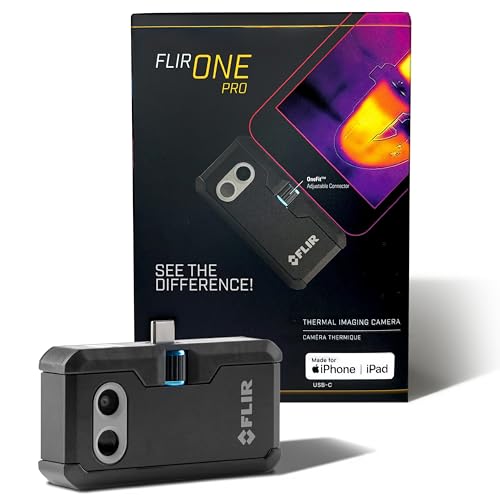 FLIR ONE Pro (phone) | Plugs into iPhone/Android; inspector favorite. | Amazon — $349.00 |
 Topdon TC001 | High-res phone module at a low price. | Amazon — $262.99 |
 FLIR C5 Compact | Standalone pocket camera with Wi-Fi. | Amazon — $649.00 |