Thermal Imaging Inspection Johnstown, CO | InspectandTest
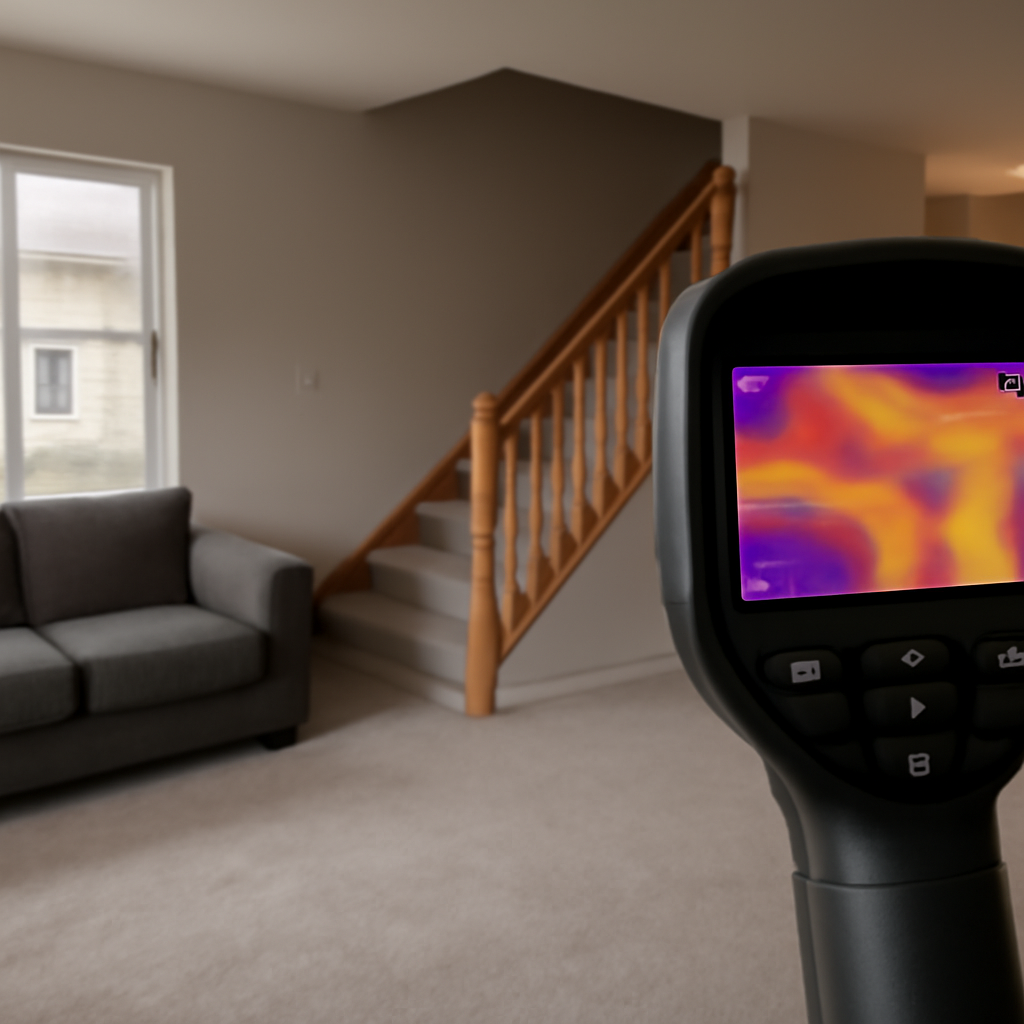
A thermal imaging inspection uses an infrared camera to read surface temperature differences that the eye cannot see, revealing hidden moisture, missing insulation, air leaks, and overheating electrical components behind walls and ceilings. In Johnstown, a fast-growing town straddling Weld and Larimer counties at the I-25 and US-34 (Centerra) interchange, infrared adds value across both the new-build subdivisions and the early-1900s Old Town stock, two housing types with very different hidden problems. This page explains what a thermal imaging inspection johnstown homeowners and buyers get, why local conditions make it useful, and what it costs. This summary reflects standard inspection practice current as of 2026; engage a qualified inspector for your property.
Part of our Thermal Imaging for Homes guide — start there for the full picture →
Thermal imaging inspection in Johnstown: what to know
Thermal imaging, or infrared inspection, is a diagnostic tool that detects temperature variation on surfaces. A wet patch behind drywall reads cooler than its surroundings, a gap in insulation shows as a temperature streak, and an overloaded breaker or loose electrical connection glows warm. The camera does not see through walls; it reads the surface clues that hidden problems leave behind.
It is a supplement, not a standalone service. Thermal imaging is most powerful folded into a full home inspection, where the inspector uses it to investigate anomalies and then confirms findings with a moisture meter or further examination. For how it fits the larger inspection process, our buyer’s guide to hiring a home inspector explains where infrared adds value and where its limits lie.
The key to interpreting infrared correctly is that the camera shows temperature, not moisture or insulation directly, so a skilled operator is essential. A cool spot can mean a leak, a missing batt of insulation, or simply a cold-water pipe, and only a trained inspector who confirms with a moisture meter can tell which. This is why a thermal image is evidence to investigate, not a verdict on its own, and why the value of a Johnstown infrared inspection depends far more on the operator’s skill than on the camera’s resolution.
Why Johnstown homes benefit from thermal imaging
The town’s two housing eras give infrared two jobs. In the 2000s-and-later subdivisions, Thompson River Ranch, Pintail Commons, Rocksbury, and Mountain View, fast-built tract homes can have missing or compressed insulation, air-sealing gaps, and finish defects that infrared maps quickly, exactly the energy-efficiency shortcuts that drive up heating bills in a Colorado winter. In the early-1900s Old Town homes, infrared hunts for hidden moisture behind aging plaster, around original plumbing, and in partial basements and crawl spaces where leaks stay concealed.
Climate makes the findings actionable. Colorado’s intense temperature swings, cold sealed winters and hot dry summers, create the surface-temperature contrast that infrared needs, so a Johnstown inspection often produces its clearest images precisely when energy loss and moisture matter most. The agricultural plains setting, with spring snowmelt and summer storms, drives the kind of basement and crawl-space moisture that infrared is well suited to flag before it becomes visible damage. Evaporative coolers, common locally, add ducting and condensation that infrared can survey for moisture issues.
Infrared is also a strong electrical-safety tool, which matters across both housing types. In an Old Town home with original or layered wiring, and in a new subdivision home with a freshly loaded panel, the camera can reveal a hot breaker, an overloaded circuit, or a loose connection generating heat behind a cover, conditions that precede electrical failures and fires. Because these problems are invisible until they fail, the ability to spot a thermal anomaly during an inspection gives a Johnstown homeowner or buyer an early warning that a visual check alone would miss, which is a meaningful safety benefit on top of the moisture and energy findings.
What a Johnstown thermal imaging inspection covers
During an inspection, the operator scans ceilings, walls, floors, around windows and doors, and the electrical panel, looking for temperature anomalies. Each anomaly is investigated, photographed in both standard and infrared, and confirmed with a secondary tool before it goes in the report.
Moisture detection
Infrared excels at finding the cool signatures of evaporative moisture from roof leaks, plumbing leaks, and foundation seepage before stains appear. In a Johnstown home, that means catching a slow leak behind a finished-basement wall or under an Old Town bathroom early. A same-city home inspection in Johnstown is the natural service to pair infrared with, since the camera guides where the inspector looks closer.
Insulation and air leaks
The camera maps missing, settled, or wet insulation as temperature variation across walls and ceilings, and reveals air leaks at top plates, rim joists, and window frames. For a Johnstown homeowner facing high winter heating bills, this turns vague discomfort into a specific, fixable map of where the home loses heat, which is some of the most practical information an infrared scan provides.
Thermal imaging inspection cost in Johnstown
When added to a full home inspection, thermal imaging in the Johnstown market typically adds about $100 to $200, since the inspector is already on site. As a standalone targeted infrared scan, to investigate a specific suspected leak or insulation problem, it usually runs about $200 to $400 depending on home size and scope.
A focused scan of one suspected problem area sits at the low end, while a whole-house infrared survey of a larger home costs more. Bundling infrared into a pre-purchase inspection is the most economical route, since it leverages a visit already happening.
The value comes from catching what stays hidden. A thermal scan that reveals a slow plumbing leak behind a finished Johnstown basement wall, before it rots framing and grows mold, can save thousands in repairs and remediation, and a scan that maps missing insulation pays for itself in reduced heating bills over a few Colorado winters. On the electrical side, finding an overheating connection before it fails is a safety return that is hard to price. For a modest add-on cost, infrared converts invisible, slowly worsening problems into specific, addressable findings, which is exactly the kind of early detection that keeps a small issue from becoming an expensive one.
Scope and operator skill drive the worth more than the price. A cheap scan from someone who cannot interpret the images, or who skips moisture-meter confirmation, produces false alarms and missed problems. A modestly priced scan from a skilled operator who investigates and confirms each anomaly produces findings you can act on. When comparing Johnstown providers, weigh the inspector’s training and process over the headline fee, because the camera is only as good as the person reading it.
What thermal imaging cannot do
Setting expectations matters. Infrared does not see through walls, detect mold directly, or work well when indoor and outdoor temperatures are too close to create contrast. It infers hidden conditions from surface temperature, so it can miss a problem that is not currently producing a thermal signature, a leak that has dried, for instance. A reputable Johnstown inspector explains these limits up front and uses infrared as one tool among several rather than overselling it as an X-ray vision device. Understanding what the scan can and cannot reveal helps a homeowner value the findings correctly and avoid both false reassurance and false alarm.
When to schedule a Johnstown infrared scan
Timing affects how much an infrared scan can reveal, because the camera depends on a temperature difference between the inside and outside of a surface. In Johnstown, the best results often come during the heating season, when a warm interior and a cold high-plains exterior create strong contrast that makes missing insulation, air leaks at rim joists and top plates, and cold-air infiltration stand out clearly. A homeowner chasing high winter heating bills is also exactly the person who benefits most from this seasonal window, since the scan maps the heat-loss paths while they are actively costing money.
Moisture and electrical findings are less season-dependent. An active plumbing leak behind a finished-basement wall in a Thompson River Ranch home produces an evaporative cool spot the camera can catch year-round, and an overheating electrical connection glows warm whenever the circuit is loaded, regardless of the weather outside. That said, a scan run on a mild day with little indoor-outdoor temperature difference will struggle to reveal insulation gaps, so a Johnstown homeowner whose main concern is energy efficiency should plan the inspection for a colder stretch. A skilled local operator will advise on timing based on what you most want the scan to find, which is one more reason the operator’s judgment matters as much as the equipment.
Colorado regulations and disclosure
Colorado does not license home inspectors or thermal imaging operators, so a Johnstown homeowner should verify the inspector’s certification and specific infrared training rather than assuming a credential exists. Thermal imaging findings, like any inspection findings, can inform the Seller’s Property Disclosure when they reveal a known defect such as an active leak.
In a transaction, infrared findings carry the same weight as other inspection results. If a thermal scan during a pre-purchase inspection reveals hidden moisture or an electrical hot spot, a Johnstown buyer can raise it within the contract’s inspection objection window like any other defect. Because the technology is unregulated in Colorado, the credibility of the finding rests on the operator’s training and on confirmation with a secondary tool, which is why documented, moisture-meter-verified infrared results are far more useful in a negotiation than a raw thermal image alone.
Neighborhoods and areas served
Thermal imaging demand spans Johnstown: new-build subdivisions like Thompson River Ranch, Pintail Commons, Rocksbury, and Mountain View, where insulation and air-sealing scans pay off, and the older homes of historic Old Town Johnstown, where hidden-moisture detection matters most. Service typically extends to adjacent Loveland, Milliken, Windsor, and Berthoud. A neighboring thermal imaging inspection in Windsor guide covers a comparable town.
The home’s age shapes what infrared looks for. In a new Pintail Commons home, the emphasis is insulation gaps, air leaks, and energy efficiency; in an Old Town bungalow, hidden moisture and aging-system leaks; across both, electrical hot spots. A Johnstown inspector who aims the camera at the questions that fit the home’s era and construction, rather than running a generic sweep, delivers findings worth acting on.
How to choose a Johnstown thermal imaging provider
Choose an inspector with documented infrared training who treats thermal imaging as an investigative tool, confirming anomalies with a moisture meter or further examination before reporting them. A good provider shows you both the standard and infrared images, explains what each anomaly means, and is honest about the camera’s limits.
Ask how they integrate infrared into the inspection. The most useful Johnstown providers fold thermal imaging into a full home inspection, using it to guide where they look closer, rather than offering a disconnected scan with no follow-up. Confirm they confirm every thermal finding with a secondary tool, since an unconfirmed cool spot is a question, not a conclusion, and a provider who reports raw images without verification is offering noise rather than insight.
Documentation and interpretation are what you are buying. A trustworthy infrared inspection ends with a report that pairs thermal images with plain-language explanations and confirmed findings, so a Johnstown homeowner knows which anomalies are real problems and what to do about them. Prioritize the operator’s training and process over the camera’s specifications, because in thermal imaging the skill of the person reading the image determines whether the inspection is worth the money.
References
- Home inspection standards of practice — International Association of Certified Home Inspectors
- ENERGY STAR: Seal and Insulate — U.S. Environmental Protection Agency (ENERGY STAR)
- Moisture control and mold prevention — U.S. Environmental Protection Agency
Frequently asked questions
What does a thermal imaging inspection find in a Johnstown home?
Infrared reveals hidden moisture from leaks, missing or wet insulation, air-sealing gaps, and overheating electrical components by reading surface temperature differences the eye cannot see, in both new and old Johnstown homes.
How much does thermal imaging cost in Johnstown?
Added to a full home inspection, it typically adds $100 to $200. A standalone targeted infrared scan usually runs $200 to $400 depending on home size and scope. Bundling is the most economical route.
Can thermal imaging see through walls?
No. The camera reads surface temperature, not what is behind the wall directly. A skilled operator interprets the surface clues and confirms findings with a moisture meter, which is why operator training matters more than camera resolution.
Does infrared detect mold in a Johnstown home?
Not directly. It finds the hidden moisture that feeds mold, which guides where to investigate further. A separate mold inspection confirms active growth, so infrared is an early-warning tool rather than a mold test.
Is thermal imaging worth it on a new-construction Johnstown home?
Yes. Infrared maps missing insulation and air-sealing gaps common in fast-built subdivision homes, turning high heating bills into a specific, fixable picture, and can flag electrical hot spots in a freshly loaded panel.
Thermal imaging turns hidden moisture, insulation gaps, and electrical hot spots into findings a Johnstown homeowner can act on. To connect with a vetted local inspector trained in infrared, reach out through our contact page.
Thermal imaging cameras
Infrared cameras reveal hidden moisture, missing insulation, and air leaks. Phone-attachment models are the budget entry point; standalone units have higher resolution.
| Product | Why | Buy |
|---|---|---|
 FLIR ONE Pro (phone) FLIR ONE Pro (phone) | Plugs into iPhone/Android; inspector favorite. | Amazon — $349.00 |
 Topdon TC001 Topdon TC001 | High-res phone module at a low price. | Amazon — $199.99 |
 FLIR C5 Compact FLIR C5 Compact | Standalone pocket camera with Wi-Fi. | Amazon — $611.50 |