Thermal Imaging Inspection in Longmont, CO | InspectandTest
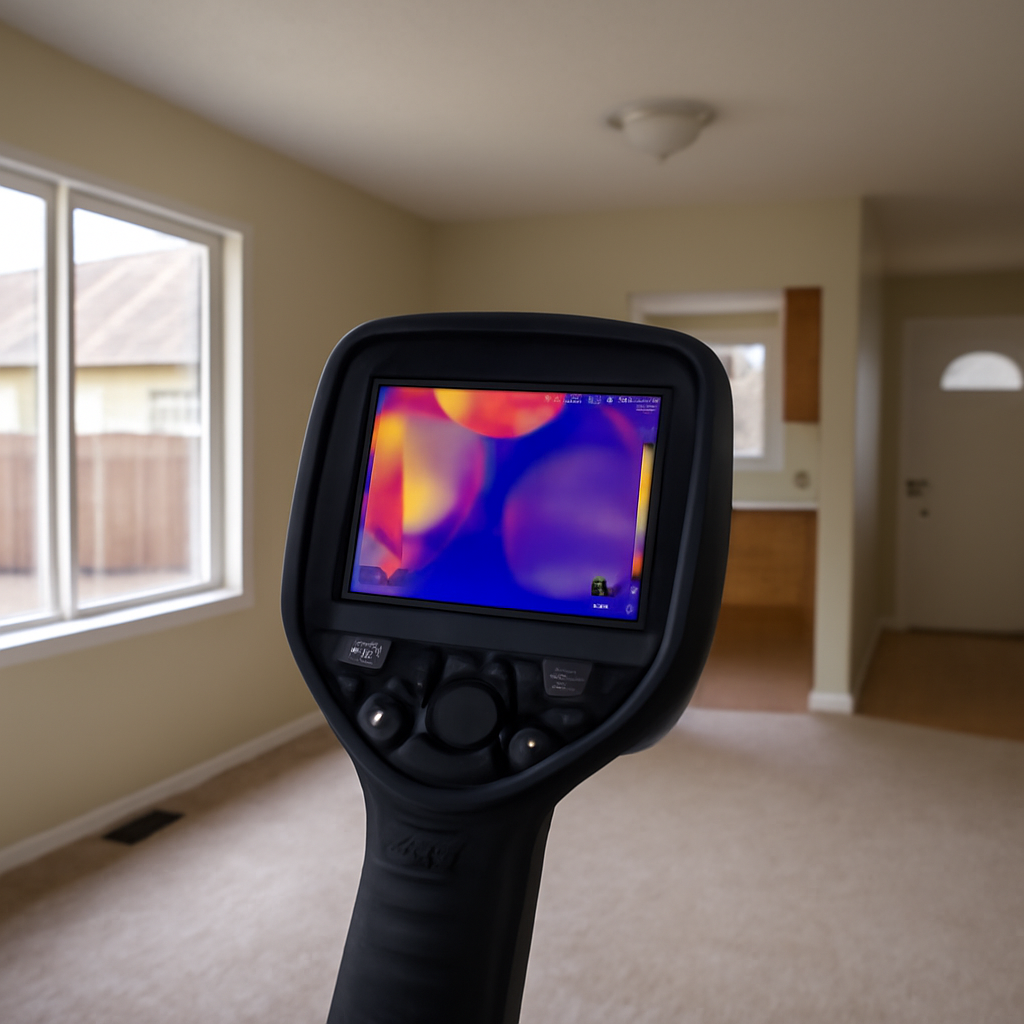
A thermal imaging inspection uses an infrared camera to reveal temperature differences across surfaces, surfacing problems a standard visual inspection cannot see: hidden moisture, missing insulation, electrical hot spots, and air leaks. In Longmont, where the 2013 St. Vrain flood left a basement-moisture legacy, freeze-thaw cycles open envelope gaps, and high-altitude winters punish insulation, infrared adds a layer of detection that matters. This page explains what a thermal imaging inspection longmont buyers and homeowners can expect, why local conditions make it useful, and what it costs.
Thermal imaging inspection in Longmont: what to know
Thermal imaging, or infrared thermography, detects how warm or cool a surface is and renders it as a color image. It does not see through walls; it reads the surface temperature, and differences in that temperature reveal what is behind the surface, such as a cold, damp patch where water is present or a warm streak where insulation is missing.
It is a diagnostic supplement, not a standalone inspection. An infrared scan during a home inspection points the inspector toward areas that warrant a closer look or a moisture-meter confirmation. For how it fits the broader evaluation, our guide to hiring a home inspector covers where add-on services like this belong in the process.
The value is in finding the invisible. Water trapped inside a flood-legacy Longmont basement wall, a missing batt of insulation in a high-altitude attic, an overheating circuit breaker, or a roof leak that has not yet stained the ceiling can all show up as a thermal anomaly before they become a visible, expensive problem.
Conditions affect what the camera sees. Infrared works best when there is a temperature difference between inside and outside, which makes Longmont’s cold winters ideal for spotting insulation gaps and air leaks, while moisture detection benefits from the evaporative cooling that damp areas produce. A skilled operator interprets the image rather than reading color alone.
Why Longmont homes benefit from thermal imaging
The flood legacy is the standout local driver. After the 2013 St. Vrain flood, many Longmont basements were dried and rebuilt, but moisture sealed inside a wall cavity or under flooring may remain. A thermal scan can reveal the cool signature of that trapped moisture behind finished drywall, flagging a problem that a visual inspection would miss entirely.
Winter envelope performance is a second driver. At nearly 5,000 feet, Longmont winters are cold and long, and homes lose money and comfort through missing insulation and air leaks. An infrared scan during the heating season maps where insulation is thin or absent and where cold air infiltrates around windows, rim joists, and attic hatches, giving a homeowner a targeted efficiency to-do list.
Climate stress adds more uses. Chinook winds and freeze-thaw cycles work on roofs and flashing, and an infrared scan can catch the temperature signature of a roof leak or wet attic insulation before water stains appear. In older Old Town homes, thermal imaging can also reveal overheating electrical connections in dated panels, a safety find worth its own attention.
Newer subdivisions benefit too. Homes in Prospect New Town, Southmoor Park, and Fox Hill can have builder-grade insulation gaps and missed air-sealing that infrared makes visible, helping a buyer hold a builder accountable during the warranty period or helping a homeowner prioritize upgrades that cut winter heating costs.
The Chinook winds that sweep down off the foothills make air-sealing especially worth checking in Longmont. When a strong Chinook drops the outdoor temperature and drives wind against the house, a poorly sealed home loses heat fast through gaps an infrared scan can pinpoint: a leaky attic hatch, an unsealed rim joist, or a window that was never properly foamed. A homeowner who feels a cold draft during a windstorm but cannot find the source benefits directly from a scan that maps the infiltration, turning a vague comfort complaint into a short list of specific spots to seal before the next cold front.
What a Longmont thermal imaging inspection covers
The operator scans interior walls, ceilings, and floors, the attic and basement, the electrical panel, and around windows and doors, looking for thermal anomalies that indicate moisture, missing insulation, air leakage, or electrical heat. Findings are confirmed where possible with a moisture meter or visual follow-up and documented with infrared and standard photos.
Moisture detection
Damp materials hold and release heat differently than dry ones, so a moisture intrusion behind drywall often shows as a cool, oddly shaped area. In a flood-legacy Longmont basement, this is the headline use: the camera can point to a wall cavity that is still wet years after the visible repair, prompting a moisture-meter check and, if confirmed, a closer investigation for mold.
Insulation and air leaks
During cold weather, missing or settled insulation shows as a warmer interior surface where heat escapes, and air leaks show as streaks of cold infiltration. For a Longmont homeowner facing high winter heating bills, this turns a vague comfort complaint into a specific, fixable map. Catching hidden moisture early also connects to mold prevention; our overview of basement mold types explains what damp cavities can grow.
Thermal imaging inspection cost in Longmont
As an add-on to a standard home inspection, an infrared scan in the Longmont market typically adds about $100 to $250, depending on home size and scope. A standalone thermal imaging inspection ordered on its own, for example to investigate a specific moisture or energy concern, usually runs roughly $200 to $400.
The cost depends on whether the scan is a quick supplement during a broader inspection or a dedicated, room-by-room moisture and energy survey. Larger homes and detailed energy audits sit at the higher end, while a focused scan of a single suspected leak is cheaper.
Set the cost against what it catches. A few hundred dollars to find trapped moisture in a flood-legacy basement, before it spreads through framing and turns into a mold remediation, is inexpensive insurance. The same scan that maps winter air leaks can pay for itself over a few heating seasons in reduced energy bills at Longmont’s elevation.
For buyers, bundling the scan with a pre-purchase inspection is the cost-effective route because it avoids a separate trip charge and gives one coordinated report. For homeowners chasing a comfort or efficiency problem, a standalone scan delivers a targeted diagnosis that guides exactly where to spend on insulation or sealing.
The season you schedule the scan in affects what it can reveal, which is worth planning around in Longmont. Insulation and air-leak detection work best when there is a strong temperature difference between inside and outside, so a winter scan during the heating season produces the clearest energy map. Moisture detection, by contrast, can be done year-round but benefits from following a wet spell, when any trapped water in a flood-legacy basement is most likely to show a thermal signature. A homeowner deciding when to book can match the timing to the question, scheduling an energy-focused scan in the cold months and a moisture-focused scan after snowmelt or a heavy rain.
Colorado context and disclosure
Colorado does not license home inspectors or thermographers, so training and experience are the real measure of an operator’s skill with an infrared camera. A poorly interpreted scan can produce false alarms or miss real problems, which is why the operator’s ability to read the image and confirm findings with a moisture meter matters more than the camera’s price tag.
Thermal findings can feed a Colorado transaction the same way other inspection results do. Hidden moisture revealed by a scan in a flood-legacy home is exactly the kind of issue a buyer can raise during the inspection objection period, and a seller’s disclosure of prior water damage gives the scan a specific area to investigate. For the full vetting framework, our hiring guide explains how to evaluate an inspector’s credentials and reporting.
Neighborhoods and areas served
Thermal imaging is useful across Longmont in different ways by neighborhood: flood-legacy moisture detection along the St. Vrain corridor, insulation and air-leak mapping in older Old Town and Roosevelt Park homes with original construction, and builder-gap detection in newer Prospect New Town, Southmoor Park, and Fox Hill subdivisions. Service typically extends to adjacent Niwot, Firestone, Mead, and Berthoud, which share the same cold-winter climate that makes infrared scanning effective.
The strongest local case for thermal imaging is the combination of flood history and cold winters. A Longmont home that took on water in 2013 and now faces another heating season is exactly where an infrared scan earns its fee, catching both trapped moisture and the insulation gaps that drive up winter bills in one pass.
Adjacent communities share the same conditions. Homes in Niwot, Firestone, Mead, and Berthoud face the same cold high-elevation winters and Chinook wind exposure that make infrared scanning effective, along with the agricultural-ditch groundwater that can drive basement moisture. A homeowner anywhere in the St. Vrain Valley who suspects a hidden leak or wants to cut heating costs gets the same value from a scan, since the local drivers behind moisture and energy loss do not respect town boundaries.
How to choose a Longmont thermal imaging provider
Ask whether the operator is trained in infrared thermography, how they confirm thermal findings with a moisture meter or visual follow-up, and whether they understand the local flood and climate context. A scan is only as good as its interpretation, so experience reading images in real Front Range homes is the key credential.
Confirm the scan is delivered with both infrared and standard photos and a written explanation of what each anomaly means and what to do about it, rather than a gallery of colorful pictures with no guidance. An operator who distinguishes a harmless thermal pattern from a genuine moisture or electrical concern saves a homeowner from chasing phantom problems. Pairing the scan with a full inspection or a radon test makes sense given Longmont’s Zone 1 status.
Finally, prefer a provider who uses thermal imaging as a diagnostic tool within a broader inspection rather than as a gimmick, and who has no financial stake in the repairs they recommend. That independence keeps the findings honest and useful for a buyer or homeowner deciding where to spend.
Set realistic expectations for what a scan can and cannot conclude, because that honesty separates a good operator from one overselling the technology. Infrared reveals where a temperature anomaly exists, but it takes interpretation and often a moisture-meter confirmation to say whether that anomaly is wet drywall, a thermal bridge, or simply a cold pipe behind the surface. A skilled Longmont operator explains that a cool spot is a lead to investigate rather than a verdict, and resists the temptation to declare a moisture emergency from color alone. That measured reading of the image is what makes the scan a genuine diagnostic aid instead of a source of false alarms that send a homeowner chasing problems that are not there.
References
- Infrared thermography in home inspection — International Association of Certified Home Inspectors
- Home energy audits and infrared scans — U.S. Department of Energy
- Moisture and mold prevention — U.S. Environmental Protection Agency
Worried about hidden moisture in a Longmont basement or high winter heating bills? A thermal scan turns the invisible into a clear map. Reach out through our contact page to connect with a vetted local inspector.
Thermal imaging cameras
Infrared cameras reveal hidden moisture, missing insulation, and air leaks. Phone-attachment models are the budget entry point; standalone units have higher resolution.
| Product | Why | Buy |
|---|---|---|
 FLIR ONE Pro (phone) FLIR ONE Pro (phone) | Plugs into iPhone/Android; inspector favorite. | Amazon — $349.00 |
 Topdon TC001 Topdon TC001 | High-res phone module at a low price. | Amazon — $199.99 |
 FLIR C5 Compact FLIR C5 Compact | Standalone pocket camera with Wi-Fi. | Amazon — $449.00 |