Solar Outdoor Lights: Path, Flood and Wall Lights Compared
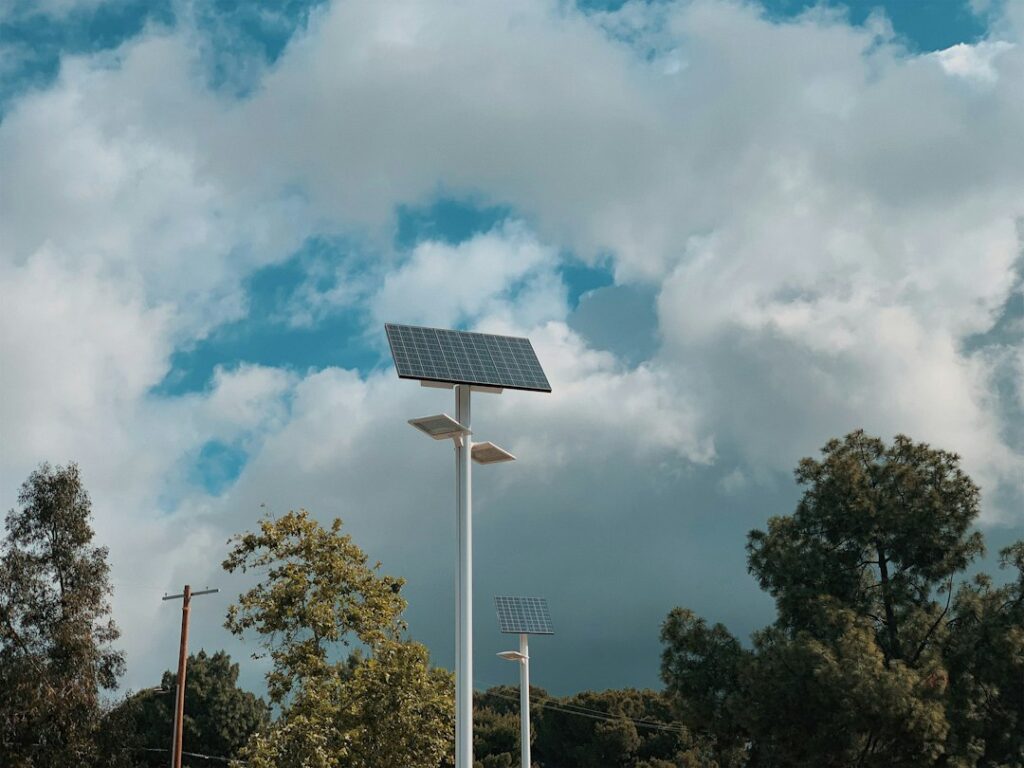
Solar lights are one of the easiest ways to add light outdoors. There is no trenching, no wiring, no transformer and no electrician; you push a stake into the ground or screw a fixture to a wall, and it charges itself during the day and turns on at dusk. That simplicity has made solar path lights, floodlights and wall-mounted security lights a common sight in Front Range yards. It also leads to frustration when the lights fade by mid-evening in December, quit after a couple of seasons, or simply cannot light a driveway the way a wired fixture can. This guide compares the main types of solar outdoor lights, explains how winter sun and short days affect them at Colorado’s latitude, covers battery types, replacement and safe disposal, and compares solar with wired low-voltage and line-voltage options so you can decide where each makes sense. Cost ranges are included as rough guides.
Part of our Home Electrical guide — start there for the full picture →
How Solar Lights Work
Every solar light has the same basic parts: a small photovoltaic panel, a rechargeable battery, a charge controller, an LED light source and a light sensor (and sometimes a motion sensor). During daylight the panel charges the battery. When the sensor detects darkness, the controller switches the LED on and runs it from the stored charge until the battery is depleted, a timer ends the cycle, or daylight returns.
That design means a solar light is only as good as three things working together:
- How much sunlight reaches the panel. Shade, panel angle, dirt, snow and season all reduce charging.
- How much energy the battery can store and deliver. Capacity falls as batteries age and in cold temperatures.
- How much power the LED draws. A bright flood drains a battery much faster than a dim marker light.
If any of those is weak, the light will be dim or run for only a short time after dark. Most disappointment with solar lights comes from expecting a small panel and battery to deliver wired-fixture performance.
Path vs Flood vs Wall Solar Lights
Path and garden lights
Stake-mounted path lights are the most common type. They are designed to mark the edge of a walkway or bed rather than to light the ground brightly, and many inexpensive models put out only a small amount of light. They work well for wayfinding and decoration. They are less effective for lighting steps or uneven paths where people need to see their footing, because the light is low and dim. Quality varies enormously, from disposable-grade units with tiny panels to sturdier metal fixtures with replaceable batteries and larger panels.
Solar floodlights
Solar floodlights aim to light a wider area such as a driveway, side yard or shed. Many use a separate panel connected by a cable, which allows the panel to be placed in full sun while the light head sits in a shaded spot or under an eave. Higher-output floods need larger panels and batteries, and many use motion activation so they only run at full brightness when someone approaches. Our flood lights guide covers placement, glare and aiming for wired fixtures, and much of that applies to solar models as well.
Wall-mounted and security lights
Wall lights mount to siding, fences or posts and are often motion-activated. They are popular beside gates, sheds and detached garages where running a circuit would be costly. Mounting them on a sunny wall matters; a north-facing wall may never charge the panel adequately. The motion sensor light guide explains sensitivity, range and false-trigger issues that also apply to solar units.
Decorative and string-style solar lights
Solar string lights, lanterns and accent lights are mostly decorative. They are convenient where no outlet exists, though they share the same seasonal limits. For plug-in strands, see our outdoor string lights guide.
Best Solar Lights: our top 3 picks
| Product | Best for | Key features | Price | Buy |
|---|---|---|---|---|
| daphino 3-Head 2500LM | Best overall security flood |
| $18.04as of Nov 19, 2026 1:45 pm GMT+0000 | Buy now →Check current price |
| TuyLuxe TWL002 | Brightest flood, longest warranty |
| $23.99as of Nov 19, 2026 1:45 pm GMT+0000 | Buy now →Check current price |
| NYMPHY Spotlights | Accent lighting in harsh weather |
| $31.99as of Nov 19, 2026 1:45 pm GMT+0000 | Buy now →Check current price |


Prices are Amazon’s listed prices as of the time shown and change often; check Amazon for today’s price. As an Amazon Associate we earn from qualifying purchases.
Winter Sun and Short Days in Colorado
Colorado’s Front Range is known for sunshine, which helps solar lights in many months. Winter is still the hard season, for a few reasons:
- Shorter days. Around the winter solstice, Denver-area daylight is roughly nine and a half hours, and the sun stays low in the southern sky. Panels have fewer hours to charge, and lights must run through longer nights.
- Low sun angle and shade. A spot that is sunny in June can sit in the shadow of the house, a fence or evergreen trees in December. A flat panel pointed straight up collects less of the low winter sun than a panel tilted toward the south.
- Snow cover. Even a thin layer of snow on the panel can stop charging. Path lights may also be buried entirely.
- Cold batteries. Rechargeable batteries generally deliver less capacity in cold weather, and some chemistries should not be charged below freezing, which manufacturers handle in different ways.
The practical result is that many solar lights run for a shorter time and dimmer in winter, sometimes much shorter, even when they work fine in summer. Ways to improve winter performance include choosing models with a separate panel that can be mounted high and tilted south, keeping panels clear of snow and dust, picking lights with larger batteries or a power-saving mode, and accepting that solar may be a seasonal convenience rather than year-round security lighting for some locations.
Battery Types and Replacement
The battery is the part of a solar light most likely to fail first. Common types include:
- Nickel-metal hydride (NiMH). Common in small path lights, often in standard AA or AAA sizes. Relatively inexpensive and easy to replace with batteries of matching size and chemistry.
- Nickel-cadmium (NiCd). Found in older and some low-cost lights. Generally being replaced by NiMH and lithium in newer products.
- Lithium-ion, including lithium iron phosphate. Common in floodlights, wall lights and higher-output fixtures. The EPA describes lithium-ion as a family of rechargeable chemistries that includes lithium iron phosphate, and notes the electrolyte is usually flammable.
Signs a battery needs replacing
- The light comes on at dusk but fades within an hour or two, even after a sunny day.
- The light does not come on at all, though the panel is clean and in sun.
- Visible corrosion, leakage or swelling in the battery compartment.
Before replacing a battery, try cleaning the panel, confirming the on/off switch is on, and letting the light charge in full sun for a day or two with the switch off if the manufacturer recommends it. If the light has a replaceable battery, replace it with the same chemistry, size and voltage the manufacturer specifies. Putting a non-rechargeable alkaline battery into a solar light, or mixing chemistries, can cause leakage or damage.
Lithium battery safety
The U.S. Fire Administration warns that lithium-ion and other batteries present fire dangers if people do not follow product instructions for using, storing or disposing of them. USFA advises stopping use of a lithium-ion battery that shows an odor, a change in color, too much heat, a change in shape, leaking or odd noises. Its guidance, citing NFPA, also notes that lithium-ion batteries should not be charged at temperatures below 32 degrees F or above 105 degrees F, and advises keeping them out of direct sunlight and hot cars. Outdoor solar products are designed to sit in the sun, so following the manufacturer’s temperature ratings and installation instructions matters, and spare batteries should be stored indoors away from anything that can burn. A swollen or damaged battery in any solar light should be removed carefully and not reused.
Disposing of Old Solar Light Batteries
Used rechargeable batteries should not go in the household trash. The EPA advises that rechargeable batteries, including NiMH, NiCd and lithium-ion types, not be put in the trash or municipal recycling bins. Instead, EPA points to specialized battery recyclers, participating retailers with battery takeback programs and local household hazardous waste collection. For handling, EPA recommends placing each battery in a separate plastic bag or covering the terminals with non-conductive tape such as electrical tape, because batteries can hold enough energy to start fires even when they appear to be discharged.
Where the battery is sealed inside the fixture and cannot be removed, EPA’s guidance for non-removable batteries is to take the whole device to an electronics recycler, retailer takeback program or household hazardous waste collection. In Colorado, county and city household hazardous waste programs vary, so check with your local program before dropping off.
Solar vs Wired Low-Voltage and Line-Voltage Lighting
Solar is not always the best choice. Comparing it with wired options helps clarify where each fits.
Where solar makes sense
- Marking garden beds, path edges and decorative features.
- Remote spots such as sheds, gates and fence lines where trenching a cable would be expensive or disruptive.
- Renters or anyone who wants lighting without electrical work.
- Supplementing wired lighting in areas that get strong sun.
Where wired lighting usually wins
- Steps, stairs and entries. Lighting that people rely on for safe footing benefits from consistent output every night, including in winter. Our porch light guide covers entry lighting.
- Security lighting. Driveways and doors where reliable light deters intruders and helps visitors see.
- Shaded yards. Under mature trees or on the north side of a house, solar may never get enough sun.
- Designed landscape lighting. Low-voltage systems powered by a transformer allow consistent brightness, timers, photocells and fixture choices that solar cannot easily match. The landscape lighting guide explains how those systems are designed and installed.
Low-voltage systems typically plug into an exterior GFCI-protected receptacle through a transformer, with cable buried shallowly to the fixtures. Line-voltage fixtures such as wall-mounted floods are hardwired and usually require a licensed electrician and a permit in many Colorado jurisdictions. Both cost more up front than solar but tend to deliver steadier performance and longer service life.
Choosing Better-Quality Solar Lights
Price is a rough guide to quality, but the specifications on the box tell more. Points worth comparing:
- Light output in lumens. Path markers may be rated at only a handful of lumens, while floodlights can be rated in the hundreds or more. Be wary of very high claims on very small, inexpensive units.
- Run time and modes. Many lights list run time after a full charge. Dim, bright and motion-only modes let the battery last longer.
- Battery capacity and access. A light with a replaceable battery and a stated capacity is generally easier to keep running for years than one with a sealed cell.
- Weather resistance. Many manufacturers list an ingress protection (IP) rating describing resistance to dust and water. Higher water-resistance ratings are generally better for lights exposed to rain and snowmelt.
- Housing material. Metal and glass housings typically hold up better to high-altitude sun than thin plastic, which can yellow and become brittle.
- Color temperature. Warmer light around 2700K to 3000K is often preferred for gardens and patios, while cooler light may be chosen for security.
- Listing marks and warranty. A recognized testing laboratory mark and a meaningful warranty suggest the manufacturer stands behind the product.
Troubleshooting Common Problems
- Light does not turn on at night. Confirm the switch is on, remove any protective film from the panel, and check that a nearby porch light or streetlight is not keeping the sensor from detecting darkness.
- Light stays on during the day. The light sensor may be faulty or covered by dirt, or water may have entered the housing.
- Light is dim or short-lived. Clean the panel, move the light into more sun, or replace an aging battery.
- Moisture inside the lens. Seals may have failed. Drying the unit may help temporarily, but water inside often leads to corrosion.
- Motion light triggers constantly. Reduce sensitivity or re-aim it away from moving branches, streets and vents.
Installation Tips
- Watch the spot for a full day, ideally in winter, before choosing it. Note when shade from the house, fences and trees crosses it.
- For floods and wall lights, choose models with a remote panel so the panel can sit in full sun while the light goes where it is needed.
- Tilt adjustable panels toward the south and clear snow and dust regularly.
- Keep solar lights away from wired fixtures and porch lights, which can trick the light sensor into thinking it is still daytime.
- Before driving stakes or anchors into the ground, call 811 to have buried utilities marked, especially for larger posts.
What a Home Inspector Covers
The ASHI Standard of Practice says inspectors are not required to inspect low voltage wiring systems and components, ancillary wiring systems that are not part of the primary electrical distribution system, or solar and other renewable energy systems. Standalone solar lights are generally treated as personal property and are outside the scope of a standard home inspection. An inspector may still note solar lights that are the only illumination at steps or entries, or comment on wired exterior fixtures, receptacles and GFCI protection, which are within scope. See our electrical inspection section for more on the electrical review, and our guide to hiring a home inspector for what a full inspection includes.
Typical Costs
These are rough 2026 ranges and vary by brand, output and installation:
- Solar path lights: commonly a few dollars to tens of dollars each, often sold in multipacks.
- Solar wall and motion-activated security lights: commonly tens of dollars to around a hundred dollars or more each.
- Solar floodlights with remote panels: commonly tens of dollars to a few hundred dollars each.
- Replacement batteries: often a few dollars for NiMH cells, more for proprietary lithium packs.
- Low-voltage landscape lighting system, professionally installed: commonly ranges from the low thousands into several thousand dollars depending on fixture count.
- Hardwired line-voltage floodlight: commonly a few hundred dollars per fixture installed, more where a new circuit is needed.
More Questions About Solar Outdoor Lights
How long do solar lights last?
Solar lights typically last about 2 to 5 years for inexpensive models and longer for higher-quality fixtures. Rechargeable batteries usually need replacing every 1 to 3 years, while LEDs can last much longer.
Panel quality, weather exposure and build materials affect overall lifespan. Cloudy panel covers, corroded contacts and cracked housings are common failure points. Replacing batteries and cleaning panels can often restore performance before the whole fixture needs replacing.
How long do solar lights stay on at night?
Solar lights typically stay on about 6 to 10 hours after a full sunny day of charging. Runtime drops after cloudy days, during short winter days or when panels are dirty or shaded.
Brightness settings affect runtime too: high-output floodlights drain batteries faster than dim path lights. Motion-activated lights stay on only when triggered, which extends battery life. Placing panels where they receive several hours of direct sun is the most important factor in reliable nighttime operation.
Can solar lights be left out in winter?
Most solar lights can be left out in winter, but they often perform poorly because of short days, low sun angles and snow cover on panels. Freezing temperatures can also reduce battery capacity.
Lights that are fragile or low quality may last longer if stored indoors for winter. Clearing snow from panels and positioning them for maximum winter sun helps. Removing batteries before storing lights prevents leaks and corrosion during long periods of non-use.
Do solar lights need direct sunlight?
Solar lights work best with direct sunlight, typically needing about 6 to 8 hours of sun to fully charge. They can charge in partial shade or on cloudy days, but output and runtime decrease noticeably.
In shaded yards, models with a separate solar panel on a cable let the panel sit in sunny spots while the light stays where it is needed. Keeping panels clean and angled toward the sun improves charging. Solar lights placed under trees or eaves often disappoint.
References
- Used Household Batteries — U.S. Environmental Protection Agency
- Lithium-Ion Battery Recycling — U.S. Environmental Protection Agency
- Battery Fire Safety — U.S. Fire Administration
- ASHI Standard of Practice for Home Inspections — American Society of Home Inspectors
Frequently asked questions
Why do my solar lights stop working in winter?
Shorter days, a low sun angle, shade, snow on the panel and cold batteries all reduce charging and run time. Mount panels in full sun, tilt them south if adjustable, and keep them clear of snow.
Can I replace the batteries in solar lights?
Many path lights use standard NiMH cells that can be replaced with the same size and chemistry. Some floods and wall lights use proprietary lithium packs. Follow the manufacturer's specifications and do not substitute alkaline batteries.
How should I dispose of old solar light batteries?
EPA advises not putting rechargeable batteries in the trash or municipal recycling. Tape the terminals or bag each battery and take them to a battery recycler, retailer takeback or household hazardous waste program.
Are solar lights bright enough for steps and driveways?
Basic path lights are mainly for marking edges. Steps, entries and driveways usually benefit from wired lighting or a higher-output solar flood with a separate panel in full sun.
How much do solar lights cost compared with wired lighting?
Solar path lights often cost a few dollars to tens of dollars each, while professionally installed low-voltage systems commonly run into the thousands. These are rough 2026 ranges.
Can solar lights charge through a window?
Solar lights can charge through a window, but much less efficiently because glass blocks or reflects part of the sunlight, and some window coatings reduce output further. Outdoor charging gives much better performance. Indoor window charging is mainly useful for storing lights over winter.
Why do solar lights turn on during the day?
Solar lights may turn on during the day if the light sensor is shaded, dirty or damaged, or if the light is placed in a dim area. Cleaning the sensor and moving the light to a brighter spot often fixes the problem.
Are solar lights waterproof?
Most outdoor solar lights are weather-resistant rather than fully waterproof. Look for an IP rating such as IP65, which indicates protection against dust and water jets. Lights should not be submerged unless specifically rated for it.
Wondering whether the outdoor lighting and exterior outlets at a home you are buying are up to the job? Talk with us about a Front Range inspector who reviews exterior fixtures, receptacles and GFCI protection.