Best Solar Generators (2026): 7 Power Station Kits Compared
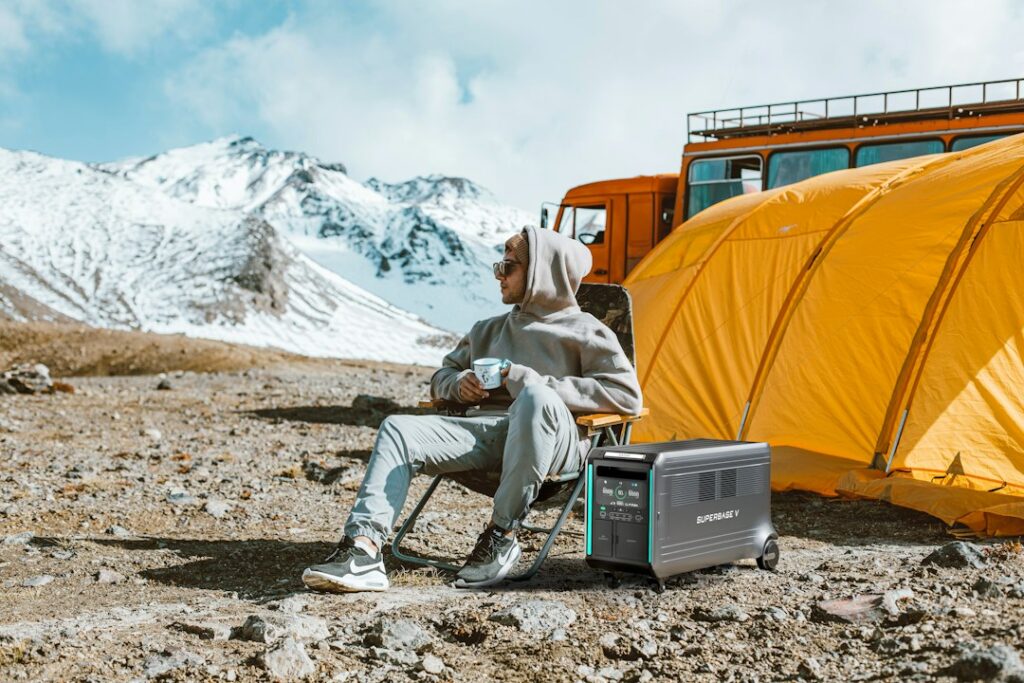
A solar generator is a battery power station paired with folding or rigid solar panels, and the best solar generator for you depends on whether you are charging phones at a campsite or keeping a refrigerator and furnace blower alive through a two-day outage. Unlike a gas generator, it makes no exhaust and no engine noise, so it can sit in the kitchen. Unlike a gas generator, it also cannot make more energy than the sun and the wall outlet put into it. Front Range homeowners have good sun most of the year but short December days and panels that disappear under snow. These picks are ranked by job, from small 300-watt kits to whole-home systems with 240-volt output, with a buying guide on capacity, solar input and realistic recharge times.
Part of our Home Electrical guide — start there for the full picture →
As an Amazon Associate we earn from qualifying purchases.
How we compared: we compared 12 current Amazon listings returned for solar generators on what each listing states: battery capacity in watt-hours, continuous and surge output, battery chemistry, included panel wattage, maximum solar input, stated recharge times, UPS switching, outlets, weight and warranty. Nine listings bundle a power station with panels and three sell the power station alone. We did not lab-test any of these units, measure their capacity or charge them from the sun. Prices and availability change often, so check the current listing before buying.
Quick picks: the best solar generators by job
| Product | Best for | Key features | Price | Buy |
|---|---|---|---|---|
| EcoFlow Delta 3 Classic + 220W | Best overall mid-size kit |
| $698.99as of Oct 20, 2026 10:22 pm GMT+0000 | Buy now →Check current price |
| Jackery Solar Generator 1000 v2 | Lightest 1 kWh kit |
| $699.00as of Oct 20, 2026 10:22 pm GMT+0000 | Buy now →Check current price |
| Jackery HomePower 3000 + 2x200W | Fridge and essentials backup |
| $1,799.00as of Oct 20, 2026 10:22 pm GMT+0000 | Buy now →Check current price |
| ABOK Ark3600 + 400W | Highest solar input |
| $1,599.99as of Oct 20, 2026 10:22 pm GMT+0000 | Buy now →Check current price |
| Jackery Solar Generator 5000 Plus | Whole-home circuits, 240V |
| $3,729.00as of Oct 20, 2026 10:22 pm GMT+0000 | Buy now →Check current price |
| Jackery Solar Generator 300 + 40W | Small devices and CPAP |
| $339.00as of Oct 20, 2026 10:22 pm GMT+0000 | Buy now →Check current price |
| ZeroKor 300W + 60W panel | Entry-level camping kit |
| $180.47as of Oct 20, 2026 10:22 pm GMT+0000 | Buy now →Check current price |
Prices are Amazon’s listed prices as of the time shown and change often; check Amazon for today’s price. As an Amazon Associate we earn from qualifying purchases.
The seven picks, compared listing by listing
1. EcoFlow Delta 3 Classic with 220W Panel — Best Overall Solar Generator

1,024 Wh LiFePO4 power station with 1,800 W output, under 10 ms UPS and a 220 W bifacial panel.
Check price on Amazon$698.99 as of Oct 20, 2026 10:22 pm GMT+0000 — prices change; see Amazon for current price.Why we like it
- Fastest stated solar recharge among mid-size kits
- Under 10 ms UPS for computers and routers
- 1,800 W output runs a fridge or microwave
- LiFePO4 cells and 5-year warranty
| Specification | Details |
|---|---|
| Capacity / chemistry | 1,024 Wh; LiFePO4, rated for 10+ years of daily use |
| Output | 1,800 W continuous, 3,600 W surge; up to 2,600 W with X-Boost for some loads |
| Panel / solar recharge | 220 W bifacial N-type panel; full recharge in about 5.8 h stated |
| AC recharge | 0 to 80% in 45 minutes stated |
| Backup | UPS switchover in under 10 ms |
| Model / warranty | EF-DL3-C; 5-year manufacturer warranty; weight not stated |
EcoFlow Delta 3 Classic — 1,024 Wh LFP, 1,800 W / 3,600 W surge, 220 W panel, 5.8 h solar, 10 ms UPS, 5-yr
One of Three Listings With UPS Switching, Paired With the Fastest Mid-Size Solar Recharge
Three of the 12 listings describe UPS-style switchover, where the power station passes wall power through to plugged-in devices and switches to battery within milliseconds when the grid drops: this EcoFlow, the Jackery HomePower 3000 and the panel-less Anker S2000. That turns a solar generator into a backup for a home office, internet router, sump pump controller or medical device, rather than something you scramble to plug in after the lights go out.
Among the roughly 1 kWh kits, its stated solar recharge of about 5.8 hours with the included 220 W panel is the fastest, ahead of the Jackery 1000 v2’s 80 percent in 6 hours. The listing also states a 25 percent conversion rate for the bifacial panel.
What the listing does not say: the power station’s weight, the number of AC outlets or the cycle count behind its 10-year claim. And 1,024 Wh is a day of refrigerator power at best, not a week; size expectations accordingly.
Pros
- UPS switchover under 10 ms
- Fast stated solar and AC recharge
- LiFePO4 and 5-year warranty
Cons
- Weight and outlet count not stated
- About 1 kWh limits outage runtime
- Panel and station ship separately
Check EcoFlow Delta 3 Classic + 220W price on Amazon
2. Jackery Solar Generator 1000 v2 with 200W Panel — Best Lightweight 1 kWh Kit

1,070 Wh LiFePO4 power station at 23.8 lb with 1,500 W output, app-controlled charging and a 200 W panel.
Check price on Amazon$699.00 as of Oct 20, 2026 10:22 pm GMT+0000 — prices change; see Amazon for current price.Why we like it
- Lightest power station near 1 kWh on the shelf
- One-hour emergency AC charge via app
- Three pure sine wave AC outlets
- 4,000 cycles to 70% capacity stated
| Specification | Details |
|---|---|
| Capacity / chemistry | 1,070 Wh; LFP, over 70% capacity after 4,000 cycles |
| Output | 1,500 W continuous, 3,000 W surge; three AC, two USB-C, one USB-A, car port |
| Panel / solar recharge | 200 W panel; 80% in 6 h stated |
| AC recharge | 1 h in app-enabled emergency mode; 1.7 h default |
| Weight | 23.8 lb |
| Model / warranty | JE-1000D; listing states 5 years of coverage, spec field says 2 years |
Jackery 1000 v2 — 1,070 Wh LFP, 1,500 W / 3,000 W surge, 200 W panel, 80% solar in 6 h, 23.8 lb
A Full Kilowatt-Hour You Can Carry With One Hand
At 23.8 lb, the Explorer 1000 v2 is the lightest power station of roughly 1 kWh or more on the shelf with a stated weight. That matters if the unit will move between a garage shelf, the kitchen during an outage and the car for a camping trip. Its app adds charging modes, including a 30 dB quiet overnight mode and a one-hour emergency charge.
The 1-hour charge applies to wall power only and must be enabled in the app each time; Jackery defaults to a 1.7-hour charge to protect battery health. Solar recharge is slower: 80 percent in about 6 hours from the 200 W panel in good sun.
The warranty is stated two ways. The box contents line says 5 years of coverage, while the spec field says 2 years. Confirm with Jackery before you rely on the longer figure. The listing does not describe UPS switching.
Pros
- Light for its capacity
- Fast app-enabled AC charging
- Long stated cycle life
Cons
- No UPS switching described
- Warranty stated two ways
- Emergency charge must be enabled each time
Check Jackery Solar Generator 1000 v2 price on Amazon
3. Jackery HomePower 3000 with Two 200W Panels — Best for Fridge and Essentials Backup

3,072 Wh LFP power station with 3,600 W output, UL-certified UPS under 20 ms, TT-30 outlet and two 200 W panels.
Check price on Amazon$1,799.00 as of Oct 20, 2026 10:22 pm GMT+0000 — prices change; see Amazon for current price.Why we like it
- Only UPS on the shelf described as UL-certified
- Three times the capacity of a 1 kWh kit
- Dual 100 W USB-C PD ports
- 5-year manufacturer warranty
| Specification | Details |
|---|---|
| Capacity / chemistry | 3,072 Wh; LiFePO4, 4,000 cycles to 70% capacity |
| Output | 3,600 W continuous, 7,200 W surge; TT-30 RV outlet |
| Panels / solar recharge | Two 200 W panels; 80% in 9 h stated |
| AC recharge | 2.2 h AC; 1.7 h hybrid AC plus DC |
| Backup | UL-certified UPS switching in 20 ms or less |
| Model / warranty | JHP-3000C; 59.5 lb; 5-year manufacturer warranty |
Jackery HomePower 3000 — 3,072 Wh LFP, 3,600 W / 7,200 W surge, 2×200 W panels, UL UPS ≤20 ms, 59.5 lb
A UL-Certified UPS and Three Kilowatt-Hours for Outage Duty
Of the three listings describing UPS switchover, this is the only one that calls its UPS UL-certified. Jackery positions it for exactly the loads that hurt most in an outage: refrigerators, security cameras, medical refrigerators, internet equipment and pet feeders. The listing claims it can keep a refrigerator running for 1 to 2 days.
With 3,600 W of continuous output and 7,200 W surge, it can start a refrigerator compressor, a microwave or a sump pump. The TT-30 outlet suits RVs and can feed a properly installed home inlet, though that connection needs an electrician.
The weak point is solar. Two 200 W panels bring it to 80 percent in about 9 hours of good sun, which in a Colorado December may be two days. Treat the panels as a way to stretch an outage, not to refill the battery daily in winter.
Pros
- UL-certified UPS switching
- Large capacity for essentials
- 5-year warranty
Cons
- Slow solar recharge with included panels
- 59.5 lb
- No 240 V output
Check Jackery HomePower 3000 + 2x200W price on Amazon
4. ABOK Ark3600 with 400W Panel — Best Solar Input and Expandability

3,840 Wh LiFePO4 power station with 2,000 W solar input, 3,600 W output, 15 outlets and a 400 W panel.
Check price on Amazon$1,599.99 as of Oct 20, 2026 10:22 pm GMT+0000 — prices change; see Amazon for current price.Why we like it
- 2,000 W solar input, among the highest stated
- Expands to 11,520 Wh
- 15 output ports including a 30A outlet
- Bluetooth app monitoring
| Specification | Details |
|---|---|
| Capacity / chemistry | 3,840 Wh, expandable to 11,520 Wh; LiFePO4, 4,000+ cycles |
| Output | 3,600 W rated, 4,500 W peak |
| Inputs | 2,000 W solar, 1,500 W AC, 120 W car; 1.29 h with AC plus solar |
| Ports | One 30A AC, four 20A AC, five USB-C, two USB-A, DC and XT60 |
| Panel | One 400 W panel included |
| Model / warranty | Ark3600; 92 lb; 2+3 year warranty |
ABOK Ark3600 — 3,840 Wh LFP, 3,600 W / 4,500 W, 2,000 W solar input, 15 ports, 400 W panel, 92 lb
A Solar Input Big Enough to Grow Into
Solar input caps how fast sunlight can refill the battery. Most kits here accept far more panel wattage than they ship with. The ABOK states 2,000 W of solar input, the highest on the shelf except the Jackery 5000 Plus’s 4,000 W. That means the included 400 W panel is a starting point: add panels over time, and on a clear day the battery can refill much faster.
It also has the largest base capacity of any pick except the 5000 Plus, and it is one of four listings that describe expanding capacity with add-on batteries. Fifteen ports, including a 30A outlet, cover a wide spread of loads.
At 92 lb, it is a wheeled cart rather than a carry-along. The listing does not describe UPS switching or 240 V output, and the “2+3 years” warranty wording suggests a base term plus an extension; confirm the terms.
Pros
- Very high solar input
- Large, expandable capacity
- Many outlets including 30A
Cons
- 92 lb
- No UPS switching described
- Warranty terms need confirming
Check ABOK Ark3600 + 400W price on Amazon
5. Jackery Solar Generator 5000 Plus with Two 200W Panels — Best for Whole-Home Circuits

5,040 Wh LiFePO4 system with 7,200 W at 120V and 240V, 4,000 W solar input and smart transfer switch pairing.
Check price on Amazon$3,729.00 as of Oct 20, 2026 10:22 pm GMT+0000 — prices change; see Amazon for current price.Why we like it
- Only bundled kit with native 240 V output
- Highest capacity and output on the shelf
- 4,000 W solar input
- Works with a 60A smart transfer switch
| Specification | Details |
|---|---|
| Capacity / chemistry | 5,040 Wh, expandable to 60 kWh; LiFePO4, rated up to 11 years daily use |
| Output | 7,200 W rated, 14,400 W surge; 120 V and 240 V |
| Solar input | Up to 4,000 W, high- and low-voltage panels; about 2 h recharge at full input |
| Home connection | Jackery 60A Smart Transfer Switch: 12 circuits at 120 V or 6 at 240 V |
| Panels | Two 200 W panels included |
| Model / warranty | JE-5000A; 134.5 lb; 5-year manufacturer warranty |
Jackery 5000 Plus — 5,040 Wh LFP, 7,200 W 120/240 V, 4,000 W solar input, 60A switch-ready, 134.5 lb, 5-yr
Built to Feed Household Circuits, Not Just Extension Cords
Three listings on the shelf mention 240 V output, and the 5000 Plus is the only panel bundle that provides it from a single unit; the HomePower 3600 Plus reaches 240 V only when two units run in parallel. 240 V matters for well pumps, some heat pump air handlers, electric water heaters and central air conditioners, which Jackery says this unit can run.
It is also one of three listings that describe a transfer switch connection. The Jackery 60A Smart Transfer Switch backs up selected circuits, which is how a battery system powers a furnace or well pump without extension cords. That switch must be installed by an electrician.
The included panels are a token amount for this battery. Two 200 W panels supply a tenth of the stated 4,000 W input, so meaningful solar recharge needs a much larger array, which moves you toward a solar panel installation rather than a portable kit.
Pros
- 120 V and 240 V output
- Largest capacity, expandable to 60 kWh
- Transfer switch integration
Cons
- 134.5 lb
- Included panels undersized for the battery
- Needs an electrician for circuit backup
Check Jackery Solar Generator 5000 Plus price on Amazon
6. Jackery Solar Generator 300 with 40W Panel — Best for Small Devices and CPAP

292 Wh LiFePO4 power station with 300 W output, 100 W USB-C, two AC outlets and a 40 W panel.
Check price on Amazon$339.00 as of Oct 20, 2026 10:22 pm GMT+0000 — prices change; see Amazon for current price.Why we like it
- 7.5 lb power station
- LiFePO4 with 4,000 cycles stated
- 100 W USB-C for laptops
- 3+2 year warranty
| Specification | Details |
|---|---|
| Capacity / chemistry | 292 Wh; LiFePO4, 4,000 cycles to 70% |
| Output | 300 W rated, 600 W surge; two AC, 100 W USB-C, two USB-A, car port |
| Panel / solar recharge | 40 W panel: 80% in 7.5 h; 100 W panel: 80% in about 2.8 h |
| Weight | 7.5 lb power station |
| Use cases named | Laptops, drones, cameras, camping, blackouts |
| Model / warranty | JE-300E; 3+2 year warranty |
Jackery 300 + 40 W — 292 Wh LFP, 300 W / 600 W surge, 100 W USB-C, 40 W panel, 7.5 lb, 3+2 yr
The Smallest LiFePO4 Kit on the Shelf
Three listings on the shelf are small kits rated at 300 W of output or less: this Jackery, the ZeroKor 300W and the Apowking 100W. The Jackery is the only one of the three that names LiFePO4 chemistry and a cycle count, which suggests it will tolerate years of regular use better than kits that do not disclose chemistry.
A 292 Wh battery is for small loads: phones, laptops, a router and modem, lights, a fan, or a CPAP machine for a night or so depending on the model and settings. It will not run a refrigerator or space heater. The same Explorer 300 is sold without a panel on this shelf as well.
The included 40 W panel is slow: 80 percent in about 7.5 hours of good sun. Jackery’s own listing notes a 100 W panel cuts that to about 2.8 hours, which is a worthwhile upgrade.
Pros
- Very light
- LiFePO4 with stated cycle life
- 100 W USB-C
Cons
- 292 Wh limits runtime
- Slow 40 W panel
- No UPS described
Check Jackery Solar Generator 300 + 40W price on Amazon
7. ZeroKor 300W with 60W Panel — Best Entry-Level Camping Kit

280 Wh pure sine wave power station with built-in MPPT, battery protections, SOS light and a 60 W panel.
Check price on Amazon$180.47 as of Oct 20, 2026 10:22 pm GMT+0000 — prices change; see Amazon for current price.Why we like it
- Larger panel than other small kits
- Built-in MPPT solar controller
- Pure sine wave AC output
- Clear warning about loads over 300 W
| Specification | Details |
|---|---|
| Capacity / chemistry | 280 Wh; chemistry not stated in listing |
| Output | Two AC outlets, 300 W max; DC port; four USB including quick charge |
| Panel | 60 W monocrystalline, 20.5% conversion stated; USB outputs on panel |
| Protection | BMS with short circuit, over-current, over-voltage, overload and overheating protection |
| Extras | Flashlight with SOS mode; car charging cable |
| Model / warranty | R200; 5.08 lb; 12-month warranty |
ZeroKor R200 — 280 Wh, 300 W pure sine AC, MPPT, 60 W panel, BMS protections, 5.08 lb, 12-month warranty
The Most Candid Limits in Any Listing
ZeroKor’s listing is unusually frank. It warns that appliances over 300 W, especially heat-producing devices and anything with a compressor, may damage the unit. It also advises keeping the battery between 60 and 80 percent and says it is not recommended as an emergency-only power supply, because sitting uncharged for a long time can push it into a protection state.
That last point matters for home backup. A power station that lives in a closet for nine months and then gets pulled out in an ice storm is exactly the use ZeroKor cautions against. As a camping and device-charging kit used regularly, it makes more sense, and its 60 W panel is larger than the 40 W panels on the other small kits.
The listing does not name the battery chemistry or a cycle count, and its 12-month warranty is the shortest among our picks.
Pros
- 60 W panel included
- Pure sine wave and MPPT
- Honest load and storage warnings
Cons
- Not recommended for emergency-only storage
- Chemistry and cycles not stated
- 12-month warranty
Check ZeroKor 300W + 60W panel price on Amazon
Capacity and output: the two numbers that matter
Every listing gives two headline figures, and they answer different questions:
- Capacity in watt-hours (Wh) is how much energy the battery stores. A 1,000 Wh battery can supply 100 W for roughly 10 hours, minus inverter losses.
- Output in watts (W) is how much power it can deliver at once. Surge or peak figures cover the brief jump when a motor starts.
To size a unit, list what you want to run, find each item’s running watts and estimate hours of use. A modern refrigerator cycles on and off, so its daily energy use is far lower than its running watts suggest; check the yellow EnergyGuide label for annual kWh and divide by 365. A furnace blower needs enough output to start and enough capacity to run through a cold night.
Most of these listings name LiFePO4 or LFP chemistry, 10 of 12 in all. That chemistry generally offers long cycle life, which shows up in the 4,000 to 10,000 cycle claims here.
Solar input and realistic recharge on the Front Range
Stated solar recharge times assume full sun on clean panels aimed correctly. The U.S. Department of Energy notes that solar production is affected by season, time of day, clouds, dust, haze, shadows, rain, snow and dirt. On the Front Range, that means:
- Strong output on clear summer and fall days.
- Much shorter useful sun in December and January, with low sun angles.
- Panels that produce nothing under snow until cleared.
- Hail that can damage portable panels left out; store them when storms are forecast.
Two practical rules: buy at least as much panel as the kit’s included one if you expect to rely on solar during an outage, and keep the battery charged from the wall between uses so you start every outage full. The DOE’s homeowner’s guide to solar describes storage as a way to use solar energy later in the day or when the power goes out.
Solar generator vs gas generator
A solar generator’s biggest advantage is safety indoors. Gasoline, propane and natural gas generators produce carbon monoxide, and the CPSC says portable generators are one of the leading causes of post-storm CO deaths. The CDC says never to run a generator inside a home or garage and to keep it more than 20 feet from windows, doors and vents. A battery power station has no exhaust, so it can sit next to the refrigerator.
The trade-off is energy. A gas generator turns a tank of fuel into many kilowatt-hours a day, while a power station delivers only what it has stored and what panels can add. For multi-day outages with heavy loads, a fuel generator through a transfer switch is often the more practical answer; see our guide to the whole-house generator. Many households pair the two: a power station for silent overnight and indoor loads, a generator outside during the day.
Powering house circuits safely
Plugging a refrigerator into a power station with a heavy-duty cord is straightforward. Powering a furnace or well pump usually means feeding house circuits, which requires a transfer switch or interlock, just as with a gas generator. Three listings here describe transfer switch connections: the two Jackery HomePower 3600 Plus listings, which pair with Jackery’s MTS, and the 5000 Plus with Jackery’s 60A Smart Transfer Switch. Our generator transfer switch guide explains the options, and an electrician should install any of them.
Cord safety still applies. The U.S. Fire Administration warns against overloading power strips, running cords under rugs where they can be damaged and using worn or damaged extension cords.
Storing and using a solar generator
- Store it indoors in a dry place, within the temperature range in the manual. Check the manual’s charging temperature range before leaving one in an unheated garage through January.
- Top it up every few months, or follow the manufacturer’s storage guidance; ZeroKor, for example, recommends keeping its unit between 60 and 80 percent.
- Keep vents clear while charging and discharging.
- Test it before storm season by running your actual outage loads for an hour.
Our main solar generator guide covers setup and storage in more depth.
When to call an electrician or inspector
Bring in a licensed electrician for any transfer switch, inlet or connection to house wiring, and for permanently mounted panels. If you are buying a home with existing solar, battery storage or a generator inlet, have the installation, permits and labeling checked. Our electrical systems hub covers what to ask, and Front Range buyers and homeowners can reach out through our contact page to connect with a vetted local inspector.
Frequently asked questions
What size solar generator do I need for a refrigerator?
A refrigerator needs enough output to start its compressor and enough capacity for a full day of cycling. Many kits from about 1,000 Wh can run a refrigerator for roughly a day, and larger 2,000 to 3,000 Wh units for longer. Check the fridge's EnergyGuide label for annual kWh to estimate daily use.
Can a solar generator power a whole house?
Only the largest systems approach it. The biggest kit here offers 5,040 Wh, 7,200 W and 240 V output with a transfer switch for selected circuits. Even then, it backs up chosen circuits rather than everything, and recharging it from solar needs a large panel array.
How long does a solar generator take to charge with solar panels?
Stated times on this shelf range from about 2 hours at maximum solar input to 9 hours or more with the included panels. Real times depend on sun, season, panel angle, heat and snow. Winter days on the Front Range are short, so expect slower solar recharge than the listing states.
Is a solar generator safe to use indoors?
A battery power station produces no exhaust or carbon monoxide, unlike fuel-burning generators, so it can be used indoors. Keep vents clear, use it on a stable surface, follow the manufacturer's charging and temperature limits and avoid overloading cords or power strips.
Are solar generators worth it compared with gas generators?
They are worth it for quiet, indoor-safe backup of smaller loads and for regular camping use. Gas generators produce far more energy for long outages but must run outdoors, at least 20 feet from the house per the CPSC and CDC. Many households use both.
References
- Homeowner’s Guide to Going Solar — U.S. Department of Energy
- Solar Integration: Solar Energy and Storage Basics — U.S. Department of Energy
- CPSC Warns of Generator Carbon Monoxide and Fire Hazards (2026) — U.S. Consumer Product Safety Commission
- Carbon Monoxide Poisoning Basics — Centers for Disease Control and Prevention
- Appliance and Electrical Fire Safety — U.S. Fire Administration