Best Portable Generator (2026): 6 Home Backup Picks Compared
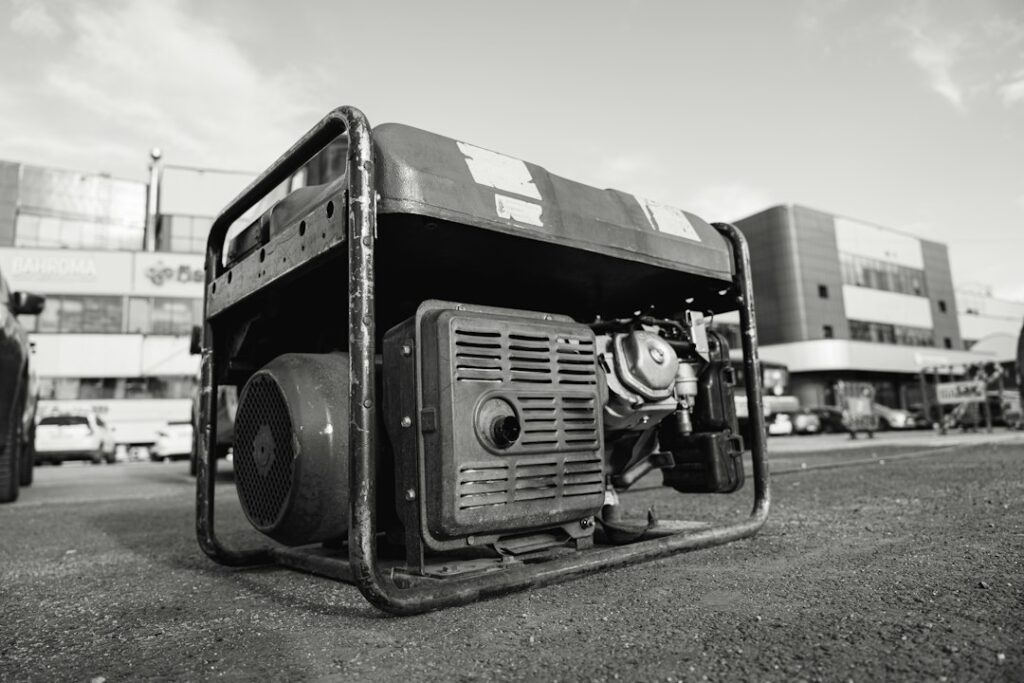
Finding the best portable generator for a house starts with three questions: how much of the house needs to run, what fuel you can store or connect, and how the generator will get power into your circuits safely. On the Front Range, outages tend to arrive with wind events, heavy spring snow and the occasional wildfire-prevention shutoff, so most buyers are shopping for a big gas or dual-fuel open-frame unit that can carry the furnace blower, refrigerator, sump pump and lights through a cold night. This guide covers those home-backup generators. Battery stations and quiet inverter units have their own roundups, linked below, because they solve different problems.
Part of our Home Electrical guide — start there for the full picture →
As an Amazon Associate we earn from qualifying purchases.
How we compared: we compared 11 current Amazon listings for gas-engine portable generators (seven open-frame dual-fuel or tri-fuel home-backup units and four smaller gasoline inverter models) on what each listing states: running and peak watts by fuel, engine size, tank size and runtime claims, outlet panel, carbon monoxide shutoff, transfer-switch readiness and stated warranty. Three battery power stations that showed up in the same search were set aside. We did not lab-test or handle any of these generators. Prices and availability change often, so confirm details on the current listing before buying.
Quick picks: the best portable generators for home backup
| Product | Best for | Key features | Price | Buy |
|---|---|---|---|---|
| Westinghouse WGen10500DFc | Best overall home backup |
| $1,099.00as of Oct 21, 2026 12:54 am GMT+0000 | Buy now →Check current price |
| Generac G0080631 Tri-Fuel | Best for a natural gas hookup |
| $1,169.00as of Oct 20, 2026 8:56 pm GMT+0000 | Buy now →Check current price |
| Westinghouse WGen11500TFc | Best highest output |
| $1,499.00as of Oct 20, 2026 8:56 pm GMT+0000 | Buy now →Check current price |
| DuroMax XP13000HX | Best stated warranty |
| $1,399.00as of Oct 20, 2026 8:56 pm GMT+0000 | Buy now →Check current price |
| DuroStar DS13000MX | Best steel-frame dual fuel |
| $899.00as of Oct 21, 2026 12:54 am GMT+0000 | Buy now →Check current price |
| WEN 56360i | Best for light loads |
| $548.31as of Oct 21, 2026 12:54 am GMT+0000 | Buy now →Check current price |
Prices are Amazon’s listed prices as of the time shown and change often; check Amazon for today’s price. As an Amazon Associate we earn from qualifying purchases.
The 6 picks, compared listing by listing
1. Westinghouse WGen10500DFc — Best Overall Home Backup Generator

Dual-fuel 500cc generator with a 9.5-gallon tank, CO sensor shutdown and 50A plus 30A outlets for home hookup.
Check price on Amazon$1,099.00 as of Oct 21, 2026 12:54 am GMT+0000 — prices change; see Amazon for current price.Why we like it
- 10,500 running watts on gasoline covers most essential circuits
- CO sensor shuts the engine down at elevated levels
- Up to 19 hours at 25 percent load stated
- Remote key fob, push-button and recoil starting
- Works with an interlock, manual switch or WATS200
| Specification | Details |
|---|---|
| Output (gasoline) | 10,500 running / 13,500 peak watts; propane figures not stated in listing |
| Fuel | Gasoline or propane (dual fuel) |
| Engine and tank | 500cc with pressure lubrication; 9.5-gallon gas tank with gauge |
| Home connection | 50A and 30A outlets for interlock, manual transfer switch or Westinghouse WATS200 (sold separately) |
| Safety | CO sensor shutdown; automatic low-oil shutdown |
| Weight / warranty | 230 lb; 3-year limited residential |
Westinghouse WGen10500DFc — dual fuel, 10,500/13,500 W gas, 500cc, 9.5 gal, 19 hr at 25%, CO shutdown, 50A + 30A, 230 lb
One of Three Listings Here That Name an Automatic Transfer Switch Pairing
Of the seven home-backup open-frame units we compared, three Westinghouse listings describe pairing with the company’s WATS200 automatic transfer switch, which lets a portable generator behave more like a standby unit when the grid drops. The WGen10500DFc is the smallest of those three by rated output, which is why it lands at the top: 10,500 running watts is enough for a typical essential-load plan without the extra fuel burn of the 14,500-peak models.
It also shares the largest tank on the shelf. The three Westinghouse “c” models each list a 9.5-gallon gasoline tank and up to 19 hours at a 25 percent load, while the Generac lists 7.5 gallons and the older WGen9500DF lists 6.6. Long runtime matters in a winter outage, because every refueling trip is a trip outside in the dark with a hot engine.
What the listing does not give is the propane rating. It states only the gasoline figures, so if you plan to run mainly on propane, expect lower output and check the manual or spec sheet before sizing your load list around it.
Pros
- CO sensor shutdown named in the listing
- Largest stated tank among the home-backup units
- Clear path to interlock, manual or automatic switching
- Three ways to start, including a key fob
Cons
- Propane wattage not stated
- WATS200 switch costs extra and needs an electrician
- 230 lb on wheels is still a two-person lift
Check Westinghouse WGen10500DFc price on Amazon
2. Generac G0080631 Tri-Fuel — Best for a Natural Gas Hookup

Tri-fuel 500cc generator that can run on gasoline, propane or a natural gas line, with COsense automatic shutdown.
Check price on Amazon$1,169.00 as of Oct 20, 2026 8:56 pm GMT+0000 — prices change; see Amazon for current price.Why we like it
- Runs on gasoline, liquid propane or natural gas
- COsense shuts the engine down as CO rises
- Automatic voltage regulation for motor loads
- LP hose, regulator, oil and battery in the box
| Specification | Details |
|---|---|
| Output (gasoline) | 9,500 running / 12,500 starting watts |
| Fuel | Gasoline, liquid propane or natural gas, selected with a dial |
| Tank and runtime | 7.5-gallon gas tank; up to 9.5 hours at 50% load or 14 hours at 25% load |
| Outlets | Two 120V 20A GFCI duplex, one L14-30R, one 14-50R; digital hour meter |
| Home connection | Listed as compatible with Generac HomeLink manual transfer switches |
| Weight / warranty | 219 lb; features list 3-year residential / 2-year commercial |
Generac G0080631 — tri-fuel, 9,500/12,500 W gas, 500cc, AVR, 7.5 gal, COsense, GFCI + L14-30R + 14-50R, 219 lb
The Only Listing Here That Names Automatic Voltage Regulation
Two of the 11 listings are tri-fuel: this Generac and the Westinghouse WGen11500TFc. Natural gas matters if your house already has a gas meter, because a properly installed connection removes the refueling problem entirely. The listing describes natural gas as giving “virtually unlimited runtime,” which is true only as long as the utility keeps gas flowing and a qualified installer has set up the connection.
This is also the only one of the 11 listings to name built-in automatic voltage regulation, which the listing ties to steadier output for motor-driven loads like sump pumps and furnace blowers. Its 219-lb stated weight is the lowest among the open-frame units that give a weight.
One discrepancy is worth flagging. The feature bullets describe a 3-year residential and 2-year commercial limited warranty, while the listing’s warranty field reads “8 Year Limited.” Confirm the warranty terms with Generac before relying on either figure. The listing states gasoline output only, so propane and natural gas wattage are unknown from the listing.
Pros
- Three fuel options, including a utility gas line
- COsense automatic CO shutdown
- Lightest stated weight of the big open-frame units
- GFCI duplexes plus 30A and 50A outlets
Cons
- Warranty details conflict within the listing
- Propane and natural gas wattage not given
- Natural gas hookup needs a qualified installer
Check Generac G0080631 Tri-Fuel price on Amazon
3. Westinghouse WGen11500TFc — Best Highest-Output Portable Generator

Tri-fuel 550cc generator rated 11,500 running watts on gasoline, with under 5 percent THD and CO sensor shutdown.
Check price on Amazon$1,499.00 as of Oct 20, 2026 8:56 pm GMT+0000 — prices change; see Amazon for current price.Why we like it
- Highest running watts among the 11 listings
- Gasoline, propane or natural gas
- Under 5 percent THD stated for electronics
- 9.5-gallon tank, up to 19 hours at 25 percent
| Specification | Details |
|---|---|
| Output (gasoline) | 11,500 running / 14,500 peak watts |
| Fuel | Gasoline, propane or natural gas |
| Engine | 550cc with pressure lubrication, reusable oil screen, copper windings |
| Power quality | Less than 5% total harmonic distortion (THD) |
| Home connection | 50A and 30A outlets; interlock, manual switch or WATS200 (sold separately) |
| Weight / warranty | 230 lb; 3-year limited residential |
Westinghouse WGen11500TFc — tri-fuel, 11,500/14,500 W gas, 550cc, <5% THD, 9.5 gal, CO shutdown, 50A + 30A, 230 lb
Top Rated Output on the Shelf, With a Stated THD Figure
Two listings tie for the highest gasoline output we saw: this tri-fuel model and its dual-fuel twin, the WGen11500DFc, both rated 11,500 running and 14,500 peak watts. We chose the tri-fuel version because the natural gas option gives homes with a gas meter one more way to keep running through a multi-day outage.
It is also one of only two open-frame listings here to state a THD figure, under 5 percent. That is better than an unstated number, but it is still a looser figure than the 3 percent or lower that most inverter generators list. If you want to run computers or a home office cleanly, our best inverter generator roundup covers models built around clean power.
The trade-off is fuel. More capacity than you need means more gasoline burned at light loads, so size it to a real load list rather than buying the biggest number.
Pros
- Most running watts of any listing compared
- Tri-fuel flexibility
- CO sensor and low-oil shutdown
- THD figure stated
Cons
- Oversized for homes that only need essentials
- Propane and natural gas wattage not stated
- 230 lb and nearly 27 inches tall
Check Westinghouse WGen11500TFc price on Amazon
4. DuroMax XP13000HX — Best Stated Warranty

13,000-watt dual-fuel generator with a 500cc engine, all-copper windings, four GFCI outlets and a 50A outlet.
Check price on Amazon$1,399.00 as of Oct 20, 2026 8:56 pm GMT+0000 — prices change; see Amazon for current price.Why we like it
- Five-year warranty listed, longest clear figure here
- Four 120V GFCI household outlets
- Front-facing fuel selector switches fuel quickly
- Both 30A twist-lock and 50A outlets
| Specification | Details |
|---|---|
| Output | 13,000 watts headline; running vs starting split not stated in listing |
| Fuel | Gasoline or propane |
| Engine | 500cc OHV with all-copper windings |
| Outlets | Four 120V GFCI, one 120V 30A, one 120/240V 30A twist-lock, one 120/240V 50A |
| Safety | “CO Alert” named; automatic shutdown wording not stated in listing |
| Weight / warranty | 245 lb; 5-year manufacturer |
DuroMax XP13000HX — dual fuel, 13,000 W headline, 500cc, copper windings, 4x GFCI + 30A + 50A, CO Alert, 245 lb, 5-yr
The Only Home-Backup Listing With an Unambiguous Five-Year Warranty
Among the seven open-frame home-backup listings, five state 3-year terms, the Generac gives conflicting figures, and the DuroMax lists a 5-year manufacturer warranty. For a machine that may sit for months between outages, a longer warranty has real value.
The power panel lists four 120V GFCI household outlets alongside a 30A plug, a 30A twist-lock and a 50A outlet, the widest mix of receptacle types in the group. That makes it easier to run extension cords to a few appliances during setup, before a transfer switch is installed.
Two gaps matter. The listing gives only a 13,000-watt headline figure, not a running and starting split by fuel, so you cannot size precisely from the listing alone. And it names a “CO Alert” without saying the engine shuts itself off, unlike the DuroStar, Generac and Westinghouse listings, which describe automatic shutdown. Confirm the behavior in the manual. At 245 lb it is also the heaviest unit with a stated weight.
Pros
- 5-year warranty listed
- Four GFCI household outlets
- Copper windings named
- 30A twist-lock and 50A both present
Cons
- No running-watt figure stated
- CO shutdown behavior not spelled out
- Heaviest stated weight at 245 lb
Check DuroMax XP13000HX price on Amazon
5. DuroStar DS13000MX — Best Steel-Frame Dual-Fuel Option

500cc dual-fuel generator with CO detection that shuts the engine down, a 50A outlet and an all-metal steel frame.
Check price on Amazon$899.00 as of Oct 21, 2026 12:54 am GMT+0000 — prices change; see Amazon for current price.Why we like it
- CO detection automatically shuts the generator down
- 50A heavy-duty outlet for a transfer switch
- Steel frame and reinforced power panel
- Push-button start with a front fuel selector
| Specification | Details |
|---|---|
| Output | 13,000 watts headline; running figure not stated in listing |
| Fuel | Gasoline or propane |
| Engine | 500cc |
| Home connection | 50A outlet described as transfer-switch ready |
| Safety | CO detection with automatic shutdown |
| Weight / warranty | 220 lb; 3-year limited factory |
DuroStar DS13000MX — dual fuel, 13,000 W headline, 500cc, CO auto-shutdown, 50A, steel frame, 220 lb, 3-yr
The 13,000-Watt Dual-Fuel Pick That Spells Out CO Shutdown
The DuroStar and DuroMax listings look similar on paper: both use a 500cc dual-fuel engine and a 13,000-watt headline. The difference is in the safety wording. The DuroStar listing says plainly that its CO detection shuts the generator down when dangerous levels are detected, which is the feature the CPSC tells consumers to look for. Five of the 11 gas listings describe that automatic shutdown, and this is one of them.
It is 25 lb lighter than the DuroMax on stated weight, and the listing emphasizes a steel frame and reinforced panel for outdoor use. That suits a unit that will live on a pad beside the house through hail season.
The listing never gives running watts, outlet counts beyond the 50A, or tank size. The title mentions remote start, but the feature bullets describe only push-button start. Check the spec sheet before you buy, and treat the 13,000 figure as peak output for planning.
Pros
- Automatic CO shutdown stated
- 50A transfer-switch outlet
- All-metal construction emphasized
Cons
- No running-watt, tank or runtime figures
- Outlet panel only partly described
- Title and bullets differ on remote start
Check DuroStar DS13000MX price on Amazon
6. WEN 56360i — Best for Light Loads and RVs

Compact 149cc gasoline inverter rated 2,900 watts, weighing 46.3 lb, with a TT-30R RV outlet and fuel shutoff.
Check price on Amazon$548.31 as of Oct 21, 2026 12:54 am GMT+0000 — prices change; see Amazon for current price.Why we like it
- Lightest stated weight of the 11 gas listings
- Clean inverter power for phones and laptops
- TT-30R RV outlet plus USB and 12V DC
- Fuel shutoff runs the carburetor dry
| Specification | Details |
|---|---|
| Output | 2,900 rated / 3,600 surge watts |
| Fuel | Gasoline only |
| Engine | 149cc |
| Outlets | Two 120V three-prong, one TT-30R, one 12V DC, two 5V USB |
| Safety | CO shutdown not stated in listing |
| Weight / warranty | 46.3 lb; 3-year limited |
WEN 56360i — 2,900/3,600 W gas inverter, 149cc, TT-30R + 2x 120V + USB, fuel shutoff, 46.3 lb, 3-yr
A Small Generator for Homes That Need a Refrigerator and Lights, Not a Panel Hookup
Not every household needs 10,000 watts. A condo, a townhome with a gas fireplace, or a cabin with a well-insulated envelope may only need to keep a refrigerator, a few lights, phone chargers and a modem running. The WEN 56360i is the lightest of the 11 gas listings that state a weight, at 46.3 lb, which means one person can carry it to the driveway.
It has no 30A twist-lock or 50A outlet, so it cannot feed a transfer switch the way the larger picks can; you run cords to individual appliances. Its listing also does not mention CO detection, while several similar small inverters do. If a CO shutoff matters to you (and it should), the WEN DF360iX and 56477i in our inverter generator comparison list WEN’s Watchdog CO shutdown sensor.
Pros
- 46.3 lb, easy to carry and store
- Clean inverter output
- RV-ready TT-30R outlet
- Fuel shutoff helps storage
Cons
- No CO shutdown stated
- Gasoline only
- Cannot back up a panel through a transfer switch
Check WEN 56360i price on Amazon
Running watts vs starting watts, and how to size a generator
Every generator listing gives two numbers. Running watts (also called rated or continuous) is what the generator can supply all day. Starting watts (peak or surge) is a short burst the generator can deliver for a second or two while a motor spins up. Refrigerators, well pumps, sump pumps, furnace blowers and window air conditioners all draw a surge well above their running load when they start.
A workable rule of thumb, not a substitute for an electrician’s load calculation:
- List the appliances you truly need during an outage. For a Front Range winter that usually means the furnace blower and controls, refrigerator, freezer, sump pump if you have one, a few light circuits, the modem and phone chargers.
- Read each nameplate or manual for running watts and add them up.
- Add the single largest starting surge on top of that total, since motors rarely start at the same moment.
- Leave headroom of roughly 20 percent so the generator is not running flat-out for hours.
Our guide to what size generator you need walks through the load list in more detail. Electric ranges, electric dryers, central air and electric water heaters are the loads that push a home into the 10,000-watt-plus class; gas-heated homes can often get by with much less.
Watch for listings that give only one headline number. The DuroMax and DuroStar listings say “13,000 watts” without a running figure, while Westinghouse and Generac split running and peak. When only one number appears, assume it is peak.
Dual fuel and tri-fuel: what the fuel choice changes
All seven open-frame home-backup listings we compared run on at least gasoline and propane, and two add natural gas. Each fuel has trade-offs:
- Gasoline gives the highest rated output on every listing that splits figures by fuel. It goes stale in months unless treated with stabilizer, and storing many gallons in an attached garage is a fire risk.
- Propane stores for years in a tank and does not gum up a carburetor. Output drops: the Westinghouse WGen9500DF listing, for example, gives 9,500 running watts on gas and 8,500 on propane. Cold weather also reduces how fast a propane cylinder can vaporize fuel, so very cold nights can limit what a small cylinder delivers.
- Natural gas (tri-fuel units only) removes refueling but has the lowest output and needs a proper connection by a qualified installer.
Run time claims usually assume 25 percent load. Real loads during an outage are often higher, so expect shorter runs. Tank size, load and fuel type all interact, so treat the listed hours as a best case.
Carbon monoxide: the safety rules that are not optional
A portable generator engine produces carbon monoxide, an odorless, colorless gas. The CPSC reports an average of nearly 100 U.S. consumer deaths each year from CO produced by portable generators, and warns that people exposed to a generator’s exhaust can become unconscious before they recognize the symptoms. The rules from the CDC, CPSC and EPA are consistent:
- Never run a generator inside a home, garage, basement, crawlspace or shed, even with doors and windows open. The CPSC says opening doors or windows will not provide enough ventilation, and the EPA notes that deadly CO levels can linger for hours even after the generator has shut off.
- Keep it at least 20 feet from the house, with the exhaust pointed away from doors, windows and vents. The CDC gives the same 20-foot distance from windows, doors and vents, and the CPSC adds that a porch or carport is too close.
- Look for automatic CO shutoff. The CPSC encourages buyers to choose generators with a CO shut-off feature and notes that models may be certified to the PGMA G300-2018 or UL 2201 standards. Five of the 11 listings we compared describe automatic CO shutdown.
- Run battery-powered or battery-backup CO alarms inside whenever a generator is in use, as the CDC recommends. Our carbon monoxide detector roundup compares plug-in and battery units.
A CO shutoff is a backup, not permission to bend the placement rules. In a Front Range wind event, exhaust can swirl back toward the house even at a distance, so watch the wind direction and keep windows on that side closed.
Connecting a generator to the house: transfer switch or interlock only
Never plug a generator into a wall outlet or dryer receptacle with a “suicide cord” to feed the house. That practice, called backfeeding, energizes the utility side of your service. The CDC warns against connecting generators to home circuits without approved automatic-interrupt devices, noting that a generator still connected when grid power returns can become a fire hazard and can endanger line workers restoring power.
The safe options are a transfer switch or a breaker interlock, installed by a licensed electrician with a permit where required:
- A generator transfer switch (manual or automatic) moves selected circuits from the utility to the generator and physically prevents both from being connected at once.
- A generator interlock kit is a mechanical plate on the main panel that blocks the main breaker and the generator breaker from being on together. It is usually cheaper but means managing circuits by hand.
Either way, the generator connects through a power inlet box with a cord matched to the outlet: L14-30 for a 30A connection or 14-50 for a 50A connection. All seven home-backup listings here have a 50A outlet; check that your inlet and cord match before the first storm.
Front Range realities: altitude, cold and wind
Gas engines lose power at elevation because thinner air carries less oxygen. A generator rated at sea level will deliver noticeably less at Denver’s elevation, and more so in the foothills. None of these listings give an altitude derating, so check each manual for a high-altitude jet or derating guidance and size with extra margin.
Cold starts are the other issue. Electric start with a charged battery, fresh oil of the viscosity the manual recommends for low temperatures, and stabilized fuel make a January start far more likely. Run the generator under load for a short session every month or two so you find a dead battery or a gummed carburetor before you need it.
Finally, plan the location. The 20-foot rule rules out many tight side yards and patios. Pick a spot on level ground, downwind of the house where possible, that you can reach in snow, and use a purpose-made generator cover if you need to run it in precipitation; do not run it inside a shed.
When a portable generator is not the right answer
Portable generators suit occasional outages. If outages are frequent, someone in the home relies on powered medical equipment, or you want the house to switch over without anyone going outside, a permanently installed standby unit may fit better. Our whole-house generator guide covers that route. If indoor-safe, silent power for a CPAP, modem and phones is the priority, a battery unit from our portable power station roundup avoids CO entirely, though it stores far less energy.
Any panel hookup, gas line connection or new outlet for a generator is licensed electrical or gas work. Hire a licensed electrician and confirm the permit. If you are buying a Front Range home with an existing inlet, interlock or transfer switch, have it evaluated during the inspection; contact us to connect with a vetted local inspector.
Frequently asked questions
What size portable generator do I need to run a house?
Add the running watts of the appliances you need during an outage, then add the largest single starting surge and leave about 20 percent headroom. A gas-heated home that only runs the furnace blower, refrigerator, sump pump, lights and electronics needs far less than an all-electric home, where ranges, dryers and central air push the total much higher. An electrician can do a proper load calculation.
Is dual fuel worth it on a portable generator?
For home backup, usually yes. Propane stores for years without going stale and does not gum up the carburetor, so a dual-fuel unit is more likely to start after months of storage. The trade-off is lower output on propane; the Westinghouse WGen9500DF listing, for example, drops from 9,500 to 8,500 running watts.
How far from the house should a portable generator be?
The CDC and CPSC both say at least 20 feet from the house, with the exhaust directed away from windows, doors and vents. Never run one in a garage, basement, shed, carport or on a porch, even with doors open. Use battery-powered or battery-backup CO alarms indoors while it runs.
Can I plug a generator into a wall outlet to power my house?
No. Backfeeding through an outlet energizes the utility lines, which can injure line workers and start a fire when grid power returns. The CDC warns against connecting generators to home circuits without approved devices. Use a transfer switch or breaker interlock installed by a licensed electrician.
Do portable generators work at high altitude in Colorado?
Yes, but gas engines produce less power in thin air, so a generator rated at sea level delivers less at Front Range elevations. Check the manual for a high-altitude jet kit or derating guidance and size your generator with extra margin. Electric start and cold-rated oil help with winter starts.
References
- CPSC Safety Tips to Prevent Carbon Monoxide Poisoning and Fires During Winter Storms — U.S. Consumer Product Safety Commission
- Carbon Monoxide Poisoning Basics — Centers for Disease Control and Prevention
- Natural Disaster Safety — Centers for Disease Control and Prevention
- Carbon Monoxide’s Impact on Indoor Air Quality — U.S. Environmental Protection Agency
- Carbon Monoxide Questions and Answers — U.S. Consumer Product Safety Commission