Reverse Osmosis vs Water Softener: Which One Your Home Needs
A reverse osmosis system and a water softener are not competing products. A water softener removes hardness minerals, mainly calcium and magnesium, from all the water entering the house to prevent scale. A reverse osmosis (RO) system forces water through a very fine membrane to reduce a long list of dissolved contaminants, usually at a single kitchen tap for drinking and cooking. If the problem is scale, spots and dry skin, a softener is the tool; if the problem is something you do not want to drink, RO is the tool; and many homes with hard water end up with both, working as a pair.
Part of our Plumbing & Water guide — start there for the full picture →
This guide compares the two side by side, explains what each one does and does not remove, covers typical costs and upkeep, and walks through how to decide which your home actually needs. It summarizes general guidance as of 2026. A water test and the product’s certification listing take priority over any general comparison for a specific home.
| Factor | Water softener | Reverse osmosis |
|---|---|---|
| Main job | Removes hardness (calcium, magnesium) | Reduces many dissolved contaminants |
| Where it goes | Point of entry, treats the whole house | Usually point of use, under one sink |
| How it works | Ion exchange resin swaps hardness for sodium or potassium | Pressure pushes water through a semi-permeable membrane |
| Prevents scale | Yes, throughout plumbing and appliances | Only for the water it treats |
| Improves drinking water safety | Not its purpose; does not remove germs | Yes, for contaminants the unit is certified to reduce |
| Wastewater | Brine and rinse water during regeneration | Reject water sent to drain during production |
| Ongoing supplies | Salt or potassium chloride | Pre-filters, post-filter, membrane |
| Typical equipment cost | Roughly $500 to $3,000 | Roughly $150 to $800 under-sink; more for whole-house |
Cost ranges are typical national figures and vary with brand, capacity and installation conditions.
Different Problems, Different Tools
The confusion between these two systems usually starts with the word “treatment.” Both change your water, but they target different things, and the CDC’s overview of home water treatment systems lays out the difference clearly.
What a water softener does
The CDC describes water softeners as systems that remove minerals, primarily calcium and magnesium, and notes that water with too much of these minerals can leave scaly buildup and prevent soap from lathering. Some softeners may also remove small amounts of iron, manganese and certain other dissolved metals. Just as important is what the CDC lists as outside a softener’s job: softeners do not remove parasites, bacteria or viruses.
A softener is a household-protection device. It protects water heaters, tankless heaters, dishwashers, washing machines, faucets and showerheads from scale, and it makes soap and detergent work better. Our main guide to how water softeners work covers the regeneration cycle and maintenance in more detail.
What reverse osmosis does
RO pushes water through a membrane with extremely small pores. The CDC notes that reverse osmosis systems remove parasites, bacteria and viruses, and will remove some chemicals including lead, copper, chromium, chloride and sodium, and may also reduce arsenic, fluoride, radium, sulfate, calcium, magnesium, potassium, nitrate and phosphorus. Residential RO units typically include a sediment pre-filter and carbon pre-filter to protect the membrane, and a carbon post-filter to polish taste.
An RO system is a drinking-water device. It is meant for the water you and your family drink and cook with. Most homes install it under the kitchen sink with a small storage tank and a dedicated faucet; tankless models with a built-in pump are increasingly common. Our reverse osmosis system guide explains the stages and installation options.
Why RO is rarely used for the whole house
Because RO reduces calcium and magnesium, people sometimes ask whether one whole-house RO system could replace a softener. It can be done, but it is uncommon in homes. Whole-house RO requires a large membrane array, a storage tank, a re-pressurization pump, and often a softener in front anyway to keep the membrane from scaling. It also sends a meaningful share of water to drain and produces water aggressive enough to corrode some plumbing without post-treatment. For most households, softening the whole house and using RO only for drinking water is the practical design.
How the Two Work Together
Pairing the two systems is common, and it is often the best outcome for hard-water homes that also have a drinking-water concern.
- The softener goes first. It is installed at the main line, after the pressure tank on well systems or after the meter and main shut-off on city water, and treats all indoor water.
- RO goes under the kitchen sink. It takes softened water and further purifies it for drinking.
- Softened water helps the membrane. Hardness is one of the main things that scales and shortens the life of an RO membrane. Feeding it softened water usually extends membrane life.
- RO removes the sodium a softener adds. Ion-exchange softening adds a small amount of sodium in proportion to the hardness removed. An RO system downstream removes most of that sodium from drinking water, which addresses a common objection to drinking softened water.
The pairing also lets each system be sized for its real job. The softener is sized for whole-house hardness and flow; the RO unit is sized for daily drinking and cooking volume, usually a few gallons per day.
Best Water Softeners: our top 3 picks
| Product | Best for | Key features | Price | Buy |
|---|---|---|---|---|
| Aquasana SimplySoft 40K | Named NSF/ANSI 44 certification |
| $749.00as of Nov 19, 2026 7:52 am GMT+0000 | Buy now →Check current price |
| GE GXSH35W | Smart alerts and leak shutoff option |
| $699.00as of Nov 19, 2026 7:52 am GMT+0000 | Buy now →Check current price |
| Kenmore 350 | Smaller households of 1 to 4 |
| $626.10as of Nov 19, 2026 7:52 am GMT+0000 | Buy now →Check current price |

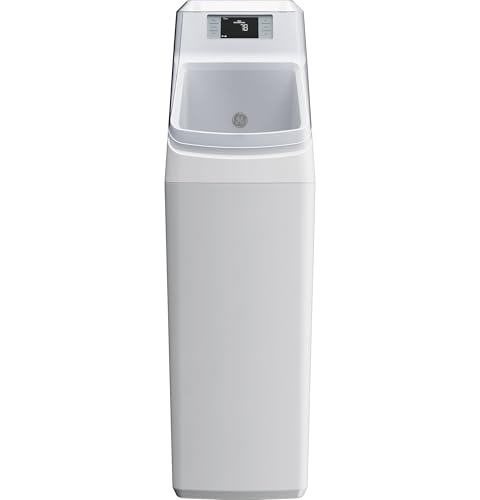

Prices are Amazon’s listed prices as of the time shown and change often; check Amazon for today’s price. As an Amazon Associate we earn from qualifying purchases.
Which One Does Your Home Need?
Start with a water test or water quality report, not with a product. The answer depends on what is actually in the water.
Signs you need a softener
- White, crusty scale on faucets, showerheads and inside kettles
- Spotty glassware after the dishwasher runs
- Soap that does not lather well and a film left on skin or tile
- Water heater noise from sediment and scale, or a tankless heater that throws scale codes
- Hardness above roughly 7 grains per gallon (about 120 mg/L) on a test or report
Signs you need reverse osmosis
- A test result showing a health-related contaminant above a level you are comfortable with, such as lead, arsenic, nitrate or certain PFAS
- High total dissolved solids that give water a salty or mineral taste
- A private well with naturally occurring contaminants identified by a lab
- A household member who has been advised by a doctor to reduce sodium, in a home that already has a softener
Signs you may need both
- Hard water and a drinking-water contaminant on the same test
- A softener already in place but complaints about taste or sodium
- An RO system already in place that keeps fouling its membrane early because the feed water is hard
Where to get the test result
City and district water customers can look up their utility’s annual report. The EPA’s Consumer Confidence Report page explains that community water systems must deliver these reports to customers every year by July 1, and the report lists the source water, detected regulated contaminants and potential health effects. Hardness is sometimes listed in a separate table of non-regulated parameters.
Private well owners have no utility report. The CDC’s well testing guidelines recommend testing at least once a year for total coliform bacteria, nitrates, total dissolved solids and pH, using a state-certified laboratory, and contacting the local health department about other contaminants common in the area. Add hardness, iron and manganese to that panel if a softener is on the table.
Certifications to Look For
Neither system should be bought on marketing claims alone. Independent certification against NSF/ANSI standards tells you what a product has been tested to do:
- NSF/ANSI 44 covers residential cation exchange water softeners, including hardness reduction capacity and salt efficiency claims.
- NSF/ANSI 58 covers point-of-use reverse osmosis systems, including total dissolved solids reduction and specific contaminant claims such as lead, arsenic, nitrate or PFOA/PFOS.
- NSF/ANSI 42 and 53 often apply to the carbon pre- and post-filters within an RO system, covering aesthetic claims such as chlorine taste and health claims such as certain organic chemicals.
The key detail is that certification is contaminant-specific. An RO unit certified for lead reduction is not automatically certified for nitrate or arsenic. Match the certification listing to the contaminants on your test. The EPA makes the same point for lead, advising homeowners who use a filter to choose one certified to remove lead and to replace the cartridge on schedule.
Costs and Upkeep Compared
Both systems have an upfront price and an ongoing cost. The ranges below are typical national figures, with the main drivers noted.
Water softener
- Equipment: roughly $500 to $3,000, driven by capacity, valve quality and whether it is a single or twin-tank unit.
- Installation: often a few hundred dollars where a softener loop exists, more if a loop, drain or outlet must be added.
- Salt: the main operating cost, rising with hardness and household size. Our guide to choosing water softener salt covers pellet, crystal and potassium options.
- Lifespan: resin commonly lasts 10 to 20 years depending on chlorine and iron exposure; valves may need service sooner.
Reverse osmosis
- Equipment: roughly $150 to $800 for under-sink units, driven by stages, tank versus tankless design and certification scope. Whole-house RO is a much larger investment.
- Installation: many under-sink units are DIY-friendly; professional installation commonly runs one to a few hundred dollars, more if a countertop hole must be drilled in stone.
- Filters: pre- and post-filters are typically replaced every 6 to 12 months, and the membrane every 2 to 5 years, depending on feed water quality and use.
- Water use: conventional units send several gallons to drain for each gallon produced; newer high-efficiency and pumped units reduce that ratio considerably.
Over a typical ten-year span, a softener’s salt cost and an RO system’s filter cost are often in the same general range for an average household, though very hard water pushes softener costs higher. When comparing models, the roundups for the best water softeners and the best reverse osmosis systems are useful next steps once you know which system, or which pair, your water calls for.
What About Salt-Free Conditioners?
Salt-free “conditioners,” often based on template-assisted crystallization, are sometimes marketed as an alternative to both. They do not remove hardness minerals; they change how those minerals behave so they are less likely to form scale on surfaces. They use no salt and send no brine to drain, which appeals to homes on septic systems and to households avoiding added sodium. The trade-off is that the water is still technically hard, soap will not lather the way it does with softened water, and performance varies with water chemistry. They also do nothing for drinking-water contaminants, so they are not a substitute for RO either.
Three Example Scenarios
Real homes rarely fit a single category, so it helps to see how the decision plays out. These scenarios are illustrative, not prescriptions.
City water, moderately hard, no health concerns
A suburban household on a public supply finds hardness of about 9 grains per gallon in the utility report, with all regulated contaminants below their limits. The family is bothered by spotty dishes and a scaled tankless water heater. A softener solves the problem they actually have. RO is optional here: some households add it for taste, but the report does not point to a drinking-water need. A simple pitcher or faucet filter certified for chlorine taste may be enough for preference.
Private well, hard water and elevated nitrate
A rural home’s lab report shows hardness of 15 grains per gallon, some iron, and nitrate above the level the lab flags. This home needs both, and possibly more. An iron filter or a softener sized with iron compensation handles the hardness and iron; an RO unit certified for nitrate reduction serves the kitchen tap. Because nitrate is a health concern, especially for infants, the owners should also follow up with the local health department and retest after installation to confirm the RO unit is doing its job.
Existing softener, sodium concern
A buyer purchases a home with a working softener. A household member has been advised by a doctor to watch sodium. Options include switching the softener to potassium chloride, leaving the kitchen cold tap on unsoftened water, or adding an under-sink RO system fed by softened water. RO is often the simplest way to get low-sodium drinking water without giving up softened water elsewhere in the house.
Common Misconceptions
- “Soft water is purified water.” Softening changes which minerals are dissolved in water; it does not disinfect it or remove most health contaminants.
- “RO strips water of everything healthy.” RO does reduce dissolved minerals, which changes taste. Most people get the bulk of their minerals from food rather than water. Some RO units include an optional remineralization stage for taste.
- “One certification covers everything.” Certifications list specific contaminants. Always check that the contaminant on your test appears on the product’s certified claims.
- “A softener protects the RO membrane, so the RO pre-filters are optional.” The sediment and carbon pre-filters still protect the membrane from particles and chlorine, which hardness removal does not address.
- “Bigger RO is better.” A residential RO unit only needs to keep up with drinking and cooking use. Oversizing adds cost and filter expense without improving water quality.
Front Range Factors
- Supply varies across the region. Front Range utilities draw on mountain reservoirs, river water and groundwater, so hardness and dissolved solids differ between cities and sometimes between seasons. Check your own utility’s report.
- Rural wells. Wells in parts of Douglas, Elbert and El Paso counties can carry hardness, iron, high total dissolved solids, or naturally occurring contaminants identified on a lab test. A softener plus RO is a common pairing in those homes, but the specific contaminants should drive the design.
- Freezing. Both systems must be installed where they will not freeze. A softener in an unheated garage or an RO line near an exterior wall can crack in a cold snap.
- Septic and drain rules. Softener brine and RO reject water both go to drain. Homes on septic should check local requirements and system design before installing either.
When to Call a Pro or an Inspector
A licensed plumber or certified water treatment professional is worth bringing in when the test shows a health contaminant, when the water comes from a private well, when there is no existing softener loop, or when a softener and RO system both need to be installed and sized together. They can confirm the right order of equipment, size the softener to flow and hardness, and match RO certifications to the contaminants found.
A general home inspection during a purchase will usually note whether a softener or RO unit is present, whether there are visible leaks, and whether there is evidence of scale or corrosion. It does not include water quality testing unless that service is added. The plumbing and water hiring guides explain how to bring in the right specialist for each step.
More Questions About RO and Softeners
Which comes first, a water softener or reverse osmosis?
A water softener goes first, treating all the water entering the home, and the under-sink reverse osmosis system comes after it at the kitchen faucet. Softened water helps protect the RO membrane from scale buildup caused by calcium and magnesium, which can extend membrane life in hard water areas. The RO system then reduces the added sodium or potassium from softening, along with other dissolved substances, in the drinking water line. In homes with very hard water, skipping the softener can shorten RO membrane life noticeably, so the two are frequently installed together.
Is softened water safe to drink?
Softened water is generally considered safe to drink for most healthy people, but it contains added sodium in proportion to how hard the original water was. People on sodium-restricted diets should ask their doctor and may prefer a separate unsoftened cold water tap or an RO system for drinking water. Potassium chloride can replace sodium chloride in many softeners, though it typically costs more and may need different settings. Softening does not remove bacteria, nitrate, lead, or most other health contaminants, so a softener is not a water safety treatment.
Can one system both soften water and remove contaminants?
No single typical residential system both softens all household water and reduces a broad range of contaminants. Softeners use ion exchange to swap hardness minerals for sodium or potassium, while reverse osmosis forces water through a membrane that reduces many dissolved solids. Some combination units package a softener, carbon filter, and RO tap in one system, but they are still separate stages. Specialty media can target iron, manganese, arsenic, or nitrate. Matching the equipment to a lab water test is the reliable way to avoid paying for treatment that does not address the actual problem.
Does reverse osmosis or a water softener cost more to run?
A water softener typically costs more to run each year than an under-sink reverse osmosis system, mainly because of salt, regeneration water, and periodic resin service. Salt use depends on hardness and household water use. An under-sink RO system’s running costs are mainly replacement filters and membranes every few years, plus some reject water. Whole-house RO, by contrast, costs far more to operate than either. For most homes, the comparison is not either-or: the softener handles scale for the whole house, and RO handles drinking water quality at one tap.
References
- About Home Water Treatment Systems — Centers for Disease Control and Prevention
- Safe Drinking Water Act: Consumer Confidence Reports — U.S. Environmental Protection Agency
- Guidelines for Testing Well Water — Centers for Disease Control and Prevention
- Basic Information about Lead in Drinking Water — U.S. Environmental Protection Agency
- Home Drinking Water Filtration Fact Sheet — U.S. Environmental Protection Agency
Frequently asked questions
Is reverse osmosis better than a water softener?
Neither is better overall because they do different jobs. A softener removes hardness from all household water to prevent scale, while reverse osmosis reduces many dissolved contaminants in drinking water at one tap.
Can a reverse osmosis system replace a water softener?
Not practically for most homes. Under-sink RO only treats one tap, and whole-house RO is costly, wastes more water and often needs a softener in front of it to keep the membrane from scaling.
Do you need a softener before a reverse osmosis system?
It is not required, but on hard water a softener ahead of RO usually extends membrane life. Many manufacturers list a maximum feed hardness for their membranes.
Does reverse osmosis remove the salt a softener adds?
Yes, RO systems reduce sodium along with many other dissolved substances, so drinking water from an RO tap after a softener is typically low in added sodium.
Does a water softener make water safe to drink?
A softener is not designed to make water safe. The CDC notes that water softeners do not remove parasites, bacteria or viruses, so a separate test and treatment plan is needed for health concerns.
Does a water softener remove iron?
A water softener can remove small amounts of dissolved iron, but higher levels or oxidized iron that stains fixtures orange usually need a dedicated iron filter. Iron can foul softener resin over time. A water test showing the iron concentration helps decide which equipment fits.
Can reverse osmosis water be used in a coffee maker or kettle?
Yes, reverse osmosis water works well in coffee makers and kettles and greatly reduces scale buildup. Some coffee enthusiasts find very low-mineral water tastes flat, and systems with a remineralization stage address that. Hard-water scaling is the bigger problem in most appliances.
Do water softeners need a drain?
Yes, water softeners need a drain for regeneration wastewater, along with a nearby electrical outlet on most metered models. The drain line requires an air gap to prevent backflow, which inspectors often check. Placement near the main water line, drain, and power keeps installation simpler and cheaper.
Not sure whether the water system in a home you are buying is working, or what it was installed to treat? Reach out to our team to schedule a Front Range inspection.