What Size Water Softener Do You Need? Sizing Math Explained
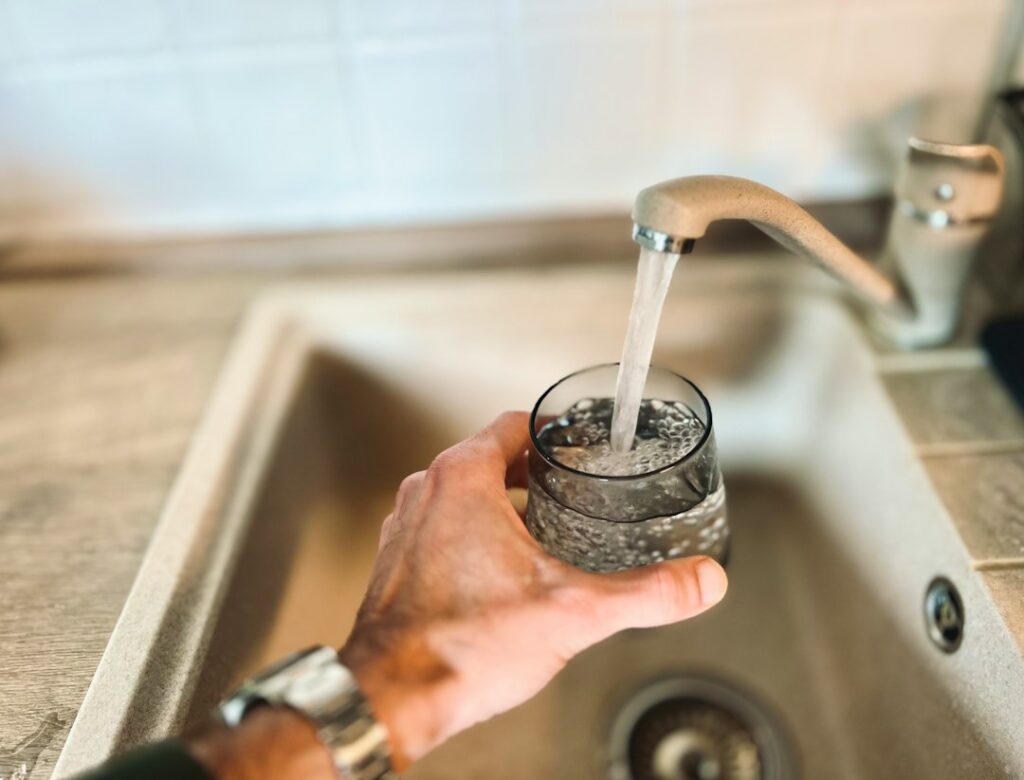
To figure out what size water softener you need, multiply your water hardness in grains per gallon by the number of people in the home and by roughly 75 gallons per person per day, then multiply by seven for a week of use. The result is the number of grains the softener should remove between regenerations, and you pick a unit whose capacity at an efficient salt setting covers it. A family of four on 12-grain water, for example, needs about 25,000 grains of capacity per week, which usually points to a nominal 40,000 to 48,000 grain softener rather than the 32,000 grain size many stores push.
Part of our Plumbing & Water guide — start there for the full picture →
This guide walks through the sizing method step by step, explains where to get an accurate hardness number, shows a full worked example, and covers the second sizing question many buyers miss: flow rate. The figures below are rules of thumb used across the water treatment trade, not engineering specifications. They summarize general guidance as of 2026; the manufacturer’s sizing chart and a local water treatment professional take priority for any specific purchase.
| Household | Hardness | Approx. weekly grains | Typical nominal size |
|---|---|---|---|
| 1–2 people | 5–10 gpg | 2,600–10,500 | 24,000–32,000 grain |
| 3–4 people | 5–10 gpg | 7,900–21,000 | 32,000–40,000 grain |
| 3–4 people | 11–15 gpg | 17,300–31,500 | 40,000–48,000 grain |
| 5–6 people | 11–15 gpg | 28,900–47,300 | 48,000–64,000 grain |
| Any size, private well with iron | Compensated (see below) | Varies widely | Size from a lab test, not a chart |
Rule-of-thumb estimates based on 75 gallons per person per day and regeneration about once a week. Your own meter reading or water bill is a better input than the 75-gallon assumption.
Step One: Get an Accurate Hardness Number
Every sizing calculation starts with hardness, and a wrong hardness number throws off everything after it. Hardness is a measure of dissolved calcium and magnesium, the minerals that form scale in water heaters, leave spots on glass and keep soap from lathering. The CDC describes water softeners as systems that remove those minerals, primarily calcium and magnesium, and notes that they do not remove germs such as bacteria, viruses or parasites. That distinction matters later if your water has more going on than hardness.
If you are on city or district water
Homes served by a public water system can usually look up hardness for free. Community water systems are required to deliver an annual drinking water quality report, called a Consumer Confidence Report, to their customers. The EPA’s Consumer Confidence Report page explains that these reports must go out each year by July 1 and that customers who did not receive one can call their supplier or use EPA’s search tool. Hardness is not a regulated health contaminant, so some reports list it in a separate “other parameters” or “secondary” table, and some list calcium and magnesium separately. If it is missing, the utility’s water quality line can usually give a typical range.
Front Range utilities draw from a mix of mountain snowmelt reservoirs and groundwater, and hardness can vary between neighboring cities, between seasons, and even between parts of one service area when a utility blends sources. Use the range the utility publishes and size toward the higher end of it.
If you are on a private well
Private wells are not covered by Consumer Confidence Reports, so the only reliable number is a lab test. The CDC’s guidelines for testing well water recommend testing at least once every year for total coliform bacteria, nitrates, total dissolved solids and pH, using a state-certified laboratory. When you order that annual panel, add hardness, iron and manganese. Iron and manganese change the sizing math, and a bacteria or nitrate problem calls for a different kind of treatment altogether, because a softener will not fix either one.
Convert the units
Softeners are sized in grains per gallon (gpg), while lab reports and utility reports usually show hardness in milligrams per liter (mg/L) or parts per million (ppm), which are effectively the same thing for water. The conversion is simple:
- Grains per gallon = mg/L (or ppm) of hardness as calcium carbonate ÷ 17.1
- Example: 205 mg/L ÷ 17.1 ≈ 12 gpg
As a rough scale, water under about 1 gpg is considered soft, roughly 3.5 to 7 gpg is moderately hard, 7 to 10.5 gpg is hard, and above 10.5 gpg is very hard. Many households do not consider a softener worthwhile below about 5 to 7 gpg, although people with sensitive skin or a tankless water heater sometimes choose to soften lower levels.
Step Two: Estimate Daily Water Use
The second input is how much water the household uses. The common rule of thumb is 75 gallons per person per day for all indoor use. It is a planning assumption, not a measurement, and it can be well off in either direction. A household with low-flow fixtures and an efficient washer may use 50 to 60 gallons per person; a household with teenagers, frequent laundry and long showers can run higher.
Two better inputs are available to most homeowners:
- Your water bill. Most utilities bill in thousands of gallons per month. Take a winter month, when outdoor watering is off, and divide by 30 to get daily indoor use. Winter numbers are the right baseline because irrigation water should not run through a softener anyway.
- Your meter. Read the meter at the same time on two consecutive days with no sprinklers running. The difference is a real daily figure for your household.
One more adjustment: if outside hose bibs or the irrigation system are plumbed after the softener, the unit will soften lawn water and burn through capacity and salt. A good installation leaves irrigation and usually at least one outdoor spigot on hard water. The plumbing and water section of our hiring guides covers what to ask the installer about bypass and plumbing layout.
Best Water Softeners: our top 3 picks
| Product | Best for | Key features | Price | Buy |
|---|---|---|---|---|
| Aquasana SimplySoft 40K | Named NSF/ANSI 44 certification |
| $749.00as of Nov 19, 2026 7:52 am GMT+0000 | Buy now →Check current price |
| GE GXSH35W | Smart alerts and leak shutoff option |
| $699.00as of Nov 19, 2026 7:52 am GMT+0000 | Buy now →Check current price |
| Kenmore 350 | Smaller households of 1 to 4 |
| $626.10as of Nov 19, 2026 7:52 am GMT+0000 | Buy now →Check current price |

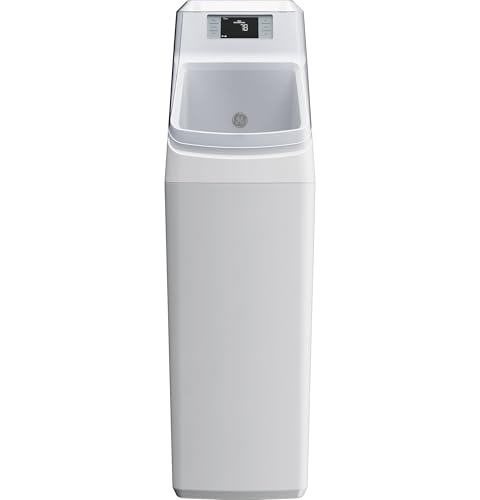

Prices are Amazon’s listed prices as of the time shown and change often; check Amazon for today’s price. As an Amazon Associate we earn from qualifying purchases.
Step Three: Calculate Grains Per Day and Per Week
With hardness and water use in hand, the math is short:
- Daily grains = hardness (gpg) × people × gallons per person per day
- Weekly grains = daily grains × 7
The seven-day target is a rule of thumb, not a requirement. Regenerating roughly once a week is a common sweet spot: often enough that the resin bed stays healthy and the brine tank does not sit idle for weeks, but not so often that the unit wastes salt and water. Some installers target regeneration every four to eight days. Regenerating every day or two is a sign the unit is undersized; regenerating once a month or less can let resin channel or foul, especially on well water.
Compensate for iron and manganese
Softener resin can remove small amounts of dissolved (clear-water) iron and manganese along with hardness, but those minerals use up capacity and can foul the resin. The trade practice is to “compensate” hardness by adding a few grains for each part per million of iron. A widely used rule of thumb is to add about 3 to 5 gpg to the hardness figure for every 1 ppm of iron, with manganese treated similarly. At higher iron levels, many professionals recommend a dedicated iron filter ahead of the softener rather than asking the softener to do both jobs. Iron levels that stain fixtures orange or produce a rotten-egg odor are a cue to get a professional evaluation before buying anything.
A Full Worked Example
Here is how the method plays out for a typical Front Range household. The numbers are illustrative.
| Input | Value | How it was found |
|---|---|---|
| Hardness | 205 mg/L ≈ 12 gpg | Utility’s annual water quality report, upper end of range |
| Iron | None reported | City water, so no compensation needed |
| People | 4 | Two adults, two children |
| Water use | 75 gallons per person per day | Rule-of-thumb assumption, close to the winter bill |
- Daily water use: 4 people × 75 gallons = 300 gallons per day.
- Daily grains: 300 gallons × 12 gpg = 3,600 grains per day.
- Weekly grains: 3,600 × 7 = 25,200 grains per week.
The tempting conclusion is that a “32,000 grain” softener covers 25,200 grains with room to spare. In practice it often does not, and the reason is salt efficiency.
Nominal capacity versus real capacity
The number in a softener’s name is its nominal or maximum capacity, usually reached only at a high salt dose per regeneration. Resin gives up its last grains of capacity grudgingly, so the final few thousand grains cost a disproportionate amount of salt. As a typical rule of thumb for one cubic foot of standard resin, which is what a “32,000 grain” unit usually contains:
- Around 6 pounds of salt per regeneration yields roughly 20,000 grains
- Around 8 pounds yields roughly 24,000 grains
- Around 15 pounds yields the full 30,000 to 32,000 grains
Manufacturers publish their own tables, and the figures vary by resin and valve design. The pattern holds, though: running a small softener at its maximum rating means using roughly twice the salt per grain removed compared with a larger unit running at an efficient setting.
For the example household, a 32,000 grain unit would have to run at or near maximum salt to reach a weekly cycle, or regenerate every four to five days at an efficient setting. A nominal 40,000 to 48,000 grain unit, typically 1.25 to 1.5 cubic feet of resin, can deliver 25,000-plus grains at a moderate salt dose and still regenerate about once a week. That is the better fit, and it is why the sizing table at the top of this page lands one step larger than a simple comparison suggests.
What if the house is bigger later?
Size for the household you expect over the next several years, not only today. A couple planning a family, or a home that regularly hosts relatives, can reasonably step up one size. Oversizing too far creates its own problem: a very large resin bed in a small household regenerates rarely, and the water in the resin tank can sit stagnant. A metered, demand-initiated valve (covered below) reduces the penalty of being slightly oversized.
Step Four: Check the Flow Rate, Not Only Capacity
Capacity tells you how long a softener lasts between regenerations. Flow rate tells you whether it can keep up when several fixtures run at once. An undersized resin bed can cause a noticeable pressure drop during peak use and can let hard water slip through when water moves past the resin too quickly.
To estimate peak demand, add up the fixtures that could plausibly run together. A rough rule of thumb used by many installers:
- Shower: about 2 gallons per minute
- Bathroom sink: about 1 gallon per minute
- Kitchen sink: about 1.5 to 2 gallons per minute
- Clothes washer: about 2 to 3 gallons per minute while filling
- Dishwasher: about 1.5 gallons per minute while filling
A morning with two showers, a bathroom sink and the washer can approach 7 to 8 gallons per minute. Compare that figure with the softener’s continuous service flow rating, usually listed on the spec sheet. Larger resin beds and larger valve ports (1-inch rather than 3/4-inch) generally support higher flows. Homes with three or more bathrooms, large soaking tubs or multi-head showers often end up sized by flow rather than by grains, which again points toward the 48,000 grain class or larger.
Regeneration Settings That Affect Sizing
How the softener decides when to regenerate has as much effect on salt and water use as the tank size.
Metered (demand-initiated) versus timer valves
A metered valve counts gallons and regenerates only after a set volume has passed, based on the hardness you program. A timer valve regenerates on a fixed schedule regardless of use, so it wastes salt during vacations and runs short during busy weeks. Most current residential softeners use metered valves, and they are the better choice for nearly every household. When buying a used home with a softener in place, it is worth checking which type is installed and whether the hardness setting matches the current water supply.
Reserve capacity
Metered valves usually hold back a reserve so the house does not run out of soft water before the regeneration, which typically runs overnight. Many valves calculate the reserve automatically; others let the installer set it. A unit with very little headroom above weekly demand can end up regenerating more often than the math predicts once reserve is subtracted, another reason to step up a size when the numbers are close.
Salt dose
Many valves let the installer choose the salt dose per regeneration. Lower doses are more efficient per grain but require a larger resin bed for the same interval. A good installer will set the dose based on your actual hardness and household size rather than leaving the factory default.
Typical Costs by Size
Prices vary with brand, valve quality, resin type, region and whether the softener is sold through a big-box store or a dealer. The ranges below are typical national figures, not quotes:
- 24,000 to 32,000 grain units: commonly a few hundred dollars up to roughly $1,000 for equipment.
- 40,000 to 48,000 grain units: commonly around $600 to $1,800 for equipment.
- 64,000 grain and larger, or twin-tank units: commonly $1,200 to $3,000 or more.
- Professional installation: often a few hundred dollars for a straightforward swap with an existing loop, rising to $1,000 or more when the plumber must add a softener loop, a drain line, a bypass valve or an electrical outlet.
- Operating cost: mainly salt, which depends on hardness, household size and salt dose. Larger units at efficient settings usually cost less to run than small units at maximum settings.
Dealer-sold systems often include a service contract and higher-grade valves, which can justify part of the price difference, but ask for the resin volume in cubic feet and the valve model so you can compare like with like. Once you know the capacity class you need, our roundup of the best water softeners is a practical next step for comparing specific models.
Front Range Considerations
A few local factors are worth thinking through before buying:
- Hardness varies by supplier. Some Front Range utilities deliver moderately hard water from mountain reservoirs, while some suburban districts and many rural wells in Douglas, Elbert and El Paso counties draw harder groundwater. A neighbor’s softener size may not fit your water.
- Private wells deserve a full panel. Wells in some areas carry iron, manganese, high total dissolved solids, or naturally occurring contaminants that a softener alone will not address. Test first, then size.
- Septic systems. Homes on septic should confirm with the system designer or local health department how brine discharge is handled, because local rules and system designs vary.
- Cold basements and garages. The brine tank and valve should not freeze. Units installed in unheated garages or crawlspaces in Colorado winters can crack fittings or stall.
- Sodium. Ion-exchange softening adds a small amount of sodium to water in proportion to hardness removed. People on sodium-restricted diets should talk with their doctor; potassium chloride can be used instead of sodium chloride in many units.
When to Call a Pro or an Inspector
Many homeowners can size a softener on their own with the steps above. A water treatment professional or licensed plumber is the better route when:
- The water comes from a private well and the lab report shows iron, manganese, bacteria or nitrates
- The house has no existing softener loop, drain or outlet near the main line
- Peak flow is high because of multiple bathrooms or large fixtures
- Water pressure is already low or the main line is undersized
- An existing softener is regenerating far more or less often than expected
During a home purchase, a general home inspector will typically note whether a softener is present and visibly leaking, whether a bypass exists, and whether there is evidence of scale on fixtures or the water heater. A standard inspection does not include sizing the softener or testing water hardness, so buyers who care about water quality should order a water test during the inspection window. Our overview of why a home inspection matters explains what is and is not covered, and the main guide to hiring a home inspector covers how to add specialty testing.
Quick Sizing Checklist
- Find hardness in mg/L from your water quality report or a lab test; divide by 17.1 for gpg.
- Add about 3 to 5 gpg for each 1 ppm of iron if you are on a well (rule of thumb).
- Estimate daily use from a winter water bill or use 75 gallons per person as a fallback.
- Multiply hardness × daily gallons × 7 for weekly grains.
- Pick a unit that delivers that many grains at a moderate salt setting, not at maximum.
- Confirm the service flow rate covers your peak fixture demand.
- Choose a metered valve and have the installer program your actual hardness.
More Questions About Water Softener Sizing
What size water softener does a two-person household need?
A two-person household typically needs a smaller water softener, often in the 24,000- to 32,000-grain range, depending on water hardness. For example, at about 10 grains per gallon and typical use of 75 gallons per person per day, two people need about 1,500 grains per day, or roughly 10,500 per week.
A softener sized to regenerate every 7 to 10 days usually balances salt and water efficiency. Very hard water or iron raises the required capacity. Check local hardness first and confirm with the manufacturer’s sizing guidance.
Does a water softener need a drain?
Yes. A water softener needs a drain for its regeneration cycle, when it flushes brine and minerals out of the resin. Common options include a floor drain, utility sink or standpipe, with an air gap to prevent backflow into the softener.
Installation also requires a nearby electrical outlet for the control valve and space for the brine tank. Local plumbing codes may set requirements for drain connections and air gaps. Some areas restrict softener discharge into septic systems or sewers, so check local rules.
How much salt does a water softener use?
A typical household water softener uses roughly 40 to 80 pounds of salt per month, depending on water hardness, household water use and regeneration settings. Many homes refill the brine tank every month or two.
Demand-initiated softeners that regenerate based on water use usually use less salt than timer-based models. Very hard water or iron raises salt use. Keep the brine tank at least one-quarter full and check for salt bridges, a hard crust that can stop softening even when the tank looks full.
How long does a water softener last?
A water softener typically lasts 10 to 20 years, depending on water quality, maintenance and the quality of the control valve and resin. The resin bed may need replacing sooner in homes with chlorinated city water or iron.
Signs of a failing softener include hard water spots returning, salt use changing unexpectedly, or the unit not regenerating. Replacing worn valve parts or resin can extend life. Annual checks and regular salt refills help keep the system working efficiently.
Is a water softener needed on city water?
A water softener is not required on city water, but it can be worthwhile if the municipal supply is hard. Many cities publish hardness in an annual water quality report, and water above about 7 grains per gallon is generally considered hard.
Softening helps reduce scale buildup in water heaters, fixtures and appliances, and improves soap performance. Homes with moderately hard water may choose a softener based on maintenance goals rather than necessity. A test kit or the utility’s report confirms local hardness.
References
- Safe Drinking Water Act: Consumer Confidence Reports — U.S. Environmental Protection Agency
- About Home Water Treatment Systems — Centers for Disease Control and Prevention
- Guidelines for Testing Well Water — Centers for Disease Control and Prevention
- Secondary Drinking Water Standards: Guidance for Nuisance Chemicals — U.S. Environmental Protection Agency
- Private Drinking Water Wells — U.S. Environmental Protection Agency
Frequently asked questions
What size water softener does a family of four need?
With moderately hard water around 10 to 12 grains per gallon and typical use, a family of four usually needs about 21,000 to 25,000 grains of capacity per week. That generally points to a nominal 40,000 to 48,000 grain softener so it can run at an efficient salt setting.
How do you convert mg/L hardness to grains per gallon?
Divide the hardness in mg/L or ppm, expressed as calcium carbonate, by 17.1. For example, 171 mg/L is about 10 grains per gallon.
Is a bigger water softener always better?
Not always. A modest step up improves salt efficiency and flow, but a greatly oversized unit in a small household regenerates rarely and can let water sit in the resin tank. A metered valve reduces the downside of slight oversizing.
How often should a water softener regenerate?
A common rule of thumb is about once a week, with four to eight days being typical. Regenerating every day or two usually means the unit is undersized or the hardness setting is wrong.
Where can homeowners find their water hardness?
City and district customers can check the annual Consumer Confidence Report or call the utility. Private well owners need a lab test, ideally from a state-certified laboratory, that includes hardness, iron and manganese.
Is a salt-free water conditioner the same as a softener?
No. A salt-free water conditioner does not remove hardness minerals the way a softener does. It typically changes minerals so they are less likely to form scale. Results vary, and conditioners do not provide the slippery feel of softened water.
Is softened water safe to drink?
Softened water is generally safe to drink for most people, though it contains added sodium from the softening process. People on low-sodium diets may prefer a separate unsoftened drinking tap or reverse osmosis filter. A doctor can advise on sodium concerns.
Should a water softener feed outdoor faucets?
Usually no. Outdoor faucets are typically left unsoftened because softened water is not needed for lawns and gardens, and skipping it saves salt and extends softener capacity. Plumbers often route hose bibs before the softener during installation.
Buying a Front Range home with an older softener or a private well? Contact our team to line up an inspection and ask about adding a water quality test.