Water Softener Salt: Pellets vs Crystals and Bridging
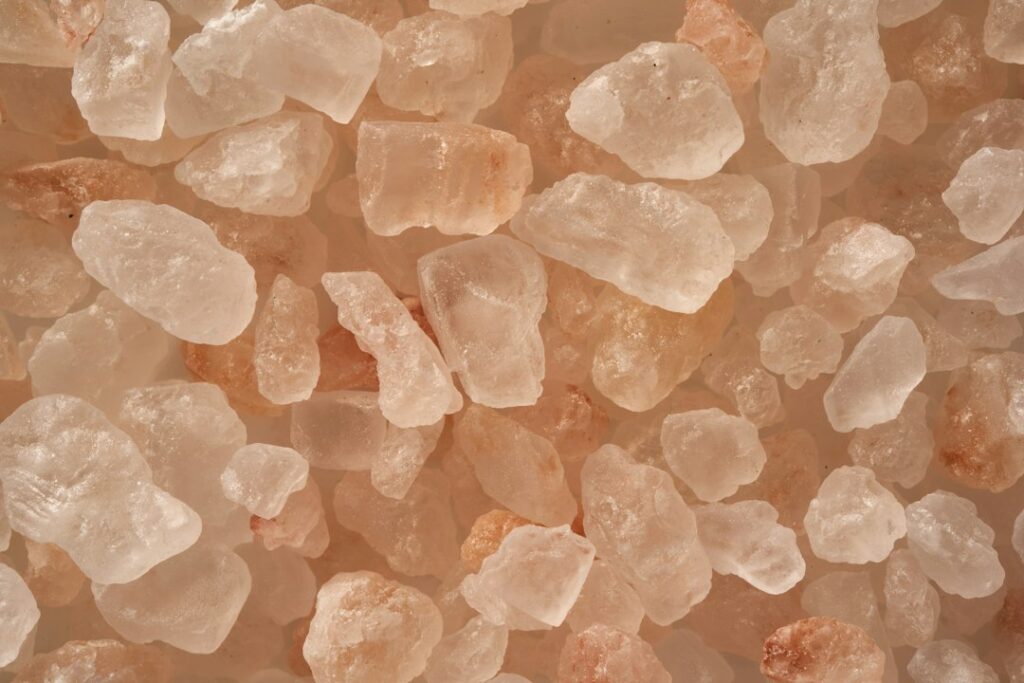
A traditional ion-exchange softener only works as long as its brine tank has the right salt in it, in the right condition. Pick the wrong product and the tank can fill with mushy sludge. Let the salt bridge over and the system quietly stops softening while the tank still looks full. Choosing water softener salt seems like a minor decision, but it affects how often the system needs attention, how clean the brine tank stays and how well the resin bed regenerates. This guide compares the main salt types, explains potassium chloride as an alternative, shows how to spot and break up salt bridges and mushing, and covers hedged guidance on how much salt to use, sodium in softened water and local discharge rules. It also explains why hard water matters for water heaters, which is often where scale does the most expensive damage. Prices and usage figures here are rough estimates, not quotes.
Part of our Plumbing & Water guide — start there for the full picture →
Which Water Softener Salt Is Best?
For most modern home softeners, high-purity evaporated salt pellets are the most trouble-free choice, because they dissolve cleanly and leave little insoluble residue in the brine tank. Solar salt crystals are a common lower-cost alternative that work well in many systems. Rock salt is the cheapest but contains more insoluble minerals that build up as sludge. Potassium chloride is a sodium-free substitute that costs more and may require a higher salt setting. The right answer for a specific home depends on the softener manufacturer’s recommendations, water hardness and how much maintenance the owner is willing to do. Always check the owner’s manual first. Some units specify pellets or crystals only, and a few compact or cabinet-style models are more sensitive to salt shape.
Types of Water Softener Salt Compared
Evaporated Salt Pellets
Evaporated salt is produced by dissolving underground salt deposits and evaporating the brine, which yields very pure sodium chloride. It is then pressed into pellets or cubes. Purity is typically very high, so there is little residue left at the bottom of the tank. Pellets are widely sold at hardware and big-box stores under names such as “pellets,” “water softener pellets” or “extra-clean.” Some pellet products include additives designed to help with iron or rust, which can be useful where the water carries a little iron, though they are not a substitute for dedicated iron treatment.
Solar Salt Crystals
Solar salt is made by evaporating seawater or saline lake water in open ponds using sun and wind. It is usually sold as crystals or small chunks. Purity is generally high but often a bit lower than evaporated pellets, so more residue may collect over time. Crystals dissolve readily and are popular in two-tank systems. Some manufacturers advise against crystals in certain cabinet models because the shape can encourage bridging. Many households use solar salt successfully at a modest saving compared with pellets.
Rock Salt
Rock salt is mined and sold with minimal processing. It is often the least expensive option, but it contains more calcium sulfate and other insoluble material. That residue settles in the brine tank and can foul the brine well, valves and injector, which means more frequent tank cleaning. Many softener makers discourage rock salt for that reason. If used, the brine tank usually needs cleaning more often.
Block Salt
Some softeners are designed to use salt blocks. Unless the manufacturer specifically calls for blocks, they are best avoided, because they may not dissolve fast enough to make adequate brine in a standard tank.
Best Water Softener Salt: our top 3 picks
| Product | Best for | Key features | Price | Buy |
|---|---|---|---|---|
| Diamond Crystal Bright and Soft | Highest stated purity |
| $34.99as of Nov 18, 2026 3:19 pm GMT+0000 | Buy now →Check current price |
| Morton Clean and Protect | Pellets from the Morton storefront |
| $34.97as of Nov 18, 2026 3:19 pm GMT+0000 | Buy now →Check current price |
| Morton Pure and Natural | Solar crystals, four bags |
| $39.00as of Nov 18, 2026 3:19 pm GMT+0000 | Buy now →Check current price |


Prices are Amazon’s listed prices as of the time shown and change often; check Amazon for today’s price. As an Amazon Associate we earn from qualifying purchases.
Potassium Chloride as an Alternative
Potassium chloride (KCl) can replace sodium chloride in most ion-exchange softeners. It regenerates the resin through the same exchange process, but it adds potassium rather than sodium to the softened water. Households concerned about sodium intake, or those in areas with restrictions on sodium-based brine discharge, sometimes choose it. It also tends to be gentler on landscaping if discharge water reaches the yard.
The downsides are cost and efficiency. Potassium chloride usually costs several times more per bag than sodium chloride, and it is often described as slightly less efficient at regenerating resin, so softeners may need a higher salt dose setting to achieve similar results. Some manufacturers recommend adjusting the regeneration settings when switching. Anyone on a potassium-restricted diet or taking medications that affect potassium should ask a physician before switching, just as someone on a low-sodium diet would ask about sodium.
Salt Bridging and Mushing: How to Spot and Fix Them
Two problems account for many “my softener stopped working” calls: salt bridges and salt mushing. Both can happen even when the brine tank looks full.
Salt Bridges
A salt bridge is a hard crust that forms across the brine tank, leaving an empty space between the crust and the water below. The softener draws water, but there is no salt in contact with it, so the brine is weak and the resin does not regenerate. Signs include hard water returning while the salt level never seems to drop. High humidity in the room, temperature swings and certain salt types can encourage bridges.
To check, press gently down on the salt with a broom handle or similar tool. If it hits a hard layer that gives way to a hollow, there is a bridge. Break it up carefully, tapping around the edges rather than stabbing hard enough to crack the tank or damage the brine well. Remove loose chunks if needed. After breaking a bridge, many manufacturers suggest running a manual regeneration so the resin gets a proper recharge.
Salt Mushing
Mushing happens when dissolved salt recrystallizes into a sludge at the bottom of the tank. The mush can clog the brine intake and prevent proper regeneration. It is more common with fine or low-quality salt and when salt sits in water for long periods. Fixing it usually means draining the brine tank, scooping out the sludge, rinsing the tank and refilling with fresh salt. Many homeowners find that switching to higher-purity pellets reduces mushing and slows sludge buildup.
Preventing Both Problems
- Keep the salt level at or below the manufacturer’s recommended fill line instead of packing it to the top.
- Avoid mixing different salt types in the same tank without cleaning first.
- Check the tank monthly, pushing gently on the salt to feel for crusts.
- Locate the softener away from heat sources and damp areas where possible.
- Clean the brine tank periodically. Many manufacturers suggest roughly once a year or every few years, depending on salt type.
How Much Salt Does a Softener Use?
Salt use depends on water hardness, household water use, the softener’s capacity and efficiency settings, and the type of control valve. Demand-initiated (metered) softeners regenerate based on actual water use and typically use less salt than timer-based models that regenerate on a fixed schedule. A common rough estimate for a typical family is one 40-pound bag per month, but real usage can be much lower or higher. Very hard water, a large household or an older timer-based system can push usage up considerably.
A practical routine is to check the tank every few weeks and keep the salt a few inches above the water level, without overfilling. If salt use suddenly drops while the water feels hard, suspect a bridge. If salt use suddenly rises, check for a stuck regeneration cycle or a water leak somewhere in the house.
Checking Water Hardness
Softeners need to be set to the actual hardness of the incoming water, usually entered in grains per gallon. Hardness test strips and drop-count kits are inexpensive and give a quick reading. Many municipal utilities publish hardness in their annual water quality reports. For private wells, EPA lists “scaly residues, soaps don’t lather” as a reason to test for hardness, and notes that iron and manganese testing is worth doing if a water softener is needed to treat hardness. EPA also recommends private well owners test annually for total coliform bacteria, nitrates, total dissolved solids and pH. After a softener is installed, test the treated water at a tap to confirm it is working. If the treated water is still hard, the system may need a hardness setting adjustment, a resin bed replacement or a service check.
Sodium in Softened Water
An ion-exchange softener swaps calcium and magnesium ions for sodium (or potassium if KCl is used). The amount added depends on how hard the water was to start with: the harder the water, the more sodium ends up in the softened water. For most healthy adults, softened water is often described as a small contributor to total sodium intake compared with food, but people on sodium-restricted diets should discuss it with a physician.
A common workaround is to leave one cold water tap, usually at the kitchen sink, connected to unsoftened water for drinking and cooking. Another is to install a point-of-use filter such as a reverse osmosis system at the kitchen sink, which can reduce sodium and other dissolved solids. Outdoor hose bibs are also often left on hard water, both to save salt and because sodium is not ideal for plants and lawns.
Discharge Restrictions and Septic Concerns
When a softener regenerates, it flushes salty brine down the drain. In some areas, particularly where wastewater is reused for irrigation or where chloride levels in rivers and groundwater are a concern, local governments have restricted or regulated salt-based softeners. Rules vary widely by community and change over time, so check with the local water utility or wastewater authority before buying or replacing a softener. Some utilities offer guidance on efficient settings or encourage potassium chloride or alternative treatment.
For homes on septic systems, opinions differ on how softener discharge affects septic tanks and drain fields. Some septic professionals and local health departments have specific recommendations, such as routing discharge separately or using high-efficiency softeners to reduce brine volume. Ask a local septic contractor or health department before connecting a new softener. Homeowners comparing treatment that does not use salt at all can read about a salt-free water softener, which reduces scale differently and does not discharge brine.
Softener Maintenance Beyond Salt
Salt is the most visible maintenance item, but the system has other parts that need attention. Resin beads gradually lose capacity, especially with chlorinated city water or iron in well water. The control valve, brine line and injector screen can clog. Periodic resin cleaners are sold for iron-bearing water. The guide to water softener basics covers sizing, settings and service in more depth.
Home inspectors usually do not evaluate softeners in detail. The ASHI Standard of Practice lists water conditioning systems among items an inspector is not required to inspect, and it also excludes water quality testing. Buyers who want a softener evaluated should ask for it specifically or have a water treatment contractor check it.
Hard Water and Water Heaters
Hardness minerals come out of solution when water is heated, which is why water heaters and the inside of hot water pipes take the brunt of scale. EPA’s secondary drinking water guidance describes scale as a mineral deposit that builds up inside hot water pipes, boilers and heat exchangers, restricting or even blocking flow. In a tank-type heater, scale and sediment collect at the bottom, can reduce efficiency and may cause rumbling or popping noises. Softened water can also affect how a tank’s sacrificial anode wears; some guidance suggests softened water may cause anodes to deplete faster. See the guide to the water heater anode rod for inspection and replacement intervals.
Tankless heaters have small heat exchangers that can be especially sensitive to scale, and many manufacturers recommend periodic descaling, particularly in hard water areas. The guide to the tankless water heater covers flushing and maintenance. A properly maintained softener can reduce scale on all of these components, which is often one of the main financial reasons homeowners install one.
Signs the Softener Is Not Doing Its Job
Because a softener runs out of sight, many owners only notice a problem weeks after it starts. Watch for these clues:
- Soap and shampoo stop lathering well, or dishes come out of the dishwasher spotty again.
- White crust returns on faucets, showerheads and glass shower doors.
- The salt level has not dropped in a month or more, which often points to a bridge or a stuck valve.
- The brine tank is full of water well above the salt, which can indicate a clogged injector or brine line.
- The control display shows an error code, the wrong time of day after a power outage, or no regeneration history.
Start with the simple checks: confirm the bypass valve is set to service rather than bypass, verify the clock and hardness setting, look for a bridge and test treated water with a strip. If those look fine and the water is still hard, the resin may be exhausted or fouled, or the valve may need service. Many older softeners eventually reach a point where repair parts and labor approach the cost of a new, more efficient unit. A water treatment contractor can test incoming and treated water side by side and give a clearer picture than guessing from symptoms alone.
Homes on private wells deserve extra attention. Iron, manganese and sediment can foul resin faster than hardness alone, and a softener is not designed to deal with bacteria or most health-related contaminants. The guide to well water filtration systems explains how pre-filters and iron treatment fit alongside a softener.
Cost of Water Softener Salt
Prices vary by region, retailer and bag size. As a rough estimate, rock and solar salt are the cheapest per bag, evaporated pellets cost somewhat more, and potassium chloride can cost several times as much as sodium chloride. Annual spending for a typical household might run from under a hundred dollars to a few hundred dollars, depending on hardness, household size, salt type and softener efficiency. Upgrading from an old timer-based unit to a demand-initiated unit can reduce salt use, though the cost of a new system should be weighed against savings.
For buyers evaluating a house with a softener, a well or signs of hard water damage, the guide to hiring a home inspector explains what a standard inspection covers and when to add water testing or a plumbing specialist.
More Questions About Water Softener Salt
Can you use table salt in a water softener?
Table salt should not be used in a water softener. Its fine grains dissolve too quickly and tend to pack into a dense sludge at the bottom of the brine tank, and many table salts contain anti-caking agents or iodine that can clog the brine line and injector.
Use salt sold specifically for softeners, such as evaporated pellets, solar crystals or high-purity block salt. Table salt also costs far more per pound than softener salt, so there is no savings in using it, even as a short-term substitute when the softener runs low.
What happens if a water softener runs out of salt?
When a water softener runs out of salt, it keeps cycling through regeneration but cannot recharge the resin, so hard water flows straight into the house within a few days. Spotting on dishes, less lather and scale on fixtures usually return first.
Refill the brine tank, wait a few hours for brine to form, then start a manual regeneration to restore soft water faster. A single empty spell does not damage resin, but repeated gaps let scale build in the water heater. Checking salt level once a month, or using a salt-level sensor, prevents it.
How full should a water softener brine tank be kept?
A water softener brine tank works best kept between about one-quarter and two-thirds full of salt, with the salt level a few inches above the water line. Filling the tank to the brim in a humid basement raises the chance of a salt bridge forming.
Adding one bag at a time when the level drops is easier to manage than topping off with several bags. Manufacturer guidance varies, so follow the softener manual if it states a maximum fill line. Some brine tanks have a marked line on the inside wall showing the target level.
Why is there standing water in the softener brine tank?
Some standing water in a water softener brine tank is normal on many models, which keep a few inches of water so brine is ready before regeneration. A tank holding much more water than usual, or water above the salt, points to a problem.
Common causes include a clogged injector or brine line, a stuck float valve, a kinked or blocked drain line, or a control valve that is not completing the brine draw. A manual regeneration that leaves the water level unchanged confirms a draw problem. Cleaning the injector screen often fixes it, but persistent overfill needs service.
References
- Protect Your Home’s Water — U.S. Environmental Protection Agency
- Secondary Drinking Water Standards: Guidance for Nuisance Chemicals — U.S. Environmental Protection Agency
- Private Drinking Water Wells — U.S. Environmental Protection Agency
- ASHI Standard of Practice for Home Inspections — American Society of Home Inspectors
Frequently asked questions
Is it better to use pellets or crystals in a water softener?
Evaporated salt pellets are very pure and leave little residue, which makes them a low-maintenance choice for most systems. Solar salt crystals are cheaper and work well in many two-tank softeners. Check the softener manual, since some cabinet models recommend pellets only.
What is a salt bridge in a water softener?
A salt bridge is a hard crust that forms across the brine tank above the water, so salt no longer dissolves and the softener cannot regenerate properly. Press down gently with a broom handle to find it, break it up carefully and run a manual regeneration.
How often should water softener salt be added?
It depends on water hardness, household size and the softener's efficiency. Many households check every few weeks and keep salt a few inches above the water level. A rough estimate for a typical family is about one 40-pound bag a month, but usage varies widely.
Can potassium chloride be used instead of salt?
Most ion-exchange softeners can use potassium chloride, which adds potassium instead of sodium to the water. It usually costs more and may require a higher dose setting. People on potassium-restricted diets should check with a physician first.
Does softened water contain a lot of sodium?
Softened water contains more sodium than the original water, and the amount rises with the starting hardness. Many households keep one unsoftened cold tap or use reverse osmosis for drinking water. Anyone on a sodium-restricted diet should ask a physician.
Does water softener salt expire?
Water softener salt does not expire, but it absorbs moisture and can harden into clumps if stored on a damp basement floor or in an open bag. Keep bags on a shelf or pallet in a dry place, and break up hardened clumps before pouring them into the brine tank.
Why is the water softener salt level not going down?
Water softener salt that stays at the same level for weeks usually means a salt bridge, a clogged injector or brine line, a control valve set to bypass, or regeneration not occurring. Push a broom handle gently down through the salt to test for a crust, then check the regeneration settings.
Can different types of water softener salt be mixed?
Different water softener salt types can usually be mixed safely, but combining pellets with crystals or rock salt can increase bridging and mushing in some brine tanks. Let one type run low before switching, and stick with one product consistently for the most predictable performance.
Looking at a Front Range home with a softener, a private well or crusty fixtures? Reach out through our contact page and we can point you to a local inspector who can flag plumbing and water heater concerns before closing.