Best Reverse Osmosis Systems (2026): 7 Picks by Waste Ratio
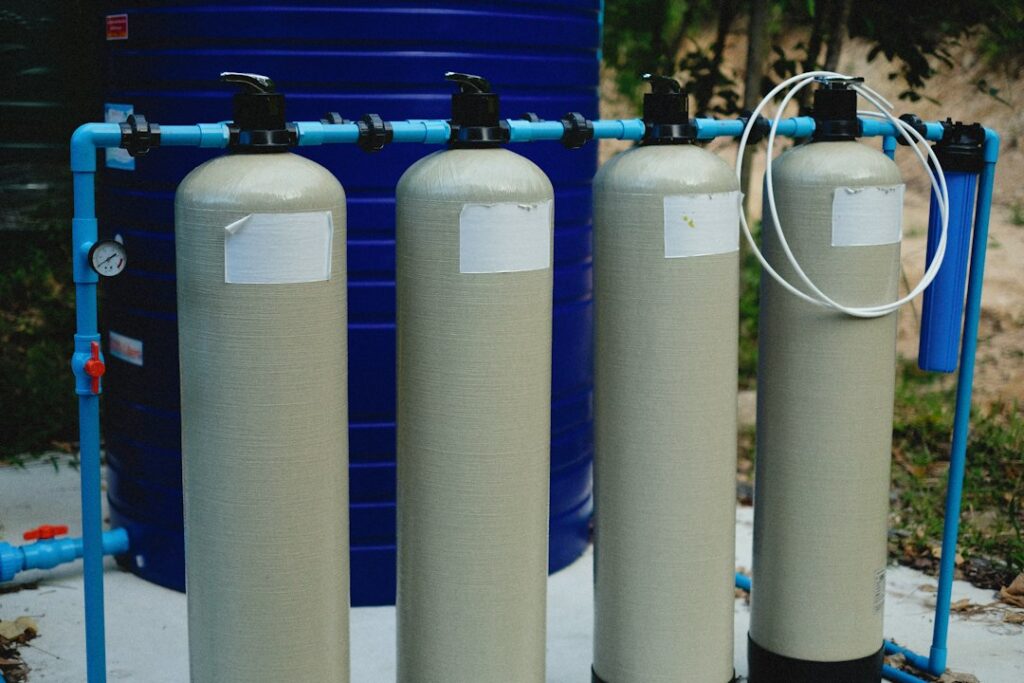
The best reverse osmosis system for a kitchen is one certified to NSF/ANSI 58, sized for how much water your household drinks and cooks with, and honest about how much water it sends down the drain. Reverse osmosis pushes water through a membrane fine enough to reduce many dissolved chemicals that carbon filters miss, which is why it is the go-to answer for lead, arsenic, nitrate, fluoride and PFAS concerns. It also wastes water, takes cabinet space and strips minerals. Below are seven picks, from a high-output tankless unit to a no-plumbing countertop model, with a guide to certifications, waste ratios, tanks versus tankless and installation.
Part of our Plumbing & Water guide — start there for the full picture →
As an Amazon Associate we earn from qualifying purchases.
How we compared: we compared 12 current Amazon listings for under-sink and countertop reverse osmosis systems on what each listing states: NSF/ANSI standards named and whether the claim is certification or testing, gallons per day, pure-to-drain ratio, tank or tankless design, power needs, filter stages, filter life and warranty. We did not lab-test any system or install them. Certification and reduction claims are reported as each listing words them. Prices and availability change often, so check the current listing before buying.
Quick picks: the best reverse osmosis systems
| Product | Best for | Key features | Price | Buy |
|---|---|---|---|---|
| Waterdrop G3P800 | Best overall tankless system |
| $759.00as of October 18, 2026 | Buy now →Check current price |
| iSpring RCC7AK-BN | Best tank system with remineralization |
| $211.49as of October 18, 2026 | Buy now →Check current price |
| APEC ROES-50 | Best basic 5-stage tank system |
| $179.99as of October 18, 2026 | Buy now →Check current price |
| iSpring RCC7AK-UV | Best with a UV stage |
| $296.99as of October 18, 2026 | Buy now →Check current price |
| Waterdrop G5P500A | Best alkaline tankless system |
| $209.99as of October 18, 2026 | Buy now →Check current price |
| AquaTru Carafe | Best countertop RO for renters |
| $356.25as of October 18, 2026 | Buy now →Check current price |
| FS-TFC 5-stage | Best compact system without power |
| $139.99as of October 18, 2026 | Buy now →Check current price |
Prices are Amazon’s listed prices as of the time shown and change often; check Amazon for today’s price. As an Amazon Associate we earn from qualifying purchases.
The seven picks, compared listing by listing
1. Waterdrop G3P800 — Best Overall Tankless System
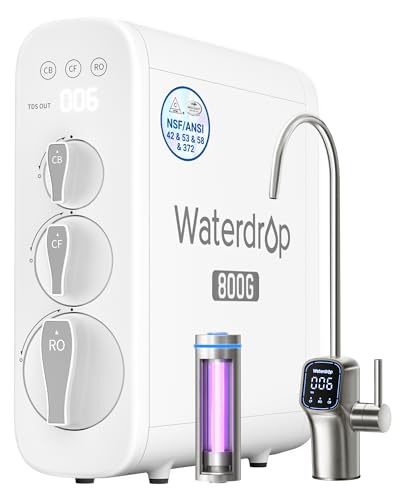
Tankless 10-stage RO certified by IAPMO to NSF/ANSI 58, 42, 53 and 372, rated 800 GPD with a 3:1 pure-to-drain ratio.
Check price on Amazon$759.00 as of October 18, 2026 — prices change; see Amazon for current price.Why we like it
- Names NSF/ANSI 42, 53, 58 and 372
- Highest output on the shelf: 800 gallons per day
- 3:1 pure-to-drain ratio, best stated among under-sink units
- Smart faucet shows TDS and filter life
- Tankless design frees cabinet space
| Specification | Details |
|---|---|
| Certifications named | IAPMO R&T to NSF/ANSI 58 for TDS; NSF 42 and 53 for chlorine, taste, odor and more; NSF/ANSI 372 lead-free |
| Output / ratio | 800 GPD; 3:1 pure to drain; a cup in about 5 seconds |
| Stages | 10-stage filtration |
| Reductions claimed (SGS) | PFAS, fluoride, lead, chromium, iron, nitrate, chloride, radium |
| Design | Tankless; smart faucet with TDS display and LED |
| Size / warranty | About 18.1 x 5.7 x 17.7 in; 33.7 lb; 1-year warranty |
Waterdrop G3P800 — tankless 10-stage RO, NSF/ANSI 42/53/58/372, 800 GPD, 3:1 ratio, TDS faucet, 1-yr warranty
The Most Standards Named and the Lowest Under-Sink Waste Ratio
Of the 12 listings, two name four NSF/ANSI standards, both Waterdrop tankless units: this G3P800 and the G3P600. The G3P800 wins the pair on efficiency. Its stated 3:1 pure-to-drain ratio sends one cup to the drain for every three it produces, against 2:1 for the G3P600. No under-sink listing states a better ratio; only the two DREO countertop units match it.
Output matters with tankless RO because there is no storage to draw from. At 800 gallons per day the G3P800 fills a cup in about five seconds, which makes it practical for cooking, coffee and filling pots, not just a glass at a time. The TDS readout on the faucet gives an ongoing check that the membrane is still doing its job.
Note the certification detail: Waterdrop says IAPMO R&T certified it against NSF/ANSI 58 for TDS reduction and against 42 and 53 for chlorine, taste, odor and other claims. Its longer contaminant list, including PFAS and radium, is from SGS lab testing rather than certification. Tankless units also need an outlet under the sink, which the G3P800 listing implies with its smart faucet; the G3P600 listing states it outright.
Pros
- Four NSF/ANSI standards named
- 800 GPD with 3:1 ratio
- TDS monitoring at the faucet
Cons
- Needs under-sink electricity
- Heaviest pick at 33.7 lb
- No remineralization stage
Check Waterdrop G3P800 price on Amazon
2. iSpring RCC7AK-BN — Best Tank System With Remineralization

6-stage tank RO with an alkaline mineral stage, whole-system NSF/ANSI 58 certification and a top-mounted faucet.
Check price on Amazon$211.49 as of October 18, 2026 — prices change; see Amazon for current price.Why we like it
- Entire system certified to NSF/ANSI 58, per listing
- Alkaline stage adds minerals back after the membrane
- Faucet installs from above the counter
- Clear first-stage housing shows sediment buildup
| Specification | Details |
|---|---|
| Certification named | NSF/ANSI 58 for the entire system |
| Output | 75 GPD with storage tank |
| Reductions stated | TDS 93 to 98%, PFAS 96 to 99%, lead over 98.9%, fluoride over 97.4%, chromium, copper and more |
| Stages | Three pre-filters, RO membrane, carbon polish, alkaline mineral (AK) stage |
| Replacement sets | F4AK (6-month), F9K (1-year), F19K75 (2-year), F28K75 (3-year) |
| Size / warranty | About 14.5 x 5.25 x 18.5 in; 27.6 lb; 1-year limited warranty |
iSpring RCC7AK-BN — 6-stage tank RO, NSF/ANSI 58 whole system, 75 GPD, AK mineral stage, top-mount faucet, 1-yr warranty
A Whole-System Certification With Stated Reduction Percentages
Several listings name NSF/ANSI 58, but some do not say whether the claim covers the whole system or individual components. iSpring states that the RCC7AK’s certification covers the entire system, and it publishes a list of reduction percentages, including lead above 98.9% and fluoride above 97.4%. That combination is the clearest certification statement among the tank systems.
The alkaline (AK) stage addresses the most common complaint about RO water: that it tastes flat. RO removes minerals along with contaminants, and the CDC notes that filters can remove beneficial substances such as fluoride. A remineralization stage adds some minerals back for taste.
As a tank system it does not need electricity, but the tank takes cabinet space and the 75 GPD output is modest. The listing does not state a pure-to-drain ratio, which is typical of tank systems but worth asking about.
Pros
- Whole-system NSF/ANSI 58
- Published reduction percentages
- Remineralization for taste
Cons
- Drain ratio not stated
- Tank takes cabinet space
- 75 GPD output
Check iSpring RCC7AK-BN price on Amazon
3. APEC ROES-50 — Best Basic 5-Stage Tank System

Classic 5-stage tank RO, 50 GPD, with NSF 58 and 372 named, color-coded quick fittings and a full install kit.
Check price on Amazon$179.99 as of October 18, 2026 — prices change; see Amazon for current price.Why we like it
- NSF 372 and 58 named in the title
- Straightforward 5-stage design, no electronics
- Color-coded tubing and quick-connect fittings
- Tank, faucet and installation kit included
| Specification | Details |
|---|---|
| Certifications named | NSF 372 and 58 |
| Output | 50 GPD with storage tank |
| Reductions claimed | Arsenic, chlorine, lead, fluoride, heavy metals; PFAS and microplastics |
| Included | Filter-Max-ES50 filter set, brushed nickel faucet, tank, installation kit |
| Filter life | Every 6 to 24 months, depending on incoming water |
| Size / weight | About 15.5 x 5.25 x 17 in; 24.9 lb |
APEC ROES-50 — 5-stage tank RO, NSF 58 + 372, 50 GPD, quick-connect color tubing, faucet + tank + kit included
The Simplest Certified Design on the Shelf
The ROES-50 is a conventional five-stage RO system: pre-filters, a membrane, a polishing filter, a storage tank and a faucet, with nothing that needs power or an app. Among listings that name NSF/ANSI 58, it is the plainest design, and its color-coded tubing and quick fittings are aimed at first-time DIY installers.
Simplicity has a long-term benefit. There is no electronic faucet or pump to fail, and APEC’s stated filter interval of 6 to 24 months, depending on incoming water quality, acknowledges that a home with low TDS city water will go much longer between changes than one on hard well water.
The listing does not say whether its NSF claims cover the whole system, does not state a drain ratio and, at 50 GPD, is the lowest-output under-sink system here. For a household of two to four people drinking and cooking from it, the tank evens out demand; for heavy use, look at a tankless model.
Pros
- NSF 58 and 372 named
- No power or electronics
- Complete DIY kit
Cons
- Lowest under-sink output, 50 GPD
- Drain ratio not stated
- No remineralization
Check APEC ROES-50 price on Amazon
4. iSpring RCC7AK-UV — Best With a UV Stage

7-stage tank RO with alkaline remineralization and a flow-activated LED UV stage, certified to NSF 58 and 372.
Check price on Amazon$296.99 as of October 18, 2026 — prices change; see Amazon for current price.Why we like it
- Only listing here with a UV stage
- Mercury-free LED UV turns on only with flow
- Whole system certified to NSF 58 and 372
- Alkaline mineral stage included
| Specification | Details |
|---|---|
| Certifications named | NSF/ANSI 58 and 372, entire system |
| Reductions stated (NSF tested) | Asbestos over 99.7%, lead 98.9%, fluoride 97.4%, TDS 97.9%, chromium, copper and more |
| Extra stages | LED UV (mercury-free, flow-activated); alkaline AK mineral stage |
| Stages | 7 total, individually layered cartridges |
| Replacement sets | F4AK, F9K, F19K75, F28K75 |
| Size / warranty | About 15 x 8 x 18 in; 28.7 lb; 1-year limited warranty |
iSpring RCC7AK-UV — 7-stage tank RO, NSF 58 + 372 whole system, LED UV, AK mineral, top-mount faucet, 1-yr warranty
The Only RO Listing That Adds a UV Stage
One of the 12 listings includes ultraviolet treatment, and it is this one. The LED stage sits after the membrane and switches on only when water flows, and iSpring describes it as mercury-free and maintenance-free. The rest of the system matches the RCC7AK-BN, including whole-system NSF 58 certification and the alkaline mineral stage.
Who benefits: homes where water sits in a storage tank between uses, and well owners who want an extra layer at the drinking tap. The CDC notes that reverse osmosis itself removes germs, including bacteria and viruses, so UV here is described by iSpring as an extra layer of protection rather than the primary barrier.
It is not a substitute for well disinfection. If a well tests positive for coliform bacteria, the whole water supply needs attention, and the EPA points to disinfection methods such as chlorine or ultraviolet treatment for the well itself. The UV stage also adds a powered component to an otherwise unpowered tank system.
Pros
- Only UV stage on the shelf
- Whole-system NSF 58 and 372
- Remineralization included
Cons
- UV requires power under the sink
- Tank takes cabinet space
- Drain ratio not stated
Check iSpring RCC7AK-UV price on Amazon
5. Waterdrop G5P500A — Best Alkaline Tankless System

Tankless 8-stage RO with alkaline mineral stage, NSF/ANSI 58 and 372, 500 GPD and a 2:1 pure-to-drain ratio.
Check price on Amazon$209.99 as of October 18, 2026 — prices change; see Amazon for current price.Why we like it
- Tankless with an alkaline mineral stage
- NSF/ANSI 58 and 372 named
- 500 GPD with a 2:1 pure-to-drain ratio
- Can supply fridges and ice makers
| Specification | Details |
|---|---|
| Certifications named | NSF/ANSI 58 and 372 |
| Output / ratio | 500 GPD; 2:1 pure to drain; a 6 oz cup in about 8 seconds |
| Stages | 8 stages; 0.0001-micron RO membrane plus alkaline mineralization |
| Minerals added | Calcium, magnesium, sodium and potassium ions, per listing |
| Connections | Can connect to ice makers and fridges via Waterdrop XT |
| Size / warranty | About 16.7 x 5.7 x 13.9 in; 21.4 lb; 1-year warranty; faucet needs a countertop hole |
Waterdrop G5P500A — tankless 8-stage RO + alkaline, NSF/ANSI 58 + 372, 500 GPD, 2:1 ratio, fridge-ready, 1-yr warranty
The Only Tankless Listing That Adds Minerals Back
Three listings on the shelf are tankless under-sink systems, all Waterdrop. The G5P500A is the only one of the three with an alkaline remineralization stage, so it combines the space savings of tankless with the taste benefit of the iSpring AK systems. It is also the most compact of the three at 13.9 inches tall.
Its listing also mentions connecting the system to refrigerators and ice makers through a Waterdrop accessory, which makes RO water available at the fridge door without a second filter. The 2:1 ratio is good, though not as efficient as the G3P800’s 3:1.
Two caveats. The faucet requires drilling a countertop hole if your sink has no spare one, which the listing notes. And like other tankless units, it needs power under the sink; check that before you buy. The listing names 58 and 372 but not 42 or 53.
Pros
- Tankless plus remineralization
- Compact and fridge-ready
- 2:1 drain ratio
Cons
- Countertop drilling may be needed
- Requires power under the sink
- Fewer standards named than the G3P800
Check Waterdrop G5P500A price on Amazon
6. AquaTru Carafe — Best Countertop RO for Renters

Plug-in countertop RO with 4-stage filtration and a glass carafe, tested and certified to NSF standards by IAPMO.
Check price on Amazon$356.25 as of October 18, 2026 — prices change; see Amazon for current price.Why we like it
- No plumbing, drilling or installation
- Dispenses into a removable glass carafe
- RO filter rated 1 year or 600 gallons
- IAPMO certification to NSF standards claimed
| Specification | Details |
|---|---|
| Type | Countertop reverse osmosis, plugs into a standard outlet |
| Certification named | Tested and certified to NSF standards by IAPMO (standard numbers not given) |
| Reductions claimed | 84 contaminants, including PFOA and PFOS, lead, microplastics, fluoride, chromium-6, arsenic |
| Filter life | Pre/carbon: 6 months or 300 gal; RO: 1 year or 600 gal; VOC carbon: 1 year or 300 gal |
| Included | Unit, glass carafe with lid, full 4-stage filter set |
| Warranty | 1-year warranty; 30-day money-back guarantee |
AquaTru Carafe — countertop RO, 4-stage, IAPMO-certified to NSF standards, 84 contaminants, glass carafe, RO filter 1 yr / 600 gal
The Only Countertop RO Here With Separate Long-Life Filters and a Glass Carafe
Three listings are countertop RO units: this AquaTru and two DREO models. The AquaTru stands apart with three separate filters on staggered schedules, including an RO filter rated for a year or 600 gallons, and a glass carafe rather than a plastic pitcher. Separate filters mean you replace only the stage that is spent.
For renters, condo owners and anyone who cannot drill a countertop or tap a drain line, countertop RO brings the same membrane technology to a counter outlet. It is also portable if you move.
The listing says it is certified to NSF standards by IAPMO without naming which standards; check the IAPMO or NSF database for the model before relying on a specific claim. It does not state a pure-to-drain ratio or capacity per fill, and you will refill the tank by hand.
Pros
- No installation at all
- Long-life, separately replaced filters
- Glass carafe
Cons
- NSF standard numbers not named
- Drain ratio not stated
- Manual refills
Check AquaTru Carafe price on Amazon
7. FS-TFC 5-Stage RO — Best Compact System Without Power

Compact 5-stage under-sink RO, 100 GPD, no electricity needed, 1:1 drain ratio stated and four spare filters included.
Check price on Amazon$139.99 as of October 18, 2026 — prices change; see Amazon for current price.Why we like it
- Runs without electricity
- Compact 11.5-inch-square footprint
- Four spare filters, close to a year of changes
- Two-year warranty after registration
| Specification | Details |
|---|---|
| Certification named | NSF Certified (title; standard number not given) |
| Output / ratio | 100 GPD; 1:1 drain ratio; 18 L per hour at 60 psi |
| Reductions claimed | Chlorine, VOCs, fluoride, arsenic, lead, nitrates, heavy metals |
| Power | None required |
| Included | System, install accessories, 4 extra replacement filters |
| Size / warranty | About 11.5 x 5 x 11.5 in; 13 lb; 2-year warranty after registration |
FS-TFC 5-stage — compact under-sink RO, 100 GPD, 1:1 ratio, no power, 4 spare filters, 2-yr warranty, NSF named
The Most Compact Unpowered Unit, With a Caveat on Waste
The FS-TFC is the smallest under-sink unit on the shelf at about 11.5 inches square, and it needs no electricity, which avoids the outlet requirement of the tankless models. That makes it a practical fit for a small kitchen, a bathroom vanity or an RV, uses the listing itself names.
Six of the 12 listings state a pure-to-drain ratio. The Waterdrop and DREO units claim 2:1 or 3:1. The FS-TFC calls its 1:1 ratio low waste, but read literally, one cup to the drain for every cup produced sends more water down the drain than the 2:1 and 3:1 designs. If water use matters to you, the tankless Waterdrop models are the more efficient choice.
It also bundles four spare filters, which the listing says covers close to a year of replacements, and offers the longest warranty among the picks at two years after registration. At about 11.5 inches square, it fits small cabinets.
Read the other claims carefully too. The 99.999% reduction figure and the “NSF Certified” title are not tied to a named standard or certifier in the listing, so look up the model in the NSF database before relying on them. The 100 GPD output is modest, and the listing does not mention a storage tank, so check how water is delivered at the faucet.
Pros
- No electricity needed
- Very compact
- Spare filters and 2-year warranty
Cons
- 1:1 ratio wastes more than tankless units
- NSF standard not specified
- Modest 100 GPD output
Check FS-TFC 5-stage price on Amazon
What reverse osmosis removes, and what it costs you
The CDC describes reverse osmosis as removing some chemicals that other home filters do not, including lead, copper, chromium, chloride and sodium, and possibly reducing arsenic, fluoride, radium, sulfate, calcium, magnesium, potassium, nitrate and phosphorus. It also lists reverse osmosis among the options that remove parasites, bacteria and viruses. EPA research identifies high-pressure membranes such as RO as one of the technologies effective at removing PFAS from drinking water.
That breadth is why RO is often the answer after a water test shows a health-related contaminant. It also has costs:
- Waste water. RO sends a portion of incoming water to the drain to carry away rejected contaminants. Ratios on this shelf range from a stated 1:1 to 3:1 pure to drain, and several tank systems do not state one.
- Minerals and fluoride. The CDC notes filters can remove beneficial substances such as fluoride. Remineralization stages add some minerals back for taste.
- Space and maintenance. Pre-filters, membranes and post-filters each have their own replacement schedule.
Reading certifications
NSF/ANSI 58 is the standard for reverse osmosis systems, as the CDC’s summary lists. Look for three things in a listing: the standard number, who certified it and whether the certification covers the whole system. On this shelf, wording varies from “whole system certified to NSF/ANSI 58” to “tested by SGS meeting NSF/ANSI 58 standards” to “NSF Certified” with no number. Only the first is a clear certification statement.
NSF/ANSI 372 appears on many listings and covers lead-free materials in the product. It is useful but separate from contaminant reduction. NSF/ANSI 42 and 53 cover taste and odor and health-related reductions respectively. For lead specifically, EPA’s consumer tool for point-of-use filters looks for certification to NSF/ANSI 53 and 42 for lead reduction.
Tank vs tankless vs countertop
Tank systems
Classic RO slowly fills a pressurized storage tank, which then delivers water at the faucet. They need no electricity, cost less up front and have fewer parts to fail. The tank takes much of a sink cabinet and the water in it can sit for hours.
Tankless systems
Tankless units use a pump to push water through the membrane on demand. They are faster, more compact and usually have better stated waste ratios. They require an outlet under the sink and a pump that may eventually need service.
Countertop units
Countertop RO needs no plumbing, only an outlet. You fill a tank by hand and the unit processes it into a clean reservoir or carafe. They suit renters and small households. Our guide to the reverse osmosis system explains each setup in more depth.
Installation and maintenance
Under-sink RO connects to the cold water supply, a drain line and a dedicated faucet. Many sinks have a spare hole; granite and quartz counters may need professional drilling. Ask a licensed plumber what your jurisdiction requires at the drain connection, such as an air gap. Our plumbing and water hiring guide covers what to ask.
Change pre-filters on schedule. A clogged sediment or carbon pre-filter lets chlorine and particles reach the membrane and shortens its life. Watch the TDS readout if your system has one; a steady rise in filtered TDS is a sign the membrane is wearing. The CDC recommends wearing gloves when changing filters and washing your hands afterward.
Front Range considerations
On city water, read your utility’s annual Consumer Confidence Report before buying; if your water meets standards, the CDC notes you may not need treatment for safety, though RO may still appeal for taste. On a private well, test first: RO is a strong point-of-use treatment for contaminants such as arsenic or nitrate, but it should follow sediment and, where needed, iron treatment, and it does not replace well disinfection when bacteria are present. Our guide to a well water filtration system covers whole-house steps that come first.
Under-sink equipment on exterior walls can freeze in a hard cold snap if the cabinet is closed and the wall is poorly insulated. Leave cabinet doors open during extreme cold, and check fittings for drips after installation; a slow leak under a sink can lead to cabinet and subfloor damage before anyone notices.
When to call a professional
Hire a plumber for drain and supply connections, countertop drilling in stone, and any installation where you are unsure about air gap or backflow requirements. If your water test exceeds a health standard, contact your local health department for guidance before choosing a system. Buyers can contact us to connect with a local inspector who will note under-sink plumbing, leaks and existing treatment equipment as part of an inspection; for other trades, our hiring process section explains how to choose.
References
- About Choosing Home Water Filters — Centers for Disease Control and Prevention
- Reducing PFAS in Drinking Water with Treatment Technologies — U.S. Environmental Protection Agency
- Consumer Tool for Identifying Filters Certified to Reduce Lead — U.S. Environmental Protection Agency
- Consumer Confidence Reports — U.S. Environmental Protection Agency
- Protect Your Home’s Water — U.S. Environmental Protection Agency
Frequently asked questions
What should I look for in a reverse osmosis system?
Look for certification to NSF/ANSI 58 that covers the whole system, a stated pure-to-drain ratio, enough output for your household, and a filter schedule you can keep up with. Decide between tank, tankless and countertop based on cabinet space, power and whether you can modify plumbing.
How much water does reverse osmosis waste?
It depends on the design. Listings on this shelf state ratios from 1:1 to 3:1 pure to drain, meaning one cup to the drain for every one to three cups produced. Older tank systems often do not state a ratio.
Does reverse osmosis remove lead and PFAS?
The CDC lists lead among chemicals RO removes, and EPA research identifies high-pressure membranes such as RO as effective for PFAS including PFOA and PFOS. Check that the specific system is certified for the contaminant you are concerned about.
Does reverse osmosis remove fluoride and minerals?
Yes. RO reduces fluoride and minerals along with contaminants, and the CDC notes filters can remove beneficial substances. Remineralization stages add some minerals back for taste. Ask your dentist about fluoride if your household relies on RO water.
Is reverse osmosis safe for well water?
RO is a strong point-of-use treatment for many well contaminants, but test first and install sediment and iron treatment ahead of it where needed. It does not replace well disinfection when bacteria are present; contact your health department if a test is positive.
Thinking about RO for a Front Range home on a well or older plumbing? Reach out through our contact page to connect with a vetted inspector who can assess the plumbing before you add treatment.