Radon Screening: Short-Term vs Long-Term Assessment

The word “screening” in radon work has a specific meaning that gets blurred in everyday use. A radon screening is a short-duration test designed to identify homes that warrant follow-up — not a definitive measurement of annual exposure. Screening serves a triage function: most homes with low screening results will not need further action, while homes with high screening results graduate to more thorough assessment. This guide summarizes EPA and Colorado Department of Public Health and Environment guidance current as of 2026 — consult a certified radon professional for mitigation decisions. The breakdown below explains what radon screening is, when it is sufficient, and when it should hand off to a long-term test.
Part of our Radon Levels guide — start there for the full picture →
What Radon Screening Actually Is
The EPA distinguishes between screening measurements (short-term tests, typically 2 to 7 days) and definitive measurements (long-term tests, 90 days or more). Both produce a result in picocuries per liter (pCi/L). The difference lies in what the result represents.
A screening test averages radon levels over a few days. The result is sensitive to weather conditions, HVAC operation, and short-term ventilation patterns during the test window. It can swing 30 to 50% between repeat short-term tests of the same home.
A definitive test averages over months. The result integrates across weather, seasons, and lifestyle variation. It is a much closer approximation of the home’s true annual average radon exposure.
Screening is the first step. Definitive testing is the confirmation step. For more on test method choice, see the best way to test for radon guide in this batch.
When Screening Is Sufficient
For most homeowners with no prior testing, a short-term screening test is the appropriate first move. The result drives one of three actions:
- Screening result below 2 pCi/L: Screening is sufficient. No action needed. Retest every two to five years.
- Screening result above 4 pCi/L: Screening is sufficient to trigger mitigation. EPA’s published guidance is that any short-term result above 4 pCi/L should be acted on, with or without long-term confirmation, especially for Zone 1 homes where elevated levels are the baseline expectation.
- Screening result 2 to 4 pCi/L: Screening is not sufficient on its own. Follow up with a long-term test (90 days or longer) to confirm before deciding on mitigation.
The 2 to 4 pCi/L window is the gray zone where screening alone does not produce a clear path. Below 2 and above 4, screening gives a definitive enough answer.
Screening Test Methods
Three common screening tools:
Charcoal Canister
The classic screening device. $10 to $25 retail, with lab fee bundled. Exposure period 2 to 7 days. Activated carbon adsorbs radon; the lab counts gamma emissions from decay products. Most widely available radon test type. Strengths: cheap, fast. Weaknesses: short integration window, sensitive to test-period conditions.
Short-Term Alpha-Track
Less common than charcoal in short-term use because alpha-track really benefits from long exposures. Some manufacturers sell short-term alpha-track at 30 to 90 days, which sits between screening and definitive in duration.
Continuous Radon Monitor for Screening
A CRM deployed for 48 to 96 hours functions as a screening test with the added benefit of hourly data. This is the method most home inspectors use for real-estate transactions because the tamper-detection adds defensibility. CRM rentals run $50 to $150 per test; ownership for a consumer CRM is $150 to $400 once and zero per test thereafter.
When Screening Hands Off to Long-Term Testing
The trigger for long-term follow-up is a screening result in the 2 to 4 pCi/L range. The EPA recommends long-term confirmation here because:
- Single short-term tests in this range have meaningful margin of error.
- The mitigation decision should not rest on a few-day window of conditions.
- True annual exposure could be lower (good news) or higher (mitigation worth doing).
The long-term follow-up uses an alpha-track detector exposed for 90 days to 12 months. Cost is $20 to $40. The result averages across seasons and weather variation, producing a more representative number.
If the long-term result lands above 4 pCi/L, mitigation is recommended. If it lands below 2 pCi/L, no action is needed and the screening result was likely affected by transient conditions. If it lands between 2 and 4, the homeowner decides based on personal risk factors — smoking history, respiratory conditions, age and health of occupants.
For a deeper look at testing methodology in homes, the home radon testing guide covers homeowner-perspective methodology.
Front Range Radon Screening Reality
Colorado sits in EPA Zone 1. CDPHE survey data shows that approximately half of pre-2000 Front Range homes test above 4 pCi/L on screening without prior mitigation. The screening result in a Front Range home is therefore more likely to land above the action level than the national average. Counties like Douglas, Boulder, and Jefferson run higher than statewide averages; Denver and Adams sit closer to the state average.
The practical implication: every Front Range home should undergo at least one radon screening. The expected outcome is one of:
- About half the time: above 4 pCi/L, proceed to mitigation.
- About a quarter of the time: 2 to 4 pCi/L, proceed to long-term confirmation.
- About a quarter of the time: below 2 pCi/L, retest periodically.
These rough proportions vary by neighborhood, foundation type, and home age. The pillar-level radon testing in Colorado guide covers the regional context.
Screening for Real-Estate Transactions
Real-estate transactions in Colorado typically include a radon screening as part of the inspection contingency. The screening is performed by a certified radon tester operating a continuous radon monitor for 48 to 96 hours. Results inform whether mitigation should be a contract condition.
Two features distinguish transactional screening from owner-occupied screening:
- Tamper detection. Pro CRMs log motion, temperature, humidity, and barometric pressure throughout the test. Anomalies that suggest deliberate manipulation (open windows, moved device, ventilation changes) appear in the report.
- Chain-of-custody documentation. The certified tester’s signature, instrument calibration record, and time-stamped data form a defensible record.
A charcoal canister-based screening would not provide these features and is rarely used in transactions. For deeper coverage of buyer-perspective testing, the radon test for home guide in this batch walks through the homeowner walkthrough.
What Makes Screening Different from Definitive Testing
A short-term screening and a long-term definitive test are not better or worse versions of the same thing. They serve different purposes:
| Attribute | Screening | Definitive (Long-Term) |
|---|---|---|
| Duration | 2–7 days | 90 days–12 months |
| Cost | $10–$25 | $20–$40 |
| Sensitivity to weather | High | Low |
| Real-estate transaction use | Yes (with CRM) | Rarely |
| True annual average approximation | Rough | Close |
| Timeline for decision | Days | Months |
Screening’s strength is speed. Definitive testing’s strength is accuracy. The right combination — screening first, definitive testing for borderline screening results — captures the benefits of both.
Conducting a Radon Screening at Home
The basic procedure:
- Buy a charcoal canister ($10–$25) or use a consumer CRM you already own.
- Place in the lowest occupied level, 2–6 feet above floor, away from walls and drafts.
- Establish closed-house conditions — windows closed 12 hours prior and throughout exposure.
- Open the canister or power on the CRM. Note start date and time.
- Wait 2 to 7 days for charcoal; 48 to 96 hours minimum for CRM.
- Seal the canister and mail same day, or read the CRM.
- Receive result. Interpret per the thresholds.
The full methodology side lives in the how-to-test-radon guide.
Common Screening Mistakes
Patterns that produce misleading screening results:
- Testing during atypical weather (extreme storms, dramatic temperature swings) when ventilation patterns differ from normal.
- Opening windows during the test period because the weather is nice.
- Placing the canister too close to a draft, vent, or window.
- Testing in a closet or utility room rather than a lived-in space.
- Failing to maintain closed-house conditions for the 12 hours before the test starts.
- Delaying the mailing of a sealed charcoal canister beyond 24 hours.
Each of these can shift the result by 20% or more. Replicating the screening with proper protocol typically produces a more reliable number.
When to Skip Screening and Go Straight to Long-Term
For owner-occupied homes where no real-estate transaction timeline is involved, going straight to a 90-day alpha-track detector skips a step and produces a more reliable result. The trade-off is waiting 90 days for the answer. For homeowners patient enough to wait, this single-step approach can be efficient.
For homeowners who want any data quickly, the screening-first approach gives a result in a week, with optional long-term follow-up if the screening lands in the 2 to 4 pCi/L gray zone.
References
- EPA Citizen’s Guide to Radon — U.S. Environmental Protection Agency
- CDPHE Radon Program — Colorado Department of Public Health and Environment
- CDC Radon Topic — Centers for Disease Control and Prevention
- American Lung Association Radon — American Lung Association
- EPA Radon Health Risk — U.S. Environmental Protection Agency
Frequently asked questions
What is the difference between radon screening and radon testing?
Screening is a short-duration test (2 to 7 days) used to identify homes that warrant further evaluation. Testing in the definitive sense is a long-term test (90+ days) that produces a more representative annual average. Screening is the triage step; long-term testing is the confirmation step for borderline results.
Is a radon screening enough to decide on mitigation?
Yes if the screening result is clearly above 4 pCi/L (proceed to mitigation) or clearly below 2 pCi/L (no action). For results between 2 and 4 pCi/L, EPA recommends a long-term follow-up test to confirm before deciding. Front Range homes often land above 4 on screening because of the regional Zone 1 baseline.
How long does a radon screening take?
Charcoal canister screening exposes for 2 to 7 days plus 3 to 5 days lab turnaround — total elapsed time about a week to ten days. Continuous radon monitor screening runs 48 to 96 hours and produces immediate results once retrieved.
Should I do a radon screening if my neighbor tested clear?
Yes. Radon levels vary dramatically between adjacent houses based on foundation type, soil contact, slab integrity, and HVAC patterns. A neighbor's clear result does not transfer. Every Front Range home should undergo at least one radon screening regardless of neighborhood history.
Front Range homeowners wanting a referral to a certified radon screening professional can connect through our contact page.
Test your home for radon
Radon is invisible and odorless, so a test is the only way to know your level. A short-term kit gives a first reading in days; a digital monitor tracks it over time.
| Product | Why | Buy |
|---|---|---|
 AirChek Charcoal Radon Test Kit | Lab fee usually included; EPA short-term protocol. | Amazon — $21.95 |
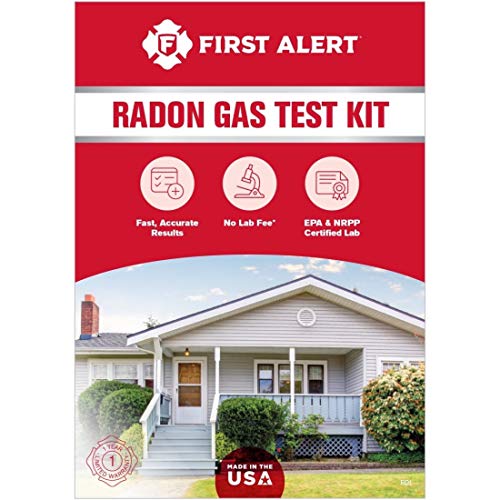 First Alert RD1 Radon Test Kit | Widely stocked; 48-hour charcoal test. | Amazon — $16.98 |
 Airthings Corentium Home | Digital monitor with a long-term average. | Amazon — $142.99 |