Radon Mitigation in Lakewood, CO | InspectandTest
When a radon test in Lakewood comes back at or above 4 pCi/L, mitigation is the next step. Lakewood sits in Jefferson County, an EPA Radon Zone 1 area where elevated readings are common, so mitigation work is a routine part of homeownership here. Radon mitigation reduces the gas to safer levels using a vent system that draws it from beneath the foundation. This guide summarizes EPA and CDPHE guidance current as of 2026. Consult a certified mitigation professional for system design and your physician for health concerns.
Part of our Radon Mitigation Systems guide — start there for the full picture →
Radon mitigation in Lakewood: what to know
Mitigation is the engineering response to a radon problem. The most common and effective approach is active sub-slab depressurization, which uses a fan and a vent pipe to pull radon from under the concrete slab and exhaust it above the roofline before it enters living space. The EPA recommends mitigation when long-term levels reach 4 pCi/L, and many Lakewood homes hit that threshold given the county’s Zone 1 status.
Because so many Lakewood homes from the 1950s through 1970s have full basements, the slab and foundation are the primary points where radon enters. A properly designed system reverses the pressure that draws gas indoors. Mitigation should always follow a confirmed test, and a post-mitigation test verifies the system worked.
The physics behind the system is straightforward. Soil under a Lakewood home holds radon-laden gas at a slightly higher pressure than the air inside the house, especially in winter when the stack effect pulls indoor air upward. A mitigation fan reverses that gradient by creating suction beneath the slab, so the gas is captured and vented outside before it can seep through cracks. Done correctly, the system does not just reduce radon; it intercepts it at the source and routes it harmlessly above the roof.
It is worth distinguishing active from passive systems. A passive system relies on natural air movement through a vent pipe and is sometimes roughed in during new construction. An active system adds a fan, and for existing Lakewood homes with confirmed elevated levels, an active sub-slab system is almost always the reliable choice. Passive systems can help but rarely achieve the consistent reductions a fan-driven system delivers in a Zone 1 county.
Why Lakewood homes need radon mitigation
Jefferson County’s Zone 1 classification means elevated radon is expected, not unusual. Foothill soils near Green Mountain, Glennon Heights, and Belmar sit on the kind of uranium-bearing geology that drives high readings. Mid-century basements and freeze-thaw foundation cracks give the gas easy entry, and tightly sealed, winterized homes let it accumulate because air exchange is low.
The EPA identifies radon as the second-leading cause of lung cancer after smoking, which is why reducing confirmed levels matters. If you have not yet tested, start there; our Lakewood radon testing guide explains the process. For homeowners weighing whether a system is worth it, the answer in a Zone 1 county is usually yes once a test confirms the level. Our explainer on how to remove radon from your home covers the mechanics in plain terms.
What happens to radon levels after a Lakewood remodel
Renovations can change a home’s radon picture. Finishing a basement in a Green Mountain or Glennon Heights home turns a rarely used space into living space, raising the importance of low levels there. Foundation repairs, new flooring over a slab, or sealing and reconfiguring ductwork all alter how soil gas enters and how air moves through the house. The EPA recommends retesting after major work, and homeowners adding a mitigation system as part of a remodel often find it is easier and cheaper to route the pipe before walls go up.
Health stakes for Lakewood families
The reason mitigation matters comes down to long-term exposure. Radon decay products lodge in lung tissue, and years of breathing elevated levels raise lung-cancer risk, with the danger compounding for smokers. Because Lakewood basements are increasingly used as bedrooms, home offices, and family rooms, the people most exposed are often those spending the most time in the lowest level. Reducing the level protects the household over the long run, which is the entire point of the system.
What a Lakewood radon mitigation system covers
A standard active sub-slab system includes a suction point cut into the basement slab, PVC piping routed up through the home or along an exterior wall, an in-line fan, and an exhaust point above the roof. A manometer (a simple U-tube gauge) shows whether the fan is running and the system is under pressure. The fan runs continuously and uses modest electricity.
Homes with crawl spaces may need a sub-membrane system, where a sealed plastic barrier is placed over exposed soil and the fan draws from beneath it. Sump pits and foundation cracks are sealed as part of the work. To understand the equipment side, our guide to a sub-slab radon mitigation system goes deeper. After installation, a follow-up test confirms levels dropped below 4 pCi/L; the full picture sits on our Front Range radon testing guide.
Radon mitigation cost in Lakewood
A typical active sub-slab radon mitigation system in the Lakewood and west-Denver area costs roughly $800 to $2,500 installed. Most straightforward basement installations land in the $1,000 to $1,800 range. Homes with multiple foundation types, long pipe runs, or crawl spaces sit at the higher end, since they require more labor and materials.
Operating cost is small: the fan and slightly increased heating load typically add a modest amount to monthly utility bills. A post-mitigation test, often included, confirms the result. For broader pricing context across systems, our radon mitigation system installation cost guide breaks down the variables. In a Zone 1 county, this is a worthwhile investment in both health and resale value.
Several factors push a Lakewood quote up or down. The slab’s condition matters: a cracked or multi-section slab may need more suction points. Foundation type is a major driver, since a home combining a basement with a crawl-space addition requires the contractor to address both. Pipe routing also affects price; an interior run hidden in a closet and through the attic is more labor than a simple exterior run, but many homeowners prefer it for appearance. Getting two or three local quotes helps you understand where your home falls in the range.
Do not overlook the fan itself as a long-term cost. Mitigation fans run continuously and typically last several years before needing replacement, a job that usually costs a few hundred dollars. A reputable installer uses a quality fan sized correctly for your home’s suction needs, since an undersized fan fails to control levels and an oversized one wastes energy. Ask about the fan warranty and expected service life when comparing bids.
Lakewood regulations and disclosure
Colorado does not license home inspectors, but radon mitigation contractors should hold certification through the National Radon Proficiency Program (NRPP) or the National Radon Safety Board (NRSB). The state requires radon disclosure in residential transactions, so an installed and documented mitigation system is a selling point on the Seller’s Property Disclosure form.
Jefferson County may require a permit for mitigation work involving electrical or structural elements, and systems should be installed to EPA and ANSI/AARST standards. Keep the installation documentation and post-mitigation test results, since buyers will ask for them. A correctly permitted, certified installation protects you at resale and keeps the home compliant with disclosure expectations.
The ANSI/AARST standards are the technical backbone of a proper installation. They cover everything from how the system exhausts above the roofline to how it is labeled and how the monitoring gauge is placed. A system installed to these standards looks tidy and performs reliably, while a cut-rate job can leave the exhaust too close to a window, route the pipe poorly, or use an undersized fan. Buyers and their inspectors increasingly know to look for standards-compliant installations, so cutting corners can come back to hurt a seller.
Post-mitigation testing closes the loop. After the system has run for at least 24 hours, a follow-up test confirms the level dropped below 4 pCi/L. A reputable Lakewood contractor includes this test and provides the result in writing. If the first system design does not achieve the target, the contractor adjusts it, perhaps by upgrading the fan or adding a suction point, until the home tests safely. That guarantee of performance is what separates a finished job from a pipe on the wall.
Living with a radon system
Once installed, a mitigation system asks little of a homeowner. The fan runs continuously and quietly, usually mounted in the attic, garage, or outside. The monitoring gauge should be checked periodically; if the liquid levels equalize, the fan has stopped and needs attention. Beyond watching the gauge and replacing the fan at the end of its service life, there is no routine maintenance. For Lakewood families, the system simply becomes a permanent, low-profile part of the house that keeps radon controlled year after year.
Neighborhoods and areas served
Radon mitigation in Lakewood covers Belmar, Green Mountain, Glennon Heights, and the foothill neighborhoods near Bear Creek Lake. Because the entire county is Zone 1, mitigation demand is steady across all of these areas. Contractors typically serve adjacent Golden, Wheat Ridge, Morrison, and western Denver as well.
An installer who knows Jefferson County’s mix of mid-century basements and crawl spaces can design a system that fits the specific foundation. Homeowners comparing across the metro may also review nearby cities; our Boulder radon mitigation guide covers a county with some of the highest radon levels in the state.
The foothill-adjacent areas of Lakewood present specific design challenges. Hillside homes near Green Mountain often combine a walkout basement with a crawl space or a slab addition, meaning a single suction point may not control the whole footprint. Homes in older Glennon Heights blocks can have rubble or block foundations that need careful sealing before the system can build proper suction. An installer who regularly works these neighborhoods anticipates these conditions and quotes a system that actually fits the home rather than a generic template.
How to choose a Lakewood radon mitigation contractor
Confirm NRPP or NRSB certification and ask for proof of insurance and references from local installations. A good contractor tests before designing the system, explains the suction-point placement, and includes a post-mitigation test in the quote. Ask whether the system carries a workmanship warranty and a fan warranty.
Get a written guarantee that the system will reduce levels below 4 pCi/L. Be wary of bids far below the local range, which can signal undersized fans or poor sealing. Local experience with Lakewood foundations and county permitting keeps the install clean and compliant.
Comparing bids takes a little care because the cheapest quote is not always the best value. Ask each contractor to specify the fan model and its warranty, the number of suction points, how they will seal cracks and the sump, where the exhaust will terminate, and whether a post-mitigation test is included. A bid that itemizes these details lets you compare apples to apples, while a vague one-line quote often hides corners that get cut during installation. The goal is a system that controls radon reliably for years, not just the lowest sticker price.
References and reputation matter in a field with no state license. Ask for addresses of recent Lakewood installations, read reviews critically, and confirm the contractor pulls required permits rather than working around them. A contractor confident in their work will gladly share before-and-after test numbers from past jobs. Because radon mitigation is something you install once and rely on indefinitely, spending time to choose a careful, certified installer pays off in long-term peace of mind for your household.
References
- Consumer’s Guide to Radon Reduction — U.S. Environmental Protection Agency
- Colorado Radon Program — Colorado Department of Public Health and Environment
- Health Risk of Radon — U.S. Environmental Protection Agency
- About Radon — Centers for Disease Control and Prevention
Frequently asked questions
When does a Lakewood home need radon mitigation?
When a test confirms a level at or above the EPA action level of 4 pCi/L. Because Lakewood is in EPA Radon Zone 1, many homes here reach that threshold, making mitigation a common and worthwhile step.
How much does radon mitigation cost in Lakewood?
A typical active sub-slab system runs roughly $800 to $2,500 installed, with most straightforward basement jobs landing between $1,000 and $1,800. Crawl spaces and complex foundations push the cost higher.
How does a radon mitigation system work?
An active sub-slab depressurization system uses a fan and vent pipe to draw radon from beneath the foundation slab and exhaust it above the roofline. This reverses the pressure that pulls the gas into living space.
Does a mitigation system help when selling a Lakewood home?
Yes. Colorado requires radon disclosure in residential sales, so a documented, certified mitigation system with post-install test results reassures buyers and can support your asking price.
If your Lakewood home tested above 4 pCi/L, or you want a system installed before selling, connect with a vetted radon mitigation professional through our contact page.
Test your home for radon
Radon is invisible and odorless, so a test is the only way to know your level. A short-term kit gives a first reading in days; a digital monitor tracks it over time.
| Product | Why | Buy |
|---|---|---|
 AirChek Charcoal Radon Test Kit | Lab fee usually included; EPA short-term protocol. | Amazon — $21.95 |
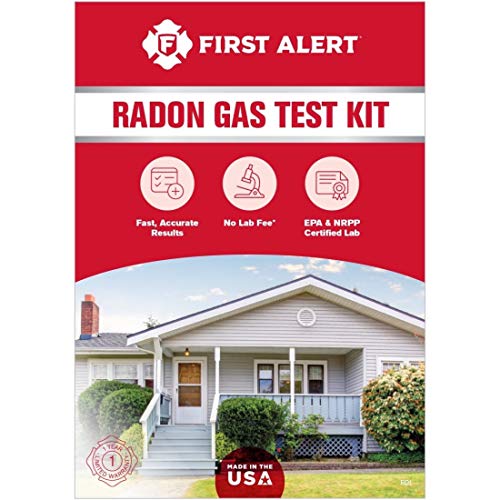 First Alert RD1 Radon Test Kit | Widely stocked; 48-hour charcoal test. | Amazon — $17.95 |
 Airthings Corentium Home | Digital monitor with a long-term average. | Amazon — $99.99 |