Radon Mitigation in Larimer County, CO | InspectandTest
Radon mitigation is the engineered fix for a home that tests at or above the EPA’s 4 pCi/L action level, and in Larimer County it is a common need because the entire county sits in EPA Radon Zone 1, the highest-risk category. From the finished basements of Fort Collins and Loveland to mountain homes near Estes Park, the county’s foothills-to-plains geology drives radon, and cold sealed winters concentrate it indoors. Radon is a colorless, odorless radioactive gas and the second-leading cause of lung cancer after smoking. This page explains how radon mitigation larimer county homeowners should approach, how systems work, and what they cost. This guidance reflects EPA and CDPHE standards current as of 2026; a certified mitigator should design the system for your home.
Radon mitigation in Larimer County: what to know
Mitigation reduces indoor radon by intercepting soil gas before it enters living space, most often with an active sub-slab depressurization system. A fan draws radon from beneath the foundation slab through a sealed suction point and vents it above the roofline, where it disperses harmlessly. A well-designed system typically lowers indoor radon to well below 4 pCi/L, often by 90 percent or more, and a post-mitigation test confirms the result.
Mitigation follows testing, never precedes it. A home should be tested first to establish the level, then mitigated if the result meets or exceeds the action threshold, then re-tested to verify the fix. If you have not yet tested, our plain-language radon guide for Front Range homeowners explains the protocol, and our radon testing in Fort Collins page covers the closed-house test that establishes whether mitigation is needed.
Home design shapes the system. A Larimer County finished basement on a slab usually suits sub-slab depressurization, while a home with a crawl space may need sub-membrane depressurization, sealing a vapor barrier over the crawl-space floor and drawing gas from beneath it. The county’s mix of plains slab-on-grade homes, basement subdivisions, and mountain crawl-space cabins near Estes Park means the right system varies, which is why a competent mitigator diagnoses the foundation before quoting a design.
There is also a passive-versus-active distinction worth knowing. Some newer Larimer County homes were built with radon-resistant features, a passive vent stack and a sealed sub-slab membrane installed during construction, that rely on natural stack effect rather than a fan. Passive systems reduce radon modestly, but if a test still shows an elevated level, a mitigator can usually activate the existing stack by adding an inline fan, which is faster and cheaper than retrofitting a system from scratch. A buyer of a newer home should ask whether a passive stack is present and whether it has been tested, since an untested passive stub is not proof of a safe level, only a verifying test is.
Why Larimer County homes need radon mitigation
Zone 1 status means elevated results are common. Because the county’s geology releases radon readily across the whole area, a meaningful share of Larimer County homes test at or above 4 pCi/L, particularly those with finished basements in direct soil contact. When a test confirms an elevated level, mitigation is the EPA-recommended response, and it is the only reliable way to bring a high reading down to a safe range.
Climate makes the problem persistent. Cold winters keep homes sealed for months while furnaces pull soil gas indoors through slab cracks and openings, so an untreated home stays elevated season after season. Finished basements, the lower-level bedrooms and family rooms families occupy daily, are exactly where radon concentrates, which means the highest-exposure room is often the most-used one. An active mitigation system reverses this by depressurizing the soil beneath the slab so gas vents outside rather than seeping in.
The health stakes justify the fix. The CDC and EPA link thousands of lung-cancer deaths a year to radon, and Larimer County’s Zone 1 designation puts local exposure among the highest in the state. A Loveland family living above an 8 pCi/L basement faces a real, cumulative risk that mitigation cuts dramatically. Once a home tests high, mitigation is not optional maintenance, it is the documented step that removes a known carcinogen from the living space, and a post-mitigation test confirms it worked, detailed alongside testing in our radon mitigation in Loveland guide.
What a Larimer County radon mitigation system covers
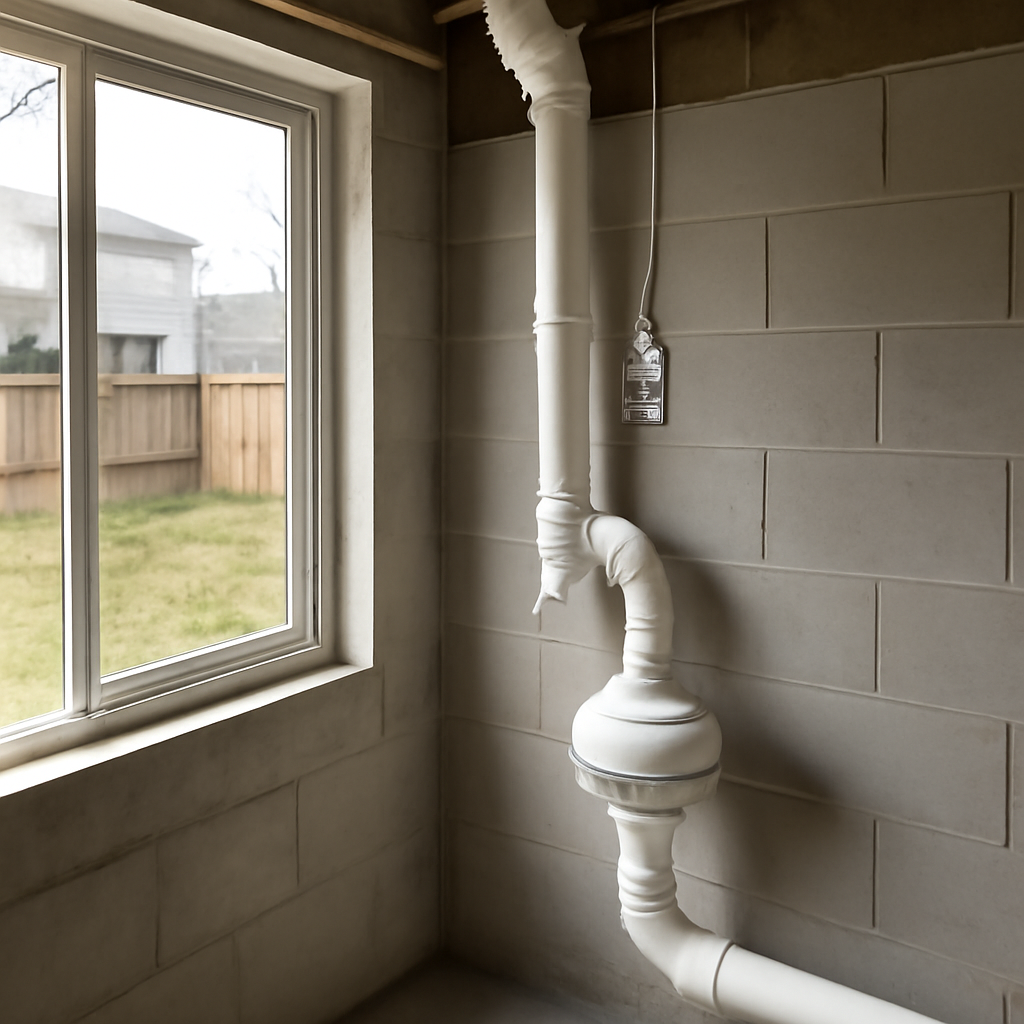
A mitigation system is engineered to the home’s foundation, with a continuous-running fan and a clear monitoring indicator.
Sub-slab depressurization
The mitigator cores a suction point through the basement or slab floor, seals it, and runs piping to an inline fan that vents radon above the roofline. Existing slab cracks, control joints, and sump openings are sealed to make the depressurization effective. A manometer (pressure gauge) on the pipe lets the homeowner confirm at a glance that the fan is moving air. In a typical Fort Collins finished basement, a single well-placed suction point handles the whole footprint.
Crawl spaces and verification
Homes with crawl spaces, common in older and mountain properties near Estes Park, often need sub-membrane depressurization, a sealed vapor barrier over the crawl-space floor with suction drawn beneath it. After installation, a follow-up radon test verifies the system brought levels below 4 pCi/L. Because mitigation only matters once a home has tested high, it always pairs with the testing covered in our radon testing in Loveland guide.
Radon mitigation cost in Larimer County
A standard active sub-slab depressurization system in the Larimer County market typically runs about $1,200 to $2,500, with most homes falling in the middle of that range. Cost depends on foundation type, the number of suction points needed, the routing and length of the vent pipe, and whether the system can be hidden in a garage or must run on an exterior wall. A straightforward single-point basement system sits at the lower end.
Complex homes cost more. Multiple foundation types, a large or subdivided slab, a crawl space requiring a sealed membrane, or difficult venting routes on a mountain home near Estes Park can push the figure higher. A post-mitigation verification test is a small additional cost and should always be included, since an installed fan is not proof of a working system, only a confirming test is.
Set the cost against the benefit. A roughly $1,500 system that drops a finished basement from 8 pCi/L to under 2 pCi/L cuts a known lung-cancer risk by the large majority for the life of the home, and the fan’s modest electricity use is minor. In a real-estate context, a seller-installed system with a clean post-mitigation result resolves a buyer’s radon objection and can keep a deal on track. Few home-safety investments deliver this combination of measurable risk reduction and transaction value in a Zone 1 county.
Ongoing costs are small but real. A radon fan runs continuously and uses roughly the electricity of a low-wattage light bulb, adding a modest amount to the annual power bill, and fans typically last several years to over a decade before needing replacement at a few hundred dollars installed. The system needs almost no maintenance beyond a glance at the manometer now and then to confirm the fan is still moving air; if the two columns of fluid in the gauge ever sit level, the fan has likely failed and should be checked. For a Larimer County homeowner, that minimal upkeep is a reasonable trade for keeping a finished basement safely below the action level year after year.
Larimer County regulations and disclosure
Colorado now regulates radon professionals, and the state has moved toward requiring radon measurement and mitigation providers to hold national certification, so confirm your mitigator carries current credentials and follows recognized mitigation standards. CDPHE runs the state radon program, references the 4 pCi/L action level, and provides guidance on mitigation. A competent mitigator designs to these standards and provides a post-mitigation test to document the result.
Disclosure ties mitigation to transactions. Colorado’s Seller’s Property Disclosure asks sellers to report known radon results and any existing mitigation system, so an installed system and its post-mitigation reading become part of the record. For buyers, a high test during the contingency window often leads to a seller-paid mitigation system or a credit under the standard contract’s deadlines. A documented, certified mitigation with a verifying test is far more reassuring to a buyer than an undocumented fan, which is why proper credentials and post-test documentation matter in any Larimer County sale.
Communities and areas served
Mitigation demand follows the county’s Zone 1 footprint and basement-heavy housing. Fort Collins leads, from Old Town to the finished-basement subdivisions of the south and east, alongside Loveland’s plains neighborhoods and the fast-growth stock of Timnath, Wellington, Berthoud, and the Larimer side of Windsor. Estes Park and foothills homes, often with crawl spaces, need sub-membrane systems, while plains slab-on-grade and basement homes typically use sub-slab depressurization.
Because the whole county is Zone 1, mitigation need does not respect neighborhood lines. Energy-efficient newer homes that trap radon once it enters and older homes with cracked slabs alike test high and benefit from an engineered system. Coverage typically reaches across Larimer County and into adjacent Front Range communities. Wherever a home sits, a confirmed high test calls for the same response, an engineered mitigation system verified by a post-mitigation reading, since the county-wide Zone 1 status makes elevated radon a routine rather than a rare finding.
How to choose a Larimer County radon mitigation provider
Verify credentials and standards. With Colorado moving to require certification of radon professionals, confirm your mitigator holds current national certification and follows recognized mitigation standards. Ask how they diagnose the foundation, where they plan to place the suction point, and how the vent will be routed, since a thoughtful design hides piping where practical and vents correctly above the roofline rather than taking shortcuts.
Ask about workmanship details that separate a clean install from a sloppy one. A well-built system routes piping discreetly, often through a garage or interior chase rather than across a living-room wall, vents above the roofline at the proper distance from windows and intakes, seals the suction point and accessible slab penetrations, and labels the system as required. Poor installs vent too low, leak at the suction point, or run noisy fans inside living space. In Larimer County’s range of homes, from a tidy Fort Collins basement to a complex mountain crawl space near Estes Park, a mitigator who walks you through the planned routing and venting before starting is showing the care that produces both a quiet system and a passing post-mitigation test.
Insist on a post-mitigation test. A reputable provider includes a verifying radon test in the price and stands behind a guaranteed result below 4 pCi/L, often re-balancing or adding a suction point at no charge if the first test does not pass. Ask for a system warranty and a manometer the homeowner can read. For Larimer County’s mix of slab and crawl-space homes, choose a mitigator who explains why sub-slab or sub-membrane suits your foundation. Current certification, a guaranteed post-test result, and a clear design are the marks of a provider worth hiring.
References
- Consumer’s guide to radon reduction — U.S. Environmental Protection Agency
- Colorado radon program and mitigation — Colorado Department of Public Health and Environment
- Radon and lung cancer — Centers for Disease Control and Prevention
If a test puts your Larimer County home at or above 4 pCi/L, an engineered mitigation system verified by a post-install test is the reliable fix. To connect with a vetted certified mitigator in Fort Collins, Loveland, or the foothills, reach out through our contact page.