Radon Testing in Fort Collins, CO | InspectandTest
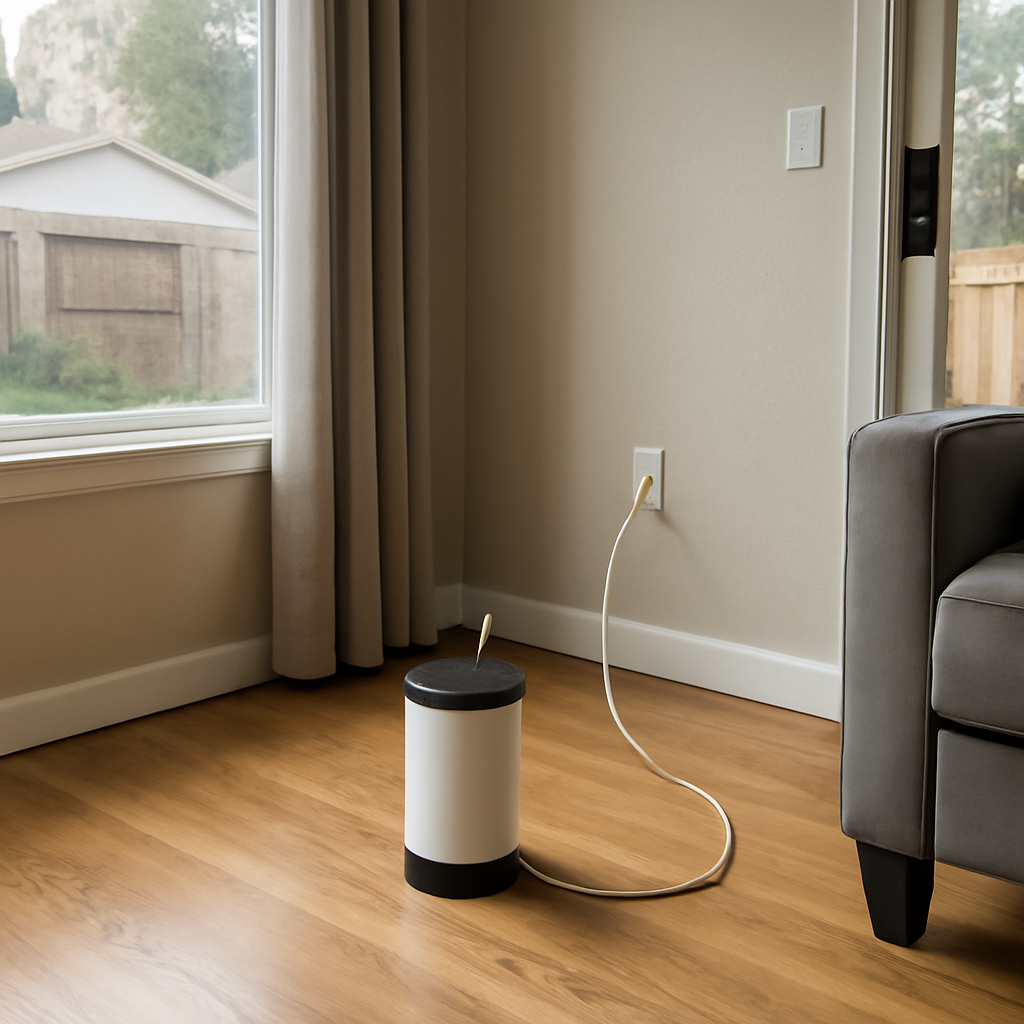
Radon is the leading cause of lung cancer among people who do not smoke, and Fort Collins sits in one of the highest-risk areas in the country for it. Radon testing in Fort Collins is the only way to know your level, because the gas is colorless, odorless, and impossible to detect without a measurement. Larimer County falls within EPA Radon Zone 1, the agency’s highest designation, and many local homes test above the 4 pCi/L action level. This guide explains how testing works, why local geology and housing drive elevated readings, what it costs, and the Colorado disclosure rules that apply. This summarizes EPA and CDPHE guidance current as of 2026; consult a certified professional for testing decisions.
Radon testing in Fort Collins: what to know
Radon is a radioactive gas produced by uranium breaking down in soil and rock. It seeps into homes through foundation cracks, sump pits, and gaps around pipes, then concentrates in the lowest occupied levels. The EPA recommends action at or above 4 pCi/L, and CDPHE, which runs Colorado’s radon program and offers discounted test kits, echoes that threshold.
Testing comes in two forms. A short-term test, lasting two to seven days, gives a quick screening result. A long-term test, running more than 90 days, captures seasonal variation and gives a truer annual average. For a real-estate transaction, a short-term test under closed-house conditions is standard. For peace of mind in a home you already own, a long-term test is more reliable.
Radon is not a fringe concern in Larimer County. EPA and CDPHE both identify Colorado as a state where indoor radon commonly exceeds the action level, and the Zone 1 designation that covers Fort Collins reflects the highest predicted average indoor levels in the country. Because the gas comes from the soil and rock under each individual home, two houses next door to each other can read very differently. That is the single most important thing for a Fort Collins homeowner to understand: you cannot rely on a neighbor’s result, a builder’s assurance, or the age of the house. Only a test of your own home tells you your level.
Short-term versus long-term radon tests
The choice between test types depends on your situation. A short-term test is fast and inexpensive, making it the standard for real-estate transactions where decisions must happen within the contract timeline. It is run under closed-house conditions, meaning windows and exterior doors stay shut except for normal entry and exit, which prevents fresh air from artificially lowering the reading. The tradeoff is that a few days cannot capture how radon swings with weather and season.
A long-term test, running more than 90 days and often through a full heating season, smooths out those swings and produces a result much closer to your true year-round exposure. For a Fort Collins home you plan to live in, this is the more meaningful number, because radon exposure is a long-term health risk measured over years, not days. Many homeowners run a short-term test first for a quick read, then confirm with a long-term test or a professional measurement if the initial result is near or above 4 pCi/L. Retesting is also wise after any major foundation work or after installing a mitigation system.
Why Fort Collins homes have high radon
The Front Range geology around Fort Collins contains uranium-bearing soils and rock, which is the root cause of the Zone 1 designation. Radon levels vary house to house even on the same street, so a neighbor’s low reading tells you nothing about your own home.
Housing patterns add to the risk. Old Town homes built before the 1920s have foundations with cracks and openings that let soil gas in. The large stock of new builds north and east is sealed tightly for energy efficiency, which reduces the natural air exchange that would otherwise dilute radon, allowing it to build up. Finished basements, common across Fort Collins, turn the lowest level into living space where occupants spend hours in the highest-radon zone of the home. Winter makes it worse: closed-up houses during cold months trap radon at its highest concentrations, which is why many tests run in heating season.
If a test comes back high, the fix is a mitigation system; our guide to radon mitigation in Fort Collins explains how that works and what it costs.
What a Fort Collins radon test covers
A professional radon test generally includes:
- Closed-house conditions set up before and during a short-term test, with windows and exterior doors kept shut except for normal use.
- A continuous radon monitor or test kit placed in the lowest livable level, away from drafts and exterior walls.
- A measurement period of two to seven days for short-term tests, longer for an annual average.
- A written report stating the average pCi/L and whether it meets or exceeds the 4 pCi/L action level.
- Guidance on next steps, including retesting or mitigation if the level is elevated.
Continuous monitors used by professionals also log tampering and hourly fluctuations, which DIY charcoal kits cannot do. That tamper record matters in a sale. For how the equipment works, see our radon testing guide for Front Range homeowners.
What to do if your Fort Collins radon test is high
A result at or above 4 pCi/L is common in Larimer County and is not a cause for panic, but it does call for action. The standard fix is a radon mitigation system, most often active sub-slab depressurization, which uses a fan and a vent pipe to draw the gas out from under the foundation before it can enter the home. A properly installed system reliably brings most homes well below the action level, and a follow-up test confirms it worked.
Cost should not be a reason to delay. A typical Fort Collins mitigation system is a one-time expense in the low thousands of dollars, modest against both the home’s value and the health risk radon carries over years of exposure. If your test came back high during a real-estate transaction, you have negotiating options: many Colorado deals resolve radon by having the seller install or credit a system before closing. The important step is to act on a high reading rather than file it away, since radon is a leading cause of lung cancer and the fix is straightforward and well established.
Radon testing cost in Fort Collins
A DIY short-term kit costs roughly $15 to $40, and CDPHE periodically offers discounted kits to Colorado residents. A professional short-term test with a continuous monitor, typically arranged during a real-estate transaction, generally runs from about $125 to $250. Bundling radon into a full home inspection often lowers the per-service cost.
For a home you own, the discounted DIY long-term kit is a cost-effective way to get an accurate annual average. For a purchase, the professional monitor is worth the extra cost because of the tamper logging and closed-house verification.
Set the cost against what is at stake. Radon testing is among the least expensive steps in protecting a household’s health, and the EPA identifies radon as a leading cause of lung cancer after smoking. A test that costs a few dollars to a couple hundred can reveal a hazard that, left unmeasured, exposes a family for years. For a buyer, the cost is trivial against the price of a Fort Collins home, and testing during the transaction means a high result can become the seller’s expense to fix. There is no scenario where skipping the test saves meaningful money, because the only way to know your home’s radon level, and therefore whether you need to act, is to measure it.
Fort Collins regulations and disclosure
Colorado requires radon disclosure in residential real-estate transactions and includes radon on the Seller’s Property Disclosure; CDPHE administers the state program. Sellers must share known radon information and any prior test results or mitigation systems. Colorado does not license home inspectors, so for radon professionals look for certification through a national radon program rather than a state permit.
The disclosure rule means a high reading does not have to kill a deal, but it does have to be on the table. Many Fort Collins transactions resolve radon by having the seller install or credit a mitigation system before closing.
For buyers, this framework is protective. Because radon must be disclosed and is routinely tested during the inspection window, you are unlikely to be blindsided by a hidden radon problem after closing, provided you actually order the test. For sellers, having a recent test and, if needed, a mitigation system already in place removes a common sticking point and signals that the home has been responsibly maintained. The practical takeaway for any Fort Collins homeowner is that radon is a known, measurable, and fixable issue, and the disclosure rules are designed to make sure it is addressed openly rather than ignored.
Neighborhoods and areas served
Radon testers serving Fort Collins commonly cover Old Town, Midtown, Campus West, the Harmony corridor, and the newer subdivisions north and east. Service typically extends to Loveland, Timnath, Wellington, and Windsor in Larimer County. Because radon varies so much home to home, local testers will not assume a result based on the neighborhood; every property needs its own measurement.
The variation is worth dwelling on, because it surprises many Fort Collins homeowners. A brand-new home in a Harmony-corridor subdivision can test higher than a century-old Old Town house next to the river, or the reverse, depending entirely on the soil, the foundation, and how the home exchanges air. New construction is not automatically safe; in fact, the tight building envelopes built for energy efficiency can hold radon in if the home was not roughed for passive venting. A finished basement raises exposure regardless of the home’s age, because it places living space in the lowest level where radon concentrates. None of this can be predicted from the outside, which is why testing your specific home, rather than relying on assumptions, is the only reliable path.
How to choose a Fort Collins radon tester
Look for certification through a recognized national radon proficiency program and ask whether the tester uses a continuous radon monitor for transactions, since the tamper log and closed-house verification protect both buyer and seller.
Confirm the report states the average in pCi/L against the 4 pCi/L action level and includes clear next steps. Ask whether the tester also handles or refers mitigation, so you have a path forward if the level is high. A tester who explains the closed-house setup, places the device correctly in the lowest livable level, and provides a clear written result is doing the job properly. If you are comparing the accuracy of consumer devices, our guide to home radon detector accuracy is a useful starting point.
References
- Health Risk of Radon — U.S. Environmental Protection Agency
- Colorado Radon Program and Test Kits — Colorado Department of Public Health and Environment
- EPA Map of Radon Zones — U.S. Environmental Protection Agency
- About Radon and Health — Centers for Disease Control and Prevention
Fort Collins homeowners and buyers who want a certified radon test with results they can act on can reach out through our contact page to connect with a vetted Larimer County professional.