Radon Eye Pro: What Homeowners Need to Know
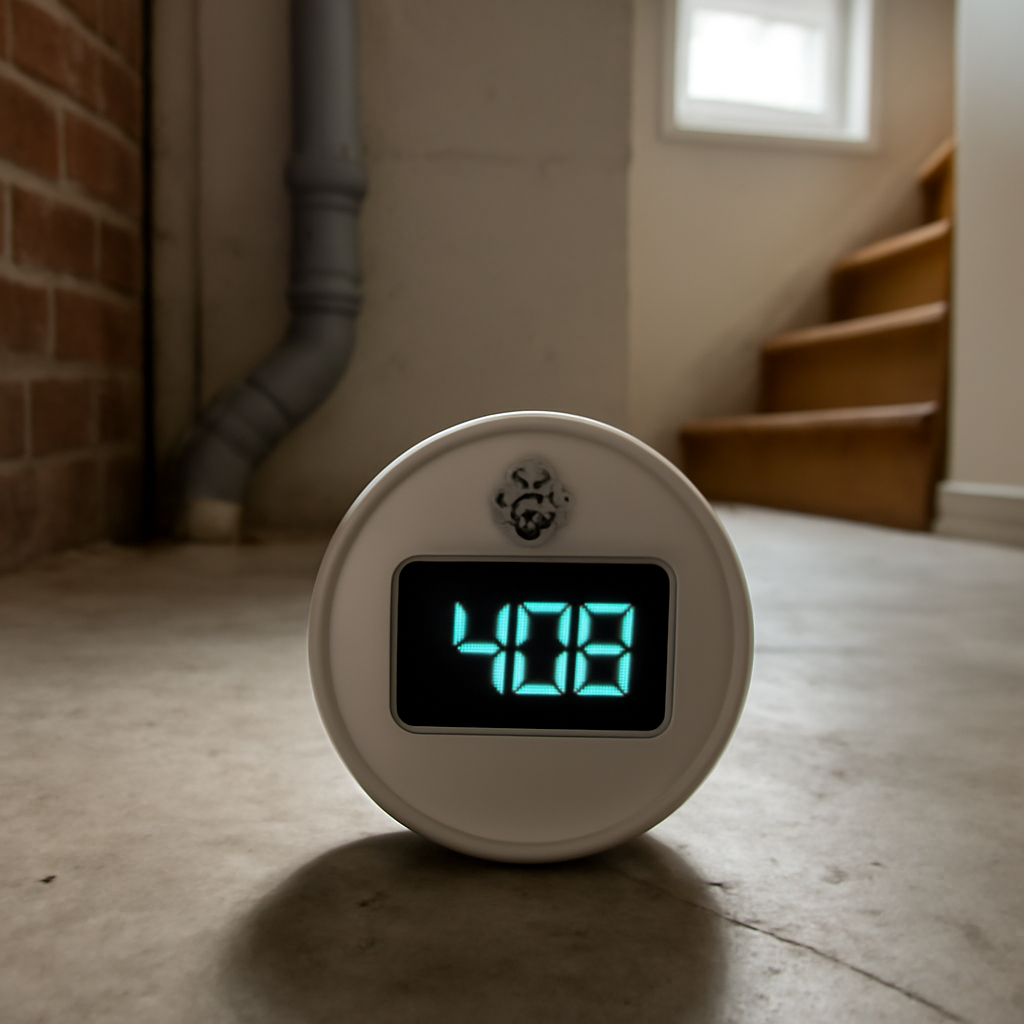
The Radon Eye Pro is one example of a continuous radon monitor, a category of device that measures the radon concentration in a home’s air and updates the reading over time rather than giving a single after-the-fact result. Continuous monitors appeal to homeowners who want ongoing visibility into a gas that is invisible, odorless, and impossible to sense. This guide explains what continuous radon monitors do, what features matter when choosing one, and how to interpret their readings against the EPA action level of 4 pCi/L. It summarizes EPA and CDC guidance current as of 2026, is educational only, and is not a substitute for a certified professional’s testing or a physician’s advice.
Part of our Radon Levels guide — start there for the full picture →
What a continuous radon monitor like the Radon Eye Pro does
A continuous radon monitor measures radon in the air and displays results that update on a recurring basis, often hourly and as rolling averages. Unlike a passive test kit that you deploy, seal, and mail to a lab, a continuous monitor gives you readings you can watch over days, weeks, and months without sending anything away.
The appeal is ongoing awareness. Radon levels fluctuate with weather, season, and how a home is used, so a single short-term test captures only a snapshot. A continuous device shows the variation, letting a homeowner see whether levels spike in winter, after closing up the house, or under certain conditions. Many models, including consumer monitors in this class, pair with a smartphone app that logs the history and sends alerts.
These monitors are designed for awareness and trend-watching, not for the formal measurements used in real estate transactions, which typically rely on protocols and devices handled by certified testers. A continuous monitor complements professional testing rather than replacing it. For the larger context of testing in radon-prone Colorado, our radon testing guide for Front Range homeowners sets the stage.
How continuous radon monitors work
Continuous radon monitors detect the radioactive decay of radon in the surrounding air and translate the count of decay events into a concentration reading, expressed in picocuries per liter, or pCi/L. Different devices use different detection technologies, but the common principle is sampling the air continuously and computing an average over chosen intervals.
Because radon levels swing, the way a monitor averages matters. Most display a short-term average, such as the last day or week, alongside a longer-running average. The longer average is generally more meaningful for assessing your typical exposure, since a single high or low hour can mislead. The EPA emphasizes long-term measurement for understanding year-round exposure, and a continuous monitor effectively performs a rolling long-term test once it has accumulated enough data.
New monitors usually need a stabilization period after first powering on before their readings settle. Early numbers can be erratic until the device has sampled enough air. Homeowners should give a new monitor at least a couple of days, and ideally longer, before drawing conclusions from its readings.
What to look for in a continuous radon detector
Shoppers comparing monitors, including the Radon Eye Pro and its competitors, should weigh several practical features rather than focusing on a single number.
Accuracy and stabilization time
Look for a monitor that reaches reliable readings reasonably quickly and holds them steadily. Some devices stabilize within a day; others take longer. A shorter, dependable stabilization time means useful data sooner, though the long-term average remains the figure that matters most.
Display, logging, and app support
A clear on-device display of current and average levels is helpful, but app connectivity adds real value. An app that logs history, charts trends, and sends alerts when levels rise lets a homeowner track patterns and catch problems early. Data export is a bonus for those who want records.
Measurement intervals and averages
Devices that show both short-term and long-term averages give a fuller picture. The ability to see how levels change hour to hour, while still anchoring decisions to a multi-day or longer average, balances curiosity against sound interpretation.
Calibration and reliability
Reputable monitors are factory-calibrated and may recommend periodic recalibration or comparison against a reference test. For high-stakes decisions, confirming a consumer monitor’s reading with a professional test is prudent. The monitor is a watchdog; the professional test is the formal verdict. Homeowners weighing detector options can also review our overview of the best indoor air quality monitors for related guidance.
How to read the results against the action level
The number that anchors every radon decision is the EPA action level of 4 pCi/L. At or above this concentration, the EPA recommends taking steps to reduce radon. The agency also suggests considering action between 2 and 4 pCi/L, since there is no completely risk-free level and the risk continues below the action threshold.
When reading a continuous monitor, focus on the long-term average rather than momentary spikes. A brief jump after closing the house for a storm is normal; a sustained average at or above 4 pCi/L is the signal that matters. If your monitor’s running average sits above the action level over a meaningful period, that warrants follow-up testing and likely mitigation.
Placement affects readings too. Position the monitor on the lowest level you regularly occupy, away from drafts, exterior doors, and direct airflow, at roughly breathing height. Following consistent placement lets you compare readings over time fairly. Erratic results often trace back to drafty locations or a device still stabilizing rather than true radon swings.
Where a monitor fits in your radon strategy
A continuous radon monitor is best understood as an ongoing awareness tool within a broader strategy. It does not replace the initial test that establishes whether you have a problem, nor the professional measurement often used to confirm before mitigation. What it adds is continuity: the ability to watch your home’s radon over the long run and to verify that a mitigation system keeps working.
For a home that has already been mitigated, a continuous monitor is a sensible safeguard. Radon systems rely on a fan that can fail silently, and a monitor that alerts you when levels rise gives early warning. Many homeowners place one near the mitigation system’s living-space side for exactly this reason. Our piece on the radon mitigation system explains how these systems operate.
For Front Range homeowners, where elevated radon is common and the heating season can push levels higher, a continuous monitor offers reassurance and accountability. Use it to understand your home’s patterns, confirm a mitigation system’s performance, and decide when a professional retest is warranted. Pair the device’s data with the 4 pCi/L action level for decisions, lean on certified professionals for mitigation, and consult a physician for any health concern, since radon’s harm is long-term lung cancer rather than anything you can feel.
Continuous monitors versus short-term test kits
It helps to understand how a continuous monitor differs from the inexpensive short-term test kits sold at hardware stores. A short-term kit is a passive device, often a small canister or detector, that you expose for a set number of days, then seal and mail to a laboratory. The lab analyzes it and returns a single average value. It is cheap and reliable for a one-time measurement, which is why it is common during real estate transactions.
A continuous monitor, by contrast, is an electronic device you keep. It does not require mailing anything to a lab and gives results you can read at any time. The trade-off is upfront cost: a continuous monitor costs more than a single kit but pays off if you want ongoing data over months and years. For a one-time check before buying a home, a kit or a professional test may suffice; for ongoing awareness, a continuous monitor earns its keep.
The two are not mutually exclusive. Many homeowners use a professional or laboratory test to establish their baseline and make decisions, then keep a continuous monitor for long-term peace of mind. Each serves a purpose, and the choice depends on whether you need a snapshot or a film. Either way, the 4 pCi/L action level remains the reference point for any decision.
Using a monitor to verify a mitigation system
One of the most valuable roles for a continuous monitor is confirming that a radon mitigation system keeps working. Sub-slab depressurization systems rely on a fan that runs continuously, and that fan can fail without any obvious sign. A failed fan means radon levels quietly climb back up, and without a monitor, a homeowner might not notice for months.
A continuous monitor placed on the living-space side of a mitigated home acts as a silent watchdog. If the fan fails or the system loses efficiency, the rising levels show up in the monitor’s data, and many devices send an app alert when readings cross a threshold. This early warning lets the homeowner arrange a fan repair before exposure accumulates, preserving the protection the mitigation system was installed to provide.
Most mitigation systems also include a simple manometer, a U-shaped tube with colored liquid, that indicates whether the fan is generating suction. The manometer confirms the fan is running; the continuous monitor confirms the result, namely that radon in the air is actually low. Using both together gives a complete picture: the manometer watches the mechanism, and the monitor watches the outcome. For homeowners who have invested in mitigation, this combination is inexpensive insurance against a silent failure.
Common pitfalls when using a continuous monitor
A continuous monitor is only as useful as the way it is used, and a few common mistakes can produce misleading impressions. The first is reacting to short-term spikes. Radon naturally swings hour to hour and day to day, and a single high reading after closing the house for a storm does not mean a problem. The long-term average is what matters, and overreacting to momentary jumps leads to unnecessary alarm.
The second pitfall is poor placement. A monitor positioned near a drafty door, an open window, a heating vent, or in direct airflow will produce erratic readings that reflect the draft rather than the home’s true radon level. Placing the device on the lowest regularly occupied level, away from drafts and at roughly breathing height, gives the most representative data. Moving the monitor around frequently also makes readings hard to compare.
The third is treating the consumer device as the final word for high-stakes decisions. For ongoing awareness, a quality monitor is excellent. But for a real estate transaction or before committing to mitigation, confirming with a professional measurement is prudent, since formal decisions benefit from the protocols and calibrated equipment a certified tester uses. Treating the monitor as a watchdog rather than a courtroom witness keeps its role in proper perspective. Used thoughtfully, with attention to averages, placement, and the 4 pCi/L action level, a continuous radon monitor gives Front Range homeowners durable, ongoing insight into a hazard they otherwise could never sense.
Who benefits most from a continuous monitor
Continuous monitors are not equally necessary for every household, and identifying who gains the most helps a homeowner decide whether to invest. Owners of mitigated homes top the list. Because a radon fan can fail silently, a monitor that watches the result and alerts on a rise turns a hidden failure into a prompt repair, preserving the protection the system was installed to provide.
Homeowners in high-radon regions like the Colorado Front Range also benefit, even without an existing system. Elevated regional potential and strong winter stack effects mean levels can climb during the heating season, and a monitor reveals those seasonal swings that a single test would miss. Families who spend significant time in a finished basement gain particular value, since that lower level is both where radon concentrates and where they accumulate exposure.
For a household in a low-radon area with a confirmed low baseline and no mitigation system, a continuous monitor is more of a comfort than a necessity, though still useful for long-term reassurance. Matching the tool to the situation keeps the decision sensible. Whatever the case, the monitor supplements rather than replaces an initial measurement against the 4 pCi/L action level, and certified professionals remain the right call for mitigation while a physician handles any health concern.
References
- Radon measurement and the action level — U.S. Environmental Protection Agency
- Radon basics and health effects — Centers for Disease Control and Prevention
- Radon testing guidance for Colorado homes — Colorado Department of Public Health and Environment
Frequently asked questions
What is a continuous radon monitor like the Radon Eye Pro?
It is a device that measures radon in your home's air and updates the reading over time, often hourly and as rolling averages, rather than giving a single lab result. It lets homeowners watch radon trends and many models connect to a smartphone app for logging and alerts.
Can a continuous monitor replace a professional radon test?
It complements rather than replaces one. Consumer monitors are excellent for ongoing awareness and trend-watching, but real estate transactions and pre-mitigation confirmation usually rely on protocols and devices handled by certified testers. Confirm important readings with a professional test.
How should I read the monitor's numbers?
Focus on the long-term average, not momentary spikes, and compare it to the EPA action level of 4 pCi/L. A sustained average at or above 4 pCi/L warrants follow-up and likely mitigation. The EPA also suggests considering action between 2 and 4 pCi/L.
Where should I place a continuous radon monitor?
On the lowest level you regularly occupy, away from drafts, exterior doors, and direct airflow, at about breathing height. Give a new device a couple of days to stabilize, and keep placement consistent so readings can be compared over time.
If a continuous monitor shows your Front Range home trending above the action level, a vetted local professional can confirm the reading and plan mitigation. Reach out through our contact page to connect with a qualified radon specialist near you.
Test your home for radon
Radon is invisible and odorless, so a test is the only way to know your level. A short-term kit gives a first reading in days; a digital monitor tracks it over time.
| Product | Why | Buy |
|---|---|---|
 AirChek Charcoal Radon Test Kit AirChek Charcoal Radon Test Kit | Lab fee usually included; EPA short-term protocol. | Amazon — $21.95 |
 First Alert RD1 Radon Test Kit First Alert RD1 Radon Test Kit | Widely stocked; 48-hour charcoal test. | Amazon — $16.98 |
 Airthings Corentium Home Airthings Corentium Home | Digital monitor with a long-term average. | Amazon — $142.99 |