Home Inspector Pro: What Homeowners Need to Know
The phrase “home inspector pro” carries two distinct meanings in 2026. The first refers to the professional category of certified, insured, and experienced inspectors who follow ASHI or InterNACHI standards of practice. The second refers to Home Inspector Pro, a widely used reporting software (subscription $99 to $149 per month, available on Mac, iOS, and Windows) that many credentialed inspectors run in the field. This guide focuses on the broader professional category: what credentials, tools, software, insurance, and experience hallmarks separate a true home inspector pro from a hobbyist or a generalist contractor offering inspection services as a side line. A buyer hiring a home inspector should know how to evaluate all five categories before signing a contract.
Part of our Home Inspections Explained guide — start there for the full picture →
Home Inspector Pro: The Five Pillars of Professional Practice
Five attributes consistently appear across reputable home inspectors. Credentialing through ASHI (American Society of Home Inspectors) or InterNACHI (International Association of Certified Home Inspectors), or both. Liability and errors-and-omissions insurance with adequate per-claim limits. A documented inspection workflow using reporting software like Home Inspector Pro, Spectora, HomeGauge, or ICC-RES. Field tools including thermal imaging, moisture meters, gas detection, and electrical testers. And demonstrated experience, typically measured in hundreds of inspections and years on the job. A pro should check all five boxes; a hobbyist or generalist usually misses two or more.
Pillar One: ASHI or InterNACHI Certification
ASHI (American Society of Home Inspectors) is the original U.S. home inspector trade association, founded in 1976. ASHI Certified Inspectors complete a written exam, pass field assessments, and submit verified reports for review. The ASHI Standard of Practice defines what an inspection must cover and what is explicitly excluded. InterNACHI (International Association of Certified Home Inspectors) is the larger membership association with global reach and an extensive continuing education library. The InterNACHI Standards of Practice are widely used in states without specific licensing rules. Both certifications are credible; many pros carry both.
State licensing matters where it exists. Texas requires TREC licensing with specific training and exam requirements. Florida, North Carolina, and several other states maintain their own credential systems. Colorado does not require state-level home inspector licensing, which makes membership in ASHI or InterNACHI even more important as a credential check for Front Range buyers. Our 2026 licensing and credential guide walks through the state-by-state differences.
Pillar Two: Insurance Coverage
A home inspector pro carries two types of insurance. General liability covers physical damage caused during the inspection (a foot through a ceiling, a broken faucet). Errors-and-omissions (E&O) covers professional liability for missed defects later attributed to inspector negligence. Typical per-claim limits run $300,000 to $1,000,000; aggregate annual limits run $1,000,000 to $2,000,000. Ask for current certificates of insurance before booking. An uninsured or underinsured inspector creates risk for both parties. Reputable inspectors disclose coverage on their website or in their pre-inspection agreement.
Pillar Three: Reporting Software
Modern home inspection reports are no longer Word documents with phone snapshots pasted in. Professional software (Home Inspector Pro, Spectora, HomeGauge, Inspection Support Network) generates structured reports with photos, defect categorization, summary sections, and integrated repair-cost estimation. Home Inspector Pro is one of the most established platforms, with desktop and mobile clients that sync via cloud, voice-to-text dictation, and ASHI/InterNACHI standard-of-practice templates built in. Subscription cost is $99 to $149 per month for the inspector, which is absorbed into the inspection fee.
Buyers should expect to receive a digital report (typically PDF, sometimes interactive web view) within 24 to 48 hours of the inspection. Reports that arrive as a hand-written summary with no photos are a warning sign about either the inspector’s professional standards or the platform they use.
Pillar Four: Field Tools
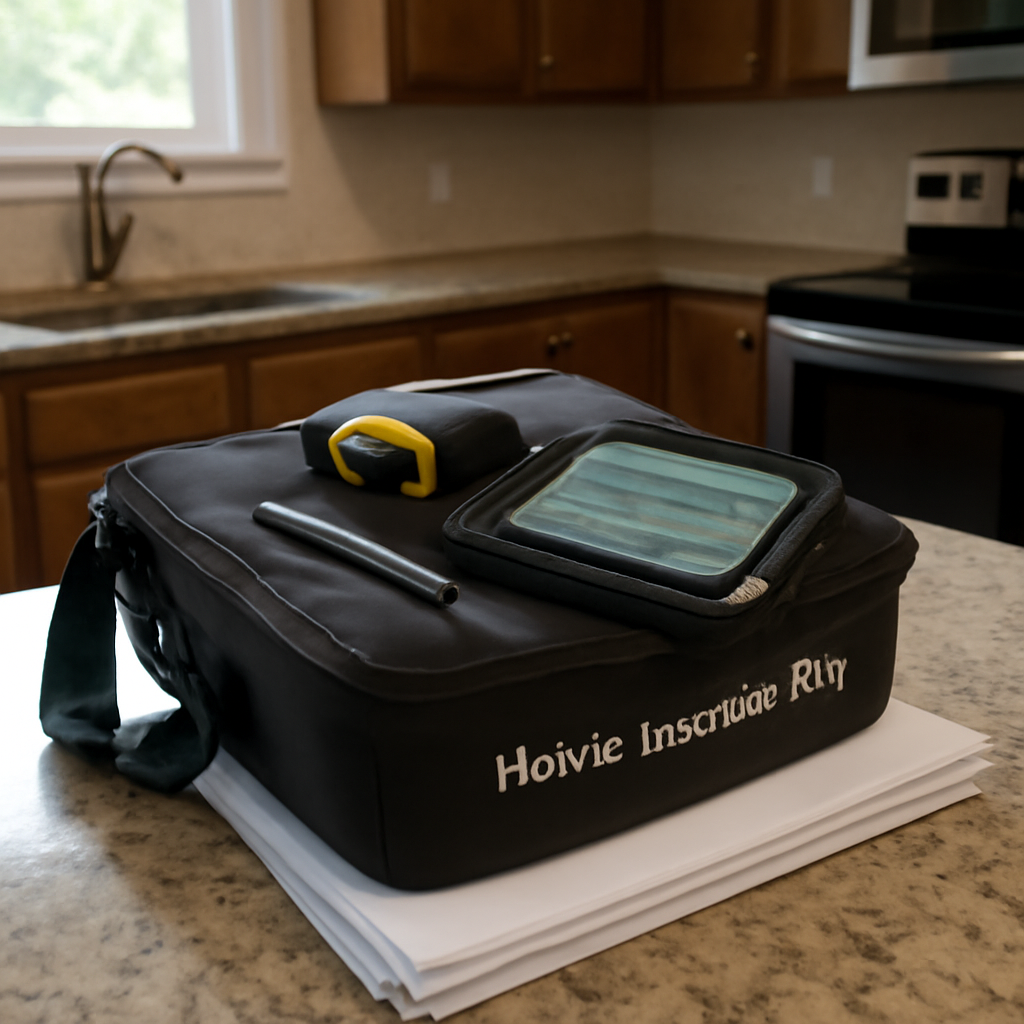
A pro arrives with specific tools, not just a flashlight and a notepad. Common items: a thermal imaging camera (FLIR, Hikmicro, or similar; for moisture and insulation mapping). A pin and pinless moisture meter. A combustion gas detector (for furnace and water heater testing). A receptacle tester with GFCI/AFCI verification. A digital multimeter. A telescoping ladder or step ladder for attic access. A flashlight with adequate output (1,000+ lumens). A drone for roof inspection in some practices. A radon test kit for clients requesting environmental add-ons. The tool bag signals whether the inspector takes the work seriously.
For background on the specific tools, our 2026 home inspection tools buyer’s guide covers each category in depth.
Pillar Five: Experience and References
Experience matters more than any single credential. Inspectors who have completed 500+ inspections develop pattern recognition that no training course produces. Ask any prospective inspector how long they have been practicing, how many inspections they have completed, and whether they will provide references from recent clients. Reputable pros provide references without hesitation. The ASHI and InterNACHI directories show membership tenure for many inspectors. Inspectors who claim “20 years of experience” but joined ASHI last year are usually counting general construction background rather than inspection-specific work.
Home Inspector Pro Software Versus the Pro Category
It’s worth separating the two senses of the phrase explicitly. Home Inspector Pro is a specific reporting software product (Home Inspector Pro LLC, founded 2004) used by many credentialed inspectors. A “home inspector pro” in the broader sense is a credentialed, insured, experienced professional regardless of which software they use. Software choice alone doesn’t make someone a pro; the combination of credentials, insurance, tools, software, and experience does. Some pros use Home Inspector Pro; others use Spectora, HomeGauge, or competing platforms; all of these can produce professional-quality reports if the inspector behind them is qualified.
What a Pro Inspection Costs
Front Range pricing in 2026 typically runs $400 to $600 for a standard pre-purchase inspection on a single-family home of 1,500 to 3,000 square feet. Add $100 to $200 for radon testing, $250 to $500 for mold air sampling, $150 to $300 for sewer scope, and $100 to $250 for thermal imaging if not already included. Larger homes, properties with extensive outbuildings, or homes with unique systems (well, septic, solar) run higher. Compare quotes carefully because the lowest bid often signals a shorter inspection time or fewer included services rather than a better deal.
What to Ask Before Hiring
Six questions screen most inspectors quickly. What associations do you belong to (ASHI, InterNACHI, both)? How long have you been inspecting and how many inspections have you completed? Do you carry general liability and E&O insurance and at what limits? Which standard of practice do you follow? When will the report be delivered and in what format? Can I attend the inspection? Inspectors who answer these directly without hedging are usually pros; inspectors who deflect or rush past credentials questions are usually not. Our hiring a home inspector pillar guide covers the screening process in more depth.
Red Flags That Signal a Non-Pro
Five warning signs separate hobbyists from pros. No ASHI or InterNACHI membership. No proof of insurance offered. Hand-written reports without photos or with phone snapshots only. Inspection time under two hours for a typical single-family home. Refusal to let the buyer attend. Any of these alone is not necessarily disqualifying, but a combination of two or more usually points to a generalist or hobbyist rather than a professional inspector. A standard pre-purchase inspection typically takes 2.5 to 4 hours on-site; reports that emerge in 30 minutes after a 1-hour inspection are not pro-quality work.
Inspector Specialization
Some pros specialize in certain property types or systems. Pre-1978 properties (lead paint and asbestos concerns) warrant an inspector experienced with EPA RRP rules and lead-paint testing. Older mountain homes (1970s and earlier) need someone familiar with knob-and-tube wiring, asbestos cement siding, and outdated plumbing. Recent new-construction inspections need someone who knows current ICC code requirements and common builder shortcuts. Asking about specialization helps match the inspector to the property.
Commercial-property inspections, multi-family residential, and unique systems like geothermal heat pumps or solar arrays often warrant inspectors with specific training beyond the standard residential certification. A pro should disclose where their expertise ends rather than overpromise on systems they haven’t trained on.
The Pre-Inspection Agreement
A pro provides a written pre-inspection agreement (sometimes called an inspection contract) before the visit. This document specifies the scope of services, limits of liability, the standard of practice followed, the fee, and the dispute-resolution process. Buyers should read this carefully. Limits-of-liability clauses are standard but vary; some agreements cap the inspector’s liability at the fee paid, while others allow recovery up to the E&O policy limit. Negotiating limits before signing is sometimes possible with reputable inspectors.
Industry-Wide Reporting Software Landscape
Home Inspector Pro is one of several established platforms competing for the inspector reporting software market. Spectora is the modern web-first competitor with a cleaner buyer-facing interface. HomeGauge is a long-running platform with deep ASHI integration. Inspection Support Network combines reporting with scheduling and CRM features. ICC-RES targets inspectors who follow ICC code references heavily. Buyers don’t need to pick the software, but a pro who has invested in any of these platforms typically delivers a cleaner, faster, more navigable report than one who emails Word documents with phone snapshots.
The software investment is also a signal of commitment. Subscription cost of $99 to $149 per month for Home Inspector Pro (or $79 to $159 for competitors) is meaningful overhead for a side-line inspector but routine cost for a full-time professional. Asking which platform the inspector uses gives buyers a quick read on whether the inspector is operating as a serious business.
Working With the Inspector During and After
Attending the inspection is the buyer’s best opportunity to learn about the property. A pro will explain findings as they go, point out maintenance items separately from defects, and answer questions without rushing. Block 2.5 to 4 hours on the calendar for the visit. After delivery of the written report, schedule a 15- to 30-minute call to walk through summary items together. Most pros include this follow-up in the inspection fee. Re-inspection of repaired items (after seller’s contractor completes work) typically costs $100 to $200.
What a Pro Inspection Covers and Excludes
ASHI and InterNACHI standards of practice define inspection scope. Covered systems include the roof (from the ground, ladder, or drone), exterior walls and grading, foundation and basement, electrical service and visible wiring, plumbing fixtures and visible piping, heating and cooling equipment, water heater, kitchen and bath fixtures, ventilation, insulation in accessible spaces, doors and windows, structural framing where accessible, and interior surfaces. Explicitly excluded items include behind-wall conditions, code compliance verification, well and septic systems (separate specialist), pool and spa equipment, environmental hazards (radon, mold, lead, asbestos require add-on testing), and cosmetic-condition assessment. Our scope and exclusions guide walks through what’s in and out.
Continuing Education and Standards Updates
Reputable pros maintain continuing education through ASHI’s required CE program (40 hours every three years) or InterNACHI’s free online CE library. Codes and standards evolve. The 2024 ICC code cycle introduced changes to electrical service sizing, ventilation requirements, and energy-efficiency standards that any pro should already have integrated into their practice. Inspectors who claim “I learned my trade 25 years ago and nothing important has changed” are usually missing significant updates to electrical, ventilation, and structural standards.
Specialized Add-Ons a Pro Can Coordinate
Environmental testing typically falls outside the standard inspection scope but should be available as add-ons. Radon testing (48-hour to 7-day continuous monitor, $100 to $200) is standard for Colorado Front Range properties. Mold air sampling ($250 to $500) makes sense when musty smells or visible water damage appear. Sewer-line scoping ($150 to $300) is important on older homes where root intrusion or pipe degradation is common. Lead-based paint inspection for pre-1978 homes ($150 to $400) is essential for households with young children. A pro coordinates these services with credentialed specialists rather than performing them in-house unless certified separately.
The Report Walk-Through
After the buyer reviews the written report, a follow-up call with the inspector helps separate cosmetic items from material defects. Pros distinguish three categories: safety items (immediate concern, often non-negotiable in any deal), material defects (significant items the buyer should weigh in negotiation), and maintenance items (normal homeowner upkeep, not negotiation points). Mixing these categories is one of the most common buyer-negotiation mistakes. A pro’s narrative on the call clarifies which findings carry weight and which are routine.
References
- ASHI Standard of Practice — American Society of Home Inspectors
- InterNACHI Standards of Practice — InterNACHI
- ICC Building Codes Reference — International Code Council
Frequently asked questions
What's the difference between an ASHI and an InterNACHI inspector?
Both are reputable trade associations with formal standards of practice. ASHI is the older U.S. body with a smaller, more selective membership. InterNACHI is larger with global reach and extensive continuing education. Many inspectors carry both certifications. Either credential is acceptable as a baseline for hiring.
How much does a professional home inspection cost in Colorado?
Front Range pricing in 2026 typically runs $400 to $600 for a standard pre-purchase inspection on a single-family home of 1,500 to 3,000 square feet. Add-ons for radon, mold, sewer scope, and thermal imaging run $100 to $500 each. Larger or unique properties run higher.
Is Home Inspector Pro software the same as a home inspector pro?
No. Home Inspector Pro is a specific reporting software platform (subscription $99 to $149 monthly) used by many credentialed inspectors. A home inspector pro in the broader sense is a credentialed, insured, experienced professional regardless of which reporting software they use. The software alone doesn't make someone a pro.