Seek Thermal Pro: A Plain-Language Tier Guide
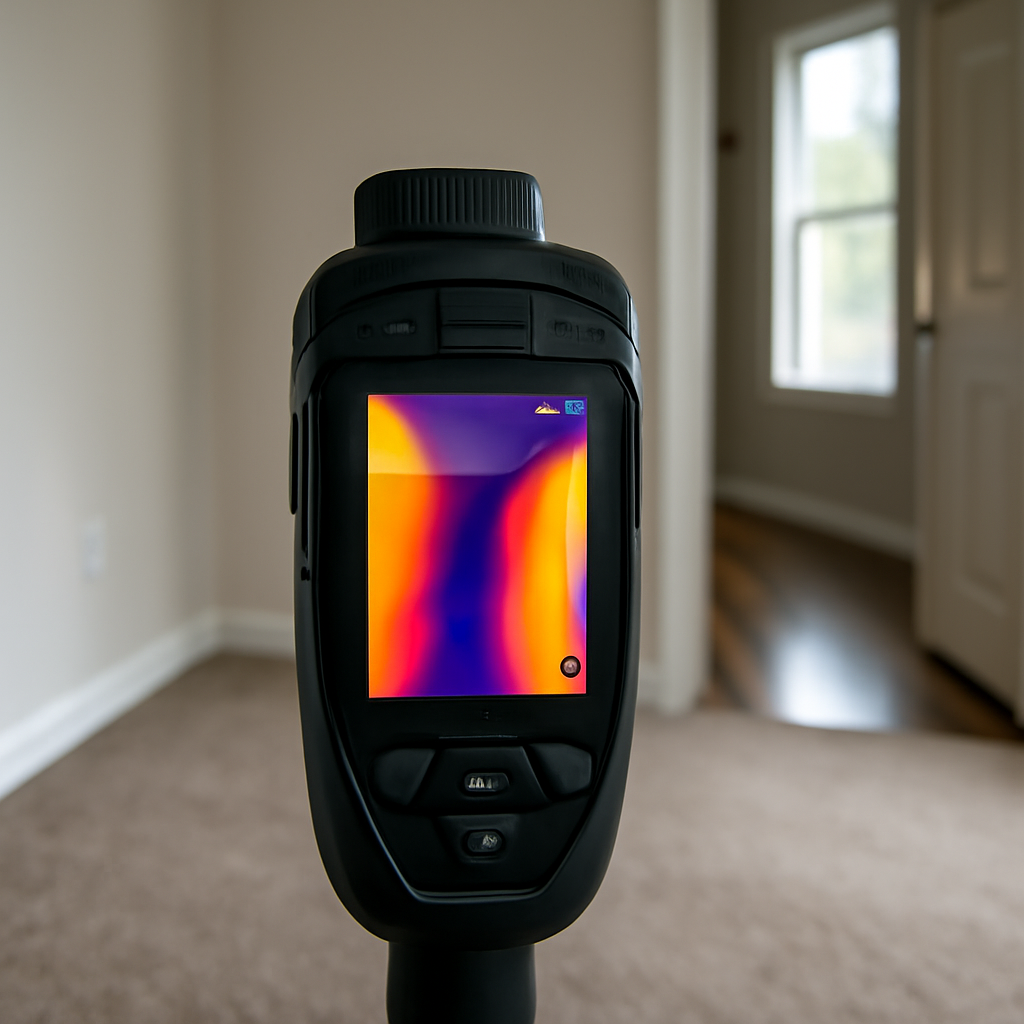
Seek Thermal is the second name most North American buyers encounter in the consumer thermal camera category, after FLIR. The brand splits its lineup into entry-level Reveal and Compact models and a Pro tier — RevealPRO, RevealPROXR, ShotPRO — aimed at homeowners, contractors, and working inspectors who need more resolution and range than the entry units provide. This guide explains what Seek Thermal Pro means as a tier, how the Pro models differ from each other, and how the tier compares to the entry models for typical inspection use.
What does Seek Thermal Pro actually refer to?
The “Pro” branding identifies a specific tier within Seek’s lineup, not a single product. The current Pro family includes the RevealPRO, the RevealPROXR (extended range), and the ShotPRO. Below that tier sit the Reveal, CompactPRO (a name that confusingly bridges the two tiers in older listings), and Compact entry models. Above the Pro tier in some price comparisons, you find phone-attached models — Compact, CompactXR, and CompactPRO — which plug into a smartphone via USB-C or Lightning.
The shorthand most inspectors use: Pro tier means standalone handheld units with their own screen, higher resolution sensors, and longer effective scanning range. The entry tier means lower resolution, shorter detection range, and often shared parts with the phone-attached models.
How does sensor resolution split between Pro and entry tiers?
Resolution is the headline spec that separates the tiers. The RevealPRO and ShotPRO use a 320×240 thermal sensor. The RevealPROXR adds a different lens for longer detection range but keeps similar core resolution. The entry Reveal sits at 206×156 pixels. The basic CompactPRO is also at 320×240 but in phone-attached form. The Compact and Reveal entry units typically use 206×156.
For home-inspection style scanning at typical wall distances of 4–8 feet, 320×240 resolution produces images detailed enough to identify insulation gaps, moisture patterns, and circuit hot spots. Below that resolution, you can still see major heat differences but small features get lost in pixelation. ASHRAE’s building thermography guidance treats this resolution threshold as the working minimum for paid scanning work, which is why Seek’s Pro tier maps to professional use cases and the entry tier maps to homeowner familiarisation.
What does the “XR” in RevealPROXR mean?
XR stands for extended range. The RevealPROXR uses a narrower lens — typically a 20-degree field of view rather than the 32-degree field of the standard RevealPRO. The narrower lens concentrates the same sensor pixels on a smaller scene, which extends the effective distance at which you can identify a heat feature.
For inspection use, that extra range matters in specific scenarios: scanning a roof from ground level, inspecting tall commercial walls without setting up a ladder, sweeping outdoor switchgear from a safe distance. For typical residential interior work — scanning walls, ceilings, and panels from within the same room — the standard lens is more useful because it captures a wider scene and lets you survey a wall in fewer pans.
What does the ShotPRO add over the RevealPRO?
The ShotPRO is Seek’s higher-end Pro model. It bundles WiFi for transferring images directly to a phone or laptop, a larger touch screen, and image-overlay technology equivalent to FLIR’s MSX — Seek calls it SeekFusion. The underlying thermal sensor and most of the imaging specifications match the RevealPRO; the differences are workflow features and ergonomics rather than raw imaging performance.
For working inspectors who deliver digital reports to clients, the WiFi transfer and image annotation features cut report-writing time noticeably. For homeowners using the camera for personal projects, those workflow extras matter less and the RevealPRO covers the same imaging ground at a lower price.
SeekFusion image overlay
SeekFusion uses a small visible-light camera mounted next to the thermal sensor to capture edges and texture, then blends those edges onto the thermal image. The output reads more like a normal photo with heat colours applied, rather than an undefined heat blob. This is the same idea as FLIR’s MSX — the implementation differs in detail but the user-facing benefit is identical.
How does the Pro tier compare to the entry tier in practice?
Entry-tier Seek cameras — the basic Reveal, Compact, and CompactXR — work for one-off homeowner tasks: finding a draft around a window, locating a wet spot in a ceiling after a leak, surveying outlets for warm circuits. The lower resolution shows large features clearly enough for the homeowner to act on what they see.
Pro-tier cameras start to earn their cost when you need to: produce images for a written report, identify subtle thermal patterns (a small air leak, a slightly warmer breaker, the edge of a moisture front), or scan across multiple inspections per week. The detail captured at 320×240 with image overlay reads cleanly enough that clients understand what they are looking at without needing the inspector to draw arrows on the image.
Where does Seek fit against FLIR in the same tier?
Seek and FLIR compete directly in the consumer and entry-professional thermal camera market. At equivalent resolution and feature tiers, Seek units typically price lower than the FLIR counterparts. FLIR offers a deeper professional lineup above the consumer band (T-series, GF-series) and a broader software ecosystem. Seek covers the homeowner-to-entry-professional band with focused product lines and competitive pricing.
For buyers comparing options, the practical question is software workflow and accessory ecosystem. FLIR Tools and FLIR Ignite are widely adopted in inspection workflows. Seek’s app and software are competent but less common in inspector toolchains. If you are joining an existing team or want to integrate with existing report templates, brand alignment matters. If you are buying independently, the underlying imaging performance at the Pro tier is comparable.
How do inspectors use Seek Thermal Pro cameras on residential walkthroughs?
Working inspectors use Pro-tier thermal cameras for the same four categories regardless of brand: missing or compressed insulation, moisture intrusion, electrical hot spots, and air leakage. The technique stays the same — scan during a thermal load (cold morning, warm afternoon, after HVAC operation), capture reference images, note ambient conditions in the report.
InterNACHI’s training materials on infrared thermography emphasise that resolution and operator technique together determine whether the camera produces useful results. Buying a higher-tier camera does not automatically produce better inspection findings — it gives you more useful images when the technique is correct, and it produces nothing useful when the operator does not understand emissivity, reflection, and thermal-load timing.
Calibration and maintenance
Seek’s Pro cameras follow standard microbolometer care: protect the lens, store at moderate temperature, run non-uniformity correction (NUC) per the manual if the image starts streaking. Factory calibration cycles are similar to other brands in the tier — annual for professional daily use, longer for occasional homeowner use.
What does the Pro tier cost versus the entry tier?
Pricing tiers map roughly to the resolution split. The basic Reveal and Compact entry models sit in the lowest band, often below $300 for the standalone or phone-attached unit. The Pro tier — RevealPRO, RevealPROXR, ShotPRO — typically lands between $500 and $1000, with the ShotPRO at the top end of that band. Pricing shifts year to year and varies by retailer, so confirm current numbers before purchase.
For homeowners deciding between renting a higher-tier camera for a single project and buying an entry unit they will own, the cost math depends on how many projects you anticipate. The home inspection tools pillar guide covers rent-versus-buy decisions in more detail, and the broader Seek thermal cameras overview covers the lineup beyond the Pro tier.
How does Seek’s warranty and calibration service compare?
Seek’s standard warranty covers manufacturer defects for a defined period — typically one to two years depending on model and market. Calibration service is available through Seek’s authorised service network, with turnaround times that vary by region. For working inspectors using the camera daily, annual calibration is the typical professional practice; for occasional homeowner use, the calibration cycle stretches further.
Calibration costs are modest relative to the camera price but worth factoring into the total cost of ownership. Out-of-calibration cameras read temperatures less reliably, which matters for any work where the absolute temperature value matters (electrical inspection, energy audits, machinery monitoring). For purely visual scanning where the question is “where is the cold spot” rather than “what temperature is the cold spot”, calibration drift matters less.
Is Seek Thermal Pro worth it for a typical homeowner?
For most homeowners doing one or two projects per year — energy auditing before insulation work, leak detection, checking electrical panels — the Pro tier is more camera than the project requires. The entry Reveal or Compact captures enough detail for the major findings, and the cost difference is real.
The Pro tier earns its cost when the buyer is: a working inspector or contractor adding the camera to a paid workflow, a serious homeowner doing energy work across multiple seasons, or a small landlord managing multiple properties where image quality affects tenant communication and contractor coordination.
What about Seek’s software and image workflow?
Seek ships its cameras with mobile and desktop software for image management, annotation, and report generation. The Seek app handles thermal image capture, temperature spot measurement, palette adjustments, and basic annotation. For inspectors who need full report integration, the desktop software allows post-capture analysis including emissivity correction, temperature scaling, and export in formats compatible with major inspection report platforms.
Image transfer from Pro cameras happens via USB cable or WiFi (on the ShotPRO and some other Pro models). For workflows that produce dozens of images per inspection, the WiFi transfer eliminates a cabled connection step and speeds report production. The software ecosystem is competent but less commonly integrated into inspection report platforms than FLIR Tools — buyers joining established inspection teams should confirm their team’s existing software supports Seek images before committing.
What accessories support Seek Pro cameras?
The Seek Pro accessory list mirrors the broader thermal camera category. Spare batteries extend full-day field use beyond the 3–4 hour single-battery runtime. Protective cases prevent drop damage during transport. Lens covers protect the germanium lens. Screen protectors guard the LCD. Some inspectors add tripod mounts for stationary surveys, particularly when paired with blower-door testing or other slow-pace diagnostic work.
The relatively compact form factor of Seek’s Pro lineup compared to some competitor handhelds makes belt-clip and side-pocket carry practical. Inspectors who climb ladders frequently or work in tight crawlspaces appreciate the smaller envelope. The trade-off is a smaller screen than larger handhelds offer — a workflow consideration for inspectors who review images on the camera between captures.
How to choose between RevealPRO, RevealPROXR, and ShotPRO
The simple decision tree: pick the RevealPRO for general residential scanning at typical room distances; pick the RevealPROXR if you regularly scan at longer ranges (roofs from ground, large commercial spaces); pick the ShotPRO if you need WiFi image transfer and the larger touch screen for client-facing report workflows. The imaging cores are similar enough that resolution alone does not separate them — workflow features and lens choice do.
Buyers cross-shopping the broader category should also evaluate infrared camera purchase frameworks that compare brands directly. Seek’s Pro tier sits in the same competitive band as mid-tier FLIR E-series models, and the right pick often comes down to ecosystem and price rather than imaging performance.
References
- Thermographic Inspections for Energy Efficiency — U.S. Department of Energy
- Building Thermography Standards Reference — ASHRAE
- Infrared Thermography Certification — InterNACHI
- ASHI Standards of Practice — Ancillary Services — American Society of Home Inspectors
Thermal imaging cameras
Infrared cameras reveal hidden moisture, missing insulation, and air leaks. Phone-attachment models are the budget entry point; standalone units have higher resolution.
| Product | Why | Buy |
|---|---|---|
 FLIR ONE Pro (phone) FLIR ONE Pro (phone) | Plugs into iPhone/Android; inspector favorite. | Amazon — $349.00 |
 Topdon TC001 Topdon TC001 | High-res phone module at a low price. | Amazon — $199.99 |
 FLIR C5 Compact FLIR C5 Compact | Standalone pocket camera with Wi-Fi. | Amazon — $449.00 |