Handheld Moisture Meter: What Homeowners Need to Know
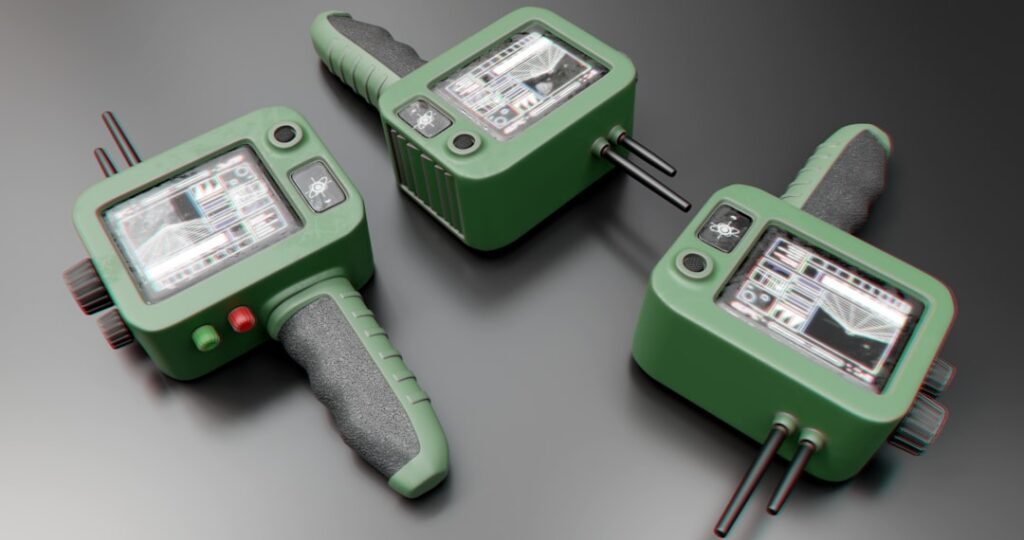
A handheld moisture meter is one of the highest-value tools a homeowner can own. It costs less than dinner for a family, takes minutes to learn, and answers definitively the question “is this actually wet” — a question that drives most decisions about leaks, mold risk, condensation problems, and water damage. This guide explains what handheld moisture meters do, the difference between pin and pinless types, what features matter, and how Front Range homeowners and inspectors can use them effectively in 2026.
Part of our Moisture Meters & Water Damage Detection guide — start there for the full picture →
What a Handheld Moisture Meter Does
A handheld moisture meter measures the water content of a material — most commonly drywall, wood, concrete, or plaster — by detecting how electrical current or radio waves interact with the material. Higher water content increases conductivity (for pin meters) or alters dielectric properties (for pinless meters), both of which the meter translates into a percentage moisture content reading. The reading lets the homeowner answer whether a wall, floor, or ceiling is wet enough to support mold growth, indicate a leak, or warrant further investigation.
Two technologies dominate the handheld market. Pin meters use two electrodes that pierce the surface of the material and read electrical resistance between them; lower resistance means higher moisture content. Pinless meters use radio-frequency capacitance to read moisture in the top quarter to three-quarters of an inch of the material without piercing the surface. Each technology has strengths and weaknesses, and many serious users carry both.
Most handheld moisture meters report a percentage moisture content (% MC) calibrated against either wood or drywall scales, sometimes both. Wood scale readings range from roughly five percent (kiln-dried lumber) to thirty percent or higher (saturated). Drywall scale readings range from around zero to approximately one hundred on a relative scale. The thresholds for “wet” depend on the material: wood above sixteen percent moisture supports mold growth; drywall above sixteen percent on a true MC reading is similarly mold-supportive.
Pin Meters vs. Pinless Meters
Pin Meters
Pin meters drive two metal pins through the surface of the material and measure electrical resistance. The reading is highly localized — only the area between the pins is sampled — and the meter penetrates roughly the depth of the pin (typically a quarter to three-quarters of an inch). Pin meters are accurate for spot checks and confirm whether a specific area is wet, but they leave small puncture holes that are visible on finished surfaces.
For drywall and wood at room temperature, pin meters are generally accurate to within plus or minus two percent moisture content when used correctly. They struggle on materials with high salt content, on freshly treated wood, or on conductive surfaces that produce false-high readings. Cost runs thirty to one hundred dollars for entry models and one to three hundred dollars for professional units. Pin meters from established brands like Delmhorst, Wagner, and Tramex are the industry standards.
Pinless Meters
Pinless meters use radio-frequency capacitance to read moisture in the top quarter to three-quarters of an inch of the material without piercing the surface. The reading averages moisture across a larger area than pin meters and produces no surface damage, which makes pinless meters ideal for scanning large surfaces quickly or for use on finished walls in occupied homes.
Pinless meters are slightly less precise than pin meters in absolute terms, but they cover ground much faster. They struggle on dense materials like solid wood beams, on materials with metallic backing, and on rough surfaces that prevent good sensor contact. Cost runs sixty to one hundred fifty dollars for entry models and two to four hundred dollars for professional units. Pinless meters from Wagner Meters, Tramex, and Stuart Industries are the dominant choices.
Combination Meters
Some moisture meters offer both pin and pinless capabilities in a single unit, switching between modes as needed. Combination meters cost one to two hundred dollars for prosumer units and two to four hundred for professional models. The combination is useful for users who want the speed of pinless scanning with the spot-check precision of pin readings without carrying two meters. The cost premium over a pin-only or pinless-only meter is modest, and many homeowners appreciate the flexibility.
What Features Actually Matter
The most important specifications are accuracy, scale options, and ergonomics. Accuracy is typically expressed as percent moisture content tolerance — plus or minus two percent is the working standard for residential use. Scale options matter because different materials require different reference scales; meters that include wood, drywall, and reference (relative) scales handle most residential needs. Some meters auto-detect the material; others require manual scale selection.
Ergonomics matters more than spec sheets suggest. Battery life of at least one year of normal use is the practical minimum. Display readability in poor lighting — bathroom corners, basement crawlspaces, attic spaces — affects how reliable readings are in the field. The grip should be comfortable for extended use; some pin meters have hammer-style backs for driving pins into harder materials.
Memory and data logging matter for users who plan to track readings over time. Higher-end meters store readings or transfer data to a smartphone app. For ongoing investigations across multiple visits, data logging is valuable; for single-event spot checks, it is overkill. For broader context on inspection tooling, see our home inspection tools hub.
How to Use a Handheld Moisture Meter
Effective use comes down to three habits. First, take baseline readings on materials you know are dry. Drywall on an interior wall in a heated, occupied room should read at the low end of the meter’s drywall scale. Wood framing in the same area should read in the kiln-dried range. Without baseline readings, suspicious readings on suspect walls have no comparison reference. Establish baselines for each material type in the home you are working in.
Second, sample systematically when investigating a specific concern. Take readings every two feet horizontally along a suspect wall, at three vertical levels (near baseboard, mid-wall, near ceiling). Record numbers on a sketch of the wall. The pattern of readings is more diagnostic than any single number; a wet stripe along the bottom of a wall has a different cause than a wet patch near the ceiling.
Third, document conditions and pair with other tools when possible. Note ambient temperature, humidity, and HVAC operation status during readings. Pair moisture-meter readings with thermal imaging — see our guide to the best thermal imaging cameras — to localize the source of moisture before opening walls. The combination of thermal imaging plus moisture metering is the standard residential moisture investigation workflow.
Reading Results Correctly
Moisture meter readings are diagnostic when interpreted in context. For drywall on a wood-scale meter, readings under twelve percent generally indicate dry conditions. Readings between twelve and sixteen percent indicate elevated moisture that warrants follow-up but is not yet mold-supportive. Readings above sixteen percent indicate mold-supportive conditions; readings above twenty percent indicate active wetting that requires immediate attention.
For wood framing, similar thresholds apply with slight variation. Kiln-dried lumber typically reads at six to twelve percent. Wood above sixteen percent supports mold growth; above twenty percent indicates active wetting; above twenty-eight percent is saturated. Wood that has been wet long enough to reach saturation and then dried out can leave residual staining and structural weakness even when current readings return to normal ranges.
For concrete, plaster, and masonry, moisture meters report on relative scales rather than true percent moisture content. Use these readings comparatively — a control reading on a known-dry surface establishes the baseline, and any suspect reading significantly above baseline indicates elevated moisture. Absolute thresholds for these materials require specialized meters or laboratory analysis; consumer handheld meters are best treated as relative comparison tools on these substrates.
Brands and Models in 2026
For homeowners shopping in the thirty-to-one-hundred-dollar range, the General Tools MMD7NP and Klein Tools ET140 pin meters are common choices. Both offer wood and drywall scales, basic LED indicators, and adequate accuracy for residential use. Battery life on both runs over a year of normal use. Build quality is solid for the price.
For homeowners shopping in the one-to-three-hundred-dollar range, the Tramex MEP and the Delmhorst BD-2100 are popular pin-meter choices with better accuracy, broader scale options, and more durable construction. The Wagner Meters Orion 940 and Tramex Roof and Wall Scanner cover the same price range on the pinless side. Combination meters at this tier include the General Tools MMH800 and the Tramex CMEX2.
For working inspectors, the Delmhorst Navigator Pro and the Tramex MEX5/MEP combo are common professional choices in the three-to-five-hundred-dollar range. These meters include data logging, smartphone integration, broader scale libraries, and traceable calibration documentation. The marginal cost over consumer-grade meters is justified by reporting integration and the credibility of professional-tier equipment in client interactions.
Common Pitfalls Homeowners Hit
The most common pitfall is failing to take baseline readings. A homeowner who finds a “high” reading on a suspect wall but has no comparison baseline cannot interpret what the number means. Every investigation should start with baseline readings on known-dry surfaces of the same material type. Skipping baselines turns the meter into a number generator rather than a diagnostic tool.
The second pitfall is using the wrong scale. Wood-scale readings on drywall produce numerically wrong values that may still appear in a “normal” range. Switch the meter to drywall scale (or the manufacturer’s “reference” scale) when measuring drywall, and to wood scale when measuring lumber. Auto-detect features on higher-end meters help, but verifying the scale before each reading is worth the few seconds.
The third pitfall is reading through finished surfaces with pinless meters and assuming the reading reflects the substrate. Pinless meters average moisture across the top fraction of an inch of material; on a painted drywall surface, the reading reflects the surface plus the gypsum behind it. On a tile floor, the reading reflects the tile plus the underlayment. Layered surfaces require interpretation in context, and confirming with pin readings often clarifies the picture.
The fourth pitfall is over-relying on single readings. A single high reading at one spot is suggestive but not definitive. Take multiple readings in a grid pattern, document them, and look for spatial patterns that point to specific sources. Variability in single readings is normal; pattern-based interpretation is more reliable than spot-based.
Front Range Use Cases
Several Front Range moisture patterns benefit from handheld moisture meter investigation. Winter ice dams produce localized wet drywall along ceiling edges adjacent to north-facing eaves; meter readings confirm the water has reached interior surfaces. Summer monsoon water intrusion produces wet drywall around windows with failed flashing; readings often spike at the window jamb and below the sill.
Below-grade moisture in finished basements is a perennial issue across Front Range counties. Meter readings along the rim joist, the floor-wall junction, and behind below-grade windows characterize whether moisture is active or historical. Readings taken in different seasons reveal cycles — basement walls may read dry in winter but elevated in summer when warm humid air condenses on cool surfaces.
Plumbing leaks under kitchens and bathrooms are reliably detected by handheld meters within hours or days of onset. Walking the home with a moisture meter every six months — checking under sinks, behind toilets, around appliance connections — catches slow leaks long before they cause significant damage. The ten minutes per inspection cycle pays back many times over the life of a home.
Maintenance and Long-Term Use
Handheld moisture meters need basic maintenance. Pin meters: keep the pin tips clean — corrosion or dirt on the pins produces erratic readings. Replace pins when they bend or wear. Pinless meters: keep the sensor surface clean and free of debris. Both: replace batteries before they reach low-voltage states that affect readings.
Calibration drift is rare for consumer-grade meters but real for professional units used heavily. Most manufacturers offer calibration verification services for thirty to seventy-five dollars per cycle. For working inspectors, annual calibration on professional meters is reasonable. For homeowners with personal meters, calibration check every three to five years is usually sufficient unless readings start to look suspicious.
Replacement of moisture meters on a roughly five-to-seven-year cycle is reasonable for homeowner use as battery contacts age and electronics drift. Working inspectors may replace more frequently as a side effect of harder use. Selling older meters on the used market recovers some value; verify operation against a known-dry reference surface before listing.
Building a Diagnostic Workflow Around the Moisture Meter
The moisture meter is the workhorse of residential moisture investigation, but it is most powerful when combined with other tools in a structured workflow. The basic homeowner kit pairs the meter with a hygrometer (twenty to fifty dollars), a flashlight, and a small inspection borescope (one to two hundred dollars). The hygrometer establishes whether room humidity is staying within healthy ranges. The meter localizes wet building materials. The flashlight finds visual confirmation. The borescope inspects wall cavities through small drilled holes when readings warrant.
Adding a thermal imaging camera elevates the kit to professional-grade capability. The thermal camera identifies suspect zones quickly across whole-house scans; the moisture meter confirms whether the temperature anomalies are actually wet. This combination is what working inspectors use, and it produces reliable findings that single tools cannot match. For homeowners with chronic moisture concerns or multiple properties, the combined kit pays back its cost many times over the life of a home.
For specific projects, the workflow extends further. Pre-renovation work in pre-1990 homes pairs the moisture meter with asbestos sampling kits to identify wet, friable materials before disturbance. Real-estate investigations pair the meter with air-sample cassettes to characterize hidden mold contamination. Each combination addresses a specific question better than any single tool alone.
Documenting Moisture Readings
Documentation turns moisture readings into actionable evidence. For each investigation, sketch the wall or area being inspected and record numbers at every reading point. Include the date, time, ambient temperature, indoor relative humidity, and HVAC operation status. Photograph any visible signs near suspect areas. Save the documentation in two locations: a cloud service and a local backup.
For real-estate transactions and insurance claims, treat documentation with chain-of-evidence rigor. Lab-grade moisture data carries weight in disputes that anecdotal observations do not. Reports more than ninety days old, or readings collected under different conditions than current, may not represent the home accurately; fresh readings provide defensible documentation when stakes are high.
For working inspectors, moisture readings should be integrated into client reports alongside thermal images, lab samples, and written interpretation. The combination of multiple data sources, each independently documented, makes the report harder to challenge and easier for downstream contractors and insurers to act on. Reports built from siloed single-tool findings are less useful than reports built around triangulated evidence.
Specific Use Patterns by Room
Each room in a home has its own moisture-meter use patterns worth knowing. In bathrooms, focus on grout joints, the perimeter of tub-shower combinations, behind toilets, and the floor area near drain assemblies. Take readings every six to twelve inches along these zones. Fresh wet spots produce sharp boundaries; old water staining produces softer transitions. The pattern indicates whether the wetting is recent and active versus historical and dried.
In kitchens, focus on the wall behind and below the sink, around dishwasher and refrigerator connections, and along the floor at baseboards near appliances. Check inside and around lower cabinets where slow leaks often pool unnoticed. The toe-kick area under cabinets is particularly important because it is rarely inspected and frequently hides slow leaks for months or years.
In basements, focus on the rim joist, the floor-wall junction, the area behind any below-grade window, and any visible moisture marks on concrete walls. Take readings on suspect drywall and on the back side of any wall that is partially below grade. Compare with readings on a known-dry interior wall to establish the baseline.
In attics, focus on sheathing along north-facing roof slopes, around plumbing vent stacks, around bathroom exhaust-fan boxes, and at the eaves where ice dams form. A pin moisture meter on attic sheathing reveals roof-leak history that visual inspection alone often misses. Readings above twenty percent on attic sheathing indicate active or recent leaks; readings between sixteen and twenty percent indicate elevated risk warranting follow-up.
Buying New vs. Used
The used market for handheld moisture meters has matured to the point that working inspectors and budget-conscious homeowners can find quality units at significant discounts. Major brands like Tramex, Delmhorst, and Wagner hold value reasonably well; a three-year-old prosumer meter in good condition typically sells at fifty to sixty percent of retail. Buying from manufacturer-authorized refurbishers preserves warranty coverage and includes calibration verification.
For homeowners buying their first meter, going new in the sixty-to-one-hundred-fifty-dollar range usually makes more sense than chasing used deals. The meter will last years, the price difference is small, and warranty coverage protects against early defects. For working inspectors building a multi-tool kit on a budget, used professional meters from reputable sources can stretch the budget and bring more capability into the toolkit faster.
Renting moisture meters is rarely useful because the meters are inexpensive to buy outright. Industrial-supply firms do rent professional-grade meters at twenty to forty dollars per day, but the breakeven point against ownership is usually two to three rental days for a basic unit. For one-time inspections, rent; for any ongoing use, buy.
Common Substrates and How They Behave
Different building materials read differently on handheld moisture meters, and understanding the differences improves interpretation. Drywall and gypsum products generally read consistently across the home, with reasonable correlation between the meter’s number and actual moisture content. The standard mold-supportive threshold of sixteen percent moisture content holds reliably for typical drywall.
Wood framing reads consistently for kiln-dried lumber but can produce variable readings on engineered wood products like LVL beams, plywood, and OSB. Each engineered product has a different cellular structure and density that affects the meter’s response. Take baseline readings on known-dry samples of the specific product type before drawing conclusions about wet readings.
Concrete and masonry surfaces are the most challenging substrates for handheld meters. The materials hold moisture in complex patterns, and meter readings tend to be relative rather than absolute. Use the meter on these surfaces comparatively — establish a baseline on a known-dry section and compare suspect areas to that baseline. Absolute thresholds for concrete moisture content require specialized meters or laboratory analysis.
Painted surfaces add a small reading offset because the paint layer affects the meter’s interpretation. The offset is usually negligible for thin coats but becomes significant for heavy textured paint or coatings. Take readings through painted surfaces with awareness of the offset, and verify suspect findings with a small inspection cut behind a painting that can later be touched up.
Tile and stone over backer board produce layered readings on pinless meters because the meter averages moisture across the top fraction of an inch. The reading captures the tile, the thin-set adhesive, and the backer board behind. Interpretation requires knowing the substrate composition; pin readings into the grout joints often clarify whether the moisture is on the surface or in the substrate behind. For complex substrates, pairing the moisture meter with thermal imaging produces dramatically more reliable findings than meter readings alone, and the combined workflow is the standard practice for serious moisture investigations across the modern residential and commercial inspection industry.
References
- ENERGY STAR: Seal and Insulate — U.S. Environmental Protection Agency (ENERGY STAR)
- Moisture Meters in Inspections — InterNACHI
- American Society of Home Inspectors — ASHI
- Mold Cleanup in Your Home — U.S. Environmental Protection Agency
Frequently asked questions
What is the best handheld moisture meter for homeowners?
For most homeowner uses, a pin meter at sixty to one hundred dollars from General Tools, Klein, or a similar established brand covers the basics. Combination pin-pinless meters at one to two hundred dollars provide more flexibility for users who anticipate ongoing use.
Should I buy a pin or pinless moisture meter?
Pin meters are more accurate for spot checks but leave small puncture holes. Pinless meters scan large areas quickly without surface damage but average moisture across a larger volume. Many serious users carry both, or buy a combination meter.
What moisture reading indicates a problem?
For wood and drywall, readings above sixteen percent moisture content indicate mold-supportive conditions. Above twenty percent indicates active wetting requiring immediate attention. Always compare against a baseline reading on a known-dry surface of the same material.
How accurate are consumer moisture meters?
Quality consumer-grade pin meters are accurate to within plus or minus two percent moisture content for wood and drywall at room temperature. Pinless meters are slightly less precise in absolute terms but cover ground faster and produce no surface damage.
Moisture meters for home inspection
Pin meters read deep but leave marks; pinless meters scan surfaces non-destructively. Many inspectors carry both.
| Product | Why | Buy |
|---|---|---|
 Klein Tools ET140 Pinless Klein Tools ET140 Pinless | Non-destructive scanning; affordable. | Amazon — $49.14 |
 General Tools MMD4E General Tools MMD4E | Best-selling pin meter for drywall/wood. | Amazon — $39.98 |
 Lignomat Mini-Ligno Lignomat Mini-Ligno | Trusted by woodworkers; species-calibrated. | Amazon — $99.00 |