Cabinet Refacing: Refacing vs Refinishing vs New Cabinets
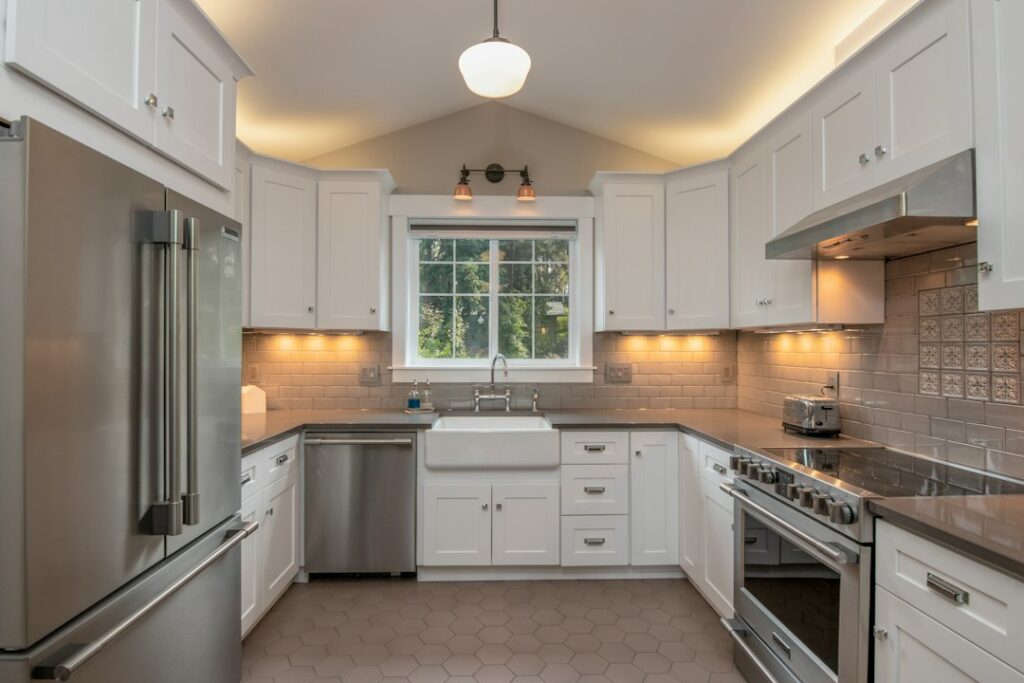
Kitchen cabinets take up more visual space than almost anything else in the room, so dated doors and worn finishes can make an entire kitchen feel old. Tearing everything out is not the only option. Cabinet refacing keeps the existing cabinet boxes in place and replaces the visible parts: new doors and drawer fronts, new veneer or laminate over the face frames and exposed sides, and usually new hinges and pulls. It sits between a paint job and a full replacement in both cost and disruption. Whether it makes sense depends mostly on what is behind the doors. Sound, square boxes in a layout that works are good candidates. Water-damaged sink bases, sagging shelves and a layout that never functioned are not. This guide compares refacing, refinishing and replacement, explains how to judge cabinet boxes, covers hardware and soft-close upgrades, flags lead paint and finish VOC concerns in older homes, explains how refacing fits with countertops, backsplash and lighting, and outlines typical costs.
Part of our Structure & Exterior guide — start there for the full picture →
Refacing vs Refinishing vs Replacement
The three approaches differ in what they change, how long they take and how much of the kitchen they disrupt.
Refinishing or Painting
Refinishing keeps the existing doors, drawer fronts and boxes and changes only the surface. Options include painting, restaining, or cleaning and recoating the existing finish. Done well, painting involves removing doors and hardware, cleaning off grease, sanding or deglossing, priming with a bonding primer and applying durable cabinet-grade paint, often sprayed. It is the least expensive way to change color, but it cannot change door style, fix warped or damaged doors, or improve the inside of the cabinets. Painted finishes on high-touch doors may chip over time, especially if surface preparation was rushed.
Refacing
Refacing replaces the doors and drawer fronts entirely and covers the face frames and exposed end panels with matching material, commonly wood veneer, rigid thermofoil or laminate. Because the doors are new, the style can change completely, for example from raised-panel oak to flat slab or shaker-style fronts. Hardware is usually replaced at the same time. The boxes, shelves, countertops and plumbing typically stay in place, so the kitchen remains largely usable during the project, and work is often completed in a few days once the doors arrive.
Refacing does not change the layout, cabinet height or interior construction. If the boxes are particleboard with worn edges, refacing improves the outside but leaves the inside as it was, although some companies offer new drawer boxes and interior accessories as add-ons.
Full Replacement
Replacement removes the existing cabinets and installs new ones. It is the only option that changes the layout, adds an island or pantry, raises upper cabinets to the ceiling, or corrects boxes that are damaged or poorly built. It usually means removing and replacing countertops too, and often leads to new flooring, backsplash, plumbing and electrical work. It takes longer and costs considerably more. The kitchen remodel cost guide covers what a full renovation typically involves.
Quick Comparison
- Changes color only: refinishing or painting.
- Changes door style and color, keeps layout: refacing.
- Changes layout, fixes damaged boxes or adds storage: replacement.
Are the Cabinet Boxes Worth Keeping?
Refacing is only as good as the boxes it covers, so the first step is a careful look inside every cabinet with the doors open and the contents removed.
Signs of Sound Boxes
- Solid plywood or good-quality particleboard sides, bottoms and backs without swelling or crumbling.
- Face frames that are firmly attached, square and free of cracks.
- Cabinets securely fastened to the wall studs and to each other.
- Shelves that are flat and supported, not bowed under normal loads.
- Drawers and drawer openings that are square, even if the drawer slides themselves are worn.
Warning Signs
- Swollen, delaminating or crumbling particleboard, especially at the bottom edges.
- Soft, stained or warped cabinet floors.
- Dark staining, musty odors or visible mold growth.
- Upper cabinets pulling away from the wall.
- Gaps between cabinets and walls or floors that suggest settlement or structural movement.
The Sink Base
The cabinet under the kitchen sink is the one most often damaged. Slow drips from supply valves, drain connections, garbage disposals and dishwasher hoses can soak the cabinet floor for months before anyone notices. Particleboard swells and loses strength once wet, and a rotted sink base under new doors is a poor foundation for a refacing project. Many refacing companies can replace a single damaged sink base box while refacing the rest, or install a water-resistant liner or mat in the bottom.
Before refacing, it is worth fixing any leaks first and confirming the area is dry. The kitchen sink drain guide covers common drain leaks, traps and clogs that lead to sink base damage. A leak sensor under the sink is an inexpensive addition once the cabinet is repaired.
Refacing Materials Compared
The material chosen for the new doors and the face frame covering affects appearance, durability and price more than almost any other decision in a refacing project.
Wood Veneer
Real wood veneer is a thin layer of hardwood applied to the face frames and end panels, usually paired with solid wood or veneered doors. It can be stained or painted and looks like traditional wood cabinetry. Veneer generally costs more than laminate or thermofoil and, like any wood finish, can show wear around handles and edges over time. Minor damage can often be touched up.
Rigid Thermofoil
Rigid thermofoil is a vinyl film heat-formed over medium-density fiberboard. It produces a smooth, uniform finish, often in white or solid colors, and is typically less expensive than wood. Its main weakness is heat. Thermofoil next to ovens, toasters, coffee makers or self-cleaning ranges can peel or discolor over time, and some manufacturers recommend heat shields beside ovens. Peeled thermofoil is difficult to repair, so replacement doors may be needed.
Laminate
High-pressure laminate is durable, resistant to moisture and stains, and available in many colors and wood-look patterns. It is a common choice for flat slab, modern-style doors. Edges are the vulnerable point; a chipped or lifting edge band can let moisture into the core below.
Solid Wood and Painted Doors
Some refacing companies offer solid wood or painted MDF doors as an upgrade. Painted MDF resists the seasonal movement that can crack paint at the joints of solid wood doors, which is a consideration in Colorado’s very dry winter air.
Questions to Ask a Refacing Company
Refacing quality depends heavily on the installer. Useful questions before signing include:
- Will someone inspect every box, including the sink base, before quoting, and how are damaged boxes handled?
- What material covers the face frames and end panels, and what is its thickness?
- Which hinge and drawer slide brands are included, and are soft-close features standard or extra?
- Are doors finished in a shop or on site?
- For homes built before 1978, is the firm EPA lead-safe certified?
- What warranty covers the doors, finish and hardware, and who honors it?
- How long will the kitchen be unusable, and what happens if doors arrive damaged or mismeasured?
Hardware and Soft-Close Upgrades
Because refacing replaces the doors, it is the natural time to upgrade the hardware that makes cabinets work day to day.
- Hinges. Many older cabinets use exposed or semi-concealed hinges that are difficult to adjust. Refacing commonly switches to concealed European-style hinges, which are adjustable in several directions and are available with built-in soft-close dampers.
- Drawer slides. Worn wooden runners or side-mount slides can be replaced with full-extension ball-bearing or undermount slides, often with soft-close. This sometimes requires new drawer boxes.
- Pulls and knobs. New doors usually need new pulls. Changing size or placement is easy on new doors but may leave holes on any doors that are reused.
- Interior accessories. Pull-out shelves, trash pull-outs, tray dividers and lazy susans can be retrofitted into existing boxes in many cases.
Soft-close hardware reduces slamming and wear on the doors and frames. It adds cost per opening, so it can be worth prioritizing for the drawers and doors that get the heaviest use.
Lead Paint on Older Painted Cabinets
Many older homes on the Front Range were built before 1978, and painted cabinets in those homes may have layers of lead-based paint under newer coats. That matters for refacing and refinishing alike, since both can involve sanding, scraping, cutting or removing painted surfaces.
The EPA’s Lead Renovation, Repair and Painting Program page notes that the federal government banned the sale of lead-based paint for use in homes in 1978, and that any renovation, repair or painting project in a pre-1978 home with lead-based paint can easily create dangerous lead dust. It explains that the RRP Rule requires anyone paid to perform work that disturbs painted surfaces in homes built before 1978 to be certified and trained in lead-safe work practices. The rule generally does not apply to homeowners working on their own homes, but does apply to rentals, home childcare centers and house flippers. Colorado does not appear on the page’s list of states authorized to run their own program, which the page says means EPA administers it there.
For anyone working on their own home, the EPA’s Lead-Safe Renovations for DIYers page recommends hiring a certified lead inspector or risk assessor to test the surfaces being renovated, and says that if the home’s age cannot be determined, it is safest to assume lead-based paint is present. Its lead-safe practices include containing the work area with plastic sheeting, turning off forced-air heating and cooling and covering vents, wearing protective equipment such as a disposable N-100 respirator, minimizing dust and cleaning thoroughly afterward.
Practical implications for cabinets:
- Ask any refacing or painting contractor working in a pre-1978 home for proof of EPA lead-safe certification.
- Avoid dry sanding, power planing or heat-gun stripping of old painted surfaces that have not been tested.
- Consider having painted face frames and end panels tested before they are sanded or cut.
The 1978 lead paint guide explains why the 1978 cutoff matters and how lead testing works.
VOCs From Finishes and Adhesives
Paints, stains, clear coats and some adhesives used in cabinet work release volatile organic compounds as they dry and cure. The EPA’s Volatile Organic Compounds’ Impact on Indoor Air Quality page lists paints, paint strippers, varnishes and building materials among common VOC sources, and notes that health effects may include eye, nose and throat irritation, headaches, loss of coordination and nausea. It reports that during and for several hours after certain activities such as paint stripping, levels may be 1,000 times background outdoor levels.
The same page recommends increasing ventilation when using products that emit VOCs, following label precautions, and buying only as much as will be used soon. It also advises keeping exposure to methylene chloride, found in some paint strippers and adhesive removers, to a minimum. For cabinet projects, that translates into:
- Asking whether doors and fronts will be finished off site, which keeps most spraying out of the house.
- Choosing low-VOC paints and finishes where the durability is adequate for cabinets.
- Ventilating the kitchen during and after on-site finishing and adhesive work.
- Keeping children, pets and people with respiratory sensitivities out of the work area until odors clear.
Coordinating With Countertops, Backsplash and Lighting
Refacing changes the cabinets but leaves everything around them, which raises a few sequencing questions.
Countertops
Refacing usually keeps the existing countertops. If new counters are planned, the general rule is to replace them before or alongside refacing rather than after, since removing counters can damage new face frames and veneer. Heavy stone counters also need sound boxes underneath, which is another reason to inspect them first. The countertop replacement cost guide covers materials and pricing.
Backsplash
New doors and frames slightly change edges and reveals, and an existing backsplash may look dated next to them. Replacing tile can also disturb the wall behind the counters. When both are planned, scheduling the backsplash after the cabinets and counters are set usually gives the cleanest result. The kitchen backsplash installation guide explains preparation and material choices.
Under-Cabinet Lighting
Refacing is a convenient time to add or upgrade lighting under the upper cabinets, since the bottom edges and light rails are being redone anyway. Hardwired fixtures may need new circuits or junction boxes and should be installed to code. The under-cabinet lighting guide compares plug-in, battery and hardwired options.
What a Home Inspection Covers
For buyers weighing a kitchen update, a home inspection can provide a starting point. The ASHI Standard of Practice includes countertops and a representative number of installed cabinets among the interior items an inspector shall inspect. In practice, inspectors commonly note water damage under sinks, loose or poorly secured cabinets, damaged doors and drawers, and active leaks at plumbing connections. A representative sample does not mean every cabinet is opened, and stored belongings can block views. The guide to hiring a home inspector explains what to expect, and the structure and exterior hub covers other parts of the inspection that can affect remodel plans.
Costs
Cabinet costs vary widely with kitchen size, number of doors and drawers, materials, hardware and local labor rates. These ranges are rough orientation, not quotes:
- Painting or refinishing: Professional cabinet painting often ranges from a few thousand dollars to several thousand dollars for an average kitchen, with DIY material costs much lower.
- Refacing: Professional refacing commonly falls in a range from several thousand dollars to over ten thousand dollars, depending on the veneer or thermofoil chosen, door style and the number of openings.
- Replacement: New cabinets with installation usually cost more than refacing, ranging from stock lines to semi-custom and custom work that can reach well into five figures, before counters and other trades.
- Add-ons: Soft-close hinges, new drawer boxes, pull-outs, replacement sink bases and crown molding each add cost per unit.
- Lead testing and lead-safe work: Testing and certified lead-safe practices in pre-1978 homes add time and cost but are often necessary.
Comparing quotes is easier when each one lists the door style and material, face frame covering, hardware brand and features, any box repairs, and whether old doors are hauled away.
References
- Lead Renovation, Repair and Painting Program — U.S. Environmental Protection Agency
- Lead-Safe Renovations for DIYers — U.S. Environmental Protection Agency
- Volatile Organic Compounds’ Impact on Indoor Air Quality — U.S. Environmental Protection Agency
- ASHI Standard of Practice for Home Inspections — American Society of Home Inspectors
Frequently asked questions
What is cabinet refacing?
Refacing keeps the existing cabinet boxes and replaces the doors and drawer fronts, covers the face frames and exposed sides with veneer or laminate, and usually adds new hinges and pulls.
Is refacing cheaper than new cabinets?
Generally yes, because the boxes, countertops and plumbing usually stay in place. It costs more than painting but less than full replacement for most kitchens.
When should cabinets be replaced instead of refaced?
Replacement makes more sense when boxes are water-damaged or poorly built, when the layout needs to change, or when new storage such as an island or taller uppers is wanted.
Do lead paint rules apply to cabinet refacing?
In pre-1978 homes, the EPA's RRP Rule requires paid contractors who disturb painted surfaces to be lead-safe certified. Homeowners doing their own work are generally exempt but are encouraged to use lead-safe practices.
How long does cabinet refacing take?
Once new doors are made, on-site refacing often takes a few days for an average kitchen, and the kitchen usually stays partly usable during the work.
Thinking about buying a home and updating the kitchen? Send us a note and we can help you find an inspector who checks sink bases, cabinets and plumbing before you plan the remodel.