Best Kitchen Cabinets (2026): Construction + How to Choose
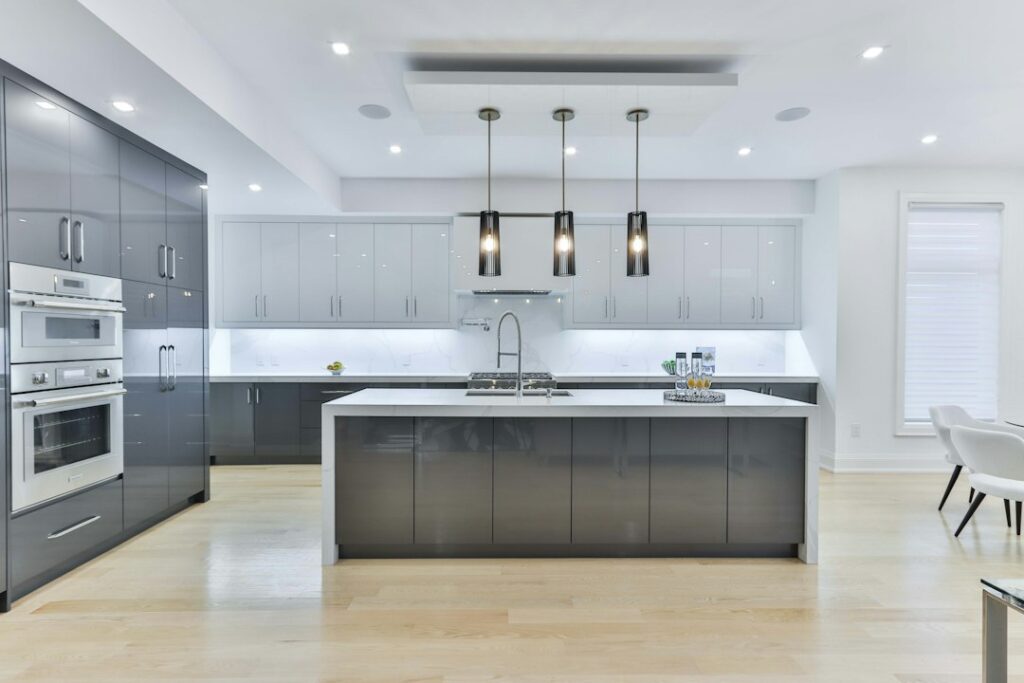
The best kitchen cabinets are built well where you cannot see it: a solid box that resists water near the sink, drawers joined to survive daily slamming, full-extension slides, adjustable hinges, and a finish that cleans without wearing through. Door style is the easy part; construction is what separates cabinets that last decades from ones that sag and swell in a few years. This guide explains what to look for inside the box, how stock, semi-custom and custom lines differ, what each typically costs, and what an inspector checks once they are installed. A note on method: we don’t test cabinets. This guide explains how to choose and what to check, drawing on industry construction standards and EPA guidance on composite wood and moisture.
Part of our Structure & Exterior guide — start there for the full picture →
This page contains affiliate links; we may earn a commission at no extra cost to you.
Quick Decision Table: Cabinet Grades and Box Construction
Price bands are typical installed costs per linear foot of base and wall cabinets for 2026. Door style, wood species, finish, accessories and installation complexity move the number widely, so treat these as a starting range before getting a layout quoted.
| Option | Who it suits | Typical price band (installed, per linear ft) | Key spec to check |
|---|---|---|---|
| Ready-to-assemble (RTA) | DIYers, rentals, garages, tight budgets | Typical $75–$250 | Box material and thickness; cam-lock vs glued joints; slide quality |
| Stock (in-store or quick-ship) | Standard layouts, flips, fast timelines | Typical $100–$350 | Limited sizes in 3-inch increments; filler strips; finish durability |
| Semi-custom | Most full remodels wanting more sizes, finishes and storage options | Typical $200–$650 | Box upgrade options (plywood), drawer box construction, modification fees |
| Custom | Odd layouts, high ceilings, specific woods and exact fits | Typical $500–$1,200+ | Shop reputation, joinery, finish system, lead time |
| Plywood box | Sink bases, humid areas, long-term owners | Usually an upgrade within a line | Thickness (1/2 vs 3/4 inch); veneer core; edge banding |
| Particleboard or MDF box | Budget lines; dry locations | Usually the base option | Thickness, density, sealed edges; TSCA Title VI label |
| Framed vs frameless | Framed: traditional look, sturdy face; frameless: more interior space | Similar within a grade | Hinge type and door overlay; drawer width lost to the frame |
If the boxes you already have are sound and you only dislike the look, refacing or new doors cost much less than replacement. Our guides to cabinet refacing and kitchen cabinet door replacement cover those routes.
What Actually Matters When Choosing Kitchen Cabinets
Box material: plywood vs particleboard vs MDF
The cabinet box (or carcass) is the sides, bottom, back and top that everything hangs on. The material and thickness of the box decide how well it holds screws, carries a stone countertop, and survives a leak.
- Plywood (cross-laminated veneers) is lighter, holds screws well, and tolerates brief water exposure better than particleboard. It is the usual upgrade and the one most worth paying for in the sink base.
- Particleboard (wood particles bonded with resin, often covered in melamine) is flat, stable and inexpensive. Higher-density boards with fully sealed edges perform reasonably in dry locations. Its weakness is water: once the core gets wet, it swells, crumbles and does not recover.
- MDF (medium-density fiberboard) is smooth and dense, making it a good substrate for painted doors and panels. It is heavy and, like particleboard, swells if water gets past the finish.
Thickness matters as much as material. A 1/2-inch particleboard side is a sign of an entry-level box; 5/8 or 3/4 inch is sturdier. Look at the back panel too: a full 1/2-inch back is stronger and easier to anchor through than a thin 1/8-inch hardboard back with a mounting rail.
Formaldehyde and composite wood
Particleboard, MDF and hardwood plywood are bonded with resins that can emit formaldehyde. EPA’s composite wood rule set national emission standards for these products, and since March 22, 2019, composite wood products sold in the United States, including finished goods made with them, must be labeled TSCA Title VI compliant. Look for the label on the box or the manufacturer’s documentation, and favor sealed edges and backs. EPA lists composite wood products such as particleboard, MDF and hardwood plywood, along with some paints, lacquers and finishes, among household formaldehyde sources, so ventilate the kitchen well for the first days after new cabinets go in. Some manufacturers also participate in industry environmental certification programs; ask what the line carries.
Construction and joinery
How the pieces are joined determines whether a cabinet stays square. Signs of better construction:
- Sides joined to the bottom and top with dadoes (grooves), glue and screws or dowels, rather than only staples or cam locks.
- Corner blocks or gussets in base cabinets to keep the box square.
- A solid or substantial hanging rail on wall cabinets, so screws go into something strong.
- Shelves at least 5/8 inch thick (3/4 inch for wide spans) that do not sag under dishes.
- A finished, sealed interior that wipes clean.
Industry testing standards exist for cabinet structure, door and drawer operation, and finishes. In the United States, many manufacturers certify lines to the ANSI/KCMA A161.1 performance standard; a certification seal or documentation shows the line has passed load, durability and finish tests. It does not tell you the box material, so check both.
Drawer boxes and slides
Drawers do the hardest work in a kitchen. On a good drawer box, the sides are solid wood or plywood, joined with dovetails (hand-cut or machine) or doweled joints, with a bottom set into a groove instead of stapled underneath. Budget drawers with stapled particleboard sides and a thin, nailed-on bottom are the first part to fail.
Slides matter just as much:
- Full-extension slides let the drawer open all the way so the back is reachable; three-quarter extension wastes a quarter of the drawer.
- Undermount concealed slides hide under the drawer and usually include soft-close; side-mount ball-bearing slides are durable but visible.
- Load rating: look for a rating suited to the drawer’s use. Pot and pan drawers need higher ratings than a utensil drawer.
- Soft-close prevents slamming and protects joints. It is standard on most semi-custom lines and worth having.
Hinges and doors
Concealed European-style hinges that adjust in three directions let an installer align doors evenly after installation and over the years as the house settles. Soft-close hinges are common now; check that they are built into the hinge, not an add-on bumper. Door overlay changes the look: full-overlay doors cover nearly the whole face frame for a modern look, partial overlay shows more frame, and inset doors sit flush inside the frame, which is beautiful but costs more and is less forgiving of seasonal wood movement. Our guide to cabinet hinges explains hinge types and adjustment.
Door construction is a separate choice from box construction. Solid wood frames with a floating center panel allow for seasonal movement; one-piece MDF doors take paint well without seams cracking at the joints, which is why many painted shaker doors are MDF.
Finishes
- Factory catalyzed finishes (conversion varnish and similar) are harder and more chemical-resistant than most site-applied paint.
- Painted finishes look crisp but show chips at edges; MDF doors take paint more evenly than solid wood, where joints can show hairline cracks seasonally.
- Stained wood hides wear best.
- Thermofoil and laminate doors (vinyl or melamine wrapped over MDF) are affordable and easy to clean, but heat from an oven or toaster can make thermofoil peel. Heat shields beside the range help.
If you plan to repaint existing cabinets instead of replacing them, our guide to the best paint for kitchen cabinets covers enamels, primers and spraying.
Stock, semi-custom and custom
Stock cabinets come in fixed sizes, usually 3-inch width increments, in a limited set of finishes. They ship quickly and can look excellent in a straightforward layout; gaps are closed with filler strips. Semi-custom lines start from standard sizes but allow modified depths and heights, more finishes, upgraded boxes and many storage inserts, with lead times of several weeks. Custom cabinets are built to the room, which matters for odd walls, tall ceilings or unusual appliances, and quality depends heavily on the shop. Grade alone does not guarantee quality: a well-built stock line with plywood boxes can outlast a poorly built semi-custom one.
Layout and storage that pays off
Deep drawers in base cabinets are easier to use than doors with shelves for pots and pans. Pull-out trash and recycling, a tray divider over the oven, and a lazy Susan or blind-corner pull-out make the most of corners. Go to the ceiling with wall cabinets or add a stacked upper to avoid a dust-collecting gap, which matters in tall-ceiling Front Range new builds. Plan an appliance garage or outlet strip if counter clutter bothers you.
Hardware, height and everyday comfort
Knobs and pulls are cheap to change later, but plan their placement with the layout: drawers wider than about 24 inches are easier to open with two pulls or one long bar, and handles on the corners of doors should not collide when adjacent doors open. Standard base cabinets put the countertop around 36 inches high, and standard wall cabinets start roughly 18 inches above it. Taller cooks can ask for taller toe kicks or base heights in semi-custom lines; households planning to age in place may want more drawers and fewer deep base shelves, pull-down shelving in uppers, and a section of counter at a lower height. These changes are easiest to request before ordering and costly to retrofit.
Questions to ask before you order
- What is the box material and thickness in the base, sink base and wall cabinets, and is plywood an available upgrade?
- How are drawer boxes built, and what slides and hinges come standard?
- Is the line certified to a performance standard, and is the composite wood labeled TSCA Title VI compliant?
- What does the warranty cover, for how long, and does it require professional installation?
- What is the lead time, and how are damaged or missing pieces handled?
Front Range conditions
Colorado’s very dry indoor air, especially in winter with forced-air heat, makes solid wood shrink across the grain. Solid-wood door panels designed to float handle this; panels glued tight or painted over can show cracked joints or a stripe of unpainted wood at the panel edge in winter. A whole-house humidifier set modestly can reduce seasonal movement. Dry air is gentler on particleboard boxes than humid climates are, but leaks under sinks and dishwashers are just as damaging here.
Budgeting the cabinet job
Cabinets are typically one of the largest single line items in a kitchen remodel. Beyond the boxes and doors, budget for hardware, crown and light-rail molding, panels for exposed ends and appliances, fillers, installation, and possibly drywall and electrical work behind the old run. Our guide to kitchen remodel cost shows how cabinets fit into the full budget. Counters are usually ordered once cabinets are set, so plan them together; our guide to the best countertops compares materials and weights.
Kitchen Cabinet Buyer’s Checklist
| Spec | What to look for | Why it matters |
|---|---|---|
| Box material | Plywood, at least in the sink base; or dense particleboard with sealed edges | Water and screw-holding performance |
| Side and back thickness | 5/8 to 3/4 inch sides; solid back or strong hanging rail | Rigidity and secure wall attachment |
| Composite wood label | TSCA Title VI compliance | Federal formaldehyde emission standard |
| Performance certification | ANSI/KCMA A161.1 documentation | Line has passed load, operation and finish tests |
| Drawer box | Solid wood or plywood, dovetail or doweled, bottom in a groove | Drawers fail first on budget cabinets |
| Slides | Full-extension, soft-close, adequate load rating | Usable space and long-term smooth operation |
| Hinges | Concealed, three-way adjustable, integrated soft-close | Doors stay aligned for years |
| Finish | Factory catalyzed finish; heat shields beside the range for thermofoil | Resistance to cleaning, chips and heat |
| Warranty | Length and what it covers (box, finish, hardware) | Separates confident manufacturers from the rest |
Installation & Home-Inspection Angle
Inspectors evaluate cabinets by function and condition: are they secure, do doors and drawers work, and is there water damage. Installation quality often matters more than grade. Our guide to kitchen cabinet installation walks through the process step by step.
Secure attachment
- Wall cabinets should be screwed through the hanging rail into wall studs with cabinet screws, never hung on drywall anchors alone or with drywall screws, which can snap under load.
- Adjacent cabinets should be screwed to each other through the face frames or sides, so the run acts as one unit.
- Base cabinets should be level and shimmed solidly, because an uneven base will crack a stone countertop.
- Loose wall cabinets, gaps at the wall, or cabinets pulling away at the top are reported as safety concerns.
Water under the sink
The sink base is where most cabinet damage happens. Inspectors look for staining, swelling, delaminated bottoms and musty odor, and check drain and supply connections for drips. EPA’s mold guidance stresses fixing the water source and drying wet materials within 24 to 48 hours; particleboard that has stayed wet usually has to be replaced, not dried. A waterproof sink base mat and a battery leak sensor are inexpensive protection. Our guide to mold under a sink on particleboard explains when the cabinet floor can be cleaned and when it must be replaced.
Doors, drawers and clearances
- Doors and drawers should open fully without hitting appliances, handles or each other, especially at inside corners.
- Dishwashers should be secured to the countertop or cabinet sides so they do not tip forward when loaded.
- Range-side cabinets need proper clearance to cooking surfaces per the range manufacturer.
Old cabinets and lead paint
Cabinets in homes built before 1978 may have lead-based paint. EPA’s RRP Rule requires paid contractors who disturb painted surfaces in pre-1978 homes, including during demolition or sanding of painted cabinets, to be certified and use lead-safe practices. Homeowners working on their own homes are generally exempt, but dry sanding old paint without testing is not advisable for anyone. If you are refinishing rather than replacing, EPA’s VOC guidance applies: ventilate well when using finishes and strippers.
Where to Buy Kitchen Cabinets
Home centers stock in-store and quick-ship lines and sell semi-custom lines through a kitchen design desk, often with a free or low-cost measure and layout. Ask to see a sample box, not just a door, so you can check the material, drawer joints and slides. Confirm lead times, whether installation is included or subcontracted, and who is responsible if pieces arrive damaged. Inspect every box on delivery before the installer starts, because damage reported after installation is harder to resolve.
Where to shop for kitchen cabinets
Links open the retailer's current selection — prices, stock and delivery/installation options vary by ZIP code.
We may earn a commission from qualifying purchases made through these links, at no extra cost to you.
Retailers carry brands such as Hampton Bay, American Woodmark, KraftMaid, Diamond and Thomasville, among others. Compare box material, drawer construction, slides, finish and warranty line by line rather than relying on the brand name.
Frequently asked questions
Are plywood cabinets better than particleboard?
Plywood holds screws better and tolerates brief water exposure better, so it is the stronger choice, especially for sink bases. Dense particleboard with sealed edges performs reasonably in dry locations and costs less. Thickness and construction matter as much as material.
What is the difference between stock, semi-custom and custom cabinets?
Stock cabinets come in fixed sizes and finishes and ship quickly. Semi-custom lines allow modified sizes, more finishes and upgrades, with longer lead times. Custom cabinets are built to the room. Quality varies within each grade, so check box material, drawers and slides.
What makes a good kitchen cabinet drawer?
Look for solid wood or plywood drawer sides joined with dovetails or dowels, a bottom set into a groove, and full-extension soft-close slides with a load rating suited to the drawer. Stapled particleboard drawers with thin bottoms are usually the first part of a budget cabinet to fail.
Do new kitchen cabinets give off formaldehyde?
Composite wood in cabinets can emit formaldehyde, which is why EPA's rule requires those products to meet emission limits and be labeled TSCA Title VI compliant. Choosing compliant products, sealed edges and plywood boxes, and ventilating for the first days after installation, all help.
How are wall cabinets supposed to be attached?
Wall cabinets should be screwed into wall studs through a solid hanging rail with cabinet screws, and adjacent cabinets fastened to each other. Drywall anchors or drywall screws alone are not adequate for loaded cabinets. Inspectors flag loose cabinets as a safety issue.
How much do new kitchen cabinets cost?
Kitchen cabinets typically range from a few thousand dollars for stock cabinets in a small kitchen to tens of thousands for custom work, according to industry estimates. Box material, door style, finish, drawer count and installation labor drive the price. Get itemized quotes that list box construction and hardware.
What wood is best for kitchen cabinets?
Maple, oak, cherry and birch are the most common hardwoods for kitchen cabinet doors and face frames, with maple favored for painted finishes. For cabinet boxes, cabinet-grade plywood generally holds screws and resists moisture better than particleboard. Wood choice matters less than construction quality and finish.
Are frameless cabinets better than face-frame cabinets?
Neither is strictly better: frameless cabinets give slightly more interior space and easier access, while face-frame cabinets add rigidity and suit traditional styles. Frameless boxes need precise installation because doors align to each other. Both last well when built from good materials.
More Questions About Kitchen Cabinets
How long do kitchen cabinets last?
Well-built kitchen cabinets typically last 20 to 50 years, while low-cost particleboard boxes may need replacing after 10 to 15 years. The box material, joinery and hardware decide lifespan more than the door style. Water damage under the sink is the most common reason cabinets fail early, so check for leaks regularly. Hinges and drawer slides wear out long before quality boxes, and replacing them, or refacing doors, can extend a cabinet’s life considerably for less than new cabinets.
Is it cheaper to reface or replace kitchen cabinets?
Refacing kitchen cabinets is typically cheaper than replacing them, often costing roughly half as much according to industry estimates. Refacing keeps the existing boxes and adds new doors, drawer fronts, veneer on the face frames and new hardware. It only makes sense if the boxes are solid, square and free of water damage, and if the current layout works. Replacing is the better choice when the layout needs to change, the boxes are swollen or sagging, or appliances no longer fit.
What is the most durable finish for kitchen cabinets?
Factory-applied catalyzed conversion varnish is one of the most durable kitchen cabinet finishes because it resists moisture, heat and household cleaners better than standard lacquer or paint. Thermofoil and laminate are also durable against stains but can peel near heat sources such as ovens and toasters. Painted cabinets show chips at edges over time, especially on heavily used doors, while stained wood hides wear better. Ask the supplier how the finish is applied and whether touch-up kits are available.
Can I install kitchen cabinets myself?
Yes, kitchen cabinets can be installed by a careful DIYer, but the job demands patience and accuracy. Wall cabinets must be screwed into studs or blocking, never only into drywall, and base cabinets must be level and shimmed to support countertops. Plumbing for the sink, a gas line for the range and any new electrical circuits usually need a licensed trade, and many jurisdictions require permits for those. Stone countertops are normally templated and installed by the fabricator after cabinets are set.
References
- Formaldehyde Emission Standards for Composite Wood Products — U.S. EPA
- Facts About Formaldehyde — U.S. EPA
- A Brief Guide to Mold, Moisture and Your Home — U.S. EPA
- Lead Renovation, Repair and Painting Program — U.S. EPA
- Volatile Organic Compounds’ Impact on Indoor Air Quality — U.S. EPA