Cabinet Locks: Childproofing Chemicals, Meds and Tools
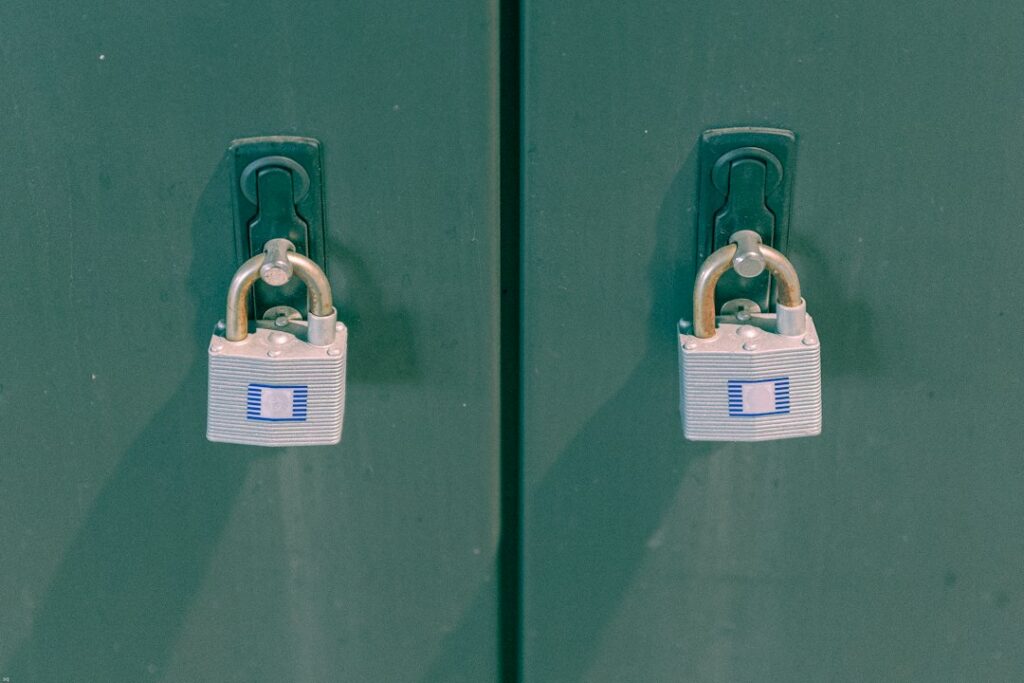
Most homes store their most dangerous products in the most reachable places. Dishwasher pods, drain openers and oven cleaner sit under the kitchen sink. Prescription bottles live in a bathroom vanity or a low drawer next to the bed. Paint thinner, antifreeze and weed killer end up on a garage shelf a toddler can climb to in seconds. A cabinet lock does not make any of those products less toxic, but it puts a mechanical step between a curious child and the contents. This guide covers how the main lock styles work, which cabinets deserve them first, how locks fit into a wider childproofing plan, what tends to go wrong with installation, and what homeowners can expect to spend. It also explains what a home inspector does and does not evaluate, since child-safety hardware sits outside a standard inspection but often comes up during a walkthrough with new parents.
Part of our Structure & Exterior guide — start there for the full picture →
What a Cabinet Lock Does and What It Cannot Do
A child-safety cabinet lock is any device that keeps a door or drawer from opening with the simple pull a young child can manage, while still letting an adult open it with a specific action. That action might be pressing a hidden tab, holding a magnetic key against the outside of the door, sliding a strap release or entering a code. The idea is to require a combination of strength, sequence or knowledge that toddlers usually lack.
The U.S. Consumer Product Safety Commission (CPSC) lists safety latches and locks for cabinets and drawers among the devices that can help prevent poisonings and other injuries, noting they can keep children away from medicines, laundry detergent, household cleaners, matches, lighters, knives and other sharp objects. The same CPSC guidance adds an important caveat: no device is completely childproof, and determined toddlers have been known to overcome or disable them. Locks also only work when they are properly installed and reengaged after every use.
That last point is where most real-world failures happen. A lock that an adult leaves disengaged because it is annoying provides no protection at all. The best cabinet lock for a given household is usually the one the adults will actually use every time, not the one with the most impressive packaging.
Locks complement storage habits, not replace them
CPSC poison-prevention guidance recommends storing medications and household chemicals in a locked cabinet or box out of a child’s reach, keeping them in their original child-resistant containers and properly discarding unused medicines. Child-resistant caps slow children down; they are not designed to stop every child. CPSC says plainly that products in child-resistant packaging should still be locked away. A lock is one layer, and keeping hazardous products up high, in original containers and in fewer locations is another.
Which Cabinets and Drawers to Lock First
Not every cabinet needs a lock. Locking every door in the kitchen often leads to frustrated adults who start leaving latches open. A more effective approach is to map where hazardous items actually live, consolidate them where possible, and then lock those specific spaces.
High-priority locations
- Under the kitchen sink. Dishwasher detergent, drain cleaners, oven cleaners, disinfectants and dish soap often live here, at exactly the height of a crawling or newly walking child.
- Bathroom vanities. Medications, mouthwash, cosmetics, nail polish remover, razors and toilet bowl cleaners are common under-sink items.
- Laundry areas. CPSC poison-prevention guidance singles out laundry packets, recommending they be kept in their original containers and out of a child’s sight and reach.
- Nightstand and dresser drawers. Many adults keep prescription bottles, vitamins or supplements near the bed. These are easy for children to reach and often not stored in child-resistant containers.
- Knife and utensil drawers. Sharp tools are a cut hazard rather than a poison hazard, but the CPSC lists them among the items locks can help secure.
- Garage and basement cabinets. Pesticides, automotive fluids, pool chemicals, paint products and solvents are frequently stored in garages on open shelving.
Medications deserve special attention
Medicine is one of the categories where a lock earns its cost quickly. The CDC’s medication safety guidance advises adults to always check that a medicine bottle’s safety cap is locked, to put medicines back in their safe storage location after each use, and to keep medicines in a place young children cannot reach or see. A dedicated lockable medicine box or a locked cabinet that only holds medications makes that routine easier to follow, because there is one place to put everything back.
Garage chemicals and pesticides
The EPA’s guidance on storing pesticides safely recommends keeping them out of reach of children and pets, ideally in a locked cabinet in a well-ventilated utility area or garden shed, and never in cabinets with or near food, animal feed or medical supplies. The EPA also warns against transferring pesticides to soft drink bottles or other containers that children could mistake for something to eat or drink. A locking metal or plastic storage cabinet in a garage serves the same purpose for antifreeze, windshield washer fluid, fuel additives and pool chemicals. Flammable liquids belong away from ignition sources such as furnaces, water heaters and lawn equipment, which in many Front Range garages share the same wall as the storage shelves.
Cabinet Lock Types Compared
Most products fall into a handful of designs. Each has trade-offs in security, convenience, installation effort and how well it works with different cabinet styles.
Magnetic locks
Magnetic locks mount entirely inside the cabinet. A latch attaches to the inside of the door and a catch to the cabinet frame. The latch stays engaged until an adult holds a magnetic key against the outside of the door at the right spot, which pulls the internal latch back. From the outside, the cabinet looks untouched.
- Strengths: Invisible from outside, difficult for young children to defeat, and they do not interfere with cabinet appearance or hardware.
- Weaknesses: The key is easy to misplace, and a lost key can leave a cabinet stuck closed. Installation must be precise so the latch aligns with the catch. Thick doors, metal doors and some cabinet constructions can weaken the magnetic pull. Most use adhesive mounting, screws or both.
Households using magnetic locks often store a spare key in a fixed, high location so it never ends up in a junk drawer, and keep the primary key on a hook out of reach.
Spring latch (push-down) locks
The classic inside-mount spring latch is a flexible plastic arm screwed to the inside of the door with a hook that catches on the cabinet frame. The door opens an inch or two, then stops until an adult reaches in and presses the latch down to release it.
- Strengths: Inexpensive, invisible from outside, and no key to lose.
- Weaknesses: The partial opening can pinch small fingers. Older children may learn to reach in and press the release. Screwing into cabinet doors is required for most models, and the latch can be awkward for adults with limited hand strength.
Adhesive strap locks
Strap locks use a flexible strap anchored with adhesive pads on two surfaces, such as a cabinet door and the adjacent frame, a refrigerator door and its side, or a drawer front and the countertop edge. A button or squeeze release frees the strap.
- Strengths: No drilling, quick to install, useful for appliances and for renters who cannot add screws.
- Weaknesses: Visible and somewhat unsightly. Adhesive can fail with heat, humidity, grease or repeated tugging, and older children often learn the release mechanism. Adhesive removal can damage some finishes.
Keyed, combination and box-style locks
For medications and the most toxic chemicals, a keyed or combination lockbox inside a cabinet adds a stronger layer. Some homeowners also add a keyed cam lock to a cabinet door, which requires drilling through the face. These options are more secure against older children and teens, which matters for prescription medications that can be misused.
Installation Tips and Common Problems
A well-chosen cabinet lock can still fail if it is installed poorly. Most problems fall into a few patterns.
Check the cabinet construction first
Frameless (European-style) cabinets lack the face frame that many spring latches and magnetic catches are designed to grab. Some lock kits include adapters for frameless cabinets, while others simply will not work. Thin doors made of particleboard or thermofoil can crack or delaminate when screws are driven too close to an edge. If the hinges are loose or the doors sag, a lock may not align reliably; our guide to cabinet hinges covers adjustment and replacement before adding child-safety hardware.
Clean and cure adhesive mounts
Adhesive pads hold best on clean, dry, smooth surfaces. Kitchen cabinets often carry a thin film of cooking grease that defeats adhesive. Wiping with rubbing alcohol, letting the surface dry and allowing the adhesive to cure for the time the manufacturer recommends before testing usually improves results. Bathrooms with high humidity and cabinets near a range or dishwasher vent are tougher environments for adhesive.
Test from a child’s perspective
After installation, tug on each door and drawer with the kind of short, jerky pulls a toddler uses. Watch for flex in the door that opens a gap wide enough for a small hand. CPSC guidance suggests looking for latches and locks that adults can easily install and use but that are sturdy enough to withstand pulls and tugs from children.
Plan for adult access
Locks that frustrate adults get bypassed. Consider who uses each cabinet daily, including older adults or anyone with arthritis or limited dexterity, and choose a release mechanism they can manage.
Cabinet Locks as Part of a Wider Childproofing Plan
Poisoning is one of several hazards CPSC addresses in its childproofing guidance. A plan that focuses only on cabinets can miss threats that cause serious injuries in the same rooms.
Tip-overs
CPSC warns that furniture, televisions and ranges can tip over and crush young children who climb onto, fall against or pull themselves up on them. The agency recommends anchoring these items to the floor or wall, and installing freestanding ranges with anti-tip brackets. A child who cannot open a locked lower cabinet may try climbing a dresser to reach a high shelf instead. Our guide to furniture anchors covers straps, brackets and how to attach them to studs.
Stairs and gates
CPSC recommends safety gates to help prevent falls down stairs and keep children out of rooms with possible dangers, and notes that only gates that screw to the wall should be used at the top of stairs. Pressure-mounted gates have their place at doorways, but not at the top of a stairway. See our guide to choosing a baby gate for stairs for mounting details.
Windows
Window screens are not designed to keep children from falling out. CPSC suggests window guards and safety netting, and limiting window openings to four inches or less, while making sure at least one window in each room can still be used for escape in a fire. Our window guards guide explains how emergency-release models work.
Electrical hazards and cords
Outlet covers and tamper-resistant receptacles reduce shock risk, and cordless window coverings remove a strangulation hazard. Power strips and extension cords running behind furniture are another spot children explore; our guides to power strips and extension cords cover safe placement.
What If a Child Gets Into a Cabinet Anyway
Even with good locks, exposures happen. CPSC childproofing guidance says that if a child may have swallowed a poisonous substance, caregivers should contact the poison control hotline at (800) 222-1222. Saving that number in every adult’s phone and posting it inside a cabinet door the adults use often means nobody has to search for it in an emergency. If a child is unconscious, having trouble breathing or having a seizure, call 911 immediately.
Cabinet Lock Costs
Costs vary by style, brand, number of cabinets and whether installation is do-it-yourself or hired out. The ranges below are general 2026 estimates and can differ by retailer and region.
- Spring latch locks: Often sold in multi-packs that work out to a few dollars per cabinet.
- Adhesive strap locks: Usually a few dollars to around ten dollars each, with multi-packs reducing the per-unit price.
- Magnetic lock kits: Commonly in the range of roughly $20 to $50 for a kit covering several cabinets, including one or two keys. Extra keys are often sold separately.
- Lockable medication boxes: Commonly around $15 to $50 depending on size and whether they use a key or combination.
- Locking garage storage cabinets: Can range from under $100 for a small plastic unit to several hundred dollars for a larger steel cabinet.
Professional childproofing services exist in many metro areas, including along the Front Range. They typically charge for a consultation plus installation labor and products, and total costs can run from a few hundred dollars for a targeted set of upgrades to considerably more for a whole-house plan. Getting a written quote that lists each device, its location and the labor charge makes it easier to compare providers.
What Home Inspectors Do and Do Not Check
A standard home inspection evaluates the condition of a home’s systems and components. Child-safety devices such as cabinet locks, outlet covers and gates are generally considered personal property or occupant choices and fall outside most inspection standards of practice. An inspector will typically not test cabinet locks or recommend specific childproofing products.
That said, an inspection often turns up conditions that overlap with child safety. Inspectors commonly note missing anti-tip brackets on freestanding ranges, loose or missing stair handrails, wide baluster gaps, windows that open low to the floor on upper levels, non-tamper-resistant receptacles in older homes, water heater temperature concerns and garage door auto-reverse problems. New parents who flag childproofing as a priority can ask their inspector to point out these conditions during the walkthrough. Our structure and exterior inspection guides cover many of these items, and the main guide to hiring a home inspector explains how to choose an inspector and what a report covers.
Choosing the Right Approach for Your Home
For most households with toddlers, a practical mix looks something like this: magnetic locks on the under-sink kitchen and bathroom cabinets where the most toxic products live, spring latches or strap locks on secondary cabinets and drawers with sharp tools, a keyed or combination box for medications, and a locking cabinet in the garage for chemicals. Pair those with anchored furniture, properly mounted gates and window guards where needed.
Then reduce the load on the locks. Discard products that are expired or no longer used, consolidate chemicals into fewer locations, keep everything in its original container, and put dangerous products back immediately after each use. Revisit the plan every few months as children’s reach and problem-solving skills grow.
References
- Childproofing Your Home: Several Safety Devices to Help Protect Your Children from Home Hazards — U.S. Consumer Product Safety Commission
- Poison Prevention — U.S. Consumer Product Safety Commission
- Medication Safety and Your Health — Centers for Disease Control and Prevention
- Storing Pesticides Safely — U.S. Environmental Protection Agency
Frequently asked questions
What is the most secure type of cabinet lock for toddlers?
Magnetic locks that mount inside the cabinet and open only with a magnetic key are among the harder styles for young children to defeat. Keyed or combination lockboxes offer more security for medications. No device is completely childproof, so pair locks with high storage.
Are child-resistant caps enough to keep medicines safe?
No. Child-resistant packaging slows children down but is not childproof. CPSC advises keeping medicines in their original child-resistant containers and storing them in a locked cabinet or box out of a child's reach.
Do adhesive cabinet locks work in kitchens?
They can, but grease, heat and humidity weaken adhesive. Clean the surface with rubbing alcohol, let it dry and allow the adhesive to cure before use. Screw-mounted latches are more durable where the cabinet construction allows them.
Does a home inspector check cabinet locks or childproofing?
Generally no. Child-safety devices fall outside most inspection standards. Inspectors may still note related conditions such as missing range anti-tip brackets, handrail and baluster issues or low upper-floor windows.
How much do cabinet locks cost?
Spring latch and strap locks often cost a few dollars each in multi-packs, magnetic kits commonly run roughly $20 to $50, and lockable medication boxes around $15 to $50. These are general 2026 estimates that vary by retailer.
Moving into a new home with little ones on the way? Reach out to us to connect with a Front Range inspector who can point out stair, window and range hazards during the walkthrough.