1978 Lead Paint: The Ban Year and What It Means
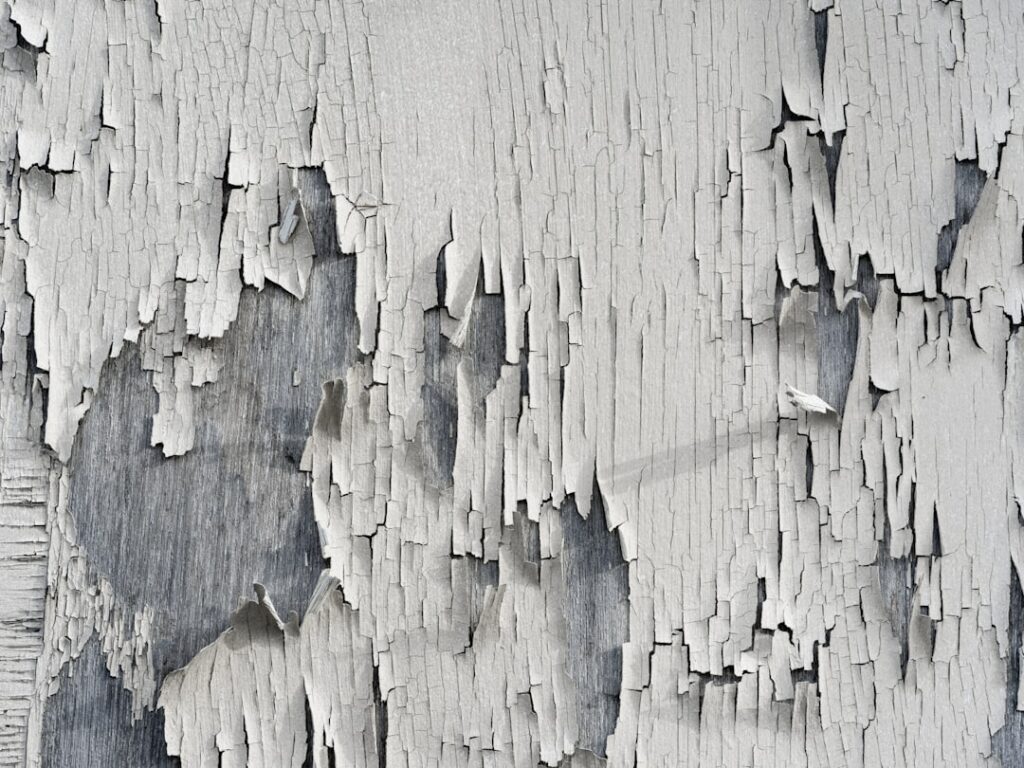
The year 1978 is the central date in U.S. residential lead-paint regulation. On August 31, 1977, the Consumer Product Safety Commission published its final rule under 16 CFR Part 1303 banning lead-based paint for residential use, with the ban taking effect February 27, 1978. Every conversation about lead paint in American housing splits along that date: homes built before 1978 carry a high probability of containing lead-based paint somewhere in the structure, and homes built after 1978 generally do not. This guide summarizes EPA, HUD, and CDC guidance current as of 2026 — consult a certified lead inspector for property-specific testing and your physician for blood-lead screening for children.
Is this mold, asbestos, or water damage? Get a free instant screen
Upload a clear photo of the suspect area. You'll get an instant AI screening opinion and what to do next. This is screening guidance, not a professional determination.
Screening guidance only. AI can be wrong. Confirm asbestos, mold type, or lead with lab testing or a licensed professional before acting.
What 1978 lead paint actually refers to
The phrase “1978 lead paint” is shorthand for the cutoff date between regulated and unregulated U.S. residential paint. The CPSC’s final rule at 16 CFR 1303 banned residential paint containing more than 0.06 percent lead by weight in the dry film. A 2008 revision tightened the threshold to 0.009 percent lead by weight, but the foundational 1978 cutoff remains the practical dividing line for housing-stock risk assessment.
The rule covered paint and other surface coatings applied to consumer products, toys, furniture, and residential buildings. Industrial coatings, military applications, automotive paint, and certain specialty applications remained exempt — and lead-bearing pigments continue to appear in some non-residential industrial paint formulations today. For residential housing, however, 1978 is the date that separates the high-risk pre-ban inventory from the post-ban housing stock. The asbestos and lead pre-1978 housing pillar resource walks through the broader regulatory context.
Pre-1978 housing prevalence in the U.S.
EPA estimates that approximately 38 million U.S. homes contain lead-based paint somewhere in the structure — most of them built before 1978. CDC and HUD data refine the picture by age cohort: homes built before 1940 have a roughly 87 percent probability of containing lead-based paint; homes built between 1940 and 1960 carry about a 69 percent probability; homes built between 1960 and 1978 carry about a 24 percent probability. Post-1978 homes are presumed lead-free unless specific evidence suggests otherwise.
The distribution matters geographically. Northeastern and Midwestern metropolitan areas have higher concentrations of pre-1940 housing and therefore higher concentrations of lead-paint risk. Western states including Colorado have proportionally newer housing stock and therefore lower aggregate risk, though significant pre-1978 inventory still exists in Denver’s older neighborhoods (Capitol Hill, City Park, Park Hill, Washington Park) and across Front Range historic districts.
Title X disclosure for pre-1978 housing sale and rental
The Residential Lead-Based Paint Hazard Reduction Act of 1992 — Title X — imposed federal disclosure obligations on every sale or rental of pre-1978 residential property. Under 40 CFR 745 Subpart F and 24 CFR 35, sellers must provide buyers with the EPA pamphlet “Protect Your Family From Lead in Your Home” (EPA-746-K-99-001), disclose known lead-based paint hazards, provide available records and reports, include the federal Lead-Based Paint Disclosure form in the contract, and offer a 10-day opportunity for the buyer to conduct lead testing.
Rental disclosure follows a similar framework: landlords must distribute the federal pamphlet, disclose known hazards, provide available records, and execute the federal disclosure form at every new lease. The disclosure obligation reattaches at each new tenant rather than only at first occupancy. Records of disclosure compliance must be retained for three years under federal record-keeping requirements. The when-did-the-US-ban-lead-paint guide covers the historical context that drove the disclosure framework.
What disclosure does and does not require
Title X disclosure does not require the seller or landlord to test for lead-based paint before the transaction. The obligation is to disclose what is known and to provide the buyer or tenant with the opportunity to conduct their own testing. If the seller has no knowledge of lead-based paint conditions in the property — which is common — the disclosure form simply documents that lack of knowledge, along with confirmation that the pamphlet was distributed and the 10-day testing opportunity was offered.
HUD Lead Safe Housing Rule for federally assisted housing
Pre-1978 housing receiving federal financial assistance — Section 8 voucher units, HUD-insured purchases, public housing, Community Development Block Grant-funded rehab — carries additional obligations under HUD’s Lead Safe Housing Rule at 24 CFR Part 35. The rule requires lead-based paint inspections or risk assessments before federally assisted purchase or significant rehabilitation, lead-safe work practices during any renovation, and clearance verification after lead-related work.
The rule applies disproportionately to lower-cost housing because federal assistance programs concentrate in lower-income housing markets. The same older urban housing stock that carries the highest lead-paint risk is therefore subject to the most rigorous federal lead-safety framework. HUD’s Office of Lead Hazard Control and Healthy Homes administers compliance enforcement and grants for hazard remediation.
Encapsulation versus abatement decision tree
Homeowners who confirm lead-based paint in a pre-1978 property face a remediation choice. Full abatement — physical removal of lead-painted surfaces, replacement of components like windows and doors, or chemical stripping of paint layers — is the most thorough approach but also the most expensive and disruptive. Costs range from $8,000 to $25,000 for whole-house abatement of significant lead-paint quantities.
Encapsulation — applying an EPA-recognized encapsulant coating that bonds with and seals the existing lead-painted surface — is significantly cheaper and less disruptive. Properly applied encapsulants carry 15-to-20-year service warranties and effectively contain lead fibers during the warranty period. The trade-off is that encapsulation does not remove the underlying hazard; future renovation work that disturbs the encapsulated surface re-introduces the lead-paint hazard.
Interim controls — addressing only the actively deteriorating lead-paint surfaces (chipping window sashes, peeling baseboards, friction-impact surfaces) — represent a middle path. Interim controls cost less than full abatement, address the most immediate health risk to child occupants, and preserve the option for future fuller remediation. The pre-1978 housing risk-map guide covers the decision factors in more detail.
EPA Renovation, Repair, and Painting Rule
Beyond the sale and rental disclosure framework, the EPA Renovation, Repair, and Painting Rule at 40 CFR 745 Subpart E imposes work-practice requirements on contractors performing renovation in pre-1978 housing or child-occupied facilities. Certified renovators must follow lead-safe work practices: contain the work area, minimize dust, clean thoroughly, and verify cleanup. The rule applies to any renovation that disturbs more than six square feet of interior painted surface or 20 square feet of exterior painted surface.
Homeowners hiring contractors for pre-1978 renovation should verify the contractor’s EPA Lead-Safe certification before signing a project contract. Contractors performing covered renovation work without certification can face civil penalties, and the renovation work itself may create lead hazards in occupied housing if work-practice requirements are not followed. The Renovate Right pamphlet (EPA-740-K-10-001) is the renovator-distributed counterpart to the consumer pamphlet.
Why pediatric blood-lead screening matters in pre-1978 housing
The medical research that drove the 1978 ban — and the subsequent regulatory tightening — focused on pediatric neurotoxicity. Lead exposure in children under six causes documented cognitive and behavioral impacts at blood-lead concentrations once considered acceptable. CDC has progressively lowered the blood-lead reference value, now set at 3.5 micrograms per deciliter as the threshold for medical intervention.
Children in pre-1978 housing should receive blood-lead screening at well-child visits, particularly at ages 12 months and 24 months. Colorado Medicaid (Health First Colorado) covers lead screening for enrolled children, and many private pediatric practices include lead screening in standard well-child workflows. A child with elevated blood-lead requires medical management and an environmental investigation to identify the lead source — which in pre-1978 housing is usually paint dust or paint chips from deteriorating surfaces.
How testing determines whether 1978-era paint is present
Two testing approaches identify lead-based paint in a specific property. The first is surface testing using X-ray fluorescence (XRF) analyzers — handheld instruments that measure lead content in painted surfaces non-destructively. XRF analysis is fast, comprehensive, and provides immediate results, making it the standard tool for whole-house lead-paint inspections. A certified XRF inspector typically charges $400 to $900 for a full residential survey covering all painted surfaces.
The second approach is paint-chip sampling with laboratory analysis. Small paint samples are collected from representative surfaces and sent to an accredited laboratory for atomic-absorption spectroscopy or inductively coupled plasma analysis. Paint-chip sampling is destructive (it creates small holes in the painted surface) and slower than XRF, but it provides definitive quantitative results in cases where XRF readings are borderline or where evidentiary documentation is needed for regulatory or legal purposes. The EPA-certified lead-paint inspector credentials guide covers the inspector qualification framework.
Dust-wipe testing for hazard quantification
Identifying lead-based paint in a property is only one piece of the assessment. The more meaningful health-risk question is whether lead-paint hazards — dust contamination, paint deterioration, soil contamination — are creating exposure pathways for occupants. Dust-wipe testing addresses this question directly.
The testing protocol collects standardized wipe samples from floor surfaces, windowsills, and window troughs in areas where children spend time. Samples are sent to an accredited laboratory for lead-loading analysis (micrograms of lead per square foot of wiped surface). EPA’s hazard threshold for floor surfaces is 10 micrograms per square foot; windowsills are 100 micrograms per square foot; window troughs are 400 micrograms per square foot. Results exceeding these thresholds indicate active lead-paint hazards regardless of whether the paint itself remains intact in the property.
The Renovation, Repair, and Painting Rule in practice
The EPA RRP Rule at 40 CFR 745 Subpart E imposes specific work-practice requirements on contractors performing renovation work in pre-1978 housing or child-occupied facilities. Certified renovators must complete EPA-approved RRP training, maintain firm-level EPA certification, follow lead-safe work practices on covered projects, distribute the Renovate Right pamphlet (EPA-740-K-10-001) to property owners and occupants, and document compliance for each covered project.
Lead-safe work practices include containing the work area to prevent dust escape, prohibiting unsafe practices such as open-flame paint removal and unprotected power sanding, cleaning the work area thoroughly using HEPA-vacuum equipment and wet-cleaning methods, and verifying cleanup through standardized cleaning-verification protocols. The rule applies to any renovation that disturbs more than six square feet of interior painted surface per room or 20 square feet of exterior painted surface. Most kitchen and bathroom remodels in pre-1978 housing trigger RRP requirements automatically given their typical scope.
Common 1978-related misconceptions worth correcting
Several misconceptions circulate about the 1978 cutoff. The first is that 1978 marks the year all lead paint was removed from American homes. It does not — the 1978 rule prevented future application of lead-based paint but did not require removal of paint already in place. Lead-based paint from the pre-1978 era remains in tens of millions of U.S. homes today, more than 45 years after the ban.
The second misconception is that pre-1978 paint somewhere in the house automatically creates a hazard. Intact lead-based paint in good condition does not generally create active exposure pathways. The hazard arises when paint deteriorates — chipping, peeling, flaking — or when renovation work disturbs intact surfaces without lead-safe practices. Many pre-1978 homes contain lead-based paint that is not actively creating hazards for current occupants but that requires careful handling during any future renovation.
The third misconception is that the 1978 ban covered all lead applications. It did not — industrial coatings, military and aerospace applications, and certain specialty applications remain exempt today. The ban was specifically focused on residential and consumer-product applications where children’s exposure pathways were most concerning.
References
- EPA lead-based paint regulations and the RRP Rule — U.S. Environmental Protection Agency
- HUD Office of Lead Hazard Control and Healthy Homes — U.S. Department of Housing and Urban Development
- CDC childhood lead exposure prevention resources — Centers for Disease Control and Prevention
If you are on the Colorado Front Range and considering a pre-1978 home purchase, reach out through our contact page for a referral to a vetted lead-paint inspector before closing.
Lead paint test kits
Instant swab kits flag lead on painted surfaces in minutes — useful before a renovation in any pre-1978 home.
| Product | Why | Buy |
|---|---|---|
 3M LeadCheck Swabs 3M LeadCheck Swabs | EPA-recognized instant swabs. | Amazon — $199.00 |
 Lead Test Kit (lab-based) Lead Test Kit (lab-based) | Mail-in for a documented result. | Amazon — $150.00 |