Lead Paint in Houses Built Before 1978: The Risk Map
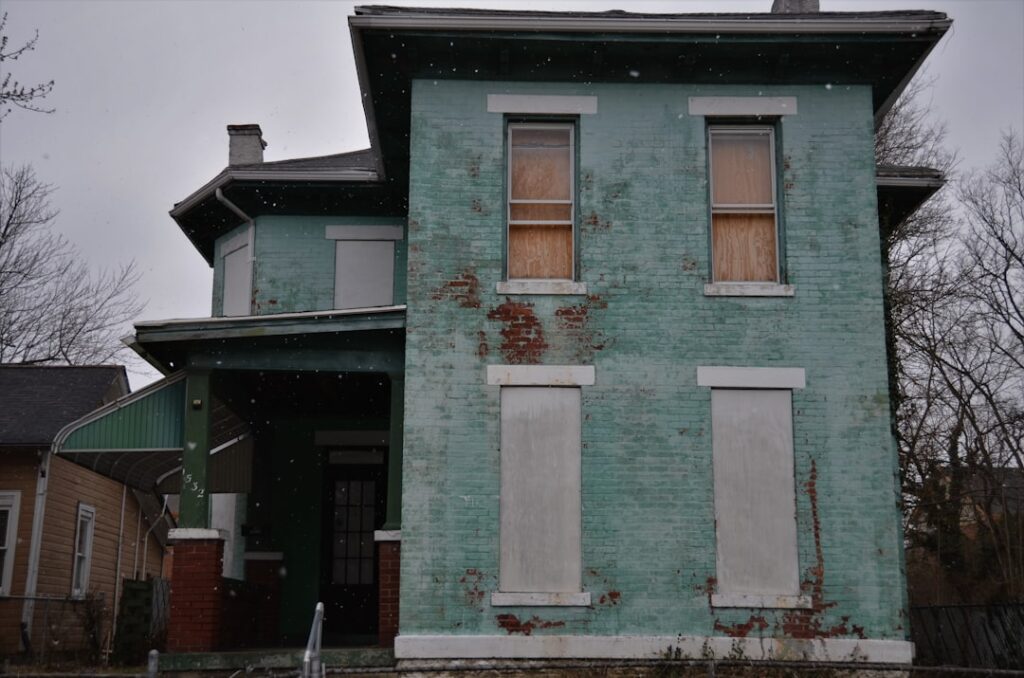
Lead paint in houses built before 1978 is the single largest residential environmental exposure in the United States. EPA estimates that roughly 38 million U.S. homes contain lead-based paint somewhere in the structure — most of it intact and stable, some of it deteriorating into the kind of dust and chips that drives childhood blood-lead poisoning. This guide summarizes EPA, CDC, and HUD guidance current as of 2026 and outlines the risk map for Front Range homeowners and tenants. It is not medical advice — consult your physician for blood-lead testing and a certified lead inspector for property assessment.
Is this mold, asbestos, or water damage? Get a free instant screen
Upload a clear photo of the suspect area. You'll get an instant AI screening opinion and what to do next. This is screening guidance, not a professional determination.
Screening guidance only. AI can be wrong. Confirm asbestos, mold type, or lead with lab testing or a licensed professional before acting.
Why 1978 is the cutoff year
Federal regulation banned the sale of residential lead-based paint in 1978 under the Lead-Based Paint Poisoning Prevention Act of 1971 and subsequent CPSC and EPA rules. Houses built or last painted before 1978 are presumed to contain lead-based paint somewhere. Houses built in 1978 or later are presumed not to — though the cutoff is not absolute, because pre-1978 paint inventory continued to be used by some contractors after the ban.
The age-of-housing variable is the strongest single predictor of lead-paint presence. Homes built before 1950 have a substantially higher probability than homes built between 1950 and 1978, because pre-war paint formulations contained much higher concentrations of lead (sometimes 50 percent or more by weight in white pigments).
Risk varies by paint condition, not just presence
Lead-based paint that is intact, well-maintained, and not subject to friction or impact is generally low-risk. Lead-based paint that is chipping, peeling, chalking, or deteriorating into dust is high-risk. The same chemical compound — lead carbonate or lead chromate in the original pigment — produces dramatically different exposure outcomes depending on whether the paint is sealed under newer layers or actively shedding particles into the home.
Friction and impact surfaces are the highest priority. Window sashes that slide against frames, door edges that contact strike plates, baseboards subject to vacuum impact, and floors with traffic wear are the surfaces where intact-looking paint can release lead dust during normal use. The companion guide on peeling lead paint and the deterioration risk pathway covers the higher-risk side of the condition spectrum in more detail.
Title X disclosure requirements when selling or renting
The Residential Lead-Based Paint Hazard Reduction Act of 1992 — known as Title X — requires lead-paint disclosure on every pre-1978 residential property sale or lease. The disclosure has three components: a federal pamphlet (“Protect Your Family From Lead in Your Home”), a signed disclosure form attached to the contract, and disclosure of any known lead-paint hazards or test results.
Sellers and landlords are required to give buyers and tenants 10 days to conduct a lead-paint risk assessment before signing (the buyer can waive this period). Penalties for non-compliance can exceed $20,000 per violation. EPA’s Title X disclosure page covers the specifics of the rule.
What the disclosure does and does not promise
Title X disclosure tells the buyer or tenant what the seller or landlord knows. It does not require the seller or landlord to test for lead paint, and it does not require them to remediate any hazards they disclose. The legal mechanism is informed consent: the buyer or tenant has the information needed to decide whether to test independently and how to weigh the property against alternatives.
Encapsulation versus abatement
Two main remediation approaches exist for lead-based paint hazards. Encapsulation seals the lead-painted surface under a coating or barrier so the lead is no longer accessible to occupants. Abatement physically removes the lead-painted material from the home.
Encapsulation
Encapsulation uses a specialized coating product designed to permanently seal the lead paint. Surface preparation includes cleaning, light scuff sanding, and application of bonding primer. Encapsulant coatings cost $2 to $5 per square foot installed. Encapsulation is suitable for surfaces in good condition that are not subject to friction or impact. It is unsuitable for window sashes, door edges, floors with traffic wear, or any surface where mechanical action will eventually compromise the coating.
Abatement
Abatement physically removes the lead-painted material. Options include wet-scraping and sanding with HEPA containment, chemical stripping with off-site disposal, and component replacement (the entire window or door is removed and replaced with a new lead-free component). Abatement costs $8 to $25 per square foot depending on the method and the component involved. Component replacement of original wood windows can run $1,200 to $2,500 per window installed.
Abatement is the permanent solution. Encapsulation is a long-term but not permanent solution. The right choice depends on the surface, the budget, and the long-term plan for the home.
XRF testing: how lead paint is identified
X-ray fluorescence (XRF) is the standard non-destructive method for identifying lead in painted surfaces. A handheld XRF analyzer is placed against the painted surface and emits low-energy X-rays. Lead atoms in the paint fluoresce a characteristic X-ray signal that the instrument detects and quantifies. Results are reported in milligrams of lead per square centimeter (mg/cm²). HUD’s regulatory threshold for lead-based paint is 1.0 mg/cm² or higher.
XRF testing is performed by a state-certified lead inspector or risk assessor. Inspection of a single-family Front Range home typically takes 2 to 4 hours and costs $300 to $700 depending on home size and number of surfaces tested. Paint chip sampling sent to an EPA-accredited laboratory is an alternative for surfaces XRF cannot reach reliably — running $40 to $80 per sample with 3- to 7-day turnaround.
Pediatric blood-lead testing rationale
The CDC’s childhood lead poisoning prevention program recommends blood-lead testing for children at ages 1 and 2 in households with lead-paint risk factors — including living in pre-1978 housing. CDC revised its blood lead reference value (BLRV) to 3.5 micrograms per deciliter in October 2021, down from the previous 5.0 µg/dL. The reference value represents the 97.5th percentile of children’s blood lead levels and signals the threshold for further evaluation and intervention.
Blood lead testing is performed by venous draw at a pediatrician’s office or via finger-stick capillary screening. Capillary screens that exceed the reference value require confirmatory venous testing. Most pediatric insurance plans cover blood-lead testing without out-of-pocket cost.
How lead exposure pathways differ
Children under six are the most-at-risk population because of the way they interact with the environment. Hand-to-mouth behavior, crawling and play on floors, and rapidly developing nervous systems make children disproportionately vulnerable to lead exposure pathways that adults rarely encounter.
Lead dust on floors, window sills, and toys is the primary exposure route for children. Lead paint chips ingested as candy-like crumbs are secondary. Lead in drinking water (from older service lines, lead solder, or brass fixtures with lead alloy) is a third pathway not addressed by paint regulations. Soil contamination near older painted exterior surfaces (from decades of paint flaking) is a fourth pathway.
Adults are not exempt from lead exposure, but the absorption rate is lower (roughly 10 percent for adults versus 40 to 50 percent for young children) and the health effects show up at higher exposure doses. Pregnant women are an exception because lead crosses the placenta and affects fetal development at much lower doses than affect a non-pregnant adult. Renovation workers, demolition contractors, and construction trades represent the largest adult occupational exposure group.
Pets are an underrecognized exposure pathway. Dogs and cats living in homes with deteriorating lead paint can ingest lead dust during grooming and from contaminated surfaces. Veterinarians occasionally diagnose lead toxicity in pets, particularly in older homes where the family has not yet identified the household lead source.
Disclosure documentation tenants and buyers should request
The federal disclosure form (EPA Form 747-K-12-001 or state equivalent) is the minimum documentation. Buyers and tenants of pre-1978 properties should also ask for any prior lead-paint test reports the seller or landlord has on file, any RRP-certified contractor reports for past renovation work, and any pediatric blood-lead screening results from prior occupants if disclosed. Sellers and landlords are not required to provide all of these, but the absence of any documentation is itself information about how lead-paint hazards have been managed at the property.
Front Range housing-stock context
Roughly 30 to 40 percent of Front Range housing was built before 1978. Older Denver neighborhoods — Capitol Hill, Wash Park, Park Hill, Highlands, Five Points — have housing stock dating to the early 1900s with much higher pre-1978 percentages. Boulder, Fort Collins, and Colorado Springs have similar concentrations of pre-1978 housing in their historic districts. Newer suburbs in Douglas, Elbert, and outer Adams counties skew much newer and have correspondingly lower lead-paint prevalence.
Buyers shopping older Front Range neighborhoods should treat lead-paint risk assessment as part of due diligence alongside the standard home inspection. The parent guide on asbestos and lead in pre-1978 housing covers the broader risk framework for older Front Range homes.
Renovation rules: RRP
EPA’s Renovation, Repair, and Painting (RRP) Rule requires contractors performing renovation work on pre-1978 housing to be certified, follow lead-safe work practices, and provide the EPA pamphlet to occupants before work begins. The rule applies to work disturbing more than 6 square feet of interior painted surface or 20 square feet of exterior painted surface, including most window replacement, siding work, and significant interior remodel projects.
Homeowners doing their own work on their own home are exempt from RRP certification requirements, but lead-safe practices are still strongly recommended. The CDC and EPA both publish step-by-step guides for DIY lead-safe renovation, covering plastic containment, wet methods, HEPA vacuum cleanup, and proper disposal.
RRP-certified contractors complete an 8-hour EPA-accredited training course and re-certify every five years. Verification is straightforward: ask for the contractor’s RRP certification number and check it on the EPA RRP Renovator Search. Contractors who cannot produce the number or whose number does not validate are not legally permitted to work on pre-1978 housing.
When to call a professional
Hire a state-certified lead risk assessor when buying or moving into a pre-1978 property, when planning renovation work on painted surfaces, when paint condition is visibly deteriorating, or when a child in the household has had an elevated blood-lead result. For broader context, the sibling guide on old lead paint and homeowner action steps covers the homeowner-action framework in more detail.
Risk assessment differs from inspection. A lead-paint inspection identifies where lead-based paint exists in the home. A risk assessment goes further: it identifies where lead-paint hazards exist — meaning where conditions create exposure pathways for occupants. The two services often overlap but address different decision needs. Buyers planning major renovation typically benefit from an inspection; families with young children moving into older housing typically benefit from a risk assessment.
References
- EPA Title X real-estate disclosure requirements — Environmental Protection Agency
- CDC childhood lead poisoning prevention program — Centers for Disease Control and Prevention
- HUD lead-paint hazard control program — Department of Housing and Urban Development
- NIEHS lead health effects research — National Institute of Environmental Health Sciences
Front Range homeowners concerned about lead paint in a pre-1978 property can reach out through our contact page for a connection to a state-certified lead inspector or risk assessor.
Lead paint test kits
Instant swab kits flag lead on painted surfaces in minutes — useful before a renovation in any pre-1978 home.
| Product | Why | Buy |
|---|---|---|
 3M LeadCheck Swabs 3M LeadCheck Swabs | EPA-recognized instant swabs. | Amazon — $199.00 |
 Lead Test Kit (lab-based) Lead Test Kit (lab-based) | Mail-in for a documented result. | Amazon — $150.00 |