Lead Paint Peeling: Priority Action for Pre-1978 Homes
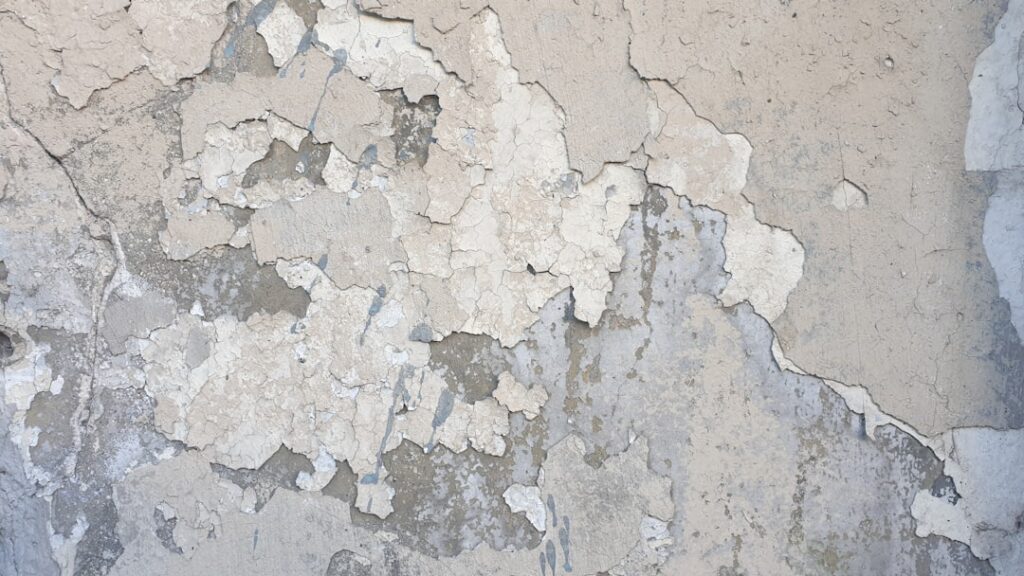
Lead paint peeling is the single highest-priority finding in a pre-1978 home. Intact lead-based paint that is well-maintained presents low exposure risk in most circumstances. Peeling, chipping, or chalking lead paint is the opposite — deteriorating paint is the dominant exposure pathway for childhood lead poisoning, accounting for the majority of pediatric blood-lead elevations in older U.S. housing. This guide summarizes EPA, CDC, and HUD guidance current as of 2026 on what to do when lead paint is peeling, why the deterioration creates a meaningful risk gap, landlord obligations under the federal Renovation, Repair, and Painting (RRP) rule, and the immediate-action protocol for homeowners and tenants. It is not medical advice — consult your physician for blood-lead concerns.
Is this mold, asbestos, or water damage? Get a free instant screen
Upload a clear photo of the suspect area. You'll get an instant AI screening opinion and what to do next. This is screening guidance, not a professional determination.
Screening guidance only. AI can be wrong. Confirm asbestos, mold type, or lead with lab testing or a licensed professional before acting.
Why peeling lead paint is so much more dangerous than intact
Peeling, chipping, and chalking lead paint releases lead-laden dust and chips into the immediate environment. CDC’s lead exposure prevention program attributes the majority of childhood lead exposure in pre-1978 housing to deteriorating paint dust. Dust settles on floors, sills, toys, and furniture. Children with normal hand-to-mouth behavior ingest the dust through routine contact. The exposure path does not require eating paint chips directly — though that pathway exists too, particularly with the sweet-tasting lead carbonate compounds in older formulations.
The chemistry is unchanged from intact paint. What changes is the bioavailability. Lead bonded inside an intact paint film is not absorbed unless the film is disturbed. Lead released as dust or chips is bioavailable through ingestion or inhalation pathways that operate continuously while the paint continues to deteriorate.
What counts as peeling, chipping, or chalking
EPA and HUD use specific terminology to distinguish paint conditions:
Peeling: paint film is releasing from the substrate in sheets or large flakes, often visible at edges, corners, or where moisture has affected adhesion. Chipping: paint film is fracturing into smaller pieces that fall away from the substrate. Chalking: paint film is breaking down at the surface into a powdery layer that transfers to fingers or cloth on contact. Cracking: paint film shows surface or substrate cracks that may or may not be releasing material yet.
All four conditions on a pre-1978 painted surface trigger the EPA RRP definition of a “lead-based paint hazard” requiring stabilization, repair, or removal. The HUD Lead Safe Housing Rule for federally assisted housing imposes similar requirements with stricter documentation and clearance standards.
Immediate action protocol for homeowners
If you discover peeling lead paint in a pre-1978 home, the immediate actions matter as much as the eventual remediation.
Stop disturbance
Do not sweep, vacuum (with anything other than a HEPA vacuum), sand, scrape, or otherwise disturb the area. Conventional sweeping and standard vacuums aerosolize lead dust and spread it. Cordless toys and pets that have been in the area should be wiped down with damp cloths.
Wet-clean the area
Wet wiping with disposable cloths and a TSP (trisodium phosphate) or lead-specific cleaning solution captures lead dust without aerosolizing it. Wet-mop hard floors. Wet-wipe window sills, trim, and any horizontal surfaces in the immediate area. Dispose of cleaning cloths in sealed plastic bags as household waste.
Isolate the area if possible
Until stabilization or repair is complete, restrict access to the affected area, particularly for children under six and pregnant women. Close doors to affected rooms. Lay a HEPA-vacuum-cleaned area rug or plastic over loose debris if relocation is not immediate.
Test if uncertainty exists
If you are not sure the paint is lead-based, sample testing or XRF analysis confirms whether the deterioration is lead-paint-specific. Costs run $300 to $700 for whole-home XRF or $40 to $80 per chip sample for laboratory analysis. The companion guide on lead-based paint testing near me covers testing options for Front Range homeowners.
Lead-safe RRP work practices
EPA’s Renovation, Repair, and Painting (RRP) Rule requires that any contractor performing renovation, repair, or painting work disturbing painted surfaces in pre-1978 housing be certified and follow lead-safe work practices. The rule applies to work disturbing more than 6 square feet of interior painted surface or 20 square feet of exterior painted surface — thresholds easily exceeded by routine repair work.
Containment
The work area is isolated with plastic sheeting on floors and walls. HVAC vents in the area are sealed. Doorways to other parts of the home are sealed with plastic to prevent dust migration. Outside containment uses plastic ground covers extending 10 feet from the structure.
Wet methods
Surfaces are misted before scraping or sanding to capture dust at the point of generation. Wet hand-scraping is preferred over dry power-sanding. HEPA-equipped power tools are used when power tools are necessary.
HEPA cleanup
HEPA vacuums (not standard shop vacs) collect debris. Wet wiping with TSP solution follows HEPA vacuuming. Final HEPA pass cleans the cleaned surfaces. Cleaning verification with a white test cloth confirms surfaces are visibly clean before plastic containment is removed.
Worker protection
RRP-certified workers wear N100 or P100 respirators, disposable coveralls, and gloves. Decontamination at the end of work prevents cross-contamination to other parts of the home or to the worker’s vehicle.
Encapsulation versus abatement for peeling paint
Encapsulation seals stabilized peeling paint under a coating designed to bond to the deteriorated surface. It is generally suitable when the underlying paint film is mostly intact and the peeling can be cleaned, primed, and re-sealed. Encapsulation runs $2 to $5 per square foot. It is unsuitable for paint that is widely failed, paint subject to friction or impact, or paint where the substrate is compromised by moisture.
Abatement physically removes the lead paint and substrate (if needed). For severely deteriorated surfaces — windows with rotted sills, doors with extensive paint failure, soffits with widespread paint loss — abatement and component replacement is often the better long-term answer. Costs run $8 to $25 per square foot or $1,200 to $2,500 per replacement window installed. The companion guide on old lead paint and homeowner action options walks through the decision in more detail.
Landlord obligations and tenant rights
Landlords of pre-1978 rental properties have specific legal obligations regarding peeling lead paint.
Federal Title X disclosure
At lease signing, the landlord must provide the EPA pamphlet “Protect Your Family From Lead in Your Home,” disclose any known lead-paint hazards, and have the tenant sign the federal lead-disclosure form. Failure to provide disclosure carries civil penalties exceeding $20,000 per violation.
RRP rule for landlord repairs
Landlords who hire contractors for repair work on pre-1978 rentals must use RRP-certified contractors. Landlords who do their own repair work on properties they own but do not occupy are not exempt from RRP — only owner-occupants doing work on their primary residence are exempt.
HUD Section 8 lead-hazard standards
For Section 8 voucher-assisted housing, HUD’s housing-quality standards require absence of deteriorated paint on any building component. Section 8 inspectors specifically check for peeling, chipping, and chalking paint. Failed inspection blocks lease execution until the hazard is remediated.
State-level enforcement
Colorado tenant protections layer onto federal requirements. The Colorado warranty of habitability includes responsibility for environmental conditions that affect tenant health, which can include lead-paint hazards. Tenants who report peeling paint to landlords have documentation rights and, in some cases, rent-withholding or repair-and-deduct remedies if the landlord does not respond. The sibling guide on tenant rights and the EPA lead pamphlet covers tenant-side protections in detail.
What pediatric blood-lead testing detects
If a child has been exposed to peeling lead paint, blood-lead testing identifies whether absorption has occurred and at what level. CDC’s blood lead reference value is 3.5 µg/dL (revised down from 5.0 in 2021). Levels above the reference value trigger further evaluation by the child’s pediatrician and the local health department. Levels above 10 µg/dL often trigger environmental investigation of the home.
Testing is performed by venous draw or finger-stick screen at the pediatrician’s office. Capillary screens that exceed the reference value require venous confirmation. The local public-health department offers environmental investigation services for elevated cases in most Front Range counties.
Front Range housing context
Roughly 30 to 40 percent of Front Range single-family housing was built before 1978. Older Denver, Boulder, and Colorado Springs neighborhoods have substantially higher pre-1978 concentrations. Peeling-paint findings in these neighborhoods should be treated as lead-paint hazards until proven otherwise — sampling first, action second.
For broader context, the parent guide on asbestos and lead in pre-1978 housing covers the combined risk framework for older Front Range homes.
Common deterioration patterns in older Front Range homes
Specific patterns repeat across older Front Range housing. Original wood window sashes painted multiple times over the decades develop friction-area paint failure where the sash slides against the frame. Exterior wood siding on south-facing walls experiences UV-driven chalking and paint loss. Wood porch and deck components with prolonged moisture exposure develop substrate rot under intact-looking surface paint.
Basements with chronic moisture issues develop paint failure on foundation walls, often hidden behind drywall finishing added in later decades. Exterior trim, eaves, and fascia accumulate weather-driven paint damage over time, particularly on north sides of homes where freeze-thaw cycles are more aggressive.
Each of these patterns has typical remediation paths. Window-sash work commonly involves component replacement rather than encapsulation, because the friction-area exposure recurs no matter how well the surface is stabilized. Exterior siding can be encapsulated if substrate is sound, abated if substrate is compromised. Basement-wall paint failure usually pairs with moisture-source correction work that the lead remediation cannot address on its own.
Documentation tenants should keep
If you discover peeling paint in a rental and notify the landlord, keep dated copies of every communication: the initial notification with photos, any landlord response, any contractor visit dates and what was done, any clearance results. The documentation matters if later disputes arise about timing, severity, or remediation adequacy. Keep a parallel record of any child blood-lead testing results during the period of exposure concern.
When to call a professional
Call a state-certified lead inspector or risk assessor when peeling paint is found in a pre-1978 home. Call an EPA-certified RRP contractor for any repair or stabilization work disturbing more than 6 square feet of interior or 20 square feet of exterior painted surface. Call your physician for any health concerns related to lead exposure, particularly for children under six.
Call the local public health department if a child has tested with an elevated blood-lead result and the home is suspected as the source. Many Front Range counties offer environmental investigation services for elevated blood-lead cases at no out-of-pocket cost to the family. The investigator identifies the lead source — paint, water, soil, imported pottery — and provides remediation guidance specific to the documented source.
References
- EPA Renovation, Repair, and Painting Rule — Environmental Protection Agency
- CDC lead poisoning prevention — Centers for Disease Control and Prevention
- HUD lead safe housing rule — Department of Housing and Urban Development
Front Range homeowners or tenants concerned about peeling lead paint can reach out through our contact page for a referral to a state-certified lead risk assessor.
Lead paint test kits
Instant swab kits flag lead on painted surfaces in minutes — useful before a renovation in any pre-1978 home.
| Product | Why | Buy |
|---|---|---|
 3M LeadCheck Swabs 3M LeadCheck Swabs | EPA-recognized instant swabs. | Amazon — $208.00 |
 Lead Test Kit (lab-based) Lead Test Kit (lab-based) | Mail-in for a documented result. | Amazon — $35.00 |