Black Mold With White Fuzz: A Homeowner Identification Guide
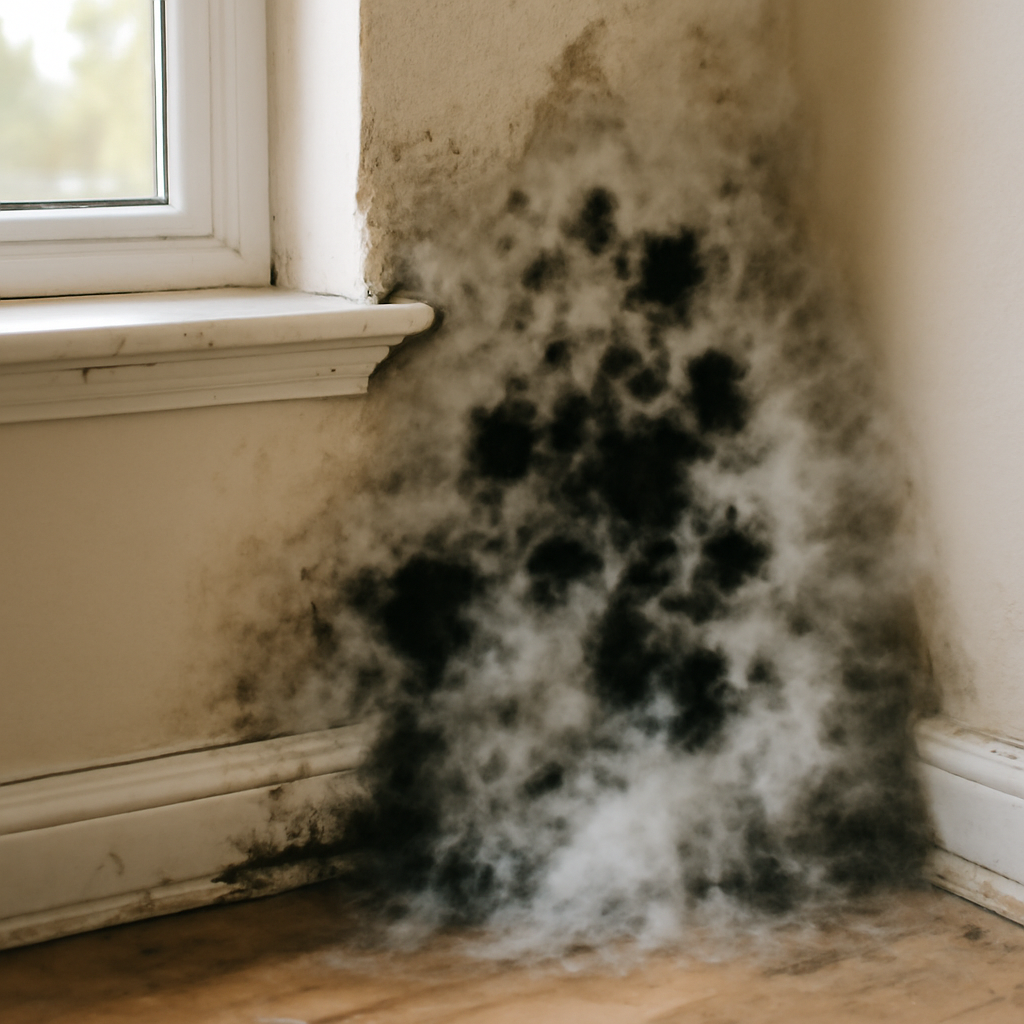
Spotting a dark stain that carries a soft white halo around its edges is one of the most common identification questions homeowners ask. The phrase black mold with white fuzz usually describes a mixed colony where two or more fungal species are growing on the same damp substrate, or a single species shifting through its life cycle. This article summarizes guidance from the EPA, the CDC, and the National Institute of Environmental Health Sciences on residential mold and is intended as general information for homeowners. It is not medical advice. If you are experiencing symptoms you believe may be related to mold exposure, consult a physician — diagnosis of mold-related illness requires medical evaluation.
Is this mold, asbestos, or water damage? Get a free instant screen
Upload a clear photo of the suspect area. You'll get an instant AI screening opinion and what to do next. This is screening guidance, not a professional determination.
Screening guidance only. AI can be wrong. Confirm asbestos, mold type, or lead with lab testing or a licensed professional before acting.
What black mold with white fuzz actually is
From a biology standpoint, the dark center of the patch is typically a melanized fungal colony — often a Stachybotrys, Cladosporium, or Aspergillus species, depending on the substrate and moisture level. The white fuzz at the edges is one of three things: the fresh mycelium of the same species before it has darkened, a secondary mold species (frequently Penicillium or a white Aspergillus) colonizing the same wet surface, or efflorescence — mineral salts pushed out of damp masonry that look like fuzz but are not biological.
The EPA does not recommend that homeowners try to identify mold to the genus level on sight. Color and texture vary with substrate, age, humidity, and lighting. A black patch with white fuzz on drywall behind a leaking sink looks different from the same colony on a concrete basement wall. What matters for the home is not the species — it is the underlying moisture problem and the surface area affected.
Why the fuzzy white halo appears
The fluffy fringe is usually the actively growing edge of a colony. Mold spreads radially. The center of the patch is older, denser, and often darker because melanin pigment has accumulated. The outer edge is newer growth where hyphae — the thread-like cells that make up a colony — are still spreading across the substrate before producing pigmented spores. Under a magnifier the fuzz resolves into a cottony mat of threads.
If the fuzz looks crystalline rather than soft, the deposit may be efflorescence. Press a fingertip lightly against the patch through a glove. Mold compresses. Efflorescence crumbles into a chalky powder. This is one of the few tests a homeowner can safely do without disturbing a suspected mold colony.
Is the combination more dangerous than ordinary mold?
From a home-exposure standpoint, the EPA position is consistent. The Agency states that all indoor mold colonies should be cleaned up regardless of species or color. The genus matters less than the size of the affected area and the underlying water intrusion. A small mixed patch in a bathroom corner does not require a different response than a uniformly dark patch of the same size.
The CDC echoes this position. Health risks associated with indoor mold exposure are linked to overall fungal burden and individual susceptibility — not specifically to whether a colony shows multiple colors. For homeowners deciding whether to act, the rule of thumb is square footage: the EPA suggests that mold patches under roughly ten square feet are usually within homeowner-DIY range, while larger areas warrant a professional remediation contractor.
Where mixed-color mold patches typically appear
Behind kitchen and bathroom plumbing
Slow leaks under sinks and behind toilets produce the cool, dark, sustained-moisture conditions that mixed colonies prefer. The fuzz is often Penicillium overlaying older Cladosporium. Drywall and the back side of vanity cabinets are common substrates.
Basements and crawl spaces
Concrete walls in below-grade rooms hold humidity, and unsealed sill plates draw water through capillary action. Mixed colonies on cinder block are extremely common in Front Range basements after spring snowmelt. The white fuzz here is sometimes efflorescence rather than secondary mold — the test described earlier helps separate the two.
Attic sheathing and HVAC closets
Roof leaks and condensation on cold OSB sheathing produce the streaky, mixed dark-and-light patches familiar to home inspectors. Attics complicate the picture because spores aerosolize quickly when disturbed. Homeowners should not attempt remediation in an attic without protective equipment and source control of the water entry.
How to identify whether it is biological or efflorescence
Three tests reduce ambiguity. First, the texture test described earlier — mold compresses, efflorescence crumbles. Second, the water test: a drop of water on efflorescence dissolves the deposit, while it bleads into a fungal mat without dissolving it. Third, persistence: efflorescence reappears in the same spot after wiping if the moisture continues, but the texture stays chalky. Mold returns and the texture stays fuzzy or slimy depending on humidity.
None of these tests replace a professional moisture survey. They simply help a homeowner decide whether to call a remediation contractor immediately or to first address a humidity problem. For a thorough overview of how patches develop visually, our reference on the early stages of black mold walks through the progression timeline from initial discoloration to mature colony.
When to clean it yourself and when to call a remediator
The EPA’s published threshold is straightforward. Patches under ten square feet on hard, non-porous surfaces can usually be cleaned by a homeowner using detergent, water, and personal protective equipment — gloves, an N-95 respirator, and eye protection. Porous materials such as drywall, ceiling tile, and carpet often need to be cut out and replaced because mold penetrates the fibers in ways that surface cleaning cannot reach.
Mixed-color patches with active fuzz suggest a colony that is still spreading. If the moisture source is unknown or the patch extends behind a wall, the right move is a professional inspection that includes a moisture survey and, where warranted, air or surface sampling. Our explainer on what to do if you have black mold covers the homeowner decision flow in more detail, and the mold inspection and testing hub outlines what a professional visit normally includes.
Documentation worth keeping
Even small DIY remediation efforts benefit from documentation. Date-stamped photographs of the affected area before and after cleanup, notes on the moisture source and how it was repaired, and receipts for any contractor work all become useful later. Homes with documented moisture history often surface that history during resale inspections. Having a written record of how each event was addressed reframes the conversation from “mystery water damage” to “documented and remediated incidents.”
For larger jobs, the documentation produced by a professional remediator under IICRC S520 provides the same value at higher resolution. The work order, scope of containment, materials removed, drying logs, and post-remediation verification results all belong in the homeowner’s permanent property file. Insurance claims and future resale negotiations frequently benefit from this paper trail.
Materials commonly associated with mixed-color patches
Three substrates produce the visual pattern more often than any others. Painted drywall is the leading host because the paper face and the paint each support different fungal preferences. Bathroom caulk and grout join the list because their porosity holds moisture longer than the surrounding tile. Concrete and cinder block in basements produce the appearance through a mix of biological growth and efflorescence — the third source we covered earlier.
Less commonly affected materials include sealed hardwood, vinyl flooring, and finished metal surfaces. When these substrates show mold, the colony usually depends on a film of organic dust on the surface rather than the material itself, and surface cleaning is often more effective.
Preventing return after cleanup
Mold needs water. Cleaning a visible patch without fixing the leak, condensation source, or humidity problem simply resets the clock. The EPA recommends keeping indoor relative humidity below sixty percent — and below fifty percent where practical — through ventilation and dehumidification. Cold-climate basements often need a dedicated dehumidifier sized to the cubic footage of the conditioned space.
Plumbing leaks should be repaired before any cosmetic cleanup. Bathroom exhaust fans should vent to the exterior, never into an attic. Crawl spaces in humid regions benefit from sealed vapor barriers and, in some climates, encapsulation with a dedicated dehumidifier. None of these measures sterilize a home — spores always exist in indoor air — but they remove the conditions a colony needs to take hold.
Seasonal patterns on the Front Range
Mixed-color mold colonies on the Front Range follow a predictable seasonal pattern. The largest concentration appears in late spring after snowmelt drives moisture into basement walls. A secondary peak follows the summer monsoon storms in July and August. Winter rarely produces fresh colonies indoors because closed-house conditions in heated buildings actually drop indoor humidity well below the threshold mold needs, but the colonies that established earlier in the year remain visible. Homeowners who inspect a basement once a year do well to schedule the inspection for late June after the spring moisture pattern has fully expressed.
Boulder, Jefferson, and Douglas counties show similar patterns despite differences in housing stock. Older Denver foothills homes with stone or block foundations have a different signature than newer Highlands Ranch construction with poured concrete walls and modern waterproofing — but both produce mixed-color mold patches when the moisture management fails.
When to involve a physician
Visible mold in the home does not automatically mean current occupants are experiencing health effects, and absence of visible mold does not rule out exposure. The CDC notes that respiratory symptoms, persistent cough, and unexplained worsening of asthma may have many causes, of which mold exposure is only one. Anyone with concerns should speak with a physician rather than attempt symptom self-diagnosis.
If you suspect mold is affecting your health, contact your healthcare provider. For home assessment and remediation, work through our mold inspection hub to understand the process and the questions to ask a contractor.
References
- Mold Cleanup in Your Home — U.S. Environmental Protection Agency
- About Mold and Health — Centers for Disease Control and Prevention
- Mold Health Topic Overview — National Institute of Environmental Health Sciences
- Mold and Dampness — American Lung Association
Front Range homeowners who want a vetted local inspector to walk through a suspected mold problem before deciding on remediation can reach out through our contact page for a connection.