When to Schedule Home Inspection for New Construction
A brand-new house looks flawless on walk-through day, yet new construction carries its own list of defects: missed flashing, rushed framing, electrical shortcuts, and HVAC that was never balanced. Knowing when to schedule home inspection for new construction is the difference between catching those issues while a builder is still obligated to fix them and discovering them after the warranty clock runs out. Unlike resale, new builds offer several natural inspection points across the timeline, and smart buyers use more than one. This guide explains each milestone and why an independent inspector, not just the municipal code inspector, belongs on your team.
Part of our Home Inspections Explained guide — start there for the full picture →
When Should You Schedule a New Construction Inspection?
There is no single right moment; there are several, and the strongest approach is a phased one. The three most valuable inspection windows are the pre-pour or foundation stage, the pre-drywall stage, and the final walk-through before closing. A fourth, the 11-month warranty inspection, comes after you move in. Each stage exposes problems that become invisible once the next phase of construction covers them.
Buyers who can only afford one private inspection should prioritize the pre-drywall phase, because so much critical structure and mechanical work disappears behind finished walls. That said, the final inspection before closing remains essential, since it documents anything the builder still owes you in writing before you sign. Pairing inspections with a clear understanding of the broader process of hiring a home inspector keeps the timeline manageable.
The Pre-Pour and Foundation Inspection
Before concrete is poured for the foundation or slab, an inspector can verify footing depth, rebar placement, vapor barriers, and grading. Once concrete cures, none of this can be checked without destructive testing. In expansive-soil regions, where foundations are engineered to resist heaving, confirming that the build matches the plans carries real weight.
This stage is the least commonly used by buyers, partly because the home does not yet look like a home and partly because builder schedules move fast. If you want a pre-pour inspection, arrange it early with your builder so the inspector gets notice before the pour date. A missed window here cannot be reopened later.
The Pre-Drywall Inspection: The Most Important Stage
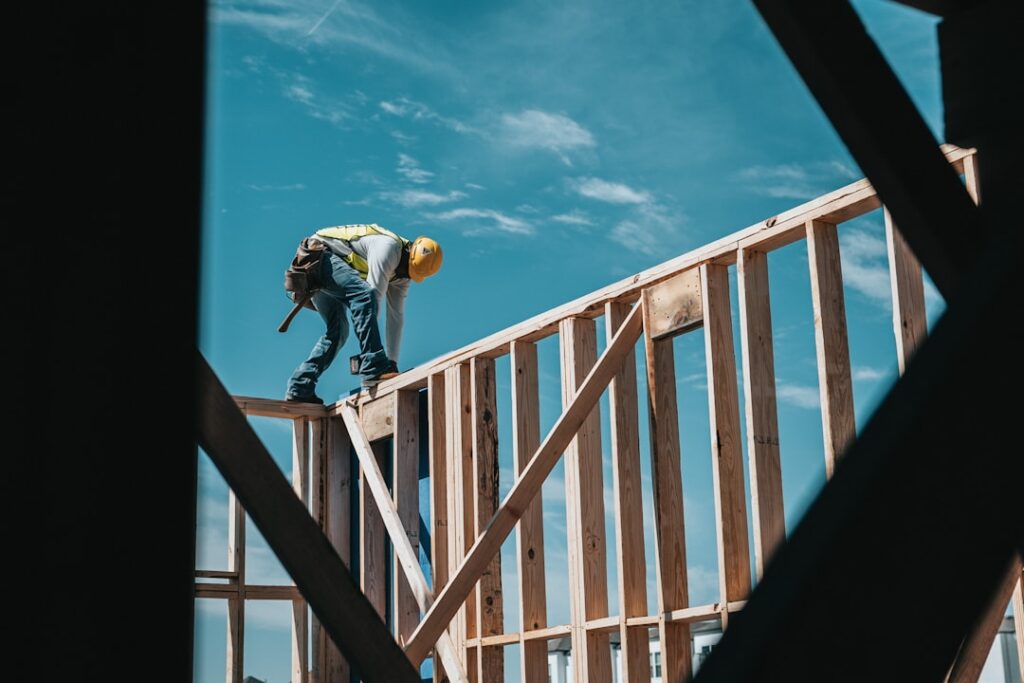
After framing, rough plumbing, electrical, and HVAC are installed but before insulation and drywall go up, the house is an open book. An inspector can see wall studs, joists, wiring runs, duct connections, plumbing supply and drain lines, and how penetrations are sealed. Defects caught here cost the builder little to correct; the same defects found after drywall require tearing out finished walls.
Common pre-drywall findings include missing fire blocking, improperly supported plumbing, ductwork that was crushed or disconnected, and electrical boxes that violate clearance rules. The International Code Council’s residential code governs much of this work, and an independent inspector cross-checks the builder’s crew against those standards rather than relying solely on a busy municipal inspector who may spend only minutes on site.
Why the Municipal Inspection Is Not Enough
City or county code inspectors verify minimum code compliance, not workmanship quality. They move through many homes a day and focus on life-safety basics. A private inspector works for you alone and has time to document cosmetic and functional issues a code official would pass. The two roles complement each other rather than overlap.
The Final Walk-Through and Pre-Closing Inspection
Before closing, the home is finished and systems are live, which lets an inspector test outlets, run appliances, check water pressure, operate windows and doors, and look for grading and drainage problems around the foundation. This is also when cosmetic punch-list items get documented: paint flaws, misaligned cabinetry, scratched glass, and incomplete trim.
Schedule this inspection a few days before closing so there is time to deliver the report to the builder and negotiate repairs. Going to closing with an undocumented defect weakens your leverage, because once you own the home, fixes shift from a contractual obligation to a goodwill request. Buyers researching what a thorough end-to-end review covers can compare notes with guidance on a total house inspection and what it includes.
The 11-Month Warranty Inspection
Most builders provide a one-year warranty on workmanship and materials. The strategic move is to schedule an inspection at around the 11-month mark, before that warranty expires. A full year of seasonal cycling exposes settling cracks, sticking doors, HVAC performance gaps, and minor leaks that were invisible at closing.
An 11-month inspection produces a documented list you can submit to the builder while coverage is still active. Waiting until month 13 means paying out of pocket for items the builder would otherwise have fixed for free. Mark the date on a calendar the day you close so it does not slip past.
How to Coordinate Inspections With Your Builder
Builder contracts sometimes discourage third-party inspections or claim they void the warranty, which is generally not enforceable in most jurisdictions, though you should read your contract and ask questions. Notify the builder in writing that you intend to bring an independent inspector and request access dates for each phase. Professionalism on both sides keeps the relationship workable.
Give the inspector the construction documents and a copy of any builder punch list. Scheduling around the build calendar matters: a pre-drywall inspection has to happen in the narrow window after rough-in and before insulation. Communicating early prevents missed phases. Buyers can also review who belongs on site during these visits in the guide on who should attend a home inspection.
Choosing an Inspector for New Construction
Not every resale inspector is comfortable reading framing and rough mechanicals. Look for someone who advertises new-construction or phase inspections and ideally holds a recognized certification. Membership in the American Society of Home Inspectors or the International Association of Certified Home Inspectors signals adherence to a standards-of-practice document and a code of ethics.
Ask candidates how many phase inspections they perform annually, request a sample pre-drywall report, and confirm they carry errors-and-omissions insurance. An inspector who can explain the difference between a code violation and a workmanship concern will give you a report a builder takes seriously rather than dismisses as nitpicking.
Common Defects Found in New Construction
The assumption that a new home is a flawless home does not survive contact with a phased inspection. Speed and subcontractor turnover introduce predictable errors. Missing or improperly installed flashing around windows, doors, and roof penetrations is a frequent finding and a leading cause of later water intrusion. Grading that slopes toward the foundation rather than away from it sets up drainage and moisture problems from day one.
Mechanical systems generate their own list. HVAC ductwork is sometimes crushed, disconnected, or never balanced, leaving rooms that never reach temperature. Plumbing can be improperly supported or vented. Electrical findings include reversed polarity, missing junction-box covers, and overcrowded panels. None of these are exotic; they are the routine consequences of many trades working fast on the same structure, and they are exactly what an independent inspector is positioned to catch.
Why Cosmetic Issues Still Matter
Buyers sometimes dismiss cosmetic punch-list items as nitpicking, but documenting them before closing converts them from a builder’s optional courtesy into a contractual obligation. Scratched glass, misaligned cabinetry, incomplete trim, and paint flaws are far easier to get fixed while the builder still wants the deal to close than after you hold the keys. A thorough final-walk report captures both the functional and the cosmetic.
How New Construction Inspection Differs From Resale
A resale inspection evaluates an aging home with a known history, looking for wear, deferred maintenance, and end-of-life systems. A new construction inspection examines a home that has no track record, where the risk is not age but workmanship and installation quality. The inspector is essentially auditing how well the builder’s crews followed the plans and the code.
That difference shapes what an inspector prioritizes. In a new build, framing connections, flashing details, mechanical rough-ins, and code compliance take center stage, whereas in a resale the focus shifts toward roof life expectancy, foundation settlement, and tired systems. Buyers who treat a new home as exempt from inspection because it is new misunderstand the risk. The fresh build simply trades one set of concerns for another, and a phased inspection is how those new-construction concerns get surfaced while they are still cheap to fix.
Putting the Timeline Together
The cleanest plan stacks inspections at pre-pour, pre-drywall, final walk-through, and month 11. Budget-limited buyers should anchor on pre-drywall and final, then add the warranty inspection because it costs little relative to the repairs it can trigger. Each milestone closes a window that does not reopen.
New construction is not a guarantee of defect-free building; it is a guarantee of a fresh set of risks tied to speed and subcontractor turnover. Treating the inspection as a phased process rather than a single event is how buyers convert a builder’s warranty from a brochure promise into documented, enforceable repairs.
How Much Do Phased Inspections Cost?
Buyers weighing multiple inspections naturally ask about cost. Each phase, pre-pour, pre-drywall, final walk-through, and the 11-month warranty inspection, is typically priced as a separate inspection, since each requires a full site visit. Some inspectors offer a discounted package when several phases are booked together, which can soften the total compared with arranging each independently.
The figure should be weighed against what these inspections protect. A pre-drywall inspection that catches a missing structural connection or crushed ductwork prevents a repair that, found later, would mean opening finished walls at far greater expense. The 11-month inspection routinely surfaces items the builder fixes for free under warranty, often recovering its cost many times over. Viewed against the price of the home and the cost of post-warranty repairs, phased inspection fees are modest insurance rather than an extravagance. Budget-conscious buyers who cannot fund every phase should prioritize pre-drywall and final, then add the warranty inspection because of its strong return.
What to Do With the Inspection Report
An inspection only helps if its findings drive action, and the timing of delivery matters. After each phase, the inspector produces a report documenting deficiencies with photographs. Deliver it promptly to the builder in writing, since a documented defect creates a paper trail that converts a verbal concern into a tracked obligation. Keep your own copy of every phase report through closing and into the warranty period.
For pre-drywall and final reports, follow up to confirm the builder corrected each item before the next phase covers it or before closing. For the 11-month report, submit the list formally while the warranty is active and request written confirmation of the repairs. Treating the reports as a managed punch list, rather than a one-time document filed away, is what ensures the builder actually performs the work the inspection identified.
Questions to Ask a New Construction Inspector
A short conversation before hiring confirms an inspector is the right fit for phased new-construction work. Ask how many pre-drywall and phase inspections they perform each year, since this work differs from resale inspecting and rewards specialization. Ask whether they carry errors-and-omissions insurance and request a sample pre-drywall report so you can judge the depth of documentation. An inspector who readily shares a sample and explains their phase process is signaling experience.
Clarify how findings are delivered and whether the inspector distinguishes code violations from workmanship concerns, because a report that conflates the two is harder for a builder to act on. Confirm they coordinate with the builder’s schedule, since the pre-drywall window is narrow. Finally, ask how they handle re-inspection if the builder corrects an item, so you know the system you have paid to identify actually gets verified as fixed.
More Questions About New Construction Inspections
Can a builder refuse to let a private inspector on site?
Some builders restrict private inspectors during construction, usually citing safety, insurance or scheduling, and the purchase contract decides whether they can. Many builders allow inspections at set stages if the inspector carries liability insurance and coordinates in advance.
The best time to secure access is before signing the purchase agreement. Ask for written permission for pre-drywall, final and 11-month inspections, plus a reasonable notice process. If the builder refuses all independent inspections during construction, buyers should weigh that heavily when choosing the builder.
How long does a pre-drywall inspection take?
A pre-drywall inspection typically takes about two to three hours for an average-sized home, and the report usually arrives within a day or two. The inspector reviews framing, sheathing, window flashing, plumbing and electrical rough-ins, and visible HVAC ductwork.
The short window before insulation and drywall go up matters more than the length of the visit. Ask the builder’s construction manager to notify you when the municipal framing inspection has passed and before insulation starts, so issues can be corrected while walls are still open.
What if the builder will not fix items the inspector found?
If the builder will not fix items an inspector found, start by putting each item in writing with photos and the inspector’s explanation, and ask the builder to respond item by item. Many disagreements are resolved once the builder’s superintendent sees specific evidence.
For items covered by the builder’s warranty or code, escalate through the builder’s warranty department, then the local building department for code issues. Contract dispute clauses may require mediation or arbitration. Cosmetic items are the hardest to enforce, so raise them before closing while the buyer still has leverage.
Should a new construction home be tested for radon?
Yes, a new construction home should be tested for radon after it is finished and occupied, because radon levels depend on the soil and how the home interacts with it, not the home’s age. New homes are sometimes tighter, which can concentrate radon.
Many builders in radon-prone areas install a passive radon-resistant system with a vent pipe that can be upgraded with a fan. Testing after move-in shows whether the passive system is enough. If levels are 4 pCi/L or higher, adding a fan to the existing pipe is usually inexpensive.
Does a new construction home need a sewer scope?
A sewer scope on a new construction home is often worth it because construction debris, crushed pipe, belly sags and poor connections in the buried sewer line are found more often than buyers expect. Those defects are usually the builder’s responsibility if found early.
The best timing is after final grading and landscaping but before the warranty runs out, often alongside the final or 11-month inspection. Industry estimates put a sewer scope at roughly $125 to $300. Share any findings with the builder in writing right away.
References
- Residential Standards of Practice — International Association of Certified Home Inspectors
- Standard of Practice for Home Inspections — American Society of Home Inspectors
- International Residential Code — International Code Council
Frequently asked questions
What is the most important new construction inspection stage?
The pre-drywall inspection is the highest-value single stage, because framing, wiring, plumbing, and ductwork are all visible before insulation and drywall cover them. Defects caught here cost the builder little to fix, while the same problems found later require opening finished walls.
Does a third-party inspection void my builder warranty?
Generally no. Builder claims that an independent inspection voids the warranty are usually not enforceable, though you should read your contract carefully. Notify the builder in writing that you are bringing an inspector and request access dates for each phase.
What is an 11-month warranty inspection?
It is an inspection scheduled near the end of a builder's typical one-year warranty period. A full year of seasonal cycling reveals settling cracks, HVAC gaps, and minor leaks. The resulting report lets you submit repair requests while warranty coverage is still active.
Is the city code inspection enough on its own?
No. Municipal inspectors verify minimum code compliance and move quickly through many homes. A private inspector works only for you, has time to document workmanship and functional issues, and complements rather than replaces the code official.
Should buyers bring a punch list to the final walk-through?
Yes, buyers should bring a written punch list to the final walk-through, combining their own notes with the inspector's report. Builders usually record items on their own form; make sure every item appears there, with a promised completion date, before closing.
Do new construction inspections check grading and drainage?
Yes, new construction inspections typically check that soil slopes away from the foundation, downspouts discharge away from the house and window wells drain. Poor grading is a common new-home defect that causes basement moisture. Settling over the first year is often reviewed at the 11-month inspection.
Is a home energy test part of a new construction inspection?
A home energy test, such as a blower door test, is usually not part of a standard new construction inspection. Many builders perform one for energy code compliance. Buyers can ask the builder for that test result or hire a separate energy auditor.