What a Thermal Imaging Camera Actually Sees (and Can’t)
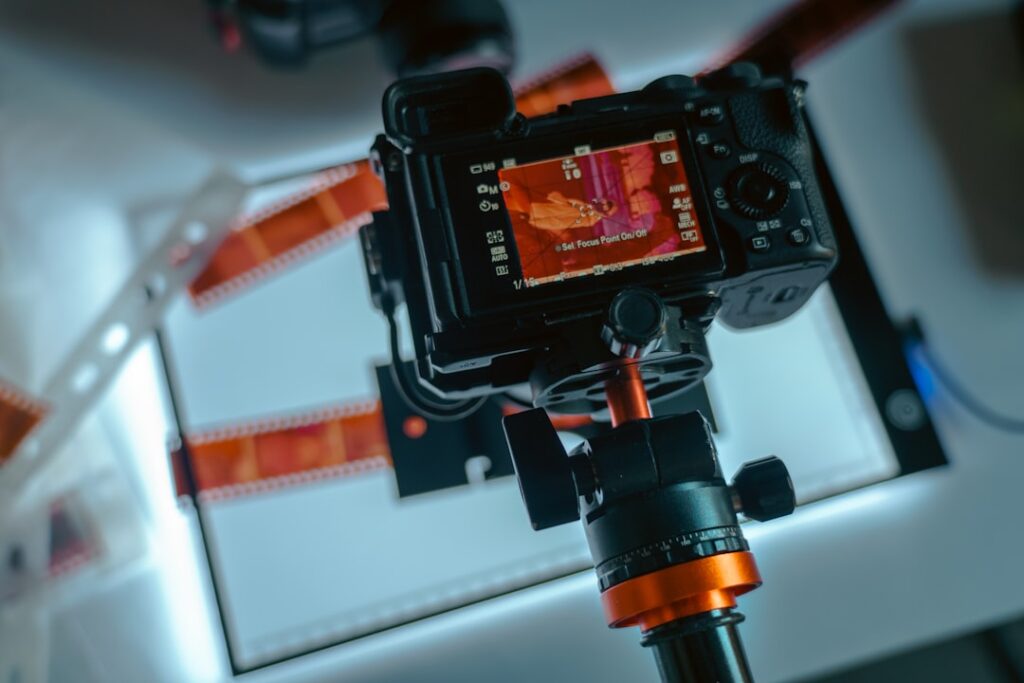
A thermal imaging camera looks like an ordinary camera but does something an ordinary camera cannot: it builds a picture from the heat objects give off rather than the visible light they reflect. That one difference changes what the image shows and how a homeowner or inspector should read it. Here is what these cameras are, how they work, what they reliably reveal, and where the marketing outruns the physics.
Part of our Thermal Imaging for Homes guide — start there for the full picture →
The plain-language definition
A thermal imaging camera converts the long-wave infrared radiation emitted by warm objects into a visible picture. Every object above absolute zero radiates in this band, and the hotter it is, the more it radiates. A germanium lens (ordinary glass blocks these wavelengths) focuses that infrared energy onto a sensor grid, which measures the energy at each pixel and renders a false-color image, typically with warm areas bright and cool areas dark.
What you see in the viewfinder is a heat map. A person in a dim room glows because skin sits near 90 degrees Fahrenheit against a 65-degree wall. A patch of missing insulation in an exterior wall on a cold day reads as a cool rectangle beside neighboring bays several degrees warmer. The camera is not seeing the person or the insulation gap; it is seeing the temperature they produce on the surface it is aimed at.
How is it different from a regular camera or night vision?
A normal digital camera is passive in the visible band. It records light bouncing off objects from the sun or a lamp, so it goes blind when the lights go out. A thermal camera is also passive but works in a different part of the spectrum, capturing heat the objects emit themselves. It performs just as well in a pitch-black attic at midnight as at noon, and often better at night, when solar heating of exterior surfaces isn’t muddying the contrast. That lighting independence is one reason thermal scanning fits cleanly into the broader kit of home inspection tools.
Night vision is a separate category people confuse with thermal. Night-vision devices read near-infrared, roughly 0.7 to 1.4 micrometers, and amplify faint ambient light; they need at least some light or an infrared illuminator to work. A true thermal camera reads long-wave infrared, roughly 8 to 14 micrometers, and senses heat directly with no light at all. Buying one when you wanted the other is a common and expensive mistake.
The sensor inside
The core of any thermal camera is a microbolometer array, a grid of tiny detectors made of vanadium oxide or amorphous silicon. Each detector is one pixel. Incoming infrared warms it by a microscopic fraction of a degree, changing its electrical resistance, and the camera converts that change into a temperature value. Because every detector is a physically manufactured element on a precision grid, there is no software trick that adds resolution. More pixels means more hardware, which is why sensor size drives price so directly.
Common resolutions run from 160 by 120 (entry consumer) through 240 by 180 and 320 by 240 (inspector-grade) to 640 by 480 (industrial). The second spec that matters as much as resolution is thermal sensitivity, quoted as NETD in millikelvins. A lower number means the camera can separate smaller temperature differences: a 50 mK sensor distinguishes a quarter-degree gap that a 100 mK sensor smears together. For building diagnostics, anything below roughly 80 mK does the job. If you want the trade-offs between specific models, the thermal camera buyer’s comparison and the IR sensor explainer go deeper on what each tier buys.
What the picture actually shows
The image is surface temperature, full stop. The dramatic false-color rendering invites the assumption that the camera sees through walls. It does not. It reads the outside face of whatever it points at. It appears to reveal what is inside a wall only because conditions behind the wall (a stud, a pipe, moisture, missing insulation, a hot wire) change the wall’s surface temperature enough to show a pattern. The camera reads the pattern; the operator infers the cause.
That is why interpretation beats image quality at the basic level. A glossy painted surface can mirror infrared from a warm object elsewhere in the room and read hot when it is not. Bare metal reflects more than it emits and can read far colder than its true temperature. These emissivity and reflection traps are the difference between a useful scan and a misread one, and the how thermography works guide walks through them in plain language.
What home inspectors use it for
Working inspectors use thermal imaging for a defined set of jobs, not as a general-purpose x-ray:
- Moisture and leaks. Wet drywall or insulation evaporates continuously and reads cooler than dry neighbors, so an upstairs-shower leak, a roof leak in an attic, or a slow pipe leak in a cavity shows a recognizable cool pattern. A moisture meter then confirms what the thermal image only suggested.
- Missing insulation. On a cold day, an insulated bay reads close to indoor temperature and an empty bay reads several degrees cooler. This is the backbone of weatherization audits, which the Department of Energy describes in its thermographic inspection guidance.
- Electrical hot-spot screening. Loose connections and overloaded circuits shed heat; a bright breaker on a scanned panel flags a problem. This is screening, not diagnosis, and the next step is a licensed electrician.
- Air leaks and HVAC. Gaps around windows, outlets, and rim joists draw cold streaks in winter and warm streaks in summer, and a duct leaking conditioned air into an attic glows against a uniform background.
What it cannot do
A thermal camera does not see through walls. It does not detect mold directly; it detects the moisture patterns that often accompany mold. It does not identify materials, since a hot rectangle could be a pipe, a stud, a duct, or a wire and the camera cannot tell you which without context. It works poorly through glass and through standing water, and it does not replace a moisture meter, a borescope, or an electrical meter. For those reasons InterNACHI’s infrared inspection standards and ASHI guidance treat thermal imaging as a complementary technique that shows where to look, not a stand-alone test that proves what is there.
How it behaves in the field
Powering on takes a few seconds while the sensor stabilizes. Most cameras then run periodic non-uniformity correction (NUC): a shutter briefly closes to give every pixel a uniform reference, then reopens. On the live image this looks like a momentary freeze every few minutes, which new users often mistake for a fault. It is normal.
Three habits separate a useful scan from a noisy one. Move the camera slowly, because consumer refresh rates smear when you pan fast. Read shape and context in real time to tell a stud-bay stripe from a moisture blob and to rule out reflections. And document systematically, since a report needs images tied to the exact spots they came from. A typical inspection captures twenty to fifty thermal frames, of which only a handful land in the final report.
Accuracy and what the numbers mean
Inspector and industrial cameras typically claim accuracy of plus or minus two degrees Celsius or two percent of the reading, whichever is greater; consumer units claim three to five degrees. Those figures assume correct emissivity settings and stable conditions. For building work, relative accuracy matters more than absolute: a camera showing a wet patch at 58 and dry drywall at 65 has done its job even if both readings are two degrees off, because the seven-degree contrast is the finding. Cameras used in paid work are usually sent for recalibration every one to two years to keep readings traceable.
Who should actually buy one
Three groups earn back a camera. Working inspectors recover a $1,000 to $2,500 unit inside a season. Weatherization contractors and energy auditors need the documentation. And busy owner-builders running several projects a year clear the break-even against renting. A homeowner with one leak to hunt or one attic to audit almost always comes out ahead renting for a weekend; the thermal camera rental guide and the cost breakdown lay out the math. Whatever you buy, budget for training too, because the same image yields very different conclusions in trained versus untrained hands.
More Questions About Thermal Imaging Cameras
Can a thermal imaging camera find pests like mice or termites in a wall?
Sometimes, indirectly. A thermal camera can show the warm body heat of a nest of rodents behind thin drywall, or the slight warmth and moisture that a large active termite colony may produce. It cannot identify the insect or rodent, and small or inactive infestations rarely show at all.
Professionals treat a suspicious warm pattern as a reason to investigate further with a moisture meter, a borescope, or a licensed pest inspection. A wood-destroying insect report from a pest professional remains the accepted way to document termite activity during a home sale.
How do you choose a color palette on a thermal camera?
The palette changes only how temperatures are displayed, not what the camera measures. Choosing well makes patterns easier to read.
- Ironbow is the common default and shows subtle building anomalies clearly.
- Grayscale or white-hot highlights shapes and is easier on the eyes in long sessions.
- Rainbow exaggerates small differences, which can help on low-contrast walls but can also make normal variation look alarming.
For reports, consistency matters more than preference, so most inspectors pick one palette and a fixed temperature span for related images.
Can thermal imaging be used outdoors to check a roof or siding?
Yes, but timing is everything. Outdoor scans of roofs and siding work best after sunset or before sunrise, when the sun is no longer heating surfaces unevenly. Wet roof insulation often holds heat longer than dry areas and appears warmer in the evening, which is the basis of many commercial roof surveys.
Wind, rain, and direct sun all degrade results. Wind strips heat from exterior surfaces, and rain wets everything equally. For most homes, interior scans on a cold day reveal insulation and air-leak problems more reliably than exterior scans do.
How much training does it take to read thermal images reliably?
Basic operation takes an afternoon, but reliable interpretation takes structured training and practice. Many building professionals start with an introductory infrared course of a few days, often offered through inspector associations or thermography training organizations, and then build skill by comparing thermal images with moisture meter readings and opened walls.
The core topics include emissivity, reflected temperature, solar loading, thermal bridging, and the conditions needed for a valid scan. Without that grounding, normal framing patterns and reflections are frequently mistaken for defects, which leads to unnecessary repairs.
Frequently asked questions
Is a thermal imaging camera the same as a night-vision camera?
No. Thermal imaging reads the long-wave infrared heat emitted by warm objects and works in total darkness with no light source. Night vision amplifies near-infrared light and needs some ambient light or an IR illuminator.
Can it see through walls?
No. It reads surface temperature only. What looks like a view into a wall is a pattern on the wall's face created by whatever is conducting heat to it from behind.
What is the cheapest practical model?
A 160-by-120 phone-attachment dongle in the $250 to $400 range. Below that, the sensor count and software usually make it hard to tell a real anomaly from noise.
Do home inspectors actually use them?
Many do, though requirements vary by state. Both ASHI and InterNACHI treat thermal imaging as a supplementary tool, and inspectors who offer scans usually charge an added fee on top of the base inspection.
Can a thermal imaging camera take normal photos too?
Many thermal imaging cameras include a small visible-light camera alongside the infrared sensor. It captures a regular photo of the same scene, which helps match each thermal image to a real location in a report. Some models also blend the two images or outline edges from the visible photo onto the thermal view for easier reading.
Does a thermal camera work through windows?
Not in a useful way. Ordinary window glass blocks most long-wave infrared, so a thermal camera aimed at a window mostly sees the surface temperature of the glass plus reflections from nearby warm objects, including the person holding the camera. To scan a room or yard, the camera must have a direct line of sight without glass in between.
Is it legal to own a thermal imaging camera in the United States?
Yes. Owning and using a thermal imaging camera is legal in the United States for home, trade, and hobby use. Export of some higher-performance models is controlled, and privacy and surveillance laws still apply when pointing any camera at neighbors or people. Law enforcement use is separately limited by court decisions on searches of homes.
Can a thermal imaging camera be rented instead of bought?
Yes. Many tool-rental stores and some equipment suppliers rent handheld thermal cameras by the day or week. Renting makes sense for a single project such as tracing one leak or checking attic insulation before winter. Confirm the rental unit's native resolution and ask for a quick demonstration of the settings before leaving the counter.
Thermal imaging cameras
Infrared cameras reveal hidden moisture, missing insulation, and air leaks. Phone-attachment models are the budget entry point; standalone units have higher resolution.
| Product | Why | Buy |
|---|---|---|
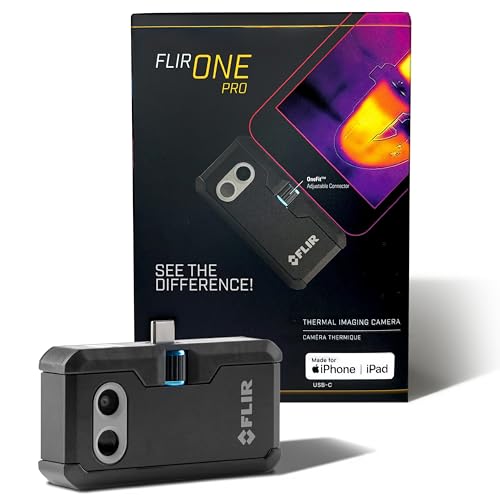 FLIR ONE Pro (phone) | Plugs into iPhone/Android; inspector favorite. | Amazon — $296.65 |
 Topdon TC001 | High-res phone module at a low price. | Amazon — $249.00 |
 FLIR C5 Compact | Standalone pocket camera with Wi-Fi. | Amazon — $593.99 |