What Does an Anemometer Measure? A Plain Guide
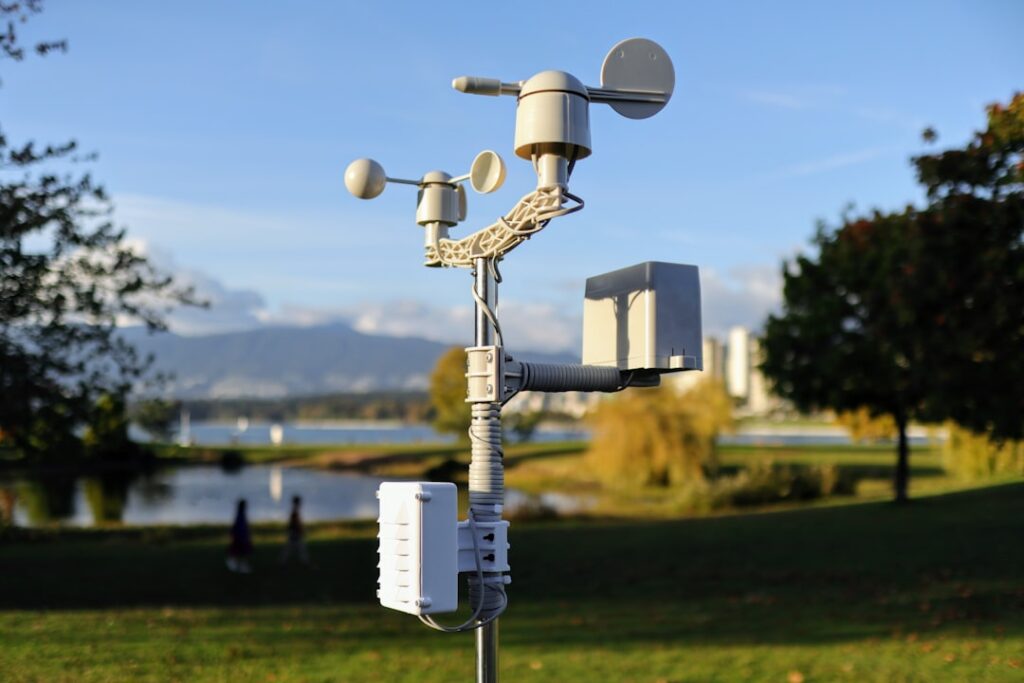
An anemometer is one of the quieter tools in a home inspector’s bag, but it answers a question that matters for comfort, energy bills, and ventilation safety: how fast is the air actually moving? If you have ever wondered exactly what does an anemometer measure, the short answer is air speed. Most modern handheld units also calculate airflow volume and report temperature, which makes them useful well beyond meteorology. For homeowners, an anemometer turns vague complaints like “this room never gets warm” or “the bathroom fan seems weak” into a number you can act on. That single shift, from a feeling to a measurement, is what makes the tool worth owning.
What Does an Anemometer Measure?
At its core, an anemometer measures wind speed or air velocity, usually in feet per minute (FPM), meters per second (m/s), or miles per hour (MPH). Velocity is the headline reading. From there, many digital models add two derived values that homeowners care about even more.
The first is air volume, often shown as cubic feet per minute (CFM). The meter takes the velocity reading and multiplies it by the cross-sectional area of the duct, register, or vent you enter into the device. CFM is how you judge whether an exhaust fan or HVAC register is actually moving enough air. The second extra reading is temperature, since most vane and hot-wire units include a thermistor. A few higher-end models also estimate wind chill, dew point, and relative humidity, which overlaps with the territory of a dedicated humidity tool.
So the full answer to what an anemometer measures is air velocity directly, and airflow volume, air temperature, and sometimes humidity as calculated or sensed extras. Velocity tells you how fast; volume tells you how much; temperature and humidity tell you about the quality of the air being moved.
How an Anemometer Works
There are two designs you will run into for indoor work. Each measures the same thing through different physics, and each has a clear best-use case.
Vane (rotating) anemometers
A vane anemometer uses a small propeller or rotating cup. Moving air spins the blades, and the device counts rotations to compute velocity. Vane units are durable, easy to read, and accurate across a wide range of speeds, which is why they are common for checking supply registers and outdoor wind. Their weakness is low airflow: a gentle draft may not turn the vane reliably, so they are not ideal for hunting faint leaks.
Hot-wire (thermal) anemometers
A hot-wire anemometer heats a thin wire or bead to a set temperature. Passing air cools the wire, and the device measures how much current is needed to keep it hot. More cooling means faster air. Hot-wire sensors shine at very low velocities, so they are the better choice for detecting weak drafts around windows, doors, and outlets. The probe is delicate and benefits from careful handling and a protective cap when stored.
Cup and ultrasonic types
Outdoors, spinning-cup anemometers are the classic weather-station design, and ultrasonic units with no moving parts measure how sound travels between sensors. Homeowners rarely need these, but they explain why outdoor wind readings and indoor airflow readings can come from very different instruments.
What the Readings Mean for Your Home
Numbers only help if you know what good looks like. Here are common indoor benchmarks homeowners check.
Bathroom exhaust fans are typically sized at 50 to 110 CFM depending on room size, and a fan delivering far less is either undersized, clogged, or venting into a blocked duct. Kitchen range hoods commonly run 200 to 400 CFM. HVAC supply registers vary widely, but a register pushing near-zero air while neighboring rooms feel a strong stream usually points to a duct restriction, a closed damper, or a leaky duct run losing air before it arrives.
Draft detection is the other big use. Hold a hot-wire probe near window sashes, door thresholds, and electrical outlets on a windy day. A measurable velocity where there should be none flags air leakage, which the U.S. Department of Energy links directly to higher heating and cooling costs. Pairing an anemometer with an infrared thermometer reading at the same spot helps confirm whether a cold surface is also a leak, since a cold draft and a cold uninsulated wall call for different fixes.
Ventilation rate is a third use that matters for indoor air quality. The EPA notes that adequate fresh-air exchange helps dilute indoor pollutants, and a homeowner can use CFM readings at supply and exhaust points to estimate whether a room is being ventilated at a reasonable rate.
Putting velocity and area together for CFM
The math behind a CFM reading is simple, which is why understanding it helps you trust the number. Airflow volume equals air velocity multiplied by the cross-sectional area the air passes through. If a register face measures one square foot of free area and the average velocity across it is 300 feet per minute, the device reports roughly 300 CFM. Double the area and the volume doubles; halve the velocity and the volume halves. This relationship explains why a small, fast jet of air from a pinched duct can feel strong at the grille yet deliver disappointing total volume, and why a large, gentle flow can move plenty of air without ever feeling forceful. When a digital anemometer asks you to enter duct dimensions, it is doing exactly this calculation, so an accurate measurement of the opening is as important as the velocity reading itself.
Indoor vs. Outdoor Use Cases
The same instrument serves two very different worlds, and knowing which you are in keeps your expectations realistic.
Indoors, the anemometer is a diagnostic tool. You use it to balance HVAC registers room by room, confirm an exhaust fan moves its rated air, check that a fresh-air intake is actually pulling, and locate drafts that drive up energy bills. These checks usually involve low to moderate velocities and benefit from averaging several readings. The payoff is concrete: a bathroom fan that tests far below its rating may be the reason mirrors fog and moisture lingers, and lingering moisture is exactly the condition that invites mold growth on ceilings and around tubs.
Outdoors, the anemometer is more of a conditions tool. Homeowners use it to gauge wind before spraying, painting, grilling, or working on a roof, and weather hobbyists log gusts and averages. Outdoor readings swing constantly, so a single number means little; the average and the peak together describe the conditions. Front Range homeowners, who deal with strong downslope winds, often find a handheld unit useful simply for deciding whether an outdoor task is safe to start.
How to Use an Anemometer Correctly
Getting a trustworthy reading takes a little technique. Sloppy positioning is the most common reason two people get different numbers from the same vent.
Hold the sensor squarely in the airflow, not at an angle, and keep your hand and body out of the stream so you do not block or deflect it. For ducts and registers, take several readings across the opening and average them, since air moves faster in the center than at the edges. Let the reading stabilize for a few seconds before recording it. If you want CFM, measure the free area of the opening accurately, because a wrong dimension throws off the volume calculation more than a small velocity error does.
For outdoor wind, face the vane into the wind and hold the unit at arm’s length above any obstruction. Record the peak gust and the average if your model offers both, since wind is rarely steady. When comparing rooms or vents, take all your readings on the same day under the same HVAC setting so the comparison is fair.
Accuracy, Calibration, and Common Mistakes
Most consumer-grade anemometers claim accuracy within roughly 3 to 5 percent of the reading, which is fine for the comparisons homeowners make. Professional units used for HVAC commissioning are tighter and can be sent out for periodic calibration against a reference standard. If your readings start drifting or a probe takes physical damage, recalibration or replacement restores trust in the data.
Common mistakes include measuring too close to a grille, where turbulence inflates the number, entering the wrong duct area, and blocking part of the airflow with your hand. People also compare readings taken on a calm day with ones taken during a wind event, then wonder why the numbers disagree. Battery condition matters too; a low battery can skew hot-wire readings in particular, because the sensor depends on stable current. Finally, letting a cold tool acclimate to room temperature before measuring avoids a brief, misleading reading.
Buying Considerations
If you are shopping for one, match the tool to the job. For checking registers and outdoor wind, a vane model with a CFM mode and an averaging function is the practical choice. For chasing faint drafts and verifying air sealing, a hot-wire model earns its higher price. Look for a clear backlit display, the units you actually use, a hold function to freeze a reading, and a sturdy case. A combined temperature and humidity readout adds value, though a dedicated hygrometer for tracking indoor humidity is more precise if moisture is your main concern.
Price tracks capability. Basic vane units are inexpensive and fine for occasional register checks. Mid-range models add data logging, a detachable probe for reaching into ducts, and tighter accuracy specs. Professional units cost more because they hold calibration, log readings over time, and survive daily field use. For most homeowners, a mid-range vane or hot-wire model covers every common need without paying for features only a commissioning technician uses. Read the stated accuracy and the velocity range before buying; a unit that cannot read low velocities will frustrate anyone trying to find drafts.
Common Questions About Anemometer Readings
A few points trip up first-time users, and clearing them up early prevents wasted effort.
A reading of zero does not always mean a fan is broken; it can mean the probe is outside the airflow, the damper is closed, or the system is simply off. Move the probe into the strongest part of the stream before concluding anything. Likewise, a very high spot reading at the center of a register does not represent the whole opening, which is why averaging across the face matters for an honest CFM figure. And because air velocity and air temperature are measured separately, a vent can move plenty of air yet still feel cold, pointing to a heating problem rather than an airflow problem. Reading both values together gives the full story, and comparing them against a few rooms in the same house quickly reveals which spaces are being shortchanged.
When to Call a Professional
An anemometer tells you airflow is wrong; it does not always tell you why. If you confirm a bathroom fan or HVAC register is grossly underperforming, the cause could be a crushed duct, a failed motor, a blocked vent termination, or an unbalanced system. Those are jobs for an HVAC technician or, during a purchase, a qualified home inspector who carries airflow instruments as part of a broader toolkit. The instruments listed in our guide to home inspection tools work best together, with the anemometer flagging ventilation problems that a professional then diagnoses and corrects.
References
- Air Sealing Your Home — U.S. Department of Energy
- Improving Indoor Air Quality — U.S. Environmental Protection Agency
- Standards of Practice and Inspection Resources — InterNACHI