Anemometer Definition: What Homeowners Need to Know
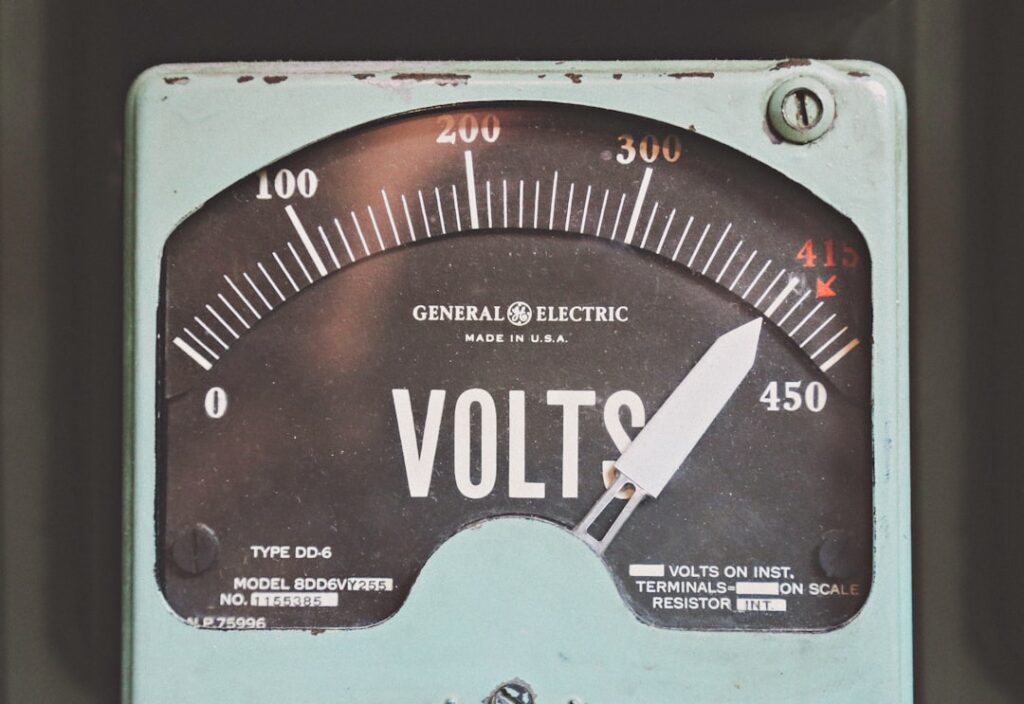
An anemometer is one of those instruments that sounds technical but quietly does a simple job: it tells you how fast air is moving. Homeowners run into the word when reading about ventilation, energy audits, or a home inspector’s report, and the term can feel more intimidating than the device deserves. The plain anemometer definition is a meter that measures wind speed or air velocity, often paired with a reading of how much air flows through a space over time. From sealing a drafty Front Range basement to checking whether a bathroom fan actually moves air, this tool turns an invisible problem into a number you can act on.
What is an anemometer? The short definition
An anemometer is a device that measures the speed of air movement, usually expressed in feet per minute, miles per hour, or meters per second. The name comes from the Greek word anemos, meaning wind. Some models stop at velocity; others multiply that velocity by the area of a duct or vent to calculate volumetric airflow, reported in cubic feet per minute (CFM).
In a home setting, the number matters more than the physics. If a kitchen exhaust hood is rated for 300 CFM but an anemometer reads far less at the vent, something is wrong: a clogged filter, a crushed duct, or a fan that is failing. The instrument gives a working inspector a way to verify performance instead of guessing. For homeowners, that same reading explains why a room never feels fresh or why humidity lingers after a shower.
Anemometers range from pocket-sized handheld units costing under fifty dollars to professional-grade meters that log data over hours. The accuracy and feature set scale with price, but the core function stays the same across all of them.
How an anemometer measures airflow
Different anemometer designs sense air movement in different ways, and the method affects accuracy, durability, and price. Three approaches dominate the consumer and inspection market.
Vane (propeller) anemometers
A vane anemometer uses a small rotating propeller. Moving air spins the blades, and an internal sensor counts the rotation speed to calculate velocity. These are intuitive, reasonably accurate, and forgiving of dust. Because the vane needs room to spin, this style works best at supply registers, large vents, and open doorways rather than tight slots.
Hot-wire (thermal) anemometers
A hot-wire model heats a thin wire and measures how quickly air cools it. Faster airflow pulls heat away faster, and the meter converts that cooling rate into a velocity reading. The thin probe slips into narrow ducts and reads very low air speeds well, which makes it the choice for HVAC balancing and detailed energy work. The trade-off is fragility and a higher price.
Cup and ultrasonic anemometers
Cup anemometers, the spinning three-cup design seen on weather stations, are built for outdoor wind rather than indoor diagnostics. Ultrasonic units measure how sound pulses shift as air moves between sensors and have no moving parts, but they sit at the higher end of the market and are uncommon in residential use. Most homeowners and inspectors stick with vane or hot-wire models. For a broader look at the category, the overview of anemometers for homeowners walks through the practical differences.
Why an anemometer matters for a home inspection
Air movement is tied directly to comfort, energy bills, moisture control, and even safety. A home inspector or energy auditor uses an anemometer to confirm that systems do what they claim. Several common checks rely on it.
Bathroom and kitchen exhaust fans are a frequent culprit. A fan that hums but barely moves air leaves moisture behind, and along Colorado’s Front Range, that trapped humidity feeds mildew in poorly vented baths. Measuring CFM at the grille tells whether the fan meets the building-code minimum, often around 50 CFM for an intermittent bathroom fan.
Combustion appliances are another. Verifying draft at a flue or measuring makeup air for a furnace room helps confirm that exhaust gases leave the home instead of spilling back inside. Inspectors also use airflow readings to spot leaky ductwork, undersized returns, and rooms that never get their share of conditioned air. These are the kinds of measurements documented in a thorough home inspection tools guide that walks through the full kit a working inspector carries.
Reading the numbers: velocity versus volume
Two readings cause most of the confusion around anemometers, so it helps to separate them clearly.
Velocity is raw air speed at a single point, measured in feet per minute (FPM). It answers “how fast is the air moving right here?” A handheld vane held at a register might read 600 FPM.
Volume is total airflow, measured in cubic feet per minute (CFM). It answers “how much air is this vent delivering?” To get CFM, the meter multiplies average velocity by the cross-sectional area of the opening. A 600 FPM reading across a one-square-foot register equals roughly 600 CFM.
The catch is that air speed is rarely uniform across a vent. The middle usually moves faster than the edges. Accurate volume measurement means taking several readings across the opening and averaging them, or using a flow hood that captures the entire stream. A single center reading overstates the real airflow, which is why one-number shortcuts can mislead a homeowner.
Choosing an anemometer as a homeowner
Most homeowners do not need a laboratory instrument. A few practical questions narrow the field quickly.
Decide what you plan to measure. For checking bathroom fans, window drafts, and HVAC registers, an inexpensive handheld vane anemometer in the thirty-to-eighty-dollar range is enough. For diagnosing low airflow deep inside ducts or chasing tiny drafts during an energy audit, a hot-wire model earns its higher cost.
Look for a unit that reports both velocity and CFM, lets you enter duct dimensions, and shows minimum, maximum, and average readings. A backlit display and data hold are small comforts that make real-world use easier. Calibration matters for professionals, but for spot checks at home, repeatability is more useful than certified precision: you mostly want to know whether a fan moves a lot of air, a little, or almost none.
Brands such as BTMETER, Proster, and the higher-end Testo and Fluke lines cover the spectrum from budget to professional. Read the measurement range carefully, since some cheap units read poorly at the very low air speeds typical of bathroom vents.
Common mistakes when using an anemometer
The instrument is forgiving, but a few habits skew results. Holding a vane at an angle to the airflow lowers the reading, so keep the sensor square to the moving air. Standing too close to a supply register can also distort the stream; following the manufacturer’s recommended distance gives a truer number.
Forgetting to enter the correct duct or vent area throws CFM calculations off badly, since volume scales directly with area. And taking a single reading rather than an average across the opening is the most common error of all. A careful measurement takes a minute longer and gives a number worth trusting. Anemometers pair naturally with other diagnostic gear; many inspectors carry one alongside an infrared thermometer buyer’s guide favorite to connect airflow problems with temperature differences across a room.
A short history of the anemometer
The instrument is older than most people assume. The first known device for measuring wind speed dates to the fifteenth century, when the Italian architect Leon Battista Alberti described a swinging-plate design that tilted further as the wind blew harder. Over the following centuries, inventors refined the idea, and in 1846 the Irish astronomer John Thomas Romney Robinson developed the four-cup anemometer that became the standard for weather stations for generations.
Modern electronics shrank the instrument and broadened its uses far beyond meteorology. The hot-wire principle, sensing how moving air cools a heated element, opened the door to measuring the very low air speeds inside ductwork and around building envelopes. Today an instrument that once required a rooftop mast fits in a shirt pocket and reads airflow at a vent in seconds. That evolution is why the same word now covers both a spinning weather-station fixture and the handheld meter a home inspector slips out of a tool bag.
Anemometers in Front Range homes
Colorado’s climate gives airflow measurement particular relevance. The dry, high-altitude air along the Front Range means ventilation behaves differently than it does at sea level, and homes here swing between sealed-up winters and windows-open summers. A bathroom fan that fails to clear moisture contributes to mildew in a region where humidity already fluctuates sharply between seasons.
High-altitude air is also less dense, which subtly affects how combustion appliances draw air and how much airflow a fan actually delivers compared with its sea-level rating. For homeowners in Denver, Boulder, Colorado Springs, and the surrounding counties, verifying that exhaust fans, furnace makeup air, and supply registers move the air they should is a practical step that an inexpensive anemometer makes possible. Confirming a fan moves air is the kind of small check that prevents a larger moisture or air-quality problem later.
Putting an anemometer reading to work
A number alone solves nothing; the value comes from comparing it against a benchmark. For a bathroom fan, the relevant target is the building-code minimum, commonly 50 CFM for an intermittent fan or about 20 CFM for one running continuously. A range hood’s rating is printed on the unit, and a reading far below it points to a clogged filter, a crushed flexible duct, or an excessively long duct run with too many elbows, each elbow can cost the equivalent of several feet of straight duct in lost airflow.
HVAC supply registers tell a similar story. A bedroom that never warms in a Denver winter often reads noticeably lower velocity than rooms closer to the air handler, a sign of duct leakage, an undersized branch, or a closed damper. Measuring each register and comparing the readings turns a vague comfort complaint into a map of where the air is and is not going. The same logic applies to a clothes-dryer vent, where weak airflow signals lint buildup that lengthens drying times and raises fire risk. In each case the anemometer converts a hunch into a comparison against a known target.
Maintaining and storing an anemometer
An anemometer needs little upkeep, but a few habits preserve accuracy. For vane models, keep the propeller clean and spinning freely; dust and lint can drag on the blades and lower readings. Avoid touching the delicate sensor of a hot-wire unit, since skin oils and physical contact can damage the thin heated element that does the measuring.
Store the device in a protective case away from extreme heat and moisture, and remove the batteries if it will sit unused for months. Professionals send their instruments out for periodic calibration against a known standard, which matters when a measurement carries weight in a report. For a homeowner doing spot checks, simply confirming the unit reads zero in still air and responds sensibly to a known airflow, such as a hand-held fan, gives reasonable confidence that it is working.
When to call a professional
A homeowner can confirm a weak bathroom fan or a drafty window with a basic anemometer in minutes. But when readings point to deeper issues, undersized ductwork, combustion-air problems, or whole-house ventilation that fails to meet code, a certified HVAC technician or home inspector should take over. They bring calibrated instruments, flow hoods, and the training to interpret borderline numbers correctly.
Energy auditors combine anemometer data with blower-door and infrared results to map a home’s air leakage. That layered approach catches problems a single tool cannot, and it produces the documentation needed for rebates or repairs. The anemometer is a starting point, not the whole diagnosis. When a measurement will inform a repair decision or a real estate transaction, the precision and interpretation a professional brings turns a rough reading into a reliable conclusion.
References
- Home Energy Assessments — U.S. Department of Energy
- Standards of Practice for Home Inspectors — InterNACHI
- Improving Indoor Air Quality — U.S. Environmental Protection Agency