Infrared Thermometer: What Homeowners Need to Know
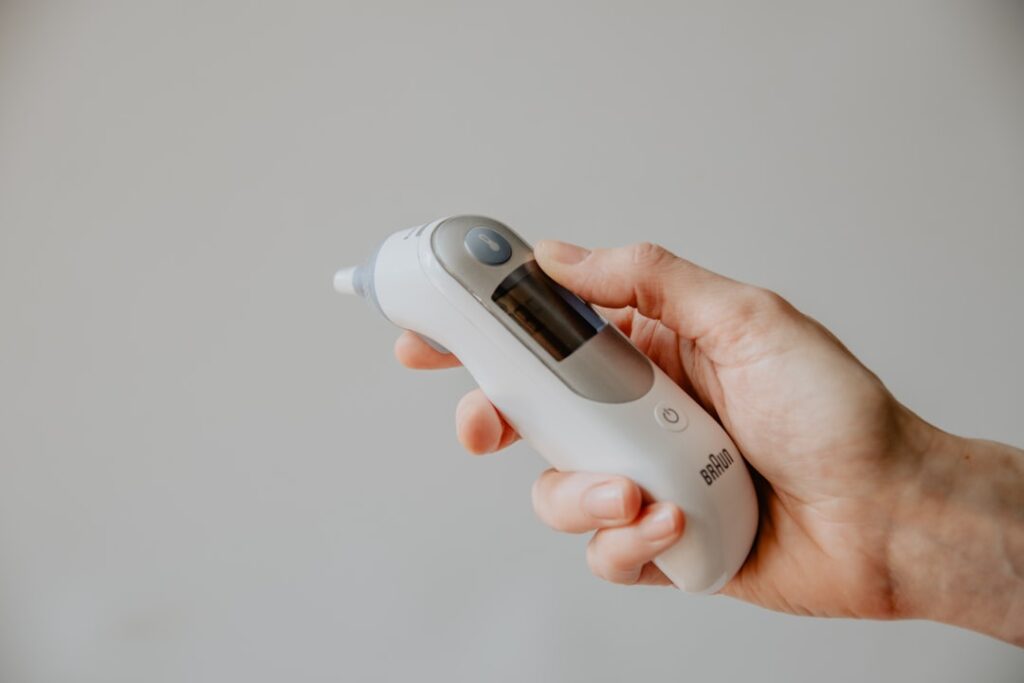
Point it at a wall, pull the trigger, and an infrared thermometer reads the surface temperature in a fraction of a second without ever touching it. That speed and convenience make it a fixture in the home inspector’s pocket and a popular tool for homeowners chasing drafts, checking HVAC output, or hunting for a frozen pipe. But the spot temperature gun is widely misunderstood, and using it well means grasping two concepts most users overlook: distance-to-spot ratio and emissivity.
Part of our Thermal Imaging for Homes guide — start there for the full picture →
What is an infrared thermometer and how does it work?
An infrared thermometer, sometimes called an IR temperature gun or non-contact thermometer, measures the infrared energy radiating from a surface and converts it into a temperature reading. Every object above absolute zero emits infrared radiation in proportion to its temperature; the instrument’s sensor captures that energy from a spot on the surface and calculates the temperature, usually displaying it on a screen with a laser pointer marking the target area.
The key word is surface. An IR thermometer reads only the temperature of whatever surface it is aimed at, not the air temperature and not anything behind the surface. That distinction matters for interpreting results correctly. The instrument is one of the everyday measurement tools surveyed in the home inspection tools guide.
Understanding distance-to-spot ratio
The single most misunderstood spec is distance-to-spot ratio, often written as D:S, such as 12:1. It describes the size of the area the thermometer averages at a given distance. A 12:1 ratio means that at 12 inches from the surface, the instrument reads a 1-inch-diameter spot. Move back to 12 feet, and that spot grows to about a foot across.
This has practical consequences. The farther you stand, the larger the area being averaged, so a small hot or cold spot gets blended into its surroundings and disappears from the reading. To measure a specific small target accurately, get close or use an instrument with a higher ratio. Many users unknowingly take a reading from across a room and average several surfaces together, then wonder why the number seems off. The laser dot marks the center of the spot, not its full size, which adds to the confusion.
Why emissivity affects accuracy
Emissivity is the second concept that makes or breaks accuracy. It is a measure of how efficiently a surface emits infrared energy, on a scale from 0 to 1. Most common building materials, such as painted walls, wood, brick, and drywall, have high emissivity around 0.90 to 0.95, and inexpensive IR thermometers are usually preset near that value.
The trouble comes with shiny, reflective surfaces. Bare metal, polished aluminum, and glossy foil have low emissivity and reflect surrounding infrared energy, so an IR thermometer reads them inaccurately, often showing a temperature closer to the reflected surroundings than the metal itself. Better instruments let the user adjust the emissivity setting; a common field trick is to place a piece of matte tape or flat paint on a shiny surface and read that instead. Ignoring emissivity is the most common cause of wildly wrong readings on metal.
Why instant, non-contact measurement is so useful
The appeal of an infrared thermometer comes down to speed and reach. It returns a temperature in a fraction of a second without touching anything, which makes it possible to measure surfaces that are hot, hard to reach, moving, or energized, situations where a contact thermometer would be slow, awkward, or unsafe. An inspector can check a register, a pipe, an electrical cover, and an appliance in the time it would take to position a single contact probe.
That convenience changes how measurement fits into an inspection. Because each reading is so quick, an inspector can take many of them, comparing one register against another or scanning along a wall point by point to build a rough sense of temperature variation. The non-contact nature also keeps the user at a safe distance from hot or live components, an advantage when checking equipment that should not be touched. The tradeoff, as always, is that each reading covers only the spot the device is aimed at, so the speed that makes it useful for confirmation is the same property that makes it poor for finding small anomalies hidden between readings. Used with that understanding, the instant, hands-off measurement is a genuine asset rather than a false promise.
What inspectors use an infrared thermometer for
Within its limits, the spot gun is genuinely useful.
- HVAC checks: measuring supply and return air register temperatures to gauge a system’s temperature split.
- Insulation and draft clues: spotting cold surfaces near windows, doors, and poorly insulated walls.
- Plumbing: tracing hot and cold lines or locating a section of pipe at risk of freezing.
- Electrical: a quick surface-temperature check at a panel or connection, though it cannot scan a whole area at once.
- Appliance and water-heater output checks.
Because it reads one spot at a time, it is a confirmation tool rather than a scanning tool. An inspector often uses it to verify a specific point after a broader survey.
Infrared thermometer versus thermal imaging camera
The most important comparison is with a thermal imaging camera, because the two are frequently confused. An infrared thermometer measures the temperature of a single spot and gives one number. A thermal imaging camera captures thousands of measurements at once and renders them as a heat-map image, so an entire wall, ceiling, or panel appears as a picture of warm and cool zones.
That difference is decisive for finding problems. A spot gun can confirm that one point is cold, but it can easily miss a small moisture stain or a localized hot connection because it only reads where it is aimed. A thermal camera reveals the pattern across a whole surface, which is why inspectors use cameras to locate hidden moisture and energy loss. The capabilities of imaging are covered in detail in the guide to thermal imaging inspections, and the practical differences in price and use show up across the thermal imaging scanner overview. The spot thermometer is the affordable, single-point cousin of the camera.
Practical household uses and their limits
An infrared thermometer earns a place in the toolbox because it answers many quick questions cheaply, as long as its single-point nature is respected.
- Drafts and insulation: sweeping the beam along an exterior wall, around windows, and at outlets reveals cold spots that hint at missing insulation or air leaks, useful for prioritizing weatherization.
- Plumbing: tracing which pipe is hot and which is cold, or finding a section near an exterior wall at risk of freezing in a Colorado cold snap.
- Appliances: checking that a water heater outlet, refrigerator coil, or oven is reaching expected temperatures.
- Electrical spot checks: measuring a single warm cover plate or connection, though a camera is needed to scan a whole panel.
The common thread is verification of one point at a time. The tool confirms a suspicion quickly, but because it reads only where it is aimed, it can miss problems that sit just outside the measured spot. Treating it as a confirmation device rather than a search-and-scan instrument keeps its results trustworthy and prevents the false confidence that comes from assuming one cold reading describes an entire surface.
How to use an infrared thermometer accurately
A few habits keep readings honest.
- Stand close enough that the measured spot is smaller than your target.
- Match the emissivity setting to the surface, or apply matte tape to shiny metal.
- Avoid reading through glass, steam, or dust, which distort infrared.
- Let the instrument acclimate when moving between very different temperatures.
- Take several readings and compare, rather than trusting a single point.
Remember that it measures surface, not air, temperature, so a cold wall does not by itself prove a cold room. Comparing a suspect surface against a nearby reference surface of the same material often tells you more than an absolute number, since the difference highlights an anomaly while controlling for emissivity and ambient conditions. And avoid taking a reading immediately after the surface has been touched, breathed on, or hit by sunlight, all of which temporarily skew the result.
Reading HVAC temperature splits
One of the most practical homeowner uses of an infrared thermometer is checking an HVAC system’s temperature split, the difference between the air entering and leaving the equipment. On a cooling system, technicians look for the supply air to be meaningfully cooler than the return air, typically a difference in the range of 15 to 22 degrees Fahrenheit depending on conditions. On a furnace, the supply should be substantially warmer than the return.
Measuring the supply register and the return grille gives a quick health check. A split that is too small can point to low airflow, a refrigerant issue, or a dirty coil; a split that is too large can indicate restricted airflow. The infrared thermometer makes this easy because it reads the register surfaces and nearby air-influenced surfaces instantly. It is a screening check rather than a full diagnosis, but it tells a homeowner whether the system is performing roughly as expected or whether something warrants a closer look by a technician.
Why surface temperature is not air temperature
A point worth repeating is that an infrared thermometer reads surfaces, not air. This trips up many users who aim the device into a room and expect a room-air temperature. What they get is the temperature of whatever surface the beam lands on, which may be a sun-warmed wall, a cold window, or a register face. For air temperature, a contact or probe thermometer is the correct tool.
This distinction also explains some confusing results. A wall that feels cold may read cooler than the room because its surface is below air temperature, especially on an exterior wall in winter. That reading is genuinely useful for spotting insulation gaps and drafts, but it is not the room’s air temperature. Understanding what the number represents keeps homeowners from drawing the wrong conclusion, such as assuming a room is freezing when only one surface is cold.
Where the spot gun falls short for moisture detection
Homeowners sometimes hope an infrared thermometer will find hidden water leaks, and here its single-point design is a real limitation. Moisture often shows up as a subtle, irregularly shaped cool area on a surface, because evaporation cools damp material. A spot gun reading one small circle at a time can easily land beside the wet area and miss it entirely, giving false reassurance.
A thermal imaging camera, by contrast, displays the whole surface at once, so a damp patch appears as a distinct cool shape against the surrounding wall. That is why moisture investigations rely on imaging rather than spot measurement, often confirmed afterward with a moisture meter that reads the actual water content of the material. The infrared thermometer can verify a single suspicious point, but it is not a search tool for hidden moisture. Recognizing this boundary steers homeowners toward the right instrument when a leak is suspected.
Do homeowners need an infrared thermometer?
An inexpensive infrared thermometer is a handy, affordable addition to a homeowner’s toolkit for quick checks: confirming a register is blowing warm air, finding a drafty spot, or checking whether a pipe is near freezing. Its limits are real, though, and for finding hidden moisture or mapping energy loss across a surface, a thermal imaging camera is the right tool. Understanding distance-to-spot ratio and emissivity is what separates a useful reading from a misleading one, and that understanding matters more than the price of the device.
References
- ENERGY STAR: Seal and Insulate — U.S. Environmental Protection Agency (ENERGY STAR)
- Infrared and Inspection Standards of Practice — InterNACHI
- Standard of Practice and Inspection Tools — ASHI
Frequently asked questions
What does an infrared thermometer measure?
It measures the surface temperature of whatever it is aimed at by reading the infrared energy radiating from that surface. It does not read air temperature or anything behind the surface, which is important when interpreting results.
What is distance-to-spot ratio?
It describes the size of the area the thermometer averages at a given distance. A 12:1 ratio means at 12 inches it reads a 1-inch spot, but at 12 feet that spot grows to about a foot. The farther you stand, the larger the averaged area, so small hot or cold spots can be missed.
Why does emissivity matter?
Emissivity measures how efficiently a surface emits infrared energy. Most building materials are high and read accurately, but shiny metals are low and reflect surrounding energy, giving false readings. Adjusting the emissivity setting or placing matte tape on metal corrects this.
What is the difference between an infrared thermometer and a thermal camera?
An infrared thermometer reads a single spot and gives one number. A thermal imaging camera captures thousands of points at once as a heat-map image, revealing patterns across a whole surface. For finding hidden moisture or mapping energy loss, the camera is the right tool.