Laser Thermometer: What Homeowners Need to Know
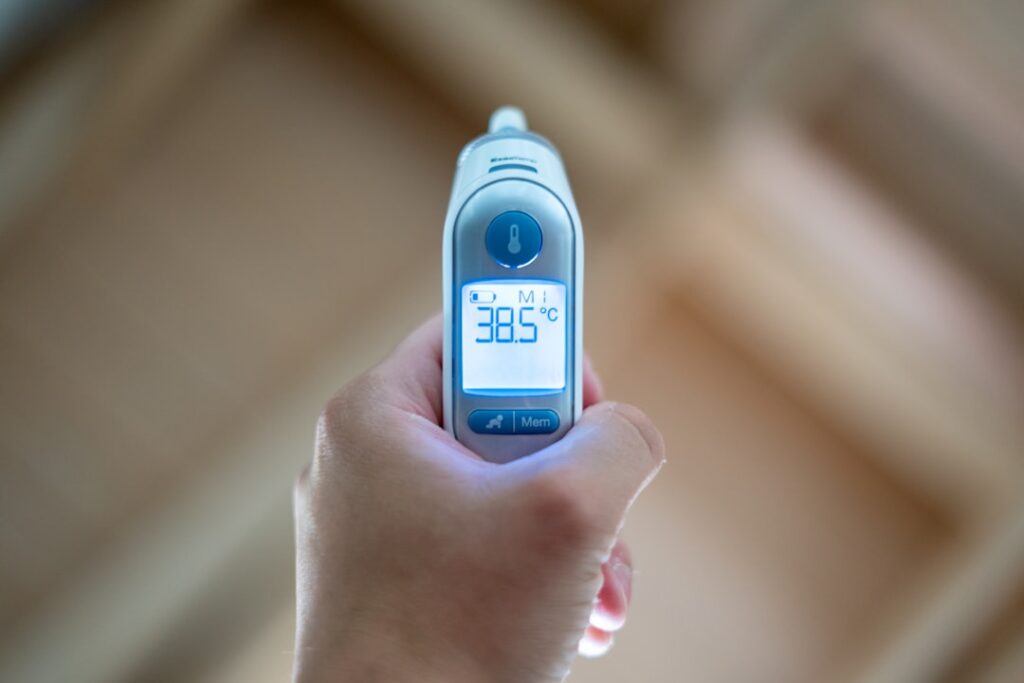
Point it at a register, pull the trigger, and a number appears: surface temperature, read from a few feet away without touching anything. The laser thermometer has become a staple of home inspections precisely because it turns a vague impression—”this room feels cold”—into a measurement an inspector can record. The red dot the device projects is only an aiming guide; the real work happens through infrared sensing. This guide explains how the tool measures heat, where it earns its keep in an inspection, and the misreadings that trip up new users, with guidance drawn from inspection-trade and energy-efficiency sources.
Part of our Home Inspection Tools guide — start there for the full picture →
What Is a Laser Thermometer and How Does It Work?
A laser thermometer, more accurately an infrared thermometer, measures the temperature of a surface by detecting the infrared energy that surface radiates. Every object above absolute zero emits infrared radiation in proportion to its temperature. A sensor inside the device, called a thermopile, converts that radiation into an electrical signal, and the unit translates it into a temperature reading on the display.
The laser itself does not measure anything. It is a visible pointer that shows roughly where the device is aimed. The actual reading comes from a cone of infrared energy gathered by the lens. That distinction matters because the measured spot is larger than the laser dot, and it grows as the user steps back. Understanding the difference between the aiming laser and the sensing field is the first step to using the tool correctly.
The Distance-to-Spot Ratio
Every infrared thermometer has a distance-to-spot ratio, often printed as something like 12:1. It describes how the measured circle grows with distance. At a 12:1 ratio, holding the device 12 inches away measures a 1-inch circle; at 12 feet away it averages temperature across a 1-foot circle.
This single specification governs accuracy more than any other. If an inspector tries to read a small electrical terminal from across a room, the device averages the hot terminal with the cool surroundings and reports a misleadingly mild number. To read a small target, the user must move close so the spot is smaller than the object. A higher ratio like 30:1 lets the user stand farther back and still target a small area, which is why better units quote a tighter ratio.
Why Emissivity Changes the Reading
Emissivity is the property that decides whether the reading is trustworthy. It measures how efficiently a surface radiates infrared energy compared with a perfect emitter, on a scale from 0 to 1. Flat, dull, painted, or matte surfaces sit near 0.95 and read accurately. Shiny metals—bare copper pipe, polished aluminum ductwork, stainless appliances—have low emissivity, sometimes below 0.1, and they reflect surrounding heat instead of emitting their own.
Aimed at a shiny pipe, a laser thermometer can report the temperature of whatever the pipe reflects rather than the pipe itself. Two workarounds exist: set the device’s adjustable emissivity to match the surface, if it offers that control, or stick a piece of matte tape or dab of flat paint on the shiny spot and measure that. The same physics that complicates a laser thermometer is what a infrared thermometer guide covers in more depth, since they are the same class of instrument.
Where the Tool Earns Its Place in an Inspection
Inspectors reach for the laser thermometer for fast comparative checks across a house. A few examples show the range.
- HVAC performance — measuring supply and return air temperatures to estimate the temperature split across a furnace or air conditioner, a quick gauge of whether the system is doing its job.
- Insulation gaps — scanning a ceiling or wall for a cold streak that hints at missing insulation or air leakage, common in older Front Range homes.
- Plumbing — confirming a water heater delivers hot water, or finding which pipe is the hot line.
- Electrical — checking a breaker or connection for an abnormally warm spot that suggests a loose or overloaded conductor, always read up close given the small target.
The Department of Energy points to surface-temperature differences as one signal of where a home loses conditioned air, and a spot reading is the simplest way to chase that down before committing to a more expensive diagnostic.
Laser Thermometer vs. Thermal Camera
The most useful comparison is between the single-point laser thermometer and a thermal imaging camera. They sound similar and both sense infrared, but they answer different questions.
Single-Point Spot Reading
The laser thermometer gives one number for one small area. It is cheap, fast, and precise about a defined target, but it cannot show a pattern. To survey a whole wall, the user must take dozens of separate readings and reconstruct the picture mentally.
Full-Field Image
A thermal camera renders thousands of points at once as a color image, instantly revealing a cold draft outline or a hidden moisture plume. It costs far more and demands more training to interpret. For homeowners weighing the two, the broader home inspection tools overview frames the spot thermometer as the screening tool and the camera as the imaging tool. Many inspectors carry both, using the cheap one to confirm what the camera suggests.
Common Misreadings and How to Avoid Them
Most bad readings trace back to a handful of errors. Measuring a shiny surface without correcting emissivity tops the list, followed by standing too far away so the spot averages in surrounding temperatures. Steam, dust, or a smudged lens also scatter the infrared signal.
Temperature shock is a quieter culprit. Carrying the device from a cold truck into a warm house can fog the lens and bias readings until the unit acclimates, sometimes for fifteen minutes or more. Reading through glass fails entirely, because glass blocks the relevant infrared band and the device measures the glass surface, not what is behind it. Knowing these limits keeps the tool honest: it measures surface, line-of-sight, and only as small a spot as distance and ratio allow.
Choosing a Laser Thermometer
For home use, three specifications matter most. A reasonable temperature range covers everything from a freezing crawlspace to a hot flue. Adjustable emissivity, even a simple high/low/medium switch, makes the tool usable on more surfaces. And a distance-to-spot ratio of at least 12:1 keeps readings tight at normal working distances.
Extra features—data logging, dual lasers that outline the spot, backlit displays—add convenience but not core accuracy. A homeowner checking drafts and HVAC output needs far less than an inspector documenting findings for a report. As with any instrument, matching the spec to the task prevents both overspending and disappointment from a unit that cannot do the job at hand.
Reading HVAC Performance With a Spot Thermometer
One of the most practical uses is gauging whether a heating or cooling system is performing. For a furnace, an inspector measures the temperature of air at a return register and at a supply register, and the difference, the temperature rise, indicates whether the unit is heating properly within the manufacturer’s expected range. For air conditioning, the same supply-versus-return comparison reveals the temperature split, with a healthy system typically dropping the air a meaningful amount across the coil.
The spot thermometer makes these checks fast, but they remain rough. Airflow restrictions, a dirty filter, low refrigerant, or duct losses all influence the reading, so the number is a screening indicator rather than a diagnosis. A surprising split prompts a closer look—possibly a duct survey or a call to an HVAC technician—rather than a firm conclusion. Used this way, the tool points toward problems instead of pretending to solve them.
Finding Insulation Gaps and Air Leaks
Heat loss leaves a temperature signature, and a laser thermometer can chase it. Scanning a ceiling, an inspector watches for a cold streak that betrays missing insulation above, or a cold band along a wall plate where outside air infiltrates. In a Front Range winter, an exterior wall reading several degrees colder than an interior partition flags a likely insulation or air-sealing deficiency.
The Department of Energy points to these surface-temperature differences as one way to locate where conditioned air escapes. The catch is that a single-point reading only samples one spot at a time, so finding a leak this way is tedious compared with a thermal image. For homeowners deciding between the spot tool and a full imager, our guide on thermal imaging house inspection explains where the full-field camera pulls ahead. The spot thermometer still earns a place as a quick confirmation of a suspected cold spot.
Electrical and Plumbing Spot Checks
On the electrical side, a warm connection at a breaker or terminal can signal a loose or overloaded conductor, and a quick spot reading flags an abnormally hot point for an electrician to investigate. Because electrical targets are small, the reading must be taken up close so the measured spot does not average in cool surroundings—a direct application of the distance-to-spot rule.
Plumbing uses are simpler. The tool confirms a water heater is delivering hot water, identifies which of two pipes carries the hot supply, and can spot a section of pipe that is unexpectedly cold or warm. None of these replaces a proper diagnosis, but each turns a guess into a measurement in seconds, which is the recurring value of the instrument across the inspection.
Using It Well in a Real Home
Practical technique pulls everything together. Get close enough that the target fills the measured spot. Correct for emissivity on shiny surfaces with tape or a setting. Let the device acclimate to room temperature before trusting readings. And treat the numbers as comparisons rather than absolutes—an inspector cares less about the exact degree on a register than about the difference between supply and return, or between a well-insulated wall and a cold one.
Used this way, the laser thermometer is a fast, reliable first look that points toward where deeper investigation is warranted. It does not replace a thermal camera, a moisture meter, or an electrician’s analysis, but it tells a careful user where to aim those next.
How Infrared Sensing Actually Works
The physics behind the reading is worth understanding because it explains every limitation. All matter above absolute zero emits thermal radiation in the infrared band, and the intensity of that radiation rises with temperature according to well-established physical law. The thermopile sensor inside the device absorbs that radiation and produces a small voltage proportional to the energy received, which the unit’s electronics convert into a temperature.
Two consequences follow directly. First, the device measures surface temperature only—it sees the outermost skin of an object, not what lies beneath, so a cold pipe behind a warm wall reads as the wall. Second, the reading depends on the surface’s emissivity, the efficiency with which it radiates, because the sensor assumes a value to do the conversion. When that assumption is wrong, as on shiny metal, the number is wrong. Grasping that the tool reads emitted surface radiation, and nothing else, is what separates a user who trusts every number blindly from one who knows when to apply tape, move closer, or reach for a different instrument.
Spot Readings vs. Contact Thermometers
An infrared spot thermometer is not the only way to measure temperature, and knowing the alternative clarifies when each fits. A contact thermometer—a probe pressed against a surface or inserted into a substance—measures by direct conduction and is unaffected by emissivity or distance. It is slower, requires touching the target, and cannot read a live electrical terminal or a moving part safely, but it is accurate regardless of surface finish.
The infrared tool trades that surface-independence for speed and non-contact convenience. It reads a hot flue, a live breaker, or a register in an instant from a safe distance, which is exactly why inspectors favor it for rapid surveys. The trade-off is the emissivity and distance sensitivity that a contact probe sidesteps. For most inspection tasks the speed wins, and the user simply works around the limitations; for a precise reading on a shiny or critical surface, a contact measurement remains the more dependable choice. Matching the method to the surface is part of competent measurement.
References
- ENERGY STAR: Seal and Insulate — U.S. Environmental Protection Agency (ENERGY STAR)
- Infrared thermography in inspections — InterNACHI
- Standard of Practice for inspection tools — ASHI
Frequently asked questions
What is the difference between the laser and the temperature reading?
The laser is only an aiming pointer that shows roughly where the device points. The temperature reading comes from infrared energy gathered through the lens across a circular spot. That measured spot is larger than the laser dot and grows with distance.
Why does my laser thermometer read wrong on shiny metal?
Shiny metals have low emissivity, so they reflect surrounding infrared rather than emitting their own. The device then reads reflected heat, not the metal's true temperature. Apply matte tape over the spot or adjust the emissivity setting to fix it.
Can a laser thermometer measure through glass?
No. Glass blocks the infrared band these devices read, so the tool measures the glass surface itself, not the object behind it. Measuring inside an oven or behind a window requires a different method or direct line of sight.
Is a laser thermometer as good as a thermal camera?
They serve different jobs. A laser thermometer gives one precise spot reading and costs little, while a thermal camera shows a full image revealing patterns like drafts or moisture. The spot tool screens; the camera images. Many inspectors use both.